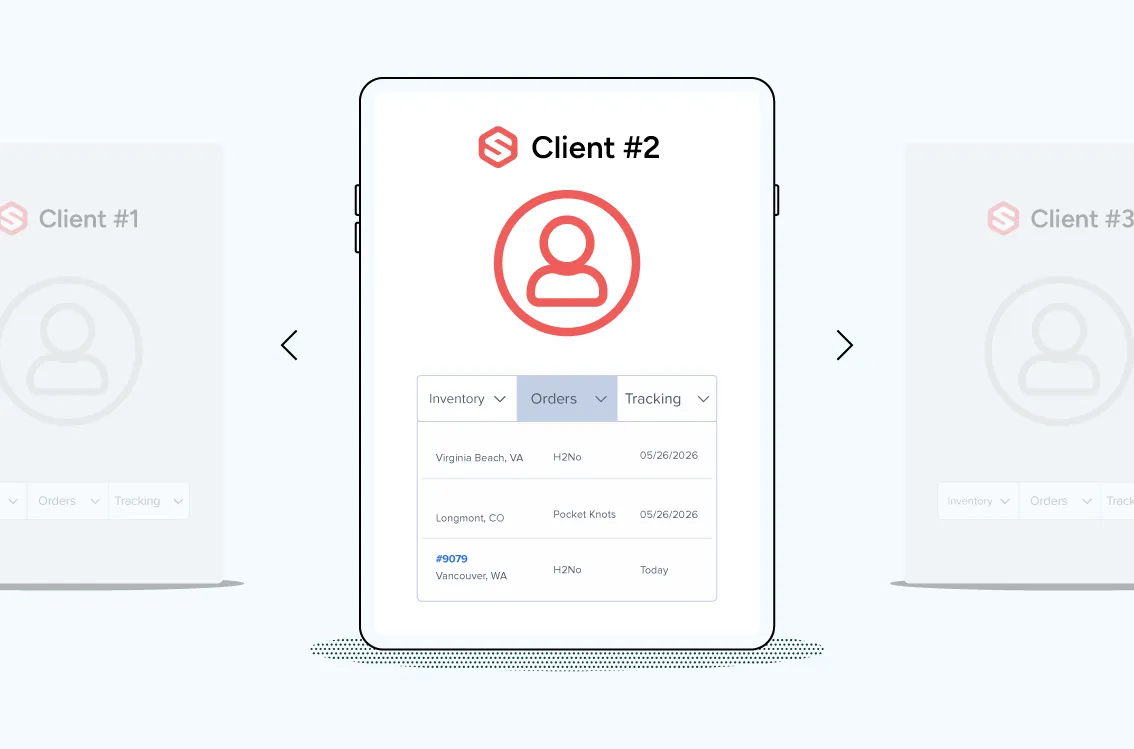
Run every client from one WMS. Whether you have 5 clients with 100 SKUs or 25 clients with 10,000 SKUs, ShipHero keeps their inventory, orders and billing separate while your team works one warehouse floor.

Unlimited 3PL clients, never metered
3PL billing automated down to the action
White-label client portal on your own subdomain
EDI and a UCC-128 label library for 100+ retailers
Most 3PL software makes you buy billing, client portals and integrations as separate modules. ShipHero includes the tools 3PLs run on every day, from the first client onboarded to the last invoice sent.
Connect each client's Shopify, Amazon, TikTok Shop, BigCommerce and other stores, and orders flow in with the right client attached. Track every client's inventory in real time, with lot and expiration tracking (FEFO) and mobile cycle counts for supplement, food and regulated clients.
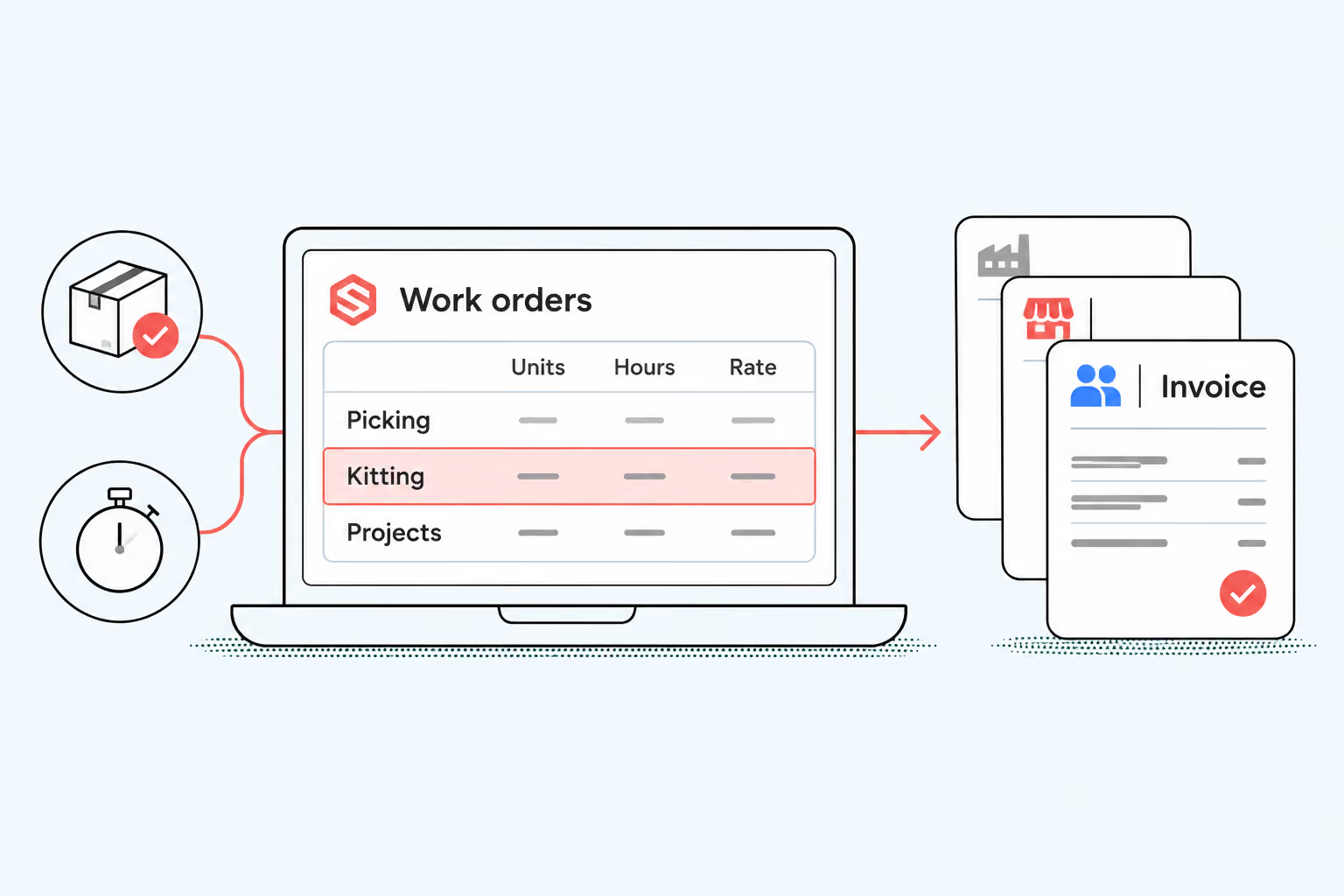
Stop rebuilding invoices in spreadsheets at month end. ShipHero tracks billable activity as your team works and bills each client automatically. Work orders support rates by units or hours worked, with more than one rate per job, so kitting and special projects get billed as soon as they're done.
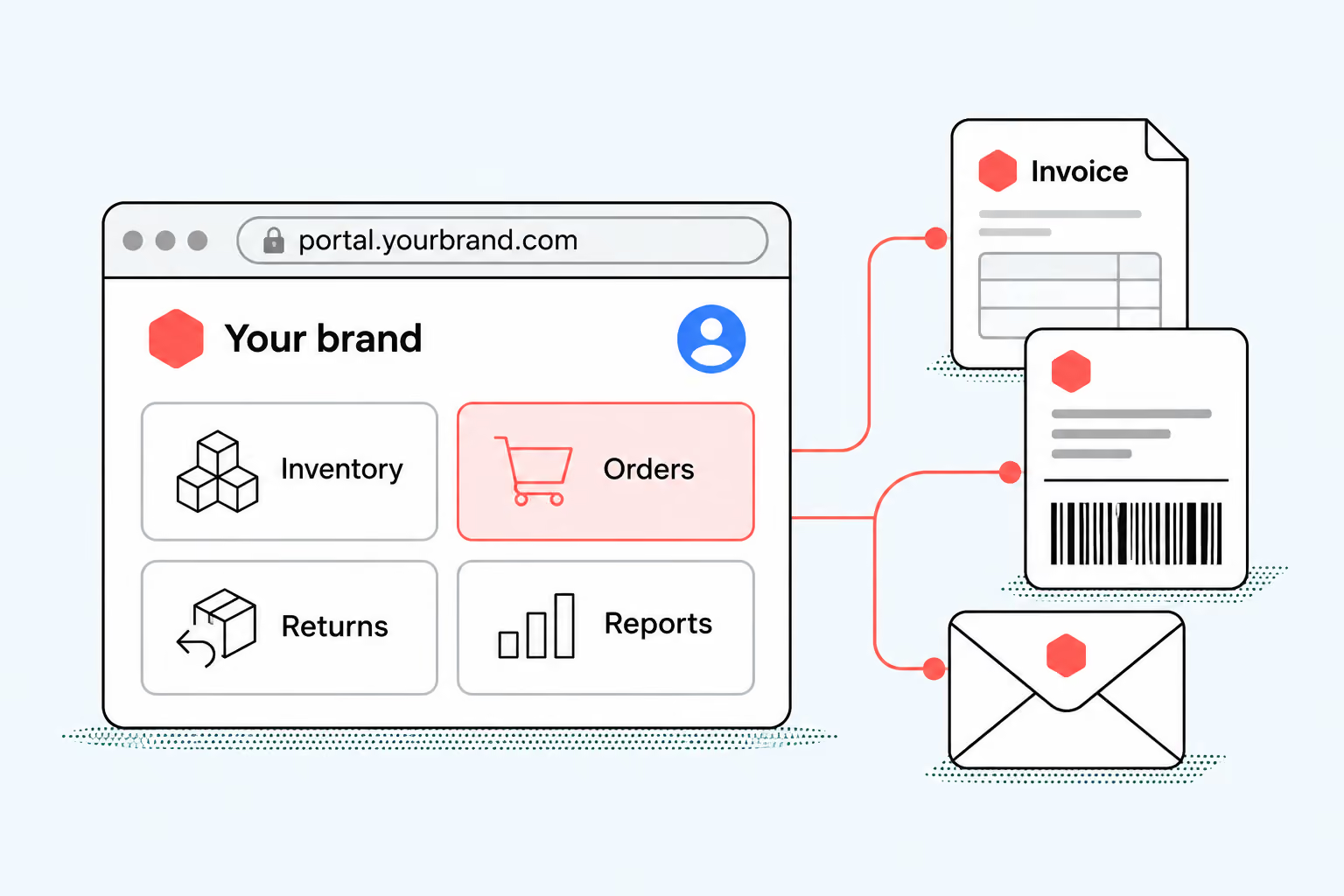
Give every client a self-serve portal on your own subdomain, with your logo on invoices, shipping orders, labels and emails. Clients create inbound shipping plans, check inventory, manage orders and returns, and pull their own reports. That means fewer "where's my order?" emails for your team.
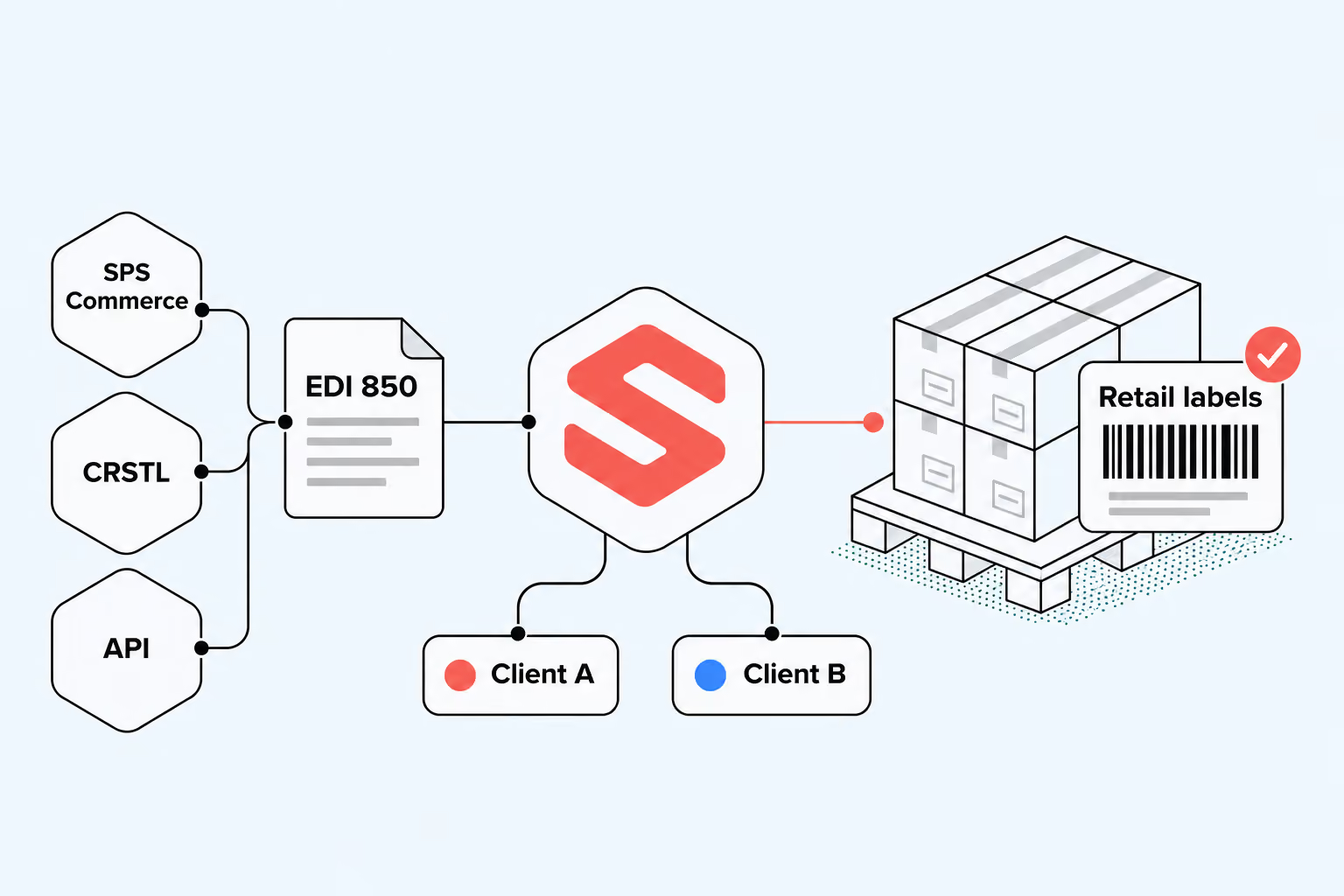
ShipHero is EDI-agnostic, so each client can connect through SPS Commerce, CRSTL or another provider. Retailer POs flow in, ship notices and inventory updates flow back, and ShipHero Support sets up and tests each trading partner before go-live. A native GS1 (UCC-128) label library covers 100+ retailers. Wholesale orders follow one path, from picking plan to pick, pack, label and outbound schedule, and ship as boxes or pallets with their own staging location.
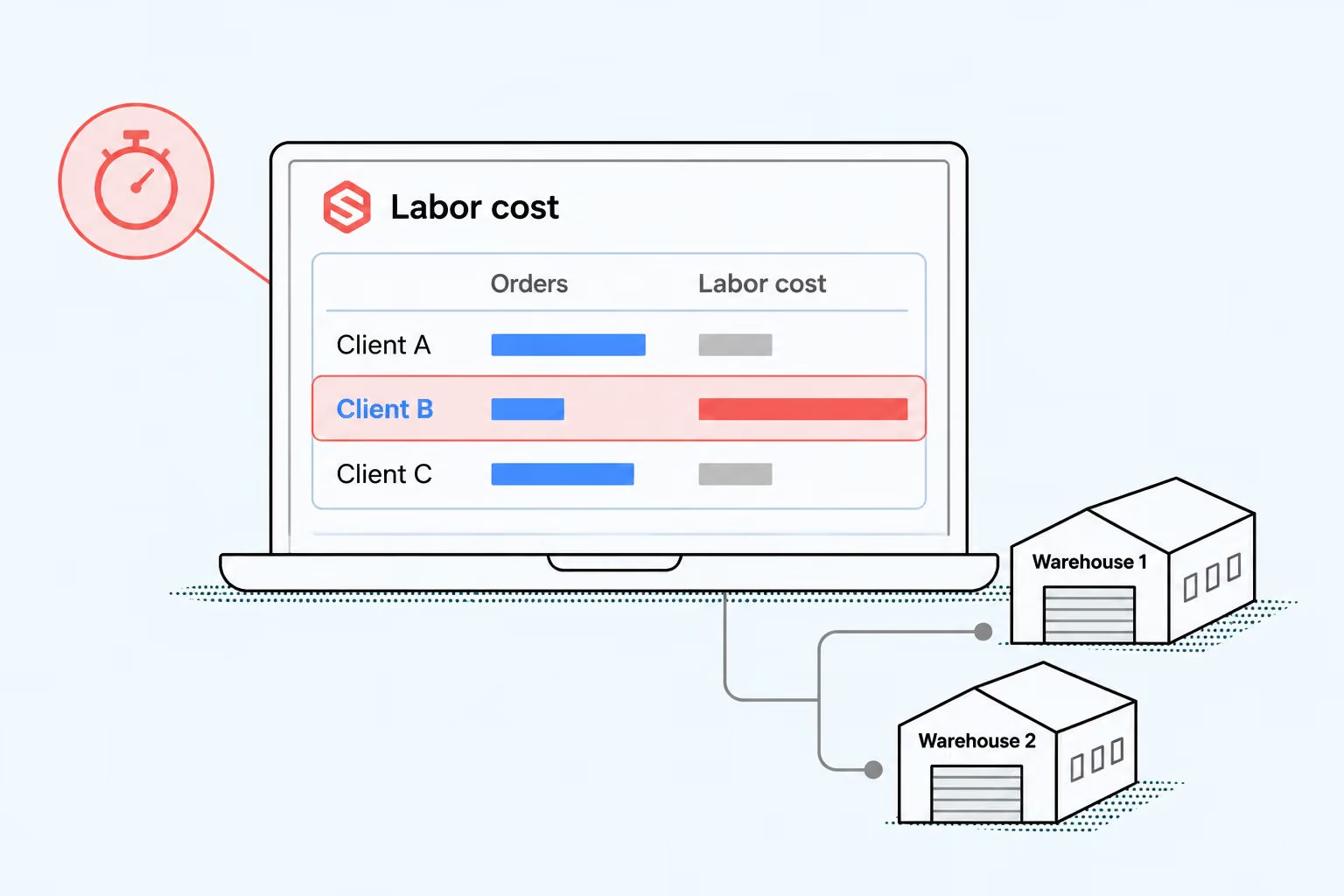
The Labor Cost Dashboard breaks down orders and labor cost per client and per warehouse. See which accounts need more resources, and price your next contract with confidence.

Every item is barcode-checked before it ships, and new pickers learn the mobile app fast. Live rate shopping picks the cheapest on-time carrier on every order, with carrier preferences you set per client. ParcelView captures a photo of every package's contents, so you can settle "it arrived wrong" disputes with proof instead of credits.
How a purpose-built 3PL platform stacks up against entry-level tools and legacy ERP systems.













Carts, marketplaces, carriers and ERPs. Connect each client's stores, and orders and product details import automatically.
A 3PL warehouse management system lets a third-party logistics provider run inventory, orders, shipping and billing for many clients from one system, while keeping each client's data separate.
Yes. You can onboard unlimited 3PL clients, each with their own stores, inventory, billing and portal. Clients are never metered in ShipHero pricing.
ShipHero tracks billable activity as your team works and bills each client automatically, down to the action. Work orders and special projects can be billed by units or hours.
Yes. Each client gets a white-label portal on your subdomain to manage inbound shipments, inventory, orders, returns and reports.
Yes. ShipHero is EDI-agnostic, so clients can connect through SPS Commerce, CRSTL or another provider, and ShipHero Support sets up and tests each trading partner. A native GS1 (UCC-128) label library covers 100+ retailers, and wholesale orders ship as boxes or pallets.
Plans start at $15,000 a year. Pricing is based on annual shipment and order volume, store connections and add-ons. Users, SKUs, warehouses and 3PL clients are never metered.
Tell us about your clients and order volume, and we'll put together pricing and a migration plan for your 3PL.

Custom pricing for your order volume
Dedicated implementation team
We migrate you from your current WMS
A Leader in 3PL and Warehouse Management on G2
*Onboarding timeline based on standard accounts. Actual deployment ranges from 2–12 weeks depending on operational complexity, selected package (Rapid, Standard, or Advanced), and partner team responsiveness.