
E-commerce has certainly been in the spotlight this past year, but who has really been stealing the show? Thieves, of course. Package theft is on the rise, as illustrated in a recent report, which showed that approximately 43% of Americans reported having a package stolen, a 7% increase from 2019. Of these theft victims, 64% of them say they’ve had packages stolen more than once. What’s to account for the rise in theft?
Approximately 59% (+5% YoY) of Americans receive a package at least weekly, and 10% (+5% YoY) receive a package daily. That’s way more packages being left on the doorstep, and although the average value of the items has decreased, this does not seem to stop porch pirates from throwing up their hood and grabbing what they can.http://https://www.youtube.com/watch?v=a_TSR_v07m0ICYMI: Watch the amazing Glitter Bomb 2.0 vs Porch Pirates video
“YOU ARE GOING TO PAY FOR THIS!” you may have exclaimed to the heavens when you watch a thief grab your $3 toe clippers on your home security system. “But, who actually pays for this?”, you may have wondered as you pace around with your hawk talons clacking against the hardwood floors. (true story)
Well the answer is, if the shipper says that the package was delivered and the buyer states that it was not received, the seller is no longer liable. However, in most cases of a stolen package, the retailer or seller issues a refund or agrees to replace the item to preserve their customer experience. Amazon’s A-Z Guarantee program pretty much guarantees that purchases made from their retail partners will almost always be refunded or replaced if the package goes missing.
Some businesses may ask customers to file a claim with the shipper before issuing a refund or replacement.
For sellers, traditional shipping carriers such as UPS, USPS, and FedEx offer optional shipping insurance for a fee; however, this only covers so much. FedEx caps their liability at $100 and will only increase this if the package is packed and shipped at a FedEx location. Even then, it only increases to $1,000 for items like jewelry, artwork, collectibles, and antiques.
Ultimately, the brands are responsible for making sure that their products reach their customers. So besides installing guard dogs as a nice ‘gift with purchase’, the most effective way that brands can combat package theft is to offer customers more ways to receive their products. The most common have been curbside pickup and local delivery. You can also schedule for in-person delivery and require signatures.
When deciding to outsource your fulfillment, be aware of your 3PLs Terms and Conditions surrounding stolen goods, and ask what your fulfillment provider can do. For example, in the case of stolen goods, ShipHero files claims with Carriers on your behalf, up to a certain value. Read more about ShipHero Fulfillment’s stolen goods FAQ here and our T&Cs.
According to the International Maritime Organization, international shipping contributes ~3% of annual carbon-dioxide emissions. To combat this, shipping companies seek to replace petroleum with a new fuel source, ammonia (NH3).
Why ammonia? Well… *deep breath in* this colorless fuel emits no carbon dioxide when burned, It’s abundant, it can be made using renewable electricity, water, and air, both fuel cells and internal combustion engines can use it, it doesn’t have to be stored in high-pressure tanks or cryogenic dewars like hydrogen, and it has 10 times the energy density of a lithium-ion battery.
The only problem is that no shipping carriers today are equipped to use ammonia as a fuel source. But by 2024, Viking Energy is set to become the first shipping vessel propelled by ammonia fuel cells, powered by several Norwegian-based companies.
NASA successfully landed their Mars Rover, Wall-e -- I mean, Perseverance on the Red Planet last week. The videos of the landing immediately went viral, and in typically nerdy fashion, people began uncoding Easter Eggs hidden throughout the footage. In one such hidden message, the parachute was allegedly stitched in binary code that read “Dare Mighty Things”, a quote from President Teddy Roosevelt.
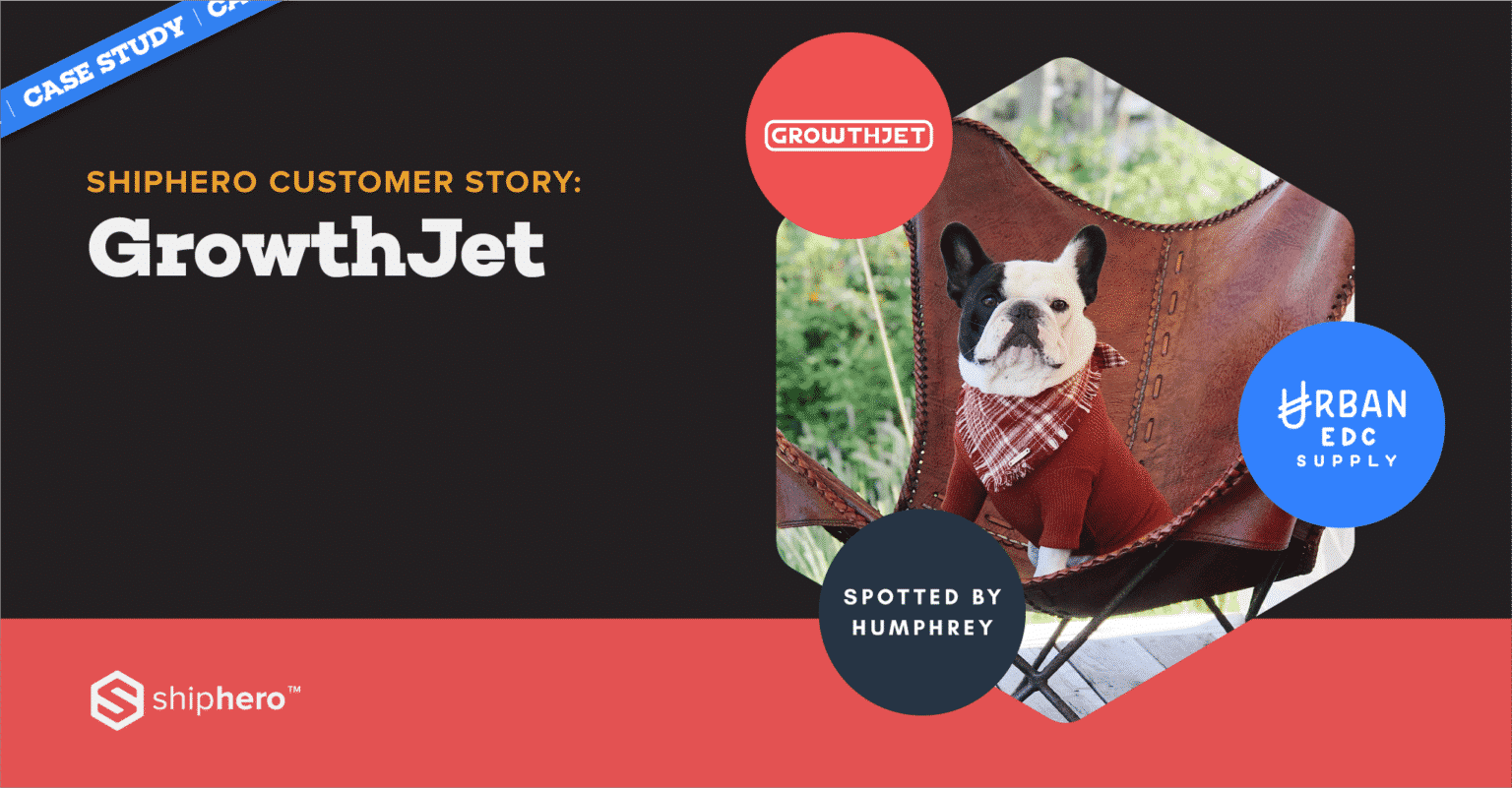
What would you do if your dog became an internet sensation? Well, that’s what happened with ShipHero customer Yong-Soo and his French Bulldog, Humphrey!
Spotted By Humphrey - “with its quirky name for a shop that has the personality to match” - is a community-driven online destination for dog parents around the world who are looking to find something special and unique for their dogs.
Learn how they turned Instagram fame to a successful ecommerce business with our newest doggone ShipHero Case Study.
Need a sick pump for your e-commerce business? Learn how the dietary supplement industry used three simple strategies to get bulging revenue gains of over 40% this year, outpacing overall e-commerce by 12%... and they say it’s “all-natural”.
These days, your products probably travel more than you do… But don’t be jealous, multimodal and intermodal fulfillment options are becoming more common as technology allows for seamless communication between carriers. On our Shipping Methods Explained series, we deep-dive into Multimodal vs. Intermodal fulfillment options, so you can determine if it’s right for your business.
Are you bogged down by the day-to-day tasks of running a business, desperate for time to focus on your strategy? Automation is the answer you need, and your fulfillment provider should be just the one to provide it. In ShipHero’s Fulfillment Innovation Wheel series - Automation, we give a glimpse into our Automation Cookbook to show you how automation can improve your speed and efficiency.
.webp)

TikTok Shop is discontinuing "seller shipping" on February 25, 2026, a move that will halt fulfillment for any 3PL using non-integrated legacy technology. ShipHero's WMS is fully integrated and approved to support TikTok Shop’s new logistics requirements, allowing you to generate compliant labels and avoid a total operational lockout. By migrating to ShipHero before the deadline, 3PLs can eliminate onboarding fees and ensure their clients’ businesses remain active and profitable.
Starting February 25, 2026, TikTok Shop is officially discontinuing "seller shipping" (also known as "bring your own label") for all U.S. local sellers.
This means your clients can no longer use their own carrier accounts for TikTok orders.
As their 3PL, you will be unable to generate labels unless your WMS is directly integrated with TikTok’s new ecosystem. To keep your clients' businesses running, you must transition them to TikTok Shop Logistics Services through a verified partner.
ShipHero can keep your 3PL orders flowing from February 25 onwards.
If you are running your warehouse on legacy systems, you are at risk of a complete TikTok Shop lockout. Your fulfillment—and your revenue—will simply stop that day.
TikTok's latest policy creates a massive bottleneck for 3PLs using legacy technology.
To help 3PLs transition quickly and stay compliant, we are waiving all onboarding fees for new customers who join ShipHero before February 25.
There are only 6 approved ERP/WMS providers globally that meet TikTok’s new integration standards. ShipHero WMS is on that list. Most legacy WMS providers are not currently approved. To avoid a total operational blackout for your clients, you must move to a verified partner like ShipHero.
No. Starting February 25, TikTok will discontinue seller shipping. All shipping must go through TikTok Shop Logistics Services.
No. You can still manage fulfillment from your own 3PL warehouse using ShipHero’s direct integration, which pulls the required TikTok labels and logic directly into your existing workflow.
You will lose the ability to generate shipping labels for any TikTok Shop order. This will result in immediate fulfillment backlogs, client dissatisfaction, and potential loss of contracts.
Yes. ShipHero is the only U.S. based WMS currently supporting these requirements, allowing 3PLs to continue shipping without interruption.
.webp)

TikTok Shop is introducing mandatory logistics changes that will stop fulfillment for unprepared sellers on February 25, 2026.
ShipHero's WMS is fully integrated and approved to support TikTok Shop’s new logistics requirements, ensuring your orders keep moving without interruption. By switching to ShipHero before the deadline, brands can maintain compliance and eliminate onboarding fees during this transition. Here’s everything brands need to know to continue fulfilling orders.
Starting February 25, 2026, TikTok Shop will discontinue "seller shipping" for all U.S. local sellers. This means you can no longer use your own carrier accounts to generate labels for TikTok orders. To stay compliant and keep selling, brands must transition to TikTok Shop Logistics Services.
Relying on legacy systems like Extensiv, Deposco, or Logiwa puts your business at risk of account suspension and shipping delays that kill customer loyalty.
If your current WMS or 3PL is not integrated with TikTok Shop Logistics Services, you will face a total fulfillment blackout on that date. Failure to adapt to these changes risks shipping delays that kill customer loyalty and can lead to account suspension on the platform.
For brands onboarding on or after February 9, 2026, these restrictions are already in effect.
ShipHero has done the due diligence and has built a direct integration to ensure that merchants can fulfill TikTok Shop orders themselves while remaining fully compliant with TikTok’s new label requirements.
To help brands and 3PLs transition quickly and stay compliant, we are waiving all onboarding fees for new customers who join ShipHero before February 25.
Currently, there are only 6 approved ERP/WMS providers globally that meet TikTok’s new integration standards. ShipHero WMS is on that list. If you are using legacy providers like Extensiv, Deposco, or Logiwa, they are not currently approved to support these specific TikTok Shop requirements. To avoid a total operational blackout, you must move to a verified partner like ShipHero before the deadline.
No. Starting February 25, TikTok will discontinue seller shipping. You must use TikTok Shop Logistics Services.
You can use Fulfilled by TikTok (FBT) to store and ship items through their network, switch to one of the six approved ERP/WMS systems, or use ShipHero's direct integration.
You must use TikTok Shop Logistics Services, but with ShipHero, you can still manage the fulfillment from your own warehouse using TikTok’s required labels and logic.
This connection type will not support the new label requirements. You must switch to a direct TikTok Shop connection within ShipHero to avoid fulfillment interruptions.
Yes. ShipHero is currently the only U.S. based WMS that supports these requirements, allowing our customers to continue shipping without interruption.
.webp)
Imagine running a warehouse where orders are picked quickly, inventory is accurate, and all operations run smoothly without any errors or delays. Thanks to Artificial Intelligence, this can now become a reality with ease.
AI is transforming warehouse management by enhancing efficiency, intelligence, and the ability to meet the rapid demands of today’s eCommerce-driven market.
ShipHero is pioneering this revolution with its AI-powered warehouse solutions, setting new industry benchmarks. This article explores ShipHero’s AI Picking feature, highlighting how it’s transforming warehouse management and enhancing operational efficiency.
The integration of AI technologies, including machine learning, robotics, and predictive analytics, is revolutionizing warehouse operations, driving significant improvements in efficiency, accuracy, and overall performance. These innovations are optimizing processes across various areas, from inventory management to order fulfillment. Below are the key benefits of AI in warehouse management.
A combination of AI technologies is shaping smarter warehouse systems to help revolutionize warehouse management.
ShipHero has taken AI integration to the next level with its AI Picking feature, designed to significantly improve warehouse efficiency. This feature automates the picking process, reducing the reliance on manual labor and enhancing productivity in ways that were once thought impossible.
Let’s dive deeper into how ShipHero’s AI Picking works and the advantages it offers.
AI Picking optimizes warehouse operations in two key ways:
The AI Picking feature delivers a wide range of benefits:
The transformative power of AI extends far beyond just picking. AI is also revolutionizing other aspects of warehouse management, driving improvements in operational efficiency, inventory management, and safety.
AI automates tasks, reducing errors and increasing speed. Automated sorting and real-time inventory tracking ensure accuracy, while real-time monitoring helps managers adapt and ensure timely deliveries.
AI plays a vital role in maintaining accurate inventory levels. By leveraging predictive analytics, AI can forecast demand and optimize stock levels, helping warehouses avoid both stockouts and overstock situations. This leads to better inventory management and fewer disruptions in supply chains.
AI-driven systems can monitor warehouse conditions to ensure safety and compliance with industry regulations. These systems can analyze warehouse data and predict potential hazards before they occur, proactively reducing risks and ensuring a safer working environment.
AI technologies are playing a transformative role in the supply chain and logistics sectors by improving efficiency, reducing costs, and enhancing decision-making.
These intelligent systems effortlessly manage supply chain processes by using data to optimize operations, predict trends, and automate routine tasks. This ultimately reshapes everything, from how goods are moved to stored and delivered.
The future of warehouse management looks promising with greater automation and efficiency, but future warehouse digitization brings challenges, such as high upfront costs and the need for skilled personnel.
AI-powered drones, autonomous robots, and IoT integration are smart warehouse technologies that are revolutionizing warehouse operations. Drones will deliver goods quickly, while robots automate sorting and transportation, thereby reducing the need for manual labor.
IoT and AI integration will enable real-time monitoring and optimization of operations. Smart technology in warehouses is leading to fully automated systems that are faster, scalable, and need minimal human input.
While AI offers immense benefits, businesses must also consider certain challenges. High initial investments in AI technology, data security concerns, and the need for skilled personnel are just a few of the hurdles that must be addressed.
However, with a strategic approach, companies can eliminate the challenges and embrace AI’s full potential to boost accuracy in picking and improve overall warehouse operations.
AI minimizes error by automating tasks like inventory tracking, order picking, and sorting, ensuring greater accuracy and efficiency.
Yes, AI-driven predictive analytics can predict demand, track inventory levels, and improve supply chain efficiency by forecasting needs with greater accuracy to help businesses stay ahead of trends and market fluctuations.
AI solutions are becoming more cost-effective thanks to cloud-based services and subscription pricing models. These options make AI technology more accessible to small businesses, allowing them to take advantage of its benefits without large upfront costs.