
.svg)

Let’s stay in touch with the ShipHero Blog.


.webp)
The ShipHero Model Context Protocol (MCP) connects supported AI clients directly to your live ShipHero data, so warehouse teams can ask questions and get specific answers from their own account. It is built for day-to-day operational checks, including inventory levels, open orders, shipment status, holds, returns, purchase orders, and exceptions. For ShipHero customers, it is available at no additional charge and runs on existing API credits.
Every order, shipment, inventory movement, hold, return, and purchase order creates data inside ShipHero. Your warehouse information is right there, but getting to it can be a slow, complex process.
Before the ShipHero MCP, answering a specific operational question often meant logging in, finding the right report, applying the right filters, exporting data, or asking the one person on the team who knew where to look.
Even when the answer was simple, like a quick inventory check, it could turn into a 20 to 45 minute task. A customer question could sit half a day while someone pulled the right numbers. That delay adds friction to the floor. It slows decisions. It keeps teams waiting on data they already own.
The ShipHero MCP gives supported AI clients secure, read-only access to live ShipHero data.
That means operators can ask questions in plain English and get answers from their actual account, not from a generic help article or static knowledge base. A chatbot can tell you where to find a number. The ShipHero MCP can return the number itself.
It works with MCP-enabled AI clients, including Claude, ChatGPT, Cursor, and Codex. Connect it once, authenticate access, and your team can start asking operational questions from the AI tool they already use.
The workflow is simple:
The MCP does not replace ShipHero. It makes the data inside ShipHero easier to reach when your team needs a fast answer.
The ShipHero MCP is designed for everyday operational questions, such as:
If the data lives in your ShipHero account, the MCP gives your team a faster way to ask for it.
Speed matters, but safety matters too.
The ShipHero MCP is read-only by design. It can retrieve information from your account, but it cannot create orders, modify records, delete data, or change warehouse settings.
That gives teams a practical way to use AI for operational visibility without risking accidental account changes. Operators can ask. Managers can check. 3PL teams can answer client questions faster.
The data becomes easier to use, while the records stay protected.
For founders, the MCP can turn a quick inventory check into a simple question.
For operations leads, it can surface shipment status, holds, exceptions, and low-stock SKUs without digging through reports.
For 3PL operators, it can help answer client questions faster, using live account data instead of manual follow-up.
The result is a faster way to reach the information already inside ShipHero.
The ShipHero MCP is available to all ShipHero customers at no additional charge. It runs on existing API credits, so specific questions help keep usage efficient.
To get started, visit developer.shiphero.com or contact your ShipHero account representative.
ShipHero MCP is a read-only connection between supported AI clients and your live ShipHero data. It lets users ask operational questions in plain English and receive answers from their actual ShipHero account.
A chatbot usually answers from fixed, generic information. ShipHero MCP connects to live account data, so it can return specific answers about your orders, shipments, inventory, holds, returns, and other ShipHero records.
ShipHero MCP works with AI clients that support the Model Context Protocol, including Claude, ChatGPT, Cursor, and Codex.
No. ShipHero MCP is read-only. It can query data, but it cannot create, update, or delete records in your ShipHero account.
No. The MCP is built for operators and can be connected from a supported AI client in minutes. Developers may use more advanced tools for deeper analysis, but most day-to-day users can work directly with the MCP.
Yes. ShipHero MCP is available to ShipHero customers at no additional charge and runs on existing API credits.
Transitioning to a new Warehouse Management System (WMS) is a high-stakes decision that often triggers concerns regarding downtime, data integrity, and workforce adaptation. As warehouses prepare for 2026 growth, understanding these common hurdles—and the technical solutions that resolve them—is essential for a successful migration. This guide addresses the five primary barriers to adoption and how a high-velocity infrastructure ensures a seamless transition.
Warehouse operators frequently hesitate to upgrade due to perceived risks that can halt operations. These challenges typically include:
To clear these hurdles, a structured implementation strategy is used to prioritize data density and entity clarity.
In the competitive eCommerce landscape, staying stagnant with manual workarounds is often more costly than the transition itself. Moving to a high-velocity WMS converts your warehouse from a cost center into a growth engine by providing Labor Efficiency and ROI through automated routing and reduced authentication friction.
Because the platform is built for the floor worker, features like Workforce Hero allow seasonal temps and new staff to be authenticated and productive in under an hour.
No. High-velocity infrastructure increases visibility by providing Total Real-Time Control. Managers can monitor exactly what is in the Hospital queue and track replenishment in real-time from a single dashboard.
Before going live, a ground-up audit is performed using cycle counting tools. The system's architecture ensures that every movement on the floor is synchronized with sales channels instantly, maintaining 99.9% accuracy.
Picture a packer at Peak Season. A box is in front of them, a product in each hand, and somewhere on a cluttered desk there's a mouse they need to find to confirm the order. They look down. They hunt. They click. Then they do it again. Thousands of times a day.
That moment of friction is small. But it is never just one moment. Multiply it across your entire pack line, across an entire shift, and you are looking at a measurable and largely invisible drag on your total throughput.
Tap-to-Pack is a purpose-built hardware controller designed by ShipHero to eliminate digital friction at the packing station. It connects via USB-C, requires no drivers or additional software, and syncs automatically with the ShipHero WMS packing app. This new system is now available at the ShipHero Store.
Instead of navigating a screen with a keyboard and mouse, packers execute every high-frequency command — such as selecting box sizes, printing labels, finalizing orders, flagging exceptions — with a single physical tap on one of eight programmable buttons.
Key specifications:
Most warehouses are running 2026 operations on 1990s peripheral standards. The keyboard and mouse were designed for spreadsheets and emails, not high-volume fulfillment. When used at a packing station, they create three compounding problems:
The problem is not your people. It is the tools you are asking them to use.
Tap-to-Pack introduces a "Rodent-Free" packing standard: a workflow where the packer's hands stay on the product, their eyes stay on the work, and the software fades into the background.
The device guides the packer through two feedback systems:
ShipHero customers running Tap-to-Pack are already seeing a 90% reduction in on-screen interactions and a significant increase in the number of orders packed per hour, without adding headcount or changing their warehouse layout.
One of the hardest challenges in fulfillment is absorbing volume quickly, especially during Peak Season, when temporary staff need to reach target productivity fast.
Because Tap-to-Pack's interface is physical and intuitive, there is almost nothing to teach. Pick up the product, follow the light, tap the button. New packers can reach target productivity in minutes rather than hours.
The system is also modular:
Whether you are a growing DTC brand or a high-volume 3PL, Tap-to-Pack is designed so your hardware never becomes a ceiling on what your team can do.
Tap-to-Pack is a programmable, industrial-grade hardware controller that connects to the ShipHero WMS and allows warehouse packers to execute packing station commands, such as printing labels, selecting boxes, and completing orders. All with a single physical button press, eliminating the need for a keyboard and mouse.
The device connects via USB-C and syncs automatically with the ShipHero WMS packing app. It is a true plug-and-play solution: no drivers, no background software, and no manual configuration required.
Yes. Buttons are configurable for a range of packing actions, including Print Label, Complete Order, Select Box Size, and the Hospital function, which flags a problematic order and keeps the line moving without stopping to resolve it on screen.
The system is fully modular. Connect up to two additional 8-button hubs to the Main Hub for a total of 24 programmable buttons, supporting even the most complex multi-step packing workflows.
Tap-to-Pack devices require ShipHero Packing App v1.0 or higher. The current release is v1.1.0.
Imagine running a warehouse where orders are picked quickly, inventory is accurate, and all operations run smoothly without any errors or delays. Thanks to Artificial Intelligence, this can now become a reality with ease.
AI is transforming warehouse management by enhancing efficiency, intelligence, and the ability to meet the rapid demands of today’s eCommerce-driven market.
ShipHero is pioneering this revolution with its AI-powered warehouse solutions, setting new industry benchmarks. This article explores ShipHero’s AI Picking feature, highlighting how it’s transforming warehouse management and enhancing operational efficiency.
The integration of AI technologies, including machine learning, robotics, and predictive analytics, is revolutionizing warehouse operations, driving significant improvements in efficiency, accuracy, and overall performance. These innovations are optimizing processes across various areas, from inventory management to order fulfillment. Below are the key benefits of AI in warehouse management.
A combination of AI technologies is shaping smarter warehouse systems to help revolutionize warehouse management.
ShipHero has taken AI integration to the next level with its AI Picking feature, designed to significantly improve warehouse efficiency. This feature automates the picking process, reducing the reliance on manual labor and enhancing productivity in ways that were once thought impossible.
Let’s dive deeper into how ShipHero’s AI Picking works and the advantages it offers.
AI Picking optimizes warehouse operations in two key ways:
The AI Picking feature delivers a wide range of benefits:
The transformative power of AI extends far beyond just picking. AI is also revolutionizing other aspects of warehouse management, driving improvements in operational efficiency, inventory management, and safety.
AI automates tasks, reducing errors and increasing speed. Automated sorting and real-time inventory tracking ensure accuracy, while real-time monitoring helps managers adapt and ensure timely deliveries.
AI plays a vital role in maintaining accurate inventory levels. By leveraging predictive analytics, AI can forecast demand and optimize stock levels, helping warehouses avoid both stockouts and overstock situations. This leads to better inventory management and fewer disruptions in supply chains.
AI-driven systems can monitor warehouse conditions to ensure safety and compliance with industry regulations. These systems can analyze warehouse data and predict potential hazards before they occur, proactively reducing risks and ensuring a safer working environment.
AI technologies are playing a transformative role in the supply chain and logistics sectors by improving efficiency, reducing costs, and enhancing decision-making.
These intelligent systems effortlessly manage supply chain processes by using data to optimize operations, predict trends, and automate routine tasks. This ultimately reshapes everything, from how goods are moved to stored and delivered.
The future of warehouse management looks promising with greater automation and efficiency, but future warehouse digitization brings challenges, such as high upfront costs and the need for skilled personnel.
AI-powered drones, autonomous robots, and IoT integration are smart warehouse technologies that are revolutionizing warehouse operations. Drones will deliver goods quickly, while robots automate sorting and transportation, thereby reducing the need for manual labor.
IoT and AI integration will enable real-time monitoring and optimization of operations. Smart technology in warehouses is leading to fully automated systems that are faster, scalable, and need minimal human input.
While AI offers immense benefits, businesses must also consider certain challenges. High initial investments in AI technology, data security concerns, and the need for skilled personnel are just a few of the hurdles that must be addressed.
However, with a strategic approach, companies can eliminate the challenges and embrace AI’s full potential to boost accuracy in picking and improve overall warehouse operations.
AI minimizes error by automating tasks like inventory tracking, order picking, and sorting, ensuring greater accuracy and efficiency.
Yes, AI-driven predictive analytics can predict demand, track inventory levels, and improve supply chain efficiency by forecasting needs with greater accuracy to help businesses stay ahead of trends and market fluctuations.
AI solutions are becoming more cost-effective thanks to cloud-based services and subscription pricing models. These options make AI technology more accessible to small businesses, allowing them to take advantage of its benefits without large upfront costs.




.jpg)
Welcome to the monthly ShipHero Fixes & Features email. Our Product Team has been working hard to bring several new and impactful fixes and features to life.
Just like your teams, ShipHero was busy during Peak keeping everything running as smoothly as possible! We have big plans and big updates coming for 2024, but we also wanted to share some of the awesome stats we saw during Peak 2023!
We wanted to let you know that we also got some big, positive changes happening in Customer Support for 2024 that we know you’ll love! We’ll be sharing more details soon, so stay tuned!
.svg)

# Shipping Software for E-commerce PackagesAre you tired of spending countless hours managing your e-commerce packages and dealing with the hassle of shipping? Look no further than shipping software. In this article, we will explore why shipping software is essential for e-commerce businesses, the benefits it brings to the table, key features to look out for, and how to choose the right software for your specific needs.## Why Do You Need Shipping Software?Shipping software is a game-changer for e-commerce businesses. It streamlines your order fulfillment process and enhances the overall customer experience. But why do you really need it?Well, let's take a closer look at the benefits of using shipping software for e-commerce businesses.### Benefits for E-commerce BusinessesE-commerce businesses rely heavily on shipping to deliver products to customers. With shipping software, you can accomplish this in a more efficient and cost-effective manner, allowing you to focus on growing your business. Let's dive into some key benefits of using shipping software.**1. Automated Order Processing:** One of the biggest advantages of shipping software is its ability to automate the order processing workflow. Instead of manually entering shipping details for each order, the software can automatically import order information from your e-commerce platform and generate shipping labels, saving you valuable time and reducing the risk of errors.**2. Real-Time Shipping Rates:** Shipping software integrates with major shipping carriers, such as USPS, FedEx, and UPS, allowing you to access real-time shipping rates. This enables you to provide accurate shipping costs to your customers during the checkout process, increasing transparency and reducing the chances of unexpected shipping fees.**3. Shipping Label Generation:** With shipping software, you can easily generate shipping labels in bulk. This feature is particularly useful for businesses that deal with a high volume of orders. You can print multiple labels at once, saving you from the tedious task of individually creating labels for each package.**4. Shipment Tracking:** Shipping software provides you and your customers with real-time shipment tracking information. You can easily track the status of each package, ensuring that it reaches its destination on time. This visibility not only helps you manage customer expectations but also allows you to proactively address any potential delivery issues.**5. Cost Savings:** By using shipping software, you can compare shipping rates from different carriers and choose the most cost-effective option for each shipment. This can result in significant cost savings, especially for businesses that ship large volumes of products. Additionally, the automation provided by shipping software reduces the need for manual labor, further reducing operational costs.**6. Improved Customer Experience:** Efficient and reliable shipping is crucial for a positive customer experience. With shipping software, you can streamline your order fulfillment process, ensuring that orders are processed and shipped quickly. Real-time tracking information also allows customers to stay informed about the status of their shipments, enhancing their overall satisfaction with your business.**7. Scalability:** As your e-commerce business grows, shipping software can easily scale with your needs. Whether you're shipping a few packages a day or thousands, shipping software can handle the increased volume without compromising efficiency or accuracy.In conclusion, shipping software offers numerous benefits for e-commerce businesses. From automated order processing to cost savings and improved customer experience, it is a valuable tool that can help you streamline your shipping operations and drive the success of your business.## Streamlining Order FulfillmentGone are the days of manually processing orders and printing shipping labels one by one. Shipping software automates this process, saving you time and effort. You can easily import orders from your e-commerce platform and batch-process them. Whether you have ten or a thousand orders, the software takes care of it all.But what exactly does automated order fulfillment entail? Let's dive deeper into the benefits and features of this innovative solution.One of the key advantages of using shipping software is the ability to quickly generate and print shipping labels, invoices, and packing slips. Instead of spending hours manually inputting customer information into various documents, the software seamlessly integrates with your e-commerce platform, pulling all the necessary data with just a few clicks. This not only speeds up your operations but also reduces errors and eliminates the need for manual data entry.Furthermore, shipping software allows you to customize your shipping labels, invoices, and packing slips to reflect your brand identity. You can add your logo, choose specific fonts and colors, and even include personalized messages for your customers. This level of customization not only enhances the professionalism of your packaging but also helps establish a memorable brand experience.Another significant benefit of automated order fulfillment is the ability to streamline your shipping process. The software automatically selects the most cost-effective shipping carrier based on factors such as package weight, destination, and delivery timeframe. This ensures that you're always getting the best shipping rates without the hassle of manually comparing rates from different carriers.Additionally, shipping software provides real-time tracking information for both you and your customers. You can easily monitor the status of each shipment, ensuring that everything is on track and delivered on time. This level of transparency not only improves customer satisfaction but also allows you to proactively address any potential issues that may arise during the shipping process.Lastly, shipping software often integrates with inventory management systems, allowing you to keep track of your stock levels in real-time. This ensures that you never oversell a product and helps you plan for restocking in a timely manner. By having a holistic view of your inventory and order fulfillment process, you can make informed decisions to optimize your operations and reduce costs.In conclusion, automated order fulfillment through shipping software offers numerous benefits for businesses of all sizes. From saving time and reducing errors to enhancing brand identity and improving customer satisfaction, this innovative solution revolutionizes the way you handle your order processing and shipping operations.## Enhancing Customer ExperienceShipping is a crucial touchpoint in the customer journey. When done right, it can leave a lasting positive impression on your customers. Shipping software provides real-time tracking updates, allowing your customers to keep an eye on their packages from the moment they are shipped until they arrive at their doorstep.Furthermore, shipping software allows you to brand your shipping experience. You can customize shipping labels with your company logo, include personalized thank-you notes, and even offer package tracking pages with your branding. This attention to detail can help you foster a strong customer relationship and build a loyal customer base.## Key Features of Shipping SoftwareNow that we understand why shipping software is essential let's take a closer look at the key features you should consider when choosing the right software for your e-commerce business.### Automation and BatchingEfficiency is the name of the game when it comes to shipping software. Look for software that can automate order import and processing, as well as batch-processing capabilities. This will save you valuable time and effort.### Integrations with E-commerce PlatformsMake sure the shipping software integrates seamlessly with your e-commerce platform. This ensures that orders flow smoothly from your website or marketplace to the software, eliminating any manual work or errors.### Real-time Tracking UpdatesCustomers love to track their packages. Make sure the shipping software provides real-time tracking updates that can be easily shared with your customers. This gives them peace of mind and reduces customer inquiries about the status of their orders.### Branding Your Shipping ExperienceCustomization is key. Look for shipping software that allows you to customize your shipping labels, packing slips, and invoices. This helps to reinforce your brand identity and create a memorable unboxing experience for your customers.### Finding the Lowest Shipping RateShipping costs can eat into your profits. Look for software that provides you with various shipping options and helps you find the lowest rates. This allows you to save money without compromising on the quality and speed of your delivery.### Multi-Carrier Options and FlexibilityChoose shipping software that supports multiple carriers. This gives you the flexibility to choose the most suitable carrier for each shipment, based on factors like destination, size, weight, and delivery speed. The ability to switch carriers easily can help you optimize costs and meet customer expectations.## How to Choose the Right Shipping SoftwareChoosing the right shipping software can be overwhelming with so many options available. To make things easier, consider the following factors:### Evaluating Features and IntegrationsLook for software that offers the key features we discussed earlier. Additionally, ensure it integrates seamlessly with your current systems and e-commerce platform. This will ensure a smooth transition and eliminate any disruptions to your workflow.### Considering Shipping Volume and Business SizeEvery business is unique, and your shipping software should cater to your specific needs. Consider your shipping volume, the number of orders you process daily, and whether you plan to scale your business in the near future. Make sure the software can handle your current volume and accommodate future growth.### Assessing Support and User ReviewsGood customer support is crucial in the world of shipping software. Look for a provider that offers prompt and reliable support. Additionally, read user reviews and ratings to get a sense of other businesses' experiences with the software. This will help you make an informed decision and avoid any potential pitfalls.## Key TakeawaysShipping software is a must-have for e-commerce businesses. It streamlines order fulfillment, enhances the customer experience, and brings a host of benefits to your operations. Look for software that offers automation, integrates with your e-commerce platform, provides real-time tracking updates, allows customization, finds the lowest shipping rates, and offers flexibility with multi-carrier options.## Frequently Asked Questions### How Does Shipping Software Integrate with E-commerce Platforms?Shipping software integrates with e-commerce platforms by connecting directly to your platform through APIs or plugins. This allows for seamless flow of orders, customer information, and inventory data between your e-commerce platform and the shipping software.### Can Shipping Software Help in International Shipping?Absolutely! Shipping software can help you navigate the complexities of international shipping. It can generate the necessary customs forms, provide accurate shipping rates, calculate duties and taxes, and even handle international returns. This makes international shipping easier and more cost-effective for your business.### What are the Cost Implications of Using Shipping Software?The cost of shipping software varies depending on the provider and the specific features you require. However, it's important to note that shipping software can save you money in the long run. By optimizing your shipping operations, finding the lowest rates, and eliminating manual errors, shipping software can contribute to cost reduction and increased profitability for your e-commerce business.In conclusion, shipping software is a powerful tool that can revolutionize your e-commerce operations. It streamlines order fulfillment, enhances the customer experience, and saves you valuable time and money. By choosing the right shipping software, you can take your e-commerce business to new heights of efficiency and success. Don't wait any longer - start exploring your options and find the perfect shipping software for your needs today!

Managing a warehouse is about more than picking, packing, and shipping. Special projects set you apart from your competition, pad your bottom line, and help your organization to operate more efficiently and achieve its goals.
This article will discuss the role, types, mechanics, benefits, challenges, and considerations involved in special projects.
A special project is any request outside the normal pick-pack, receiving, or shipping processes. These requests could range from designing a custom packaging solution for a new product line to relabeling a batch of products.
In any warehouse operation, special projects can play a crucial role in helping a business adapt and innovate in response to new challenges or opportunities. By taking advantage of special projects, companies can stay ahead of the curve, improve their processes, and maintain a competitive edge.
The demand for companies to produce more with less has never been more pressing. Process optimization in a warehouse minimizes room for error, resulting in increased productivity and decreased operational expenses.
Using technology integration, companies can leverage predictive analytics to better forecast seasonal trends in demand and allocate resources accordingly.
Every stage of setting up for special projects demands attention to detail, from project planning to monitoring and evaluation. With the right mechanics, special projects in the warehouse can be executed confidently and efficiently.
Work orders are critical for project planning in ShipHero facilities, providing a solid foundation for successful execution. With the ability to attach vital project details like images, videos, and documents, this feature ensures that every aspect of the project is accounted for, minimizing the chance of errors. You can easily track inventory movements in real-time, update progress, and assign tasks.
Watch our video walkthrough right here to learn more about work orders.
Collaboration between people with unique expertise is key to the success of these projects. Investing in employee training and development is also crucial, as it ensures your team has the knowledge and skills needed to tackle any project.
Implementing new technologies like WorkforceHero can connect employees with special projects, track data and locations in real-time, and follow your team's progress. WorkforceHero informs decisions more comprehensively, reduces idle time by allowing you to pre-assign tasks ahead of your team's arrival, and alerts potential improvements.
With the ability to track person-hours dedicated to each job or project, you’ll never forget to bill a client again.
Monitoring and evaluating metrics is important to ensure a warehouse operates smoothly and enables prompt and effective action to prevent supply chain failure.
It's also essential to have a sophisticated system that can analyze and interpret large amounts of data, such as ShipHero WMS and our WorkforceHero. By continually striving for improvement and being adaptable to changing circumstances, your warehouse can thrive and maintain its effectiveness over the long term.
Watch our video walkthrough right here to learn more about WorkforceHero.
Prepping for special projects in a warehouse can offer several benefits to enhance overall efficiency, productivity, and operations.
By implementing special projects in a warehouse, businesses can reap many benefits that improve operations, reduce costs, and enhance their competitiveness.
Special projects in warehouse operations are a unique challenge that requires effective project management.
The primary challenge is time. Effective time management through proper planning, scheduling, and monitoring to meet the deadline is essential.
Then, the project scope must be well-defined, with specific goals and deliverables outlined to ensure focus and desired outcomes.
Finally, it is essential to keep in mind the significant cost constraint. The project expenses include several factors, including monetary fees, labor, vendors, and quality control.
A specific aspect to consider is the potential for workforce training and development. Warehouse workers can easily take on new challenges by providing specialized training.
The commitment and expertise of a well-trained warehouse team make them a valuable asset, enabling your business to stay ahead of the competition and be prepared for any unforeseen challenges.
Warehouse operations can be complex and challenging, from managing space and inventory to mitigating risk and preparing for unexpected fluctuations in demand. Tackling these challenges is easy with the help of a warehouse management system (WMS).
As a smart nerve center for your warehouse, a WMS can provide powerful insights and optimizations that streamline your operations, protect your inventory, and drive profits.
Integration with existing systems is key, and ShipHero offers powerful integrations that ensure every part of your warehouse is covered, giving you visibility into all corners of your operation.
With ShipHero on your side, you can overcome any challenge and take your warehouse operations to new heights.
Special projects can have a significant impact on your warehouse operations. Optimize your processes, collaborate with your team, and train your workforce to ensure their success.
While special projects can improve efficiency, enhance customer satisfaction, and increase competitiveness, they can be challenging to implement without proper workforce training and WMS integration. Evaluate your current approach and invest in advanced WMS integration for long-term success.


It’s time to finish up that holiday shopping! We’re highlighting some of our favorite clients and their favorite items for gifting. Check out the goodies below and click through to round out your gift list.
Founded in 1890, Aruba Aloe is one of the few Aloe companies in the world that grows, harvests, and processes its own Aloe on-site.

Aruba Aloe Special Care Lotion 2oz
An Aruba Aloe cult classic! Intensely hydrating and with an extra infusion of Vitamin E, this lotion is also blended with Pure Aloe Vera from Aruba and moisturizing Jojoba Oil to replenish dry, irritated skin and help keep skin soft and supple.
A coffee subscription you can feel good about! We source the best beans from small farms in Columbia, send them to you on a regular schedule, and 100% of profits are donated to radically reduce maternal and child mortality in Sierra Leone.

Octavia *Medium-Dark Roast*
Octavia is a rich, well-balanced, medium-dark roast of Arabica beans. With tasting notes of dark chocolate and a hint of molasses, Octavia elevates your everyday coffee to truly awesome. Buy individual bags, or subscribe to save 12% each month, and an additional 25% off your first order!
Momofuku Goods gives home cooks access to restaurant-grade products that make cooking more accessible, fun, enjoyable, and delicious.

Momofuku Chili Crunch
Meet Momofuku Chili Crunch. This spicy-crunchy chili oil is our go-to way of adding a flash of heat and texture to our favorite dishes.
Developed by David Chang and the Momofuku Goods team, Chili Crunch is restaurant-tested and the result of a decade of research.
With three types of Mexican chilis, crunchy garlic and shallots, Chili Crunch is the perfect balance of spicy and crunchy.
Hundreds of 5-star reviews agree that it’s great for spicing up dips, eggs, noodles, BBQ, and more.
Nomad Cosmetics offers beauty products inspired by captivating destinations from around the world for those that love to explore and discover.

Nomad Air Frequent Flyer Beauty Essentials Collection
Dreamed up in the air! Introducing our new Nomad Air 4-piece skin care and make-up collection. These beauty essentials blend the best of what nature has to offer with science-backed innovative ingredients for clean formulas that counter the effects of frequent travel. There’s no added dyes or fragrances - just ultimate hydration - in aircraft-inspired aluminum packaging that is plastic-free.
Finish up that holiday shopping with these unique and special items available from our valued customers. ShipHero prides itself on working with brands and 3PLs that strive for the best in service and customer satisfaction. Our WMS works as the ultimate warehouse operating system to make it easy for all of our customers to run more cost-effective and efficient warehouses. Our full-service fulfillment solution takes away the headache of managing your own DTC and wholesale fulfillment so you can focus on truly building your business.
If you’d like to learn more about how ShipHero can make your DTC, 3PL or Wholesale life easier, reach out today!

Are you feeling the pressure of peak season looming over you? We've been in your shoes and we know how to make it easier. We'll dive deep into how you can improve your kitting services to boost your bottom line, from examining your warehouse layout to implementing practical automation rules.
We also consulted a few kitting pros, Alex Lewkowict of One23 Fulfillment and ShipHero kitting superstar Heather Schwartz, Director of High Touch Fulfillment, PBI, for insight into how to make kitting work for you. Let’s get kitting!
Kits offer best-selling products in one attractive package at an irresistible price. Customers love the convenience of these ready-made gift options (especially during the holidays), making them an easy one-click purchase. By promoting kits, eCommerce businesses can drive sales rapidly and effortlessly. With a little pre-planning, you can meet your client's needs without hassle in your warehouse. Make sure everyone stays merry and bright!
Efficient kitting preparation is essential for businesses to meet peak season demands. One of the significant challenges of kitting is determining the best warehouse layout. Without a defined strategy, warehouses can end up wasting valuable space and manpower, which can lead to delays and errors throughout the shipping process. Planning ahead is essential to optimizing your physical layout for a kitting system that minimizes risk.
It may be worth considering a dynamic "hot" pick zone to balance disruption and efficiency in your warehouse. By analyzing your SKU velocity, you can quickly identify the best locations for your fastest-moving items and create a designated area to improve efficiency.
This approach can be beneficial for high-volume items with low SKU counts and items frequently promoted by your marketing team. By implementing a hot pick zone, you can take control of your warehouse operations and streamline your processes for improved productivity and profitability.
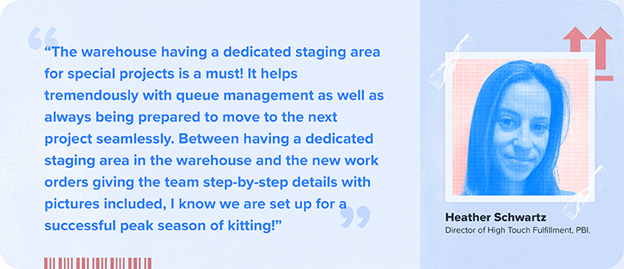
Alex Lewkowict overcame challenges managing kitting demands during past peak seasons by changing the kitting processes in the warehouse. One of his most notable changes was creating a dispatching station outside the pack line to streamline the packaging process.
Additionally, he constructed a more efficient pick wall using three shelves and 17 SKUs to handle the volume effectively. This allowed for quick replenishment of inventory behind the pick wall and placement of products in a temporary pallet location for easy access.
As a result, up to 500 items per hour were processed, and the need for an additional picker was eliminated. With Alex's approach to identifying and addressing bottlenecks, kitting processes at One23 Fulfillment have a near-zero error rate at peak season.
Identifying essential skills can make or break a company's success. For example, Alex flew 10 people out from his Palm Beach warehouse to assist Las Vegas with the sudden surge in demand, exemplifying the importance of adaptability.
By recognizing the strengths of the East Coast warehouse and shifting resources accordingly, Alex was able to maintain a 95% success rate in fulfilling orders within 24 hours. This kind of strategic thinking is essential in navigating the ever-changing landscape of modern business.
From safety protocols to customer service, employees should be equipped with the knowledge and skills to handle various situations. Properly trained staff can uphold the company's standards, minimize risks and ensure the satisfaction of customers.
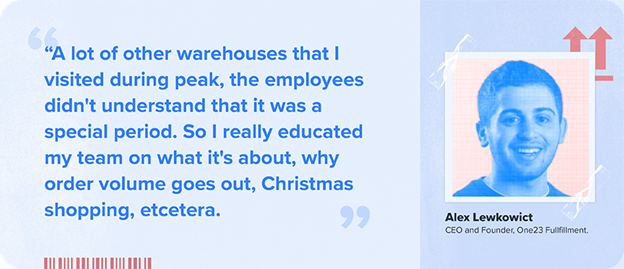
Communication is critical, as Alex noted after visiting other warehouses where employees didn't understand the significance of the peak season. It is crucial to ensure that your team is fully equipped to handle the increase in volume while still providing top-notch service.
As we've learned, don’t make drastic changes during peak season. You want to do your best to avoid bottlenecks, delays, and damages during this time. Kitting is huge for your clients, and knocking it out of the park is essential. You can optimize your kitting process and increase transparency with technology like:
The combination of mobile carts and barcodes or RFID tags with an inventory management system can significantly expedite the process.
Effective kitting strategies are critical for managing supply chains during peak seasons. One such strategy that has proven successful is Just-In-Time (JIT) kitting. By assembling kits in the warehouse and delivering them as needed, businesses can be more responsive to demand while keeping inventory levels low. This approach can also streamline processes and make it easier for 3PLs to adapt to changing circumstances.
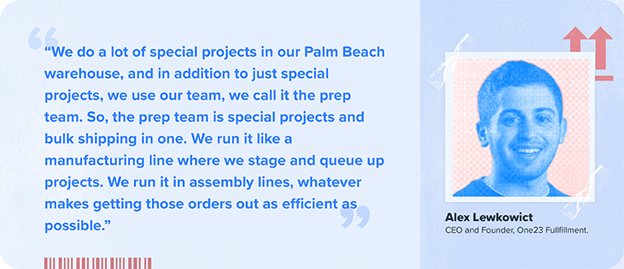
Automating your kitting system helps you use your warehouse space and resources better and leads to faster product completion and delivery. An automated system eliminates the guesswork for your pickers and packers, ensuring they can complete their tasks quickly and accurately every time.
ShipHero's WMS automation is a straightforward way to automate your warehouse.

Once the pressure of peak season ends, start thinking of reverting changes made to your warehouse during the peak rush.
This means moving items that were temporarily placed closer to packers back to their original positions and considering whether kitted items need to be disassembled and put back into their original inventory areas. Strategic reorganization of your warehouse layout through redesign is a big undertaking, but it is necessary for adapting to ever-changing market demands.
Kitting requires strategic planning and thoughtful execution, considering preparation for items like warehouse layout, employee training, automation rules, and strategic reorganization. Following our advice, you can make this peak season a successful experience.
You now have all the tools to effectively streamline your kitting services for peak season. You can ensure that the process runs smoothly with hard work and dedication. Take charge of your success and start taking action now. Don't let this opportunity slip away; make this your most successful year yet!
Staying ahead of the curve is crucial in the fast-paced third-party logistics (3PL) world. That's precisely what 360Pro Fulfillment, a rising star in the fulfillment industry, achieved by teaming up with ShipHero. In this blog, we'll dive into their journey and explore how ShipHero's innovative software solution turned their challenges into triumphs.
Founded in 2021, 360Pro Fulfillment is a three-person team with big dreams. Their mission? To provide top-notch 3PL services that streamline supply chain operations and put smiles on their clients' faces. In a recent chat with Sean Doherty, Director of 360Pro Fulfillment, we uncovered their unwavering commitment to customer satisfaction and innovation. With a dynamic team like theirs, 360Pro Fulfillment is undoubtedly one to watch in the coming years.
Before the ShipHero partnership, 360Pro Fulfillment was entangled in a web of frustration. Their previous 3PL software provider left them dealing with inventory discrepancies and needing better process alignment. They needed a game-changer, and it came in the form of ShipHero.
"Sitting in the client seat, we wanted a different system - and then getting to know the other side of that equation where we're the 3PL. I think I have a much different understanding of the system compared to what I did with Shipstation." -Sean Doherty, Director of 360Pro Fulfillment.
ShipHero didn't just solve their problems; it set them up for success. They received a comprehensive suite of services, including 3PL software, client portals, and seamless QuickBooks invoicing through CSVs generated by ShipHero. Even as a remote owner/operator, Sean found the platform incredibly user-friendly and intuitive. And let's not forget the mobile app for order fulfillment, a real game-changer!
But it didn't stop at the ease of use. ShipHero offered invaluable support in onboarding and connecting new clients. This made transitions seamless, fostering better collaboration and a smooth learning curve. Their tech support was top-notch, ensuring quick issue resolution and boosting overall satisfaction.
“One of the most attractive features was the onboarding that was offered. We had weekly calls, and it was a really great introduction. Then, between calls, I could access the different videos and articles to bring myself up to speed.” -Sean Doherty, Director of 360Pro Fulfillment.
Thanks to ShipHero, 360Pro Fulfillment has expanded its client base and improved collaborations. ShipHero's resources empowered Sean to guide clients through integration and connection processes, providing real-time data access for informed decision-making.
Sean's ambitious goal of reaching one million orders annually suddenly became more achievable as ShipHero proved its mettle during significant events, like a Good Morning America promotion that triggered a flood of orders.
"Have had a goal now to get to 1,000,000 orders on a yearly basis, and that was set because USPS tells me our next price break would be at a million orders. So we haven't reached it yet, but I've always been fully confident that we will get there." -Sean Doherty, Director of 360Pro Fulfillment.
360Pro Fulfillment is a staunch advocate for ShipHero, citing its user-friendly interface, responsive tech support, and robust resources as key strengths. The platform has been the linchpin in their global scaling journey, fortifying their position in the fulfillment industry.
As 360Pro Fulfillment grows, its strategic approach to order fulfillment will revolve around ShipHero's software. This includes delving into bulk shipping and mobile picking features to enhance results and performance.
"Our team is much more a Bulk Ship mentality team. They really like using the Bulk Ship feature and printing through the desktop. They have fun with the mobile app and they're all able to use it." -Sean Doherty, Director of 360Pro Fulfillment.
360Pro Fulfillment's journey is a testament to ShipHero's transformative power. They've achieved seamless and efficient fulfillment services with a user-friendly interface, a reliable support team, and nifty features like Bulk Ship and PostHero. If you're in the 3PL game and seeking a software solution that simplifies warehouse operations and ensures accurate fulfillment, ShipHero should be on your radar.
ShipHero isn't just a partner; it's a catalyst for growth and efficiency in the dynamic third-party logistics world. Don't miss out on the transformation – take your fulfillment game to the next level with ShipHero.
Third-party logistics (3PL) is one of the ways that a company can outsource order fulfillment. An eCommerce order fulfillment process starts when a customer submits the order and finishes when the product reaches their door.
What seems like a simple process can become quite complex depending on the storage location of your company’s inventory, the customer’s location, the size of the order, and the timetable for delivery. It becomes even more complicated when you factor in the potential for returns.
Suppose you can’t handle your eCommerce fulfillment in-house. In that case, it’s probably time to outsource and let a third-party logistics (3PL) company take over.
Here’s a breakdown of what you can look forward to while reading ShipHero’s Guide to 3PLs:
Give a listen: Our newest podcast, PalletSide Chat has a few episodes that directly cover 3PLs. Take a listen here!
When preparing goods for shipment, the packing station is a crucial stage that requires careful attention to detail. Optimizing packing flow and station setup ensures accuracy and speed, thus reducing mistakes and improving the overall efficiency of your fulfillment operation. This article will discuss the importance of packing station setup and flow in successful order fulfillment.
We recommend following a few basic principles.
Watch one of our informative videos where our CEO, Aaron Rubin, shares valuable insights on setting up a successful packing station - right here! Some principles he discusses include minimizing touches, maintaining one-direction flow, and avoiding the use of keyboards and mice.
Determine the primary goal and select the appropriate tools and materials. If you're working at a shipping station, your tasks may include combining orders, performing final quality checks, packaging, addressing and labeling, generating a manifest, and staging.
You can develop a packing station tailored to your requirements by organizing and defining these tasks. Planning final checks to ensure the products are of the highest quality is essential. Identify the locations where the inspections will occur and devise a strategy to manage damaged or defective items.
To optimize your fulfillment process, pay close attention to the flow of your packing station. Ensure that the products are moving clearly and consistently throughout each stage of the packing process. One way is by implementing signs or arrows dictating the proper directions. Additionally, designing your packing station for a seamless transition between each step can lead to a more efficient work environment.
When setting up your workstation, consider how items will be received. Will they come in via a conveyor belt system, or will you need a manual or cart-based system? If you're using a conveyor belt, it's best to have a custom standalone workbench over it.
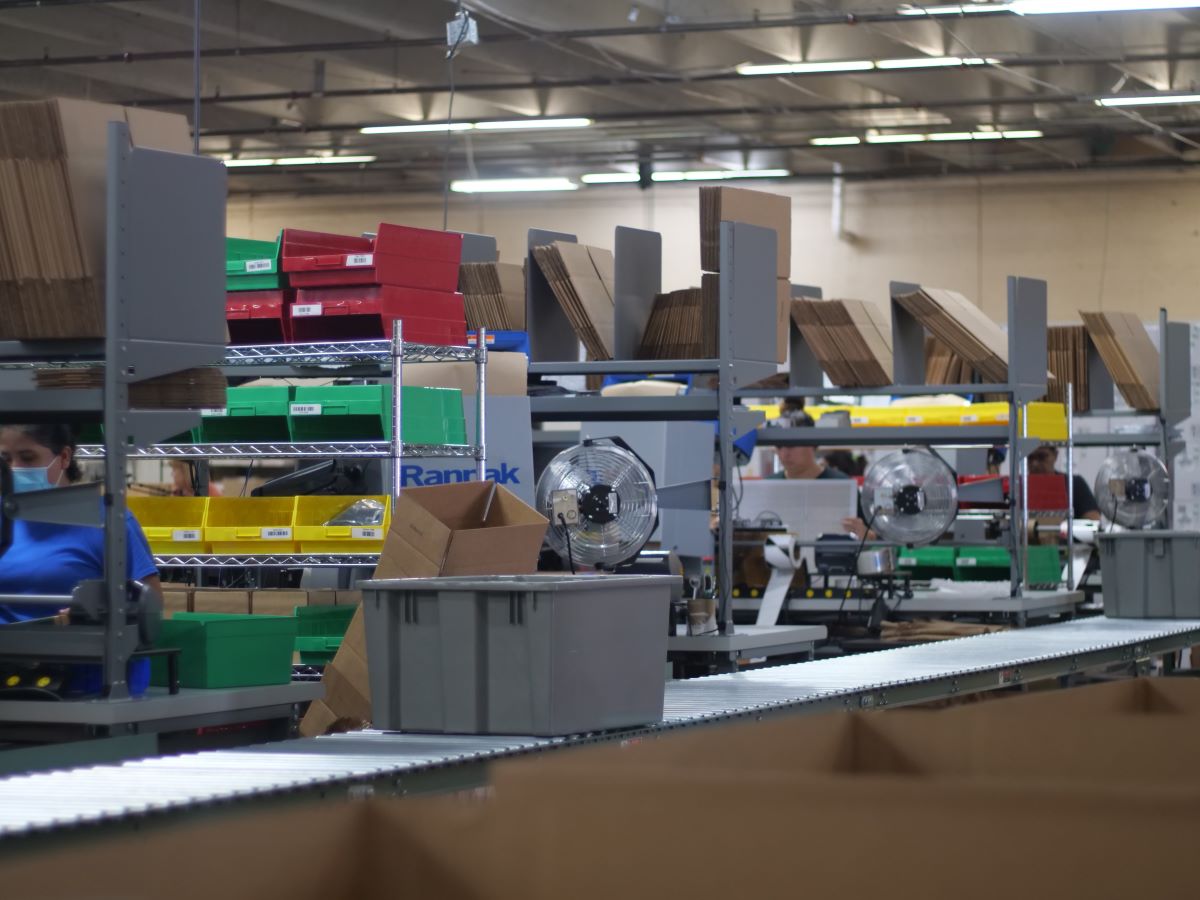
When setting up a packing station in your warehouse, there are two factors for you to begin with - proximity and materials. It's important to position the packing station close to the picking areas. This will allow for swift movement of items from picking to packing, minimizing delays.
When it comes to materials, prioritize the items used most often. Ensure your packing area has an adequate supply of commonly used items so your employees can keep the orders moving smoothly.
Having the appropriate equipment and tools to create a practical packing station is important. Some essential items to include are:
Once you have the appropriate tools and equipment, your packing station will be fully equipped to handle any shipment promptly.
When planning the layout of a packing station, it is crucial to consider ergonomics. Properly arranging goods and materials reduces the risk of work-related injuries, while worker morale and productivity can be increased.
The necessary tools and materials should be easily accessible to the packer and organized by the frequency and sequence of their use. Remember to include features such as optimal workstation height, sufficient lighting, and comfortable seating.
It's crucial to prioritize the replenishment process, which is often overlooked but can significantly impact operations. You can make the most of your replenishment process by following best practices and choosing the most suitable method for your specific needs.
Also, remember to have a solid emergency plan for replenishment needs. You can streamline this process by configuring triggers in your WMS for automatic re-ordering or using collaborative robots to assist with picking and restocking.
It's essential to maintain an organized and easily accessible stock of packing supplies and tools for your workers. Remember to replenish these items from behind the packing station to avoid hindering workflow in the front.

To guarantee accurate order fulfillment, utilizing technology that automates processes and integrates with warehouse management systems is essential. This can include automated sorting and routing of packages, which can help reduce errors and prevent bottlenecksWe strive to enhance the packing process with inventive solutions, including one-touch and hands-free pack stations. By minimizing the handling of items, we can optimize the process.
We provide adaptable pack stations that cater to different requirements.
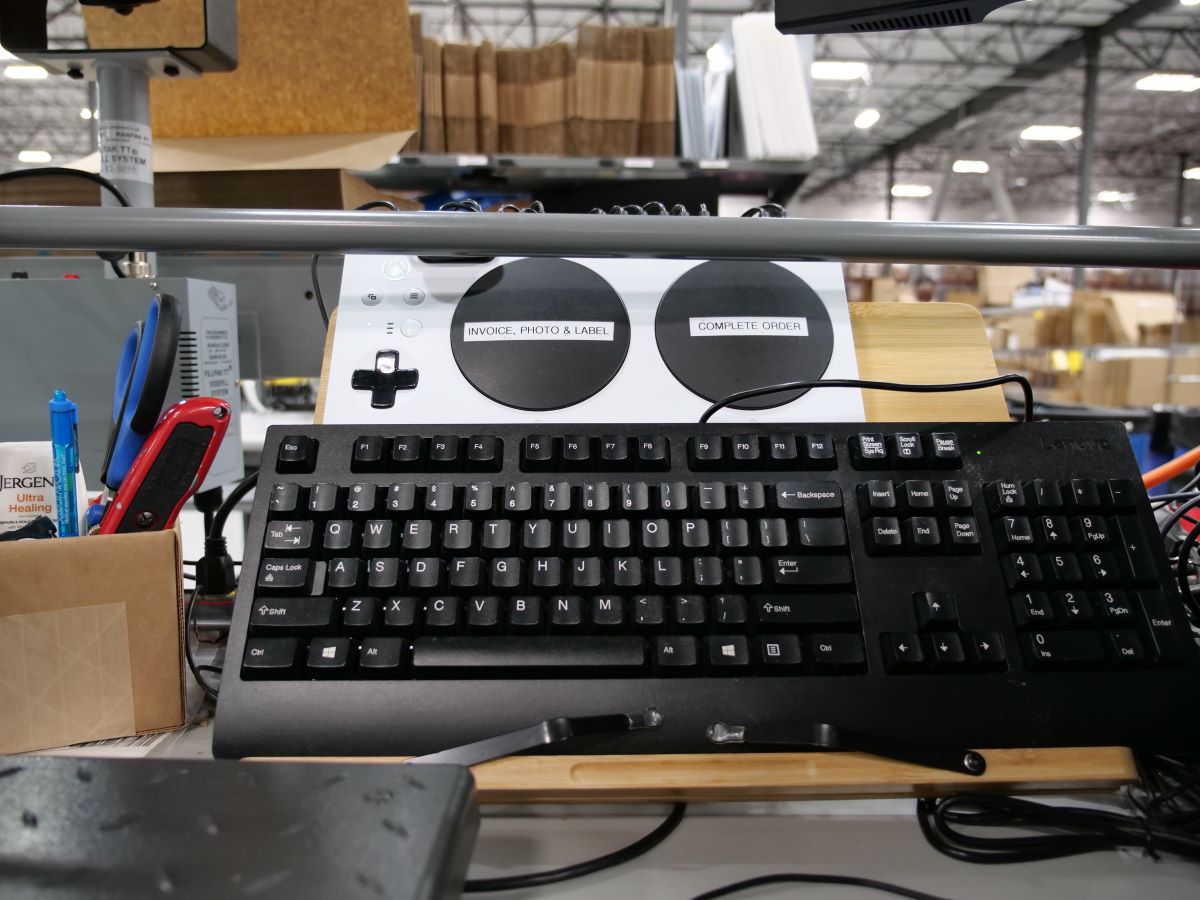
Handheld barcode scanners have undoubtedly changed the warehouse picking and packing game. However, there's no denying the lag between scanning barcodes and continuing work can be incredibly frustrating, adding unnecessary seconds to each order. To overcome this inefficiency, our team searched high and low for a non-wearable option that was both durable and cost-effective. Our solution came from an unlikely source: the gaming industry. With the Xbox® adaptive game controller, we found a way to streamline our packing stations without breaking the bank. When paired with the Logitech® button kit and some innovative open-source software, this controller has revolutionized how we pack orders.
As we have seen, the packing station is an important component of any order fulfillment process. It is essential to consider principles such as minimizing touches, maintaining one-direction flow, and avoiding keyboard or mouse use when designing a packing station setup. Furthermore, having the necessary equipment and tools available and being mindful of ergonomic design considerations facilitates accuracy. By integrating warehouse management systems with automation technologies, companies can ensure effective order fulfillment while minimizing errors. Ultimately, it's important to take stock of your current workflow and processes to identify opportunities for improvements that could give your organization an edge in the ever-evolving eCommerce landscape. Now it’s time to ask yourself: How does your packing station add up to the competition?
Pick methods and totes are essential when considering how best to approach warehouse management. The size, layout, and overall condition of a warehouse all play critical roles in determining which strategies can work optimally for enhanced picking accuracy and efficiency. In this blog post, we'll explore the pick methods we use at ShipHero, tips to optimize your picking, and best practices for tote organization.
As a warehouse manager, you know that pickers are the backbone of your operation. They are the ones who spend the majority of their time on the warehouse floor, selecting and passing off goods to packers. It's no surprise that the picking process can account for up to 55% of your operation costs. To minimize these costs, streamline the picking process as much as possible. With the right tools, your pickers can work more efficiently, making the process a breeze.
ShipHero's pick methods are designed to maximize efficiency and productivity. Utilizing the multi-item batch function, we pick multiple orders with different quantities of products into unique totes. This process streamlines the picking and packing process, saving you time and increasing your output, eliminating the need to revisit the same product location multiple times in a single shift.
As a result, pick rates are faster, and your business can scale more efficiently. Improved employee morale is another benefit, as workers are empowered to work smarter, not harder.
Picking accuracy and speed are critical for a 3PL, and while we may be biased, we suggest using ShipHero WMS for a smooth and precise picking process. The mobile app prompts you to choose a number of totes, and visual clues such as color coding make it easy to pick items for different orders. Scanners confirm that the right item is placed in the correct tote for each order. You can find an entire video walk-through on how we use multi-item batch picking right here!
When it comes to batch picking, single-item batches require a slightly different approach. Despite picking multiple orders, each order only contains one item. What sets it apart is that these items can vary in size and shape.
So how do you efficiently pick these orders? A cart with a bin and a tote barcode can come in handy. You can sort the smaller items into the bin, while the rest can go onto the cart. With this method, you can maximize your picking efficiency and ensure that the correct items get to their destinations.
When it comes to single-item batch picking, it's important to have a specific process to ensure orders are picked efficiently and quickly. While it may seem straightforward, there are nuances to consider. Our app is designed to guide users to the correct location and helps them scan barcodes to select the required items quickly. This method can help complete a high volume of orders in just a few minutes. Watch our video to see precisely how single-item batches work.
The location of your inventory storage, the type of shelving you use, and the location of your picking stations all affect accuracy and efficiency. Here are some simple tips for optimizing your picking process:
Efficient tote organization in the warehouse is crucial for companies to maximize their productivity. Totes are an excellent solution for transporting and storing items that vary in size and weight. They can also help streamline the picking and packing process with the pick-to-tote method. However, it's not just about having totes on hand. To truly master the organization of totes in the warehouse, you must also focus on effectively labeling and categorizing the items within each tote according to their bin location to minimize the risk of errors and optimize the workflow.
At ShipHero, we prefer plastic totes for their durability, stackability, and space-saving features. We also find them to be an excellent choice for these additional reasons.
If you're serious about warehouse organization, mastering bin location is crucial. The two most common methods of bin labeling are standard and serpentine rack labeling. With standard labeling, each rack, shelf, and bin gets a unique ID with numbers and letters reflecting aisle, rack, level, and bin. This method works well for straightforward warehouse layouts. However, if your warehouse is more dynamic, you might prefer serpentine rack labeling. It differs in that labeling follows a zigzag path up and down each aisle. Mastering bin location will help boost warehouse efficiency and accuracy regardless of your chosen strategy.
It's a good idea to follow industry standards when organizing your shelves. This will help things run smoothly and avoid problems. It can also prevent the need to constantly rename things and make it easier for people who pick items from the shelves.
A tote-picking system offers numerous benefits. One advantage is dedicating a picking function to a specific area. With totes that can easily accommodate a range of items, pickers can focus solely on getting the pick right without worrying about sorting or organizing their items in multiple boxes.
This reduces operator travel and the required movements, allowing employees to complete more orders quickly and efficiently. Using well-labeled totes, dividers, and bins to subdivide inventory makes picking and sorting through large quantities of small items easy, further increasing productivity. With a tote-picking system, operators can concentrate on what matters: picking.
Take a look at how your warehouse processes are performing, and continually strive for improvement. Quite often, utilizing pick methods such as batching multi-items or single-items, together with the proper tote organization, is what makes the most significant difference.
With ShipHero, you can rest assured that you're in good hands; our expertise ensures that your picking process is optimized for maximum efficiency and profitability. We understand that this is a big undertaking for any business owner--that’s why we provide many resources to make this transformation as seamless as possible. So, is your warehouse as efficient as it can be? If not, reach out to the ShipHero experts – we’ll be more than happy to assist you!
Efficient warehouse flow is crucial for any warehouse to run smoothly. A well-managed warehouse ensures products are received, stored, and distributed seamlessly. In this blog post, we’ll go over the basics of warehouse flow, from receiving to outbound packaging, and why optimizing each step is essential. Whether you’re a warehouse expert or a curious reader, this blog post will provide valuable insights into warehouse operations.
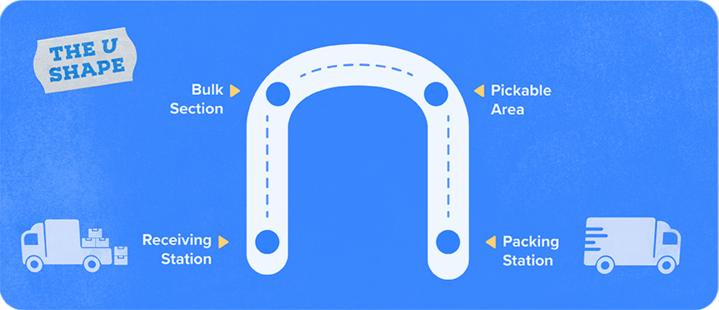
Most warehouses have a square or rectangular shape with receiving and outbound doors on one side, creating a U-shaped flow. There is usually ample space between the dock and receiving area, where products are sorted. Having more room than you need to avoid congestion or delays will come in handy.
Once products are ready to be received, they are taken to the receiving station. This can include fixed or mobile stations, depending on the volume of products being handled. Receiving is a critical aspect of warehousing, and nothing gets past the receiving station if it has not been checked or labeled. Items that pass inspection are ready to be put away, while non-compliant items are labeled accordingly.
The next step in warehouse flow is the bulk section. This is where the overstock pallets are stored until they are needed. From there, products move to the pickable area, where pickers select items for packing. As inventory is moved out of the warehouse, items are moved from the bulk section to the pickable area, where pickers can easily access them.
Pickers typically move around the warehouse with carts, selecting individual units from bins. Once all necessary items have been selected, they move to the packing station. This is where orders are finalized, labeled, and packed into boxes.
After preparing your packages, they will be taken to the outbound dock to be shipped. We typically use collapsible bulk containers for storing outbound items. Choosing a reliable shipping method is important to ensure safe and secure delivery. We recommend reputable options like USPS or FedEx.
An efficient warehouse layout is vital for a successful logistics operation. The layout plays a significant role in productivity, cost-effectiveness, and customer satisfaction, making it an essential factor to consider when setting up a warehouse. Let's look at the various aspects that an optimized warehouse layout can improve.
Understanding warehouse flow is critical to running a successful operation. Utilizing the U-shape flow model and optimized warehouse layout can provide numerous benefits, such as faster material transit time, enhanced productivity, cost optimization, and more. It’s also important to recognize the impact of technology on efficient fulfillment delivery and provide an environment that is safe for employees. Having the proper infrastructure makes a big difference in improving customer experiences and ultimately attaining business success.
If you want to visualize efficient warehouse flow, click here to watch our detailed walkthrough videos for further insights into best practices for warehouse operations.



.svg)