
.svg)

Let’s stay in touch with the ShipHero Blog.


.webp)
The ShipHero Model Context Protocol (MCP) connects supported AI clients directly to your live ShipHero data, so warehouse teams can ask questions and get specific answers from their own account. It is built for day-to-day operational checks, including inventory levels, open orders, shipment status, holds, returns, purchase orders, and exceptions. For ShipHero customers, it is available at no additional charge and runs on existing API credits.
Every order, shipment, inventory movement, hold, return, and purchase order creates data inside ShipHero. Your warehouse information is right there, but getting to it can be a slow, complex process.
Before the ShipHero MCP, answering a specific operational question often meant logging in, finding the right report, applying the right filters, exporting data, or asking the one person on the team who knew where to look.
Even when the answer was simple, like a quick inventory check, it could turn into a 20 to 45 minute task. A customer question could sit half a day while someone pulled the right numbers. That delay adds friction to the floor. It slows decisions. It keeps teams waiting on data they already own.
The ShipHero MCP gives supported AI clients secure, read-only access to live ShipHero data.
That means operators can ask questions in plain English and get answers from their actual account, not from a generic help article or static knowledge base. A chatbot can tell you where to find a number. The ShipHero MCP can return the number itself.
It works with MCP-enabled AI clients, including Claude, ChatGPT, Cursor, and Codex. Connect it once, authenticate access, and your team can start asking operational questions from the AI tool they already use.
The workflow is simple:
The MCP does not replace ShipHero. It makes the data inside ShipHero easier to reach when your team needs a fast answer.
The ShipHero MCP is designed for everyday operational questions, such as:
If the data lives in your ShipHero account, the MCP gives your team a faster way to ask for it.
Speed matters, but safety matters too.
The ShipHero MCP is read-only by design. It can retrieve information from your account, but it cannot create orders, modify records, delete data, or change warehouse settings.
That gives teams a practical way to use AI for operational visibility without risking accidental account changes. Operators can ask. Managers can check. 3PL teams can answer client questions faster.
The data becomes easier to use, while the records stay protected.
For founders, the MCP can turn a quick inventory check into a simple question.
For operations leads, it can surface shipment status, holds, exceptions, and low-stock SKUs without digging through reports.
For 3PL operators, it can help answer client questions faster, using live account data instead of manual follow-up.
The result is a faster way to reach the information already inside ShipHero.
The ShipHero MCP is available to all ShipHero customers at no additional charge. It runs on existing API credits, so specific questions help keep usage efficient.
To get started, visit developer.shiphero.com or contact your ShipHero account representative.
ShipHero MCP is a read-only connection between supported AI clients and your live ShipHero data. It lets users ask operational questions in plain English and receive answers from their actual ShipHero account.
A chatbot usually answers from fixed, generic information. ShipHero MCP connects to live account data, so it can return specific answers about your orders, shipments, inventory, holds, returns, and other ShipHero records.
ShipHero MCP works with AI clients that support the Model Context Protocol, including Claude, ChatGPT, Cursor, and Codex.
No. ShipHero MCP is read-only. It can query data, but it cannot create, update, or delete records in your ShipHero account.
No. The MCP is built for operators and can be connected from a supported AI client in minutes. Developers may use more advanced tools for deeper analysis, but most day-to-day users can work directly with the MCP.
Yes. ShipHero MCP is available to ShipHero customers at no additional charge and runs on existing API credits.
Transitioning to a new Warehouse Management System (WMS) is a high-stakes decision that often triggers concerns regarding downtime, data integrity, and workforce adaptation. As warehouses prepare for 2026 growth, understanding these common hurdles—and the technical solutions that resolve them—is essential for a successful migration. This guide addresses the five primary barriers to adoption and how a high-velocity infrastructure ensures a seamless transition.
Warehouse operators frequently hesitate to upgrade due to perceived risks that can halt operations. These challenges typically include:
To clear these hurdles, a structured implementation strategy is used to prioritize data density and entity clarity.
In the competitive eCommerce landscape, staying stagnant with manual workarounds is often more costly than the transition itself. Moving to a high-velocity WMS converts your warehouse from a cost center into a growth engine by providing Labor Efficiency and ROI through automated routing and reduced authentication friction.
Because the platform is built for the floor worker, features like Workforce Hero allow seasonal temps and new staff to be authenticated and productive in under an hour.
No. High-velocity infrastructure increases visibility by providing Total Real-Time Control. Managers can monitor exactly what is in the Hospital queue and track replenishment in real-time from a single dashboard.
Before going live, a ground-up audit is performed using cycle counting tools. The system's architecture ensures that every movement on the floor is synchronized with sales channels instantly, maintaining 99.9% accuracy.
Picture a packer at Peak Season. A box is in front of them, a product in each hand, and somewhere on a cluttered desk there's a mouse they need to find to confirm the order. They look down. They hunt. They click. Then they do it again. Thousands of times a day.
That moment of friction is small. But it is never just one moment. Multiply it across your entire pack line, across an entire shift, and you are looking at a measurable and largely invisible drag on your total throughput.
Tap-to-Pack is a purpose-built hardware controller designed by ShipHero to eliminate digital friction at the packing station. It connects via USB-C, requires no drivers or additional software, and syncs automatically with the ShipHero WMS packing app. This new system is now available at the ShipHero Store.
Instead of navigating a screen with a keyboard and mouse, packers execute every high-frequency command — such as selecting box sizes, printing labels, finalizing orders, flagging exceptions — with a single physical tap on one of eight programmable buttons.
Key specifications:
Most warehouses are running 2026 operations on 1990s peripheral standards. The keyboard and mouse were designed for spreadsheets and emails, not high-volume fulfillment. When used at a packing station, they create three compounding problems:
The problem is not your people. It is the tools you are asking them to use.
Tap-to-Pack introduces a "Rodent-Free" packing standard: a workflow where the packer's hands stay on the product, their eyes stay on the work, and the software fades into the background.
The device guides the packer through two feedback systems:
ShipHero customers running Tap-to-Pack are already seeing a 90% reduction in on-screen interactions and a significant increase in the number of orders packed per hour, without adding headcount or changing their warehouse layout.
One of the hardest challenges in fulfillment is absorbing volume quickly, especially during Peak Season, when temporary staff need to reach target productivity fast.
Because Tap-to-Pack's interface is physical and intuitive, there is almost nothing to teach. Pick up the product, follow the light, tap the button. New packers can reach target productivity in minutes rather than hours.
The system is also modular:
Whether you are a growing DTC brand or a high-volume 3PL, Tap-to-Pack is designed so your hardware never becomes a ceiling on what your team can do.
Tap-to-Pack is a programmable, industrial-grade hardware controller that connects to the ShipHero WMS and allows warehouse packers to execute packing station commands, such as printing labels, selecting boxes, and completing orders. All with a single physical button press, eliminating the need for a keyboard and mouse.
The device connects via USB-C and syncs automatically with the ShipHero WMS packing app. It is a true plug-and-play solution: no drivers, no background software, and no manual configuration required.
Yes. Buttons are configurable for a range of packing actions, including Print Label, Complete Order, Select Box Size, and the Hospital function, which flags a problematic order and keeps the line moving without stopping to resolve it on screen.
The system is fully modular. Connect up to two additional 8-button hubs to the Main Hub for a total of 24 programmable buttons, supporting even the most complex multi-step packing workflows.
Tap-to-Pack devices require ShipHero Packing App v1.0 or higher. The current release is v1.1.0.
Imagine running a warehouse where orders are picked quickly, inventory is accurate, and all operations run smoothly without any errors or delays. Thanks to Artificial Intelligence, this can now become a reality with ease.
AI is transforming warehouse management by enhancing efficiency, intelligence, and the ability to meet the rapid demands of today’s eCommerce-driven market.
ShipHero is pioneering this revolution with its AI-powered warehouse solutions, setting new industry benchmarks. This article explores ShipHero’s AI Picking feature, highlighting how it’s transforming warehouse management and enhancing operational efficiency.
The integration of AI technologies, including machine learning, robotics, and predictive analytics, is revolutionizing warehouse operations, driving significant improvements in efficiency, accuracy, and overall performance. These innovations are optimizing processes across various areas, from inventory management to order fulfillment. Below are the key benefits of AI in warehouse management.
A combination of AI technologies is shaping smarter warehouse systems to help revolutionize warehouse management.
ShipHero has taken AI integration to the next level with its AI Picking feature, designed to significantly improve warehouse efficiency. This feature automates the picking process, reducing the reliance on manual labor and enhancing productivity in ways that were once thought impossible.
Let’s dive deeper into how ShipHero’s AI Picking works and the advantages it offers.
AI Picking optimizes warehouse operations in two key ways:
The AI Picking feature delivers a wide range of benefits:
The transformative power of AI extends far beyond just picking. AI is also revolutionizing other aspects of warehouse management, driving improvements in operational efficiency, inventory management, and safety.
AI automates tasks, reducing errors and increasing speed. Automated sorting and real-time inventory tracking ensure accuracy, while real-time monitoring helps managers adapt and ensure timely deliveries.
AI plays a vital role in maintaining accurate inventory levels. By leveraging predictive analytics, AI can forecast demand and optimize stock levels, helping warehouses avoid both stockouts and overstock situations. This leads to better inventory management and fewer disruptions in supply chains.
AI-driven systems can monitor warehouse conditions to ensure safety and compliance with industry regulations. These systems can analyze warehouse data and predict potential hazards before they occur, proactively reducing risks and ensuring a safer working environment.
AI technologies are playing a transformative role in the supply chain and logistics sectors by improving efficiency, reducing costs, and enhancing decision-making.
These intelligent systems effortlessly manage supply chain processes by using data to optimize operations, predict trends, and automate routine tasks. This ultimately reshapes everything, from how goods are moved to stored and delivered.
The future of warehouse management looks promising with greater automation and efficiency, but future warehouse digitization brings challenges, such as high upfront costs and the need for skilled personnel.
AI-powered drones, autonomous robots, and IoT integration are smart warehouse technologies that are revolutionizing warehouse operations. Drones will deliver goods quickly, while robots automate sorting and transportation, thereby reducing the need for manual labor.
IoT and AI integration will enable real-time monitoring and optimization of operations. Smart technology in warehouses is leading to fully automated systems that are faster, scalable, and need minimal human input.
While AI offers immense benefits, businesses must also consider certain challenges. High initial investments in AI technology, data security concerns, and the need for skilled personnel are just a few of the hurdles that must be addressed.
However, with a strategic approach, companies can eliminate the challenges and embrace AI’s full potential to boost accuracy in picking and improve overall warehouse operations.
AI minimizes error by automating tasks like inventory tracking, order picking, and sorting, ensuring greater accuracy and efficiency.
Yes, AI-driven predictive analytics can predict demand, track inventory levels, and improve supply chain efficiency by forecasting needs with greater accuracy to help businesses stay ahead of trends and market fluctuations.
AI solutions are becoming more cost-effective thanks to cloud-based services and subscription pricing models. These options make AI technology more accessible to small businesses, allowing them to take advantage of its benefits without large upfront costs.




Do you want to monetize your brand? Do you want to engage your audience through real, non-digital means? Are you ready to become the InfluentrepreneurTM (Influencer + Entrepreneur) you were always meant to be?
Today, more and more influencers use private labelling - selling pre-made products under your own branding - to earn revenue and provide followers with a high-quality product that they can trust, because it’s yours!
As an influencer, you already have an online audience. And if you currently promote products on your page, then you also have a solid base of people who rely on your product recommendations. With this, becoming a CEO is as easy as:
There are many success stories from influencers turned CEOs, like our adorable canine friend Humphrey and his owner’s brand, Spotted by Humphrey. And companies like inKLOUT exist to help influencers design and market their own products.
But if you’re among the brave souls that want to tackle this journey yourself, this how-to guide will break down each of the three steps (especially the complicated logistics-side of things) to get you on your way to becoming CEO of your own e-commerce brand.
The private labelling business is very straightforward. You pick a product from a manufacturer, you brand the product, you sell the product, and you get the product to the customer’s doorstep.
You may have heard the term Dropshipping before, but this simply means that the manufacturer handles the final step for you and ships the product to your customers. We’ll get into this later on in Step 3...
So let’s get into the four steps to start your very own e-commerce private label business.
The most important thing to do when starting a private label business is to ask yourself the important questions, like:
Answers to these questions will help you pick a product that is relevant to your personal image and content.
The search begins. Depending on your theme or category, whether it’s fashion, beauty, wellness, etc., you want to search for trending products in your personal domain, or products that you personally use and believe in.
Avoid over-saturated items. You want to stay ahead of trends, not lag behind them. Whatever product you choose, make sure that there isn’t too much competition. Typically, products that have a smaller amount of reviews (<1,000) on Amazon or on the private label manufacturer website are good candidates, as long as they are high quality.
Pick Your Manufacturer. Search on sites like Thomasnet, Alibaba, AliExpress or Google. Simply type “*your product* private label” and see the list of results. Be sure to ask about cost of goods, shipping cost, and turnaround time for any order.
Here is a list of Private Label manufacturers based on category. And as mentioned earlier, companies like inKLOUT can help you design or select a product for your brand.
Note: Most manufacturers do only use cashier’s check or a money wire for payment.
Your company now needs a name, a logo, a product label, and a slogan. This is your opportunity to tell your story, so have some fun with it.
Company Name
It’s important to select a name that resonates with your brand and with your audience. It’s equally important to make sure the name you choose isn’t already taken, because you will want to be able to trademark your name for a site domain and social media.
Shopify has a Business Name Generator that you can use to search for and create your perfect business name.
Company Logo
When you think of logos, what comes to mind? The Nike Swoosh? The McDonald’s Golden Arches? Right from the start, these companies knew that a thoughtful logo has a huge impact on your audience.
If you already have a great idea for your logo, sketch it out! Then, if you aren’t already a master at Photoshop, consider using a Graphic Designer to create a digital copy of your logo. We also recommend using a professional because you will need multiple image sizes for product labels, social media, website, and more.
Graphic Designers can also help you brainstorm ideas for a logo if you don’t already have one. Sites like 99designs, Fiverr, and Upwork have loads of freelance Graphic Designers that can help you create your logo.
Product Label
Typically, the private labelling manufacturer creates the product label for you, once they have your company logo and name. Given the manufacturer, you can customize the labelling as much or as little as you’d like, so be sure to ask about the manufacturer’s capabilities during your search.
Company Slogan
“Just Do It.”-- Nike
“I’m Lovin’ It.” -- McDonald’s
“We Throw in Extra Parts to Mess With You” -- Ikea (not really)
Your slogan is your one sentence summary of your company and your brand. It should be something to grab your audience’s attention and showcase your company.
In the most simple terms, you have three options when it comes to shipping.
In-House
The manufacturer sends you the product directly, and you store it in your home ... or a warehouse, storage locker or shed. From there, you pack the product in a box/package and use USPS, FedEx or another delivery service to send it to the customer.
This is called in-house fulfillment, because you do it entirely by yourself, most likely in your house. This is the cheapest option, with just an upfront investment for a $200 label printer, but also the most time-consuming and the most difficult to guarantee quality service. Not to mention, you are responsible for handling product returns.
Keep in mind you are competing with brands that offer 2-day shipping and free returns. And when you start to sell a lot of products, you may find it hard to grow your business while spending all your time putting your products in boxes and taking trips to the post office.
Outsource
A company will store the product in their large network of warehouses and will ship the products on your behalf. For a set per-item fee, an eCommerce fulfillment company like ShipHero can help you deliver within two days, help you handle returns, and help you manage inventory.
Fulfillment-by-Amazon (FBA) is a popular example of outsourced fulfillment because you send your product to their warehouse, and for a per-item fee, Amazon will deliver your products.
Dropshipping
The factory/wholesaler will also pack and ship it directly to your customer, bypassing you entirely. This allows business owners to take a hands-off approach to the operation of their business, and customer satisfaction lies entirely in the hands of the manufacturer.
As a cheap and convenient option, dropshipping also results in lower profit margins, longer shipping times, and less control over your business. But CEOs that want to have a more hands-off approach will choose dropshipping for the minimum involvement required.
With a fully-branded product and a shipping method in place, all that’s left to do is sell.
Whether you want to spread your products to everyone or keep it exclusive is up to you and your brand. You can sign up for Instagram Shopping to post a New Catalog of your products, or you can connect to your website. Instagram allows integrations with Shopify, BigCommerce, Magento and WooCommerce.
Besides your social media channels, you can sell on platforms like Shopify and Amazon to reach a large audience, but Shopify lets you design your own website and gives you more control to build your brand.
The four steps to becoming brand owner and CEO of your very own eCommerce private label company. ShipHero created this influencer how-to guide to help you on your entrepreneurial journey, because ShipHero’s mission is to help businesses deliver their eCommerce.
We’ve shipped over $5 billion orders to date. Each day, more and more businesses are signing up with ShipHero to receive 2-day shipping, return handling and the eco-friendly shipping option with priority ground shipping.
.svg)
Objects! with ShipHero talks with the entrepreneurs, innovators and idealists that put items on the shelf and bring packages to your doorstep. From hot sauce to board games, toothbrushes to frying pans, startup side-gigs to enterprise players, join ShipHero founder, Nicholas Daniel-Richards, as he demystifies the manufacturing and logistics behind some of our most beloved household objects, with transformational ideas that are guaranteed to make you say, why didn’t I think of that?. This fast-paced and intriguing podcast covers thousands of travelled miles in less than an hour, so next time you’re standing in your local store and see a label that says ‘Made in <A Land Far, Far Away>’, you’ll know just how it got into your hands.
If you are a successful entrepreneur looking to grow or an aspiring innovator with an idea, Objects! with ShipHero provides a detailed, 360° exploration with the masterminds behind modern ecommerce and shipping solutions. So settle in, buckle up, and prepare to get objectified! ... no wait, not that. Get ready to say “I objects!”... we’ll work on it. Available on Spotify, iTunes and at this link.
Episode FORE of Objects! with ShipHero gets into the rough business of golf gloves, as we’re joined by Adam Karger and his company Scotch & Skins -- a brand dedicated to upping your golf game with premium leather golf gloves and other high-end golf accessories.
“True differentiation didn’t have to be about being so different from everyone else, but rather celebrating really good materials-- really amazing, natural materials. And this glove did that… and so we found a little bit of our voice.” -- Adam Karger, co-founder of Scotch & Skins
As a tech consultant by day, an entrepreneur by night, and a new father around the clock, Adam shares his journey of designing and manufacturing a high-quality golf glove from scratch, with absolutely zero prior knowledge of making or selling gloves.
So how do you start a business selling a product you don’t know how to make? Join us as we learn how Adam, armed with only a laptop and an idea, forged the right partnerships to create his brand Scotch & Skins, set to tee off in the spring of 2021. (Already nauseous of these golf puns? Don’t worry there isn’t any more).
Although he started as a novice in the manufacturing and design of golf gloves, Adam Karger is no amatuer in the golf world. Adam played Division 1 Golf at Colgate University and in his Senior year competed in five tournaments, posting a scoring average of 83.2.
Adam and his co-founder and friend, Bryce, had toyed around with the idea of vintage-style golf gloves for some time. With no prior experience, the road seemed long and challenging, and a lot of questions stood in his way like, how do you find a manufacturer? How do you design and get tech specs? How do you ensure quality? How do you source the leather?... to name a few.
But like all journeys, Adam began with a single, brave step towards his new future, after a couple beers with his friend of course.
“For me, it was a really interesting problem to solve. Because, I think when you’re building a company or a brand or a product, really it’s just solving a bunch of little questions, and the amalgamation of those answers turn into the go/no go of building a product or a brand” -- Adam Carger
Where did Adam turn for the answers to these problems? Why, Google of course. The start of Adam’s journey was typing phrases “glove designer” and “glove manufacturer” into a publicly available search engine… Here he proved that there is no secret to success other than persistence, perseverance, and a little drive. (last one ;-p)
Adam’s philosophy of “partner with people who have the superpowers that you don’t” led him to Greg, a glove consultant with years of experience making all types of gloves, except golf gloves. Excited to work on a new project, Greg agreed to consult and Adam began to grow his team.
The first superpower Greg brought to the table was his large network of manufacturers, which they were able to whittle down to a few choices and eventually settle on a Connecticut-based leather manufacturer.
Currently, Adam’s home will be the fulfillment hub due to the minimum required investment and full control of the packing and boxing customization. In the spirit of partnering with people who have superpowers they don’t, Adam set the goal for his company to eventually work with a 3PL like ShipHero, because reaching that point means the company has gotten big enough to where order fulfillment takes up too much time and a 3PL partner is needed to help your business scale.
Golf gloves are typically made of natural leather or a synthetic substitute, so the question was which material was better for their business? With this first decision, Adam and Bryce decided that whenever they came to a similar fork in the road, they were going to take the path towards high-quality materials.
But, where would their journey’s excitement be without hitting the hazards early on? They wanted to use real leather, and golf gloves are typically made using Cabretta leather (not actually leather) because it is thin, form-fitting and “soft as butter”.
In hopes to stand out from this tradition, Adam and Bryce found an Australian distributor for kangaroo leather... and when the prototype was complete, they immediately realized their massive mistake. The kangaroo leather was extremely poorly suited for a golf glove, because the leather was not thin enough or flexible enough to be useful on the golf course. Luckily, they had a mulligan.
Their glove consultant Greg recommended UK-based Pittards, a top manufacturer of Cabretta leather with over two centuries of experience. A month after the kangaroo catastrophe, their next set of Cabretta leather golf gloves were a hole-in-one: thin, form-fitting, and supple. With this, Adam and Bryce realized that differentiating your brand doesn’t need to lead you down a difficult path; rather, choosing to celebrate really good materials is a way to differentiate in and of itself.
“We’ve evolved over time, but it makes you appreciate where you are when you think of where you started.” -- Adam Carger
Adam found that being laser-focused on their first product allowed them to bring one high-quality and thoughtful product to the market and helped them to determine their company’s manufacturing principles. They then applied what they learned to making their Cabretta leather ball markers and North American hickory alignment sticks with covers made from North American leather from North American tanneries. How boujee.
Officially teeing off in the spring of 2021, Scotch & Skins is currently going through the final process of creating sizes, finalizing logo design, and will go into full-scale manufacturing soon with their premium golf gloves and assortment of high-end golf accessories.
So remember... if the glove don’t fit, you must not have shopped Scotch & Skins.
And be sure to check out https://www.scotchandskins.com/ and join their email list to be notified of product release.
Have you been sketching the next big thing on the back of a cocktail napkin? Are you frantically Googling everything about it right now? Now, right now, is the time to make it happen. There’s loads of tools and resources available everywhere to convert the idea in your head into an OBJECT! on the shelf. All it takes is a little follow through. ⛳️
Sustainability has reared its beautiful head towards the supply chain industry, and started with its biggest polluter, ocean shipping. In what has been dubbed shipping’s decarbonization ‘moonshot’, a $5 billion proposal has been formally sent to the International Maritime Organization (IMO), calling for mandatory contributions from every shipping company in the world at approximately $2 per tonne of bunker fuel.
The proposal, backed by all major global shipping associations, aims to quickly advance R&D for zero-carbon maritime technologies and the development of working prototypes, as well as CO2 reduction projects in developing countries.
In a joint press release from nine of the world’s largest global shipping companies, they state “zero-carbon technologies do not yet exist that can be applied at scale to large ocean-going ships. A well-funded R&D programme, which the industry has agreed to pay for within a global regulatory framework, needs to commence immediately under the supervision of the UN IMO.”
Since the European Parliament voted to include the shipping industry in their 2022 carbon market, and also backed a -40% greenhouse gas efficiency target to be reached by 2030, the US and China have also been evaluating similar emissions trading schemes.
Shipping associations hope that this proposal will curtail regional legislation efforts that would impose higher carbon taxes and more stringent regulation. Some environmental groups have claimed that this “moonshot” and $5 billion figure is much too small, and merely a tactic to avoid government interference
Yes, it is. With this proposal, the shipping industry must pay, one way or another, for their carbon footprint. It won’t be long for the spotlight to shine on the rest of the supply chain, and it is put under the same scrutiny as shipping. The proposal backers hope to get it ratified at the next IMO’s Marine Environment Protection Committee (MEPC) later this year. If you haven’t already looked at the sustainability of your supply chain, now is the time.
On Wednesday, the final version of President Biden's $1.9 trillion coronavirus relief bill (AKA the American Rescue Plan Act) was approved by the House and sent to Biden’s desk for signature.
The American Rescue Plan will send $1,400 in direct payments to those with an annual salary up to $75,000, and it also includes:
Aaahhhh, sweet economic stabilization.
Walmart announced that they will be repurposing one North Dallas location into a fulfillment center dedicated entirely to online delivery and curbside pickup, with no more in-store shopping. As a proverbial canary in the low-price coal mine, this could signal a permanent shift towards local delivery and curbside pickup over conventional brick-and-mortar shopping.
Continuing their effort to modernize and keep up with eCommerce culture, Walmart has begun offering free samples with their grocery pick-up and also for customers that sign up for the Walmart+ subscription service.
What’s trending on China’s online shopping platform Taobao? A statue of Trump as Buddha with the slogan 'make your company great again', of course! A Trump toilet brush is also among Taobao's top-rated Trump-related merchandise.
Quiz for the true golfers: Cabretta leather is obviously the key ingredient for golf gloves… but did you know it’s not actually leather? Learn with us on Episode FORE of Objects! with ShipHero the rough business of golf gloves with Adam Karger, co-founder of Scotch & Skins. And remember: if the glove don’t fit, you must check out Scotch & Skin’s line of premium golf gloves and accessories.
Success stories of influencers turned CEO exemplify the new American Dream. Just look at our adorable canine friend Humphrey and his owner’s brand, Spotted by Humphrey! Learn how to monetize your brand and engage with your audience with The Influencer’s Guide: How to Become a CEO Using Private Labelling.
Does Greta Thunberg haunt your dreams? Maybe it’s time your business starts cutting down its packaging and supply chain waste. Learn how with ShipHero’s Fulfillment Innovation Wheel series -- Sustainable Fulfillment.

Want to know the most effective and the most important step towards optimizing your warehouse output?
There are plenty of opinions on the internet from reliable experts, with “50+ tips for warehouse efficiency”, that cover resolving certain issues or improving minor practices, but we wanted to cut through the noise to find the ONE suggestion that will have the most impact on your supply chain, inventory management and order fulfillment.
We searched for the single pearl of wisdom amongst many best practices and our own warehousing innovations. Notable suggestions to boost warehouse productivity included:
While effective, each of the aforementioned suggestions rely on one major capability, and without it, your supply chain will NEVER improve productivity. So, what is the #1 capability for improving your warehouse productivity?
Simply put, your business must have the right tools in place to measure and access vital data relating to the productivity of your warehouse in each departmental area. The quality of the information you receive directly impacts how effectively you set realistic productivity goals and speed up work pace in a sustainable manner.
Picking, packing, and inventory replenishment are the three areas of focus when beginning to make systemic improvements to your warehouse. It’s important not to measure everything at once; rather, start by identifying your biggest cost-drivers or bottlenecks and address those first, such as labor hours, units of work, etc. In each area of focus, ask yourself the following questions:
Picking is the process of walking through the warehouse and selecting products that constitute one or more orders. You can begin measuring this process by asking the following:
Packing is the process of verifying the order contents and putting the ordered items into the shipping package. You can begin measuring this process by asking the following:
Inventory replenishment is the process of restocking bins with products so that orders can be picked, and errors in replenishment can result in serious cascading bottlenecks in the picking and packing processes. You can begin measuring this process by asking the following:
The most efficient supply chains run on information. The key to improving warehouse productivity is asking the right questions, measuring the actual outcome, and planning for incremental improvements. Without measurements and benchmarks, you will be stuck reacting to issues, rather than proactively planning and systematically working towards a better warehouse.
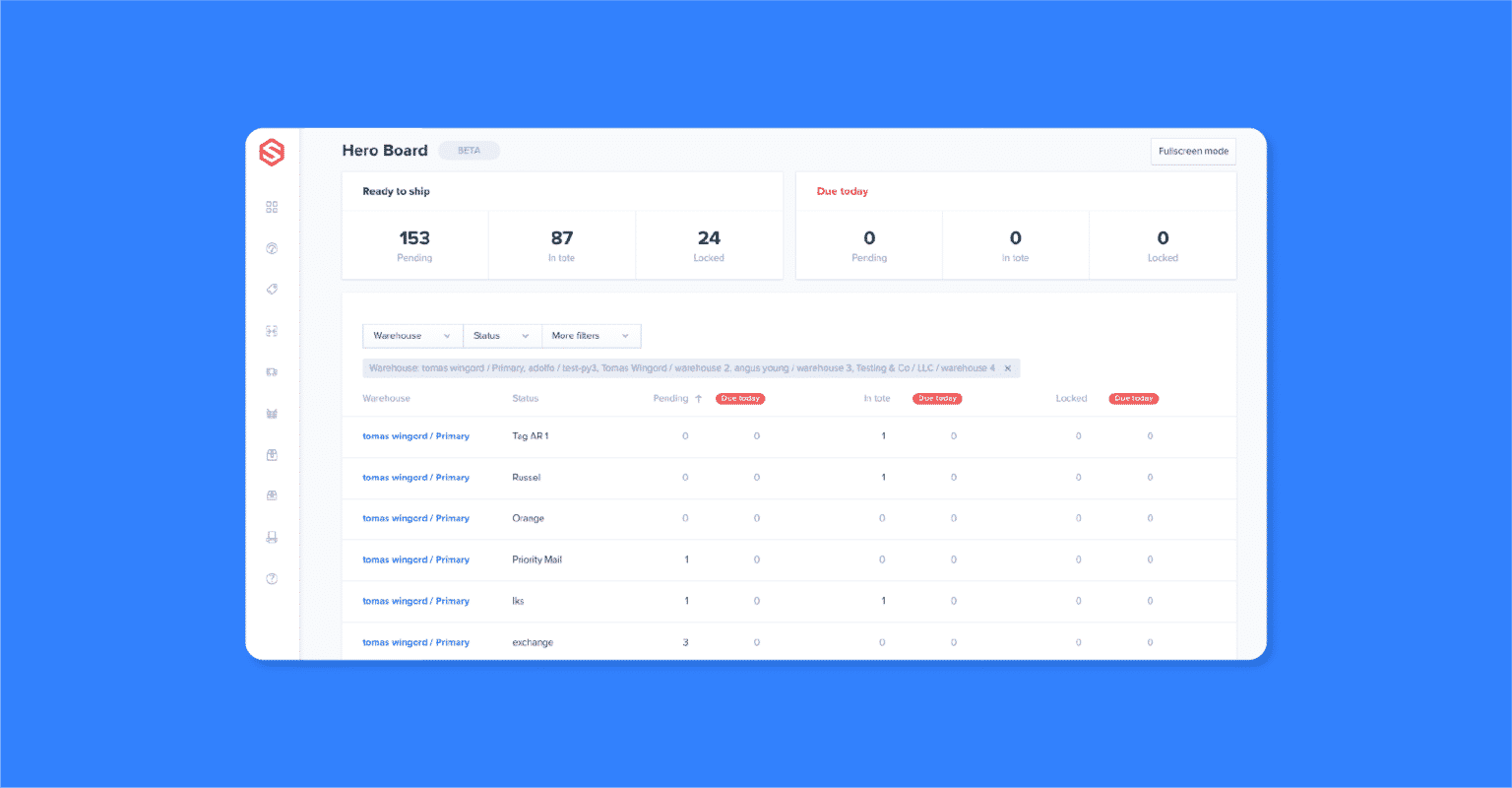
ShipHero WMS constantly strives to provide you with the information that you need to make intelligent decisions regarding your warehouse management and order fulfillment. That’s why we built the HeroBoard -- a personalized dashboard designed to give an at-a-glance view of your fulfillment operations.
The HeroBoard overview dashboard refreshes every 30 seconds for real-time monitoring of your shipments. Want to get into the specifics? HeroBoard users can easily drill down into specific order information for better customer service and flexible decision-making.
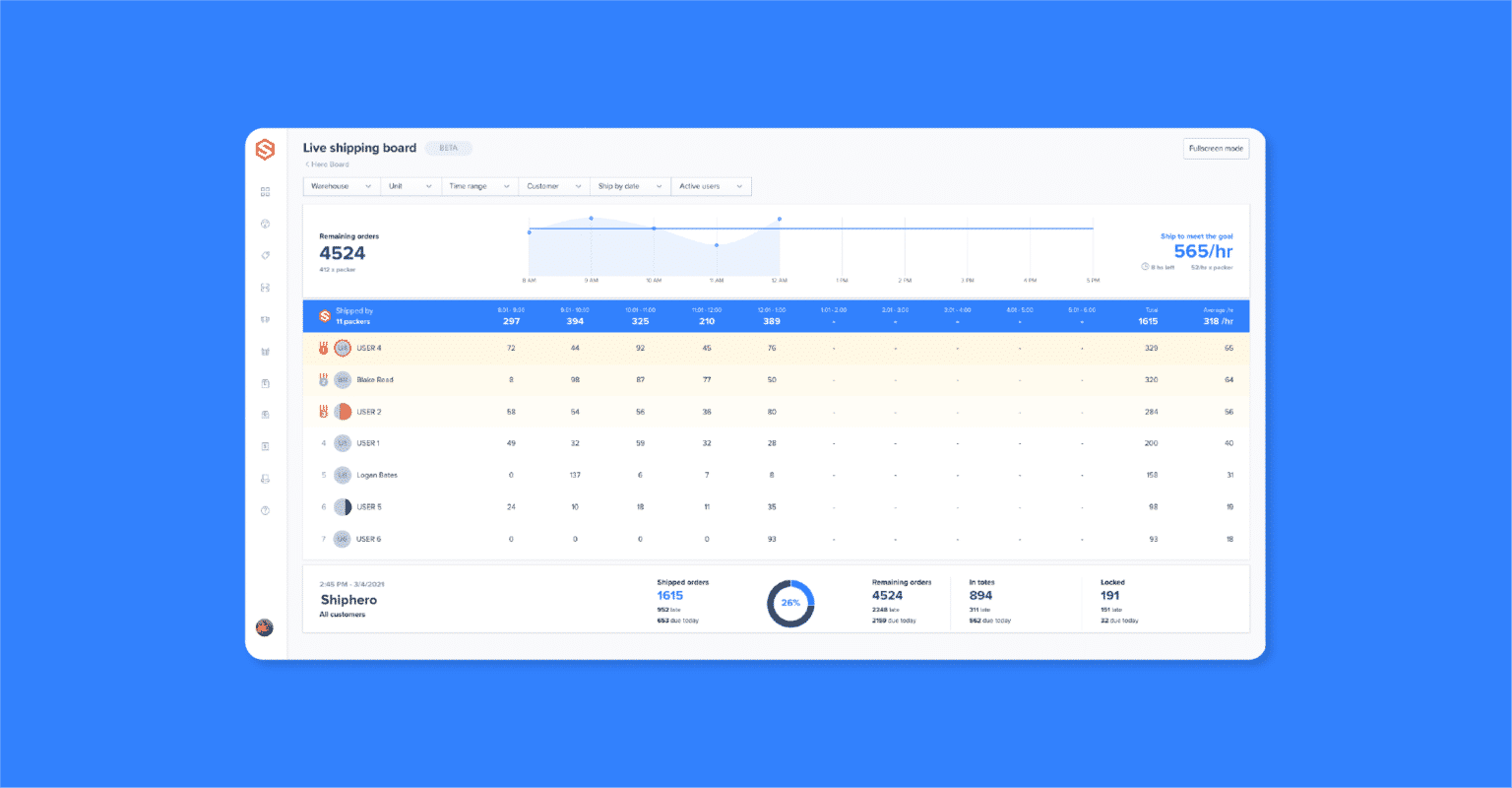
The Live Shipping Board is the newest update to the HeroBoard that gives you a view into the stats for each packer, remaining orders, and more!Schedule a demo today.
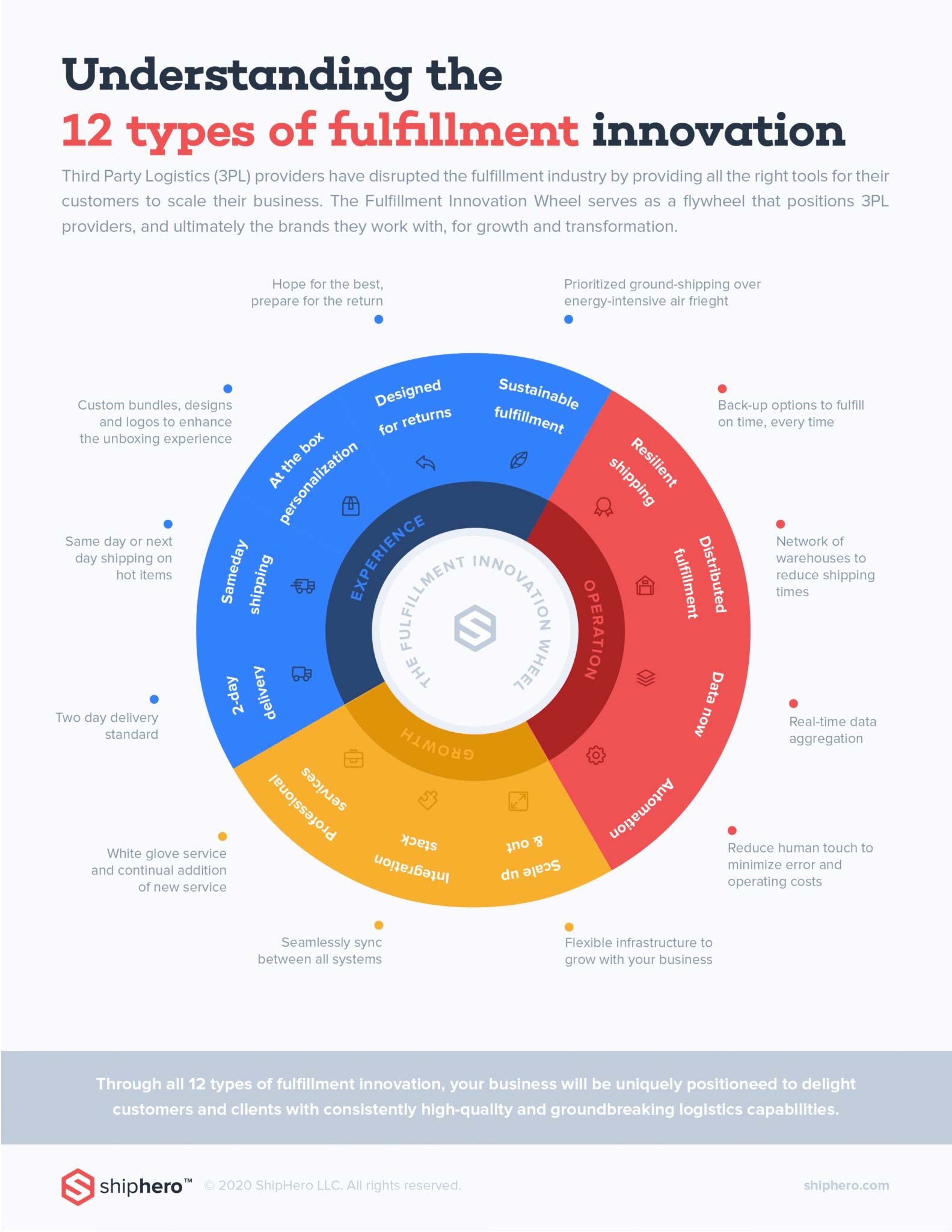
ShipHero recently launched The Fulfillment Innovation Wheel to help 3PLs understand what capabilities and service offerings they need to implement in order to be successful and to help online retailers and brands choose which 3PL is right for them by allowing them to ‘check the boxes’.
The Fulfillment Innovation Wheel listed a set of twelve (12) capabilities that fulfillment providers and logistics companies should implement to continually delight their customers and push themselves towards greater success and innovation.
The twelve capabilities are:
In this article, we will be diving into Capability #7: Distributed fulfillment.
And be sure to stay tuned for future articles as we deep-dive into each capability.
Quiz for the e-commerce gurus out there. Which of these two options makes more sense from a business standpoint: Deliver your products from nearby OR deliver your products from far away? Take your time, we all don’t have MBAs.
Businesses who want to reduce delivery times and keep costs low will opt to deliver their products from a nearby location, but as an online business reachable by customers all over the United States, how is that possible? The solution: Distributed Fulfillment.
Distributed Fulfillment is the secret to how the e-commerce giants can deliver free 1-2 day shipping nationwide, and the concept is simple: intelligently bring inventory and fulfillment centers closer to your customers.
The advantages of distributed fulfillment are:
Reducing the distance between fulfillment centers and your customer’s doorstep leads to lower costs, faster delivery times, and reduced carbon emissions. This also allows your business to offer free shipping or guaranteed two-day shipping, which are huge online purchase drivers and pretty much the standard in today’s market.
With the right tools in place, managing your inventory is simple. Warehousing companies and fulfillment providers like ShipHero offer Warehouse Management Software (WMS) to give business owners complete oversight and control into their supply chain, so that they can make intelligent decisions on where to store their inventory and how to ship their product.
Don’t be at the mercy of mother nature or shipping bottlenecks from traditional carriers. Distributed fulfillment gives you a diversified and robust supply chain that you and your customers can rely on to ship, no matter the circumstance.
For all these reasons, e-commerce giants like Amazon and Walmart are successfully employing this logistics model for e-commerce fulfillment and retailers that piggyback off of their distributed fulfillment network seeing fantastic results.
For in-house fulfilment (i.e., creating a fulfillment network yourself), a high amount of initial capital is required to lease warehouse space across the country, distribute the inventory, then continuously monitor and optimize your inventory management and order fulfillment.
Luckily for small to medium-sized businesses looking to compete, 3PLs and outsourced fulfillment providers like ShipHero are creating massive distributed fulfillment networks around the country, and are ready to deliver your e-commerce.
Our customers love that ShipHero can easily offer 2-day shipping anywhere in the contiguous United States at simple and transparent pricing. We are also able to prioritize ground shipping, making for a resilient and eco-friendly supply chain. We attribute this success on the Fulfillment Innovation Wheel to Capability #7: Distributed Fulfillment.
Stay tuned next as we cover Capability #7: Resilient Shipping! Viva la Resilience. ShipHero.
Learn more about ShipHero's industry-leading warehouse management software.
Today we venture deep into the minds of our customers to answer the age-old, controversial marketing question: does offering a “free gift with purchase” actually do anything?
Spoiler alert: yes, it does… but it doesn’t have the effect that you may expect.
Using case studies and scientific research, let’s look at the psychological effects of the free gift with purchase (GWP) to determine if it’s right for your business, or if there are more effective promotional campaigns.
First, why do companies provide a free gift with purchase? What are they trying to achieve?
Online retailers that offer a free gift with purchase (GWP), which is less than 50% of companies, believe that the added value of a free gift will inspire repeat purchases, increase brand loyalty, and stimulate social and word-of-mouth advertising. Companies that offer free GWP include:
Kinder (confectionary) -- free toy
Eileen Fisher (apparel) -- free organic ditty bag
Bentley (cologne) -- free chrome Bentley key ring
And more...
These case studies have been reported by companies that specialize in creating customized GWP for their clients, but do the benefits hold up under scientific scrutiny?
The answer... yes, but not how you’d expect.
As retailers constantly innovate promotional offers to provide more value to their customers, the “two items for the price of one” sales method has been framed using two distinct promotional tactics: the free gift, and the bundle… and it turns out how you frame the exact same deal actually has different psychological effects on your consumers.
For example, if your business sells household supplies, your promotions could be either:
Studies have shown that bundle offerings and free gift offerings tend to influence the perceived value of products themselves, rather than their opinions of the company offering the gift. Also, the promotional frame has an impact on product return rates!
Effects of Gift with Purchase
With a free gift promotion, the “free item” or “gift” is perceived as less valuable by the customer, while the focal item is valued more. Therefore, customers are less likely to buy the free item after the sale, but more likely to purchase the main item.
Of course, the likelihood of repurchase is directly related to how effective the gift promotion is in increasing the value of the main item, so if that value increases to surpass the customer’s intrinsic repurchase threshold, then they will buy again.
Additionally, with a free gift promotion, customers are less likely to return an item, because the perceived loss of giving back a “free” item is too high.
Effects of Bundle
In a bundle promotion, the opposite is true. The main item is perceived as less valuable, while the bundled item is valued more. Therefore, customers are less likely to purchase the main item as a single item, but the supplementary item is more likely to be purchased as a standalone
With a bundled promotion, customers do not mind returning an item included in a bundle.
TLDR; offer free gift promotion if you want to reduce return rates and sell more of the main product at the expense of the gifted product; offer a bundle if you want to sell more of the supplementary product at the cost of the main product.
The proven effects of “free gift with purchase” promotion are not proven to inspire net-increase in repeat purchases; rather, the promotion should be used to increase/decrease the perceived value of one focal item at the expense of a supplementary item. Also, the free gift promotion reduces actual return rates as well as the customer’s desire to return.
HOWEVER, these studies imply only the probability that customers purchase again, and this likelihood varies based on the personalization and relevance of the free gift and/or bundle.
That’s why there exists a vast amount of consumer data analysis tools and companies that make large profits off of customized gifts with purchase.
There does exist a customer group where the free gift with purchase has had immense, proven success: with products geared towards children.
You’re certainly familiar with the Happy Meal toy, which was so effective at marketing to children that McDonald’s was sued by a California mother in 2010 who claimed that the fast food chain used toys to unfairly attract children.
In the listed case study above, Kinder successfully offers a free child’s toy with purchase of chocolate, and there exist highly lucrative marketing teams like Kidoz that offer safe advertising and Gift With Purchase creation for children.
The positive results from a child-facing GWP campaign stem from two main factors:
We’re not saying all GWP campaigns should be geared towards children, it’s just that these are the only ones with a proven record for having net-increases in repeat customers and word-of-mouth advertising (they’re lovin’ it).
E-commerce has certainly been in the spotlight this past year, but who has really been stealing the show? Thieves, of course. Package theft is on the rise, as illustrated in a recent report, which showed that approximately 43% of Americans reported having a package stolen, a 7% increase from 2019. Of these theft victims, 64% of them say they’ve had packages stolen more than once. What’s to account for the rise in theft?
Approximately 59% (+5% YoY) of Americans receive a package at least weekly, and 10% (+5% YoY) receive a package daily. That’s way more packages being left on the doorstep, and although the average value of the items has decreased, this does not seem to stop porch pirates from throwing up their hood and grabbing what they can.http://https://www.youtube.com/watch?v=a_TSR_v07m0ICYMI: Watch the amazing Glitter Bomb 2.0 vs Porch Pirates video
“YOU ARE GOING TO PAY FOR THIS!” you may have exclaimed to the heavens when you watch a thief grab your $3 toe clippers on your home security system. “But, who actually pays for this?”, you may have wondered as you pace around with your hawk talons clacking against the hardwood floors. (true story)
Well the answer is, if the shipper says that the package was delivered and the buyer states that it was not received, the seller is no longer liable. However, in most cases of a stolen package, the retailer or seller issues a refund or agrees to replace the item to preserve their customer experience. Amazon’s A-Z Guarantee program pretty much guarantees that purchases made from their retail partners will almost always be refunded or replaced if the package goes missing.
Some businesses may ask customers to file a claim with the shipper before issuing a refund or replacement.
For sellers, traditional shipping carriers such as UPS, USPS, and FedEx offer optional shipping insurance for a fee; however, this only covers so much. FedEx caps their liability at $100 and will only increase this if the package is packed and shipped at a FedEx location. Even then, it only increases to $1,000 for items like jewelry, artwork, collectibles, and antiques.
Ultimately, the brands are responsible for making sure that their products reach their customers. So besides installing guard dogs as a nice ‘gift with purchase’, the most effective way that brands can combat package theft is to offer customers more ways to receive their products. The most common have been curbside pickup and local delivery. You can also schedule for in-person delivery and require signatures.
When deciding to outsource your fulfillment, be aware of your 3PLs Terms and Conditions surrounding stolen goods, and ask what your fulfillment provider can do. For example, in the case of stolen goods, ShipHero files claims with Carriers on your behalf, up to a certain value. Read more about ShipHero Fulfillment’s stolen goods FAQ here and our T&Cs.
According to the International Maritime Organization, international shipping contributes ~3% of annual carbon-dioxide emissions. To combat this, shipping companies seek to replace petroleum with a new fuel source, ammonia (NH3).
Why ammonia? Well… *deep breath in* this colorless fuel emits no carbon dioxide when burned, It’s abundant, it can be made using renewable electricity, water, and air, both fuel cells and internal combustion engines can use it, it doesn’t have to be stored in high-pressure tanks or cryogenic dewars like hydrogen, and it has 10 times the energy density of a lithium-ion battery.
The only problem is that no shipping carriers today are equipped to use ammonia as a fuel source. But by 2024, Viking Energy is set to become the first shipping vessel propelled by ammonia fuel cells, powered by several Norwegian-based companies.
NASA successfully landed their Mars Rover, Wall-e -- I mean, Perseverance on the Red Planet last week. The videos of the landing immediately went viral, and in typically nerdy fashion, people began uncoding Easter Eggs hidden throughout the footage. In one such hidden message, the parachute was allegedly stitched in binary code that read “Dare Mighty Things”, a quote from President Teddy Roosevelt.
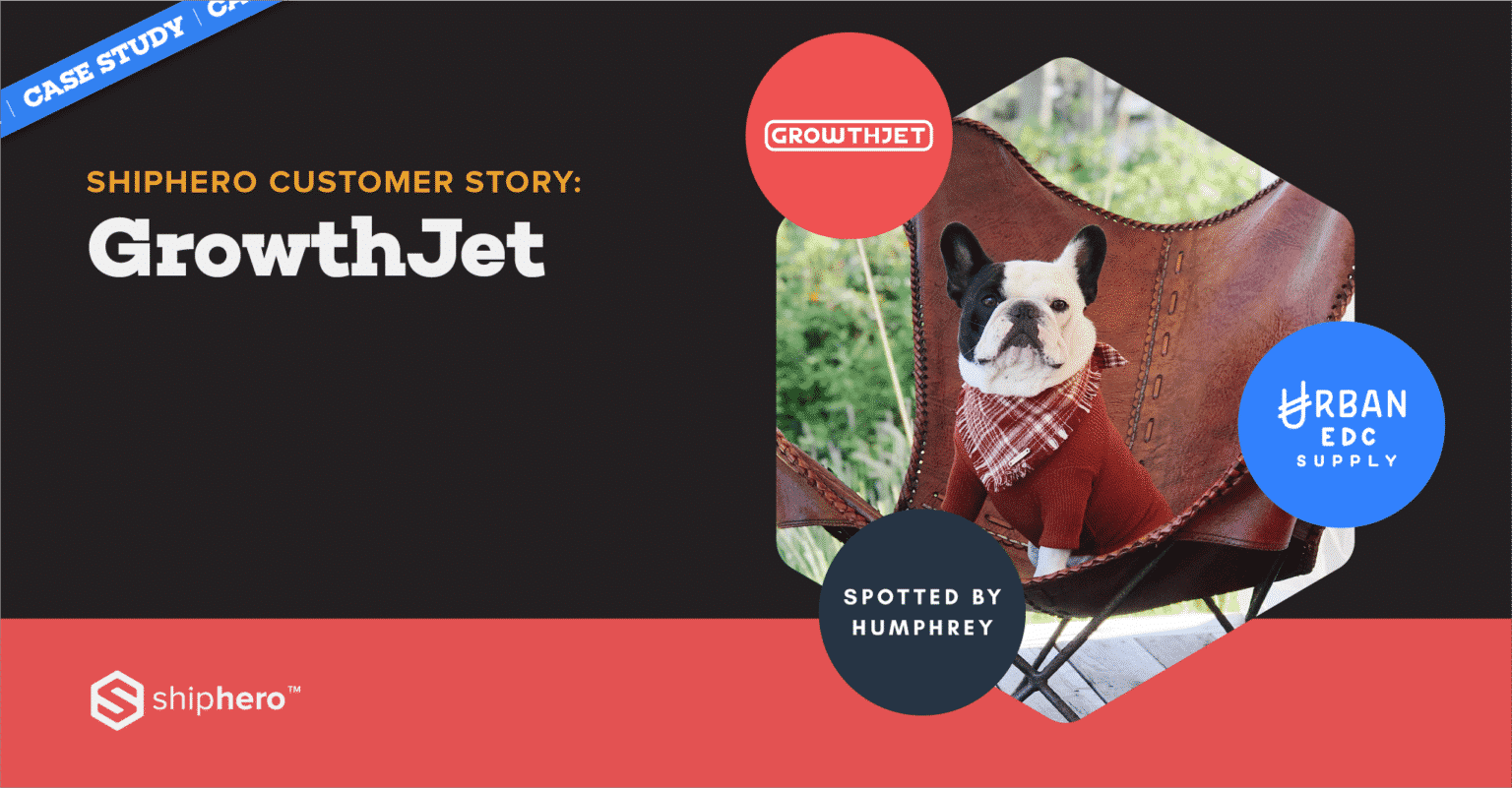
What would you do if your dog became an internet sensation? Well, that’s what happened with ShipHero customer Yong-Soo and his French Bulldog, Humphrey!
Spotted By Humphrey - “with its quirky name for a shop that has the personality to match” - is a community-driven online destination for dog parents around the world who are looking to find something special and unique for their dogs.
Learn how they turned Instagram fame to a successful ecommerce business with our newest doggone ShipHero Case Study.
Need a sick pump for your e-commerce business? Learn how the dietary supplement industry used three simple strategies to get bulging revenue gains of over 40% this year, outpacing overall e-commerce by 12%... and they say it’s “all-natural”.
These days, your products probably travel more than you do… But don’t be jealous, multimodal and intermodal fulfillment options are becoming more common as technology allows for seamless communication between carriers. On our Shipping Methods Explained series, we deep-dive into Multimodal vs. Intermodal fulfillment options, so you can determine if it’s right for your business.
Are you bogged down by the day-to-day tasks of running a business, desperate for time to focus on your strategy? Automation is the answer you need, and your fulfillment provider should be just the one to provide it. In ShipHero’s Fulfillment Innovation Wheel series - Automation, we give a glimpse into our Automation Cookbook to show you how automation can improve your speed and efficiency.
ShipHero recently launched The Fulfillment Innovation Wheel to help 3PLs understand what capabilities and service offerings they need to implement in order to be successful and to help online retailers and brands choose which 3PL is right for them by allowing them to ‘check the boxes’.
The Fulfillment Innovation Wheel listed a set of twelve (12) capabilities that fulfillment providers and logistics companies should implement to continually delight their customers and push themselves towards greater success and innovation.
The twelve capabilities are:
In this article, we will be diving into Capability #3: At the box personalization.
And be sure to stay tuned for future articles as we deep-dive into each capability.
At the Box Personalization is all the little details in your product’s unboxing experience that truly make customers fall in love with your brand. Imagine getting an unexpected hand-written note, a coupon, or a gift in the box along with your order.
All the excitement and gratitude experienced by the thoughtful presentation of your items generates customer loyalty, while also providing a targeted marketing channel for cross-sell and upsell of items. Not to mention, 59% of Americans receive packages weekly, and 10% receive packages daily. That is quite a large marketing audience in terms of packaging…
By pairing At the Box Personalization with modern-day customer data and analysis, retailers can give more personal, more thoughtful experiences than ever before; say, a gift that they truly love or a coupon for an item they had considered purchasing. You may not sell to Brad Pitt, but your customers will be screaming “WHAT’S IN THE BOX” every time they open your package with these benefits of At the Box Personalization:
Corporations have been successfully using At the Box Personalization for decades, with some customers fully relying on Youtube unboxing videos to guide their purchases, and you can see unboxing ideas all over on Pinterest.
In today’s competitive e-commerce market, most retailers do not manufacture unique goods, so your market differentiators are going to live in that extra ‘wow factor’. At the Box Personalization is proven to cultivate brand loyalty and give customers that jolt of consumer surplus that only comes with getting more bang for your buck -- that’s right, we’ve all been conditioned by the Happy Meals toy.
Along with the purchased item, retailers can incentivize cross-selling and upselling other products, essentially transforming your packaging into a targeted marketing channel. You can include coupons for relevant or wishlist items, or you can include a gift that requires purchase of other features or parts. And because this occurs in the post-sale phase of the buyer’s journey, it won’t come off as another sales gimmick.
The sky is truly the limit when providing high-quality personalization to your customers, so don’t get weighed down by your 3PL or fulfillment provider. Many fulfillment providers today simply do not provide At the Box Personalization because it reduces efficiency and increases costs.
However, smart fulfillment companies like ShipHero continually innovate their capabilities to offer you a wide range of At the Box Personalization options. Our customers love that ShipHero can easily customize their unboxing experience. We attribute this success on the Fulfillment Innovation Wheel to Capability #3: At the Box Personalization.
Stay tuned next as we cover Capability #7: Distributed Fulfillment! Fulfill Your Dreams… Everywhere. ShipHero.
Learn more about ShipHero's industry-leading warehouse management software.
Look at those gains, bro. Over the last year, the dietary supplement industry has boasted bulging sales growth of 40%, outpacing overall e-commerce by 12%, and they swear it’s all-natural…
The pandemic has certainly brought more awareness to immunity, and overall health and wellness; in fact, 77% of American adults consume dietary supplements, and the average American spends around $56 per month on dietary supplements.
Of course, there are other ways to increase immunity and health, such as at-home workout products and healthy meal kits, but those haven’t grown at nearly the same rate as supplements. So that begs the question...
How have supplement companies dominated e-commerce?After searching through the supplement industries’ gym bag of secrets, we found that the true secret to their success with the injection of three strategies: (Serving size: one scoop of each)
Disclaimer: Ingestion of the following strategies will give you and your e-commerce business a sick pump.
The Subscription Model, or “Subscribe & Save”, is where customers subscribe to weekly, monthly or seasonal purchases and receive discounts upwards of 15% off. Think content streaming services like Netflix or Hulu, recurring subscription box companies like BirchBox, and more recently, supplement and vitamin companies.
Companies that employ the subscription model offer recurring products or services, rather than the traditional, one-time transaction. Brands and businesses that have utilized this approach have reported better customer relationships, improved aggregate data, and more diversity in product offerings.
Turn Customers in Subscribers
Most large companies report that new customers only generate 15 to 25% percent of their revenues, which means that return customers generate the bulk of the revenue. Focusing on return customers and subscribers reduces acquisition costs of targeting new customers, while cultivating brand loyalty.
Gather More Fruitful Customer Data
As reported by Shopify, modeling and storing subscription data allows your company to better engage with your audience and create targeted content along the customer journey. In fact, many large brands develop separate marketing strategies for subscribers and non-subscribers, as well as strategies to convert non-subscribers to subscribers, including email campaigns and targeted discounts for subscription and account creation.
Sell the Same Product in Multiple Ways
The subscription model gives brands the creative freedom to understand how their customers would prefer to engage with their products and services.
Beyond the price discount, supplement companies could offer subscribers access to free delivery, early bird offers, free trials or samples, gifts with purchase, and much more. As you learn from your subscribers, you are free to adjust your product offerings to better meet their needs!
If you want to learn more about how to create a successful subscription model, check out our blog.
Bundles, or as they’re called in the dietary supplement industry -- stacks. Supplement stacks are a bundled variety of supplements for one specific health goal; for example, popular supplement stacks are for the ketogenic diet, weight loss, muscle gain and more.
Bundling products allows companies to cross-sell, provide a more convenient shopping experience, and give customers more flexibility.
Cross-Sell
Bundles are the perfect way for supplement companies to cross-sell products. By intelligently combining multiple products into one item, supplement companies bundle their popular and top-selling supplements with products that normally might not sell on their own (looking at you L-Carnitine). Also, if you have multiple flavors of a gut-drink for example, you can bundle together a variety pack!
Convenience
With just one click, customers can purchase all the supplements that they need. And if you are using the subscription model, their supplements will be auto-fulfilled based on their desired cadence!
Flexibility
Some supplement providers like G Fuel offer their customers the flexibility of building their own bundles -- BYOB but healthy!
Any supplement company can promise a lucrative subscription model with convenient and flexible bundling options; but in reality, these are extremely complicated to pull off without the right inventory management and order fulfillment process.
In fact, most 3PLs and fulfillment providers simply don’t offer the customization and bundling options that supplement companies need. That’s why you need to supplement your business with the right fulfillment provider.
Convenient Bundling
Through traditional fulfillment methods, creating and shipping customized bundles, kits or bulk orders can be highly complex and downright costly. By offering a subscription service, your brand can sell a variety of items in a variety of ways, so brand owners must be able to group orders quickly and pick a lot of the same product at once, making the fulfillment process quick and simple.That’s why ShipHero is dedicated to supporting our subscription-based and bundle supplement companies with our newest capability, BulkShip!BulkShip is an intuitive interface to design preassembled bundles of products, such as a BodyBuilding Stack or a more flexible bundle that would get assembled at fulfillment - like the Build-Your-Own-Bundle option.
Safe Storage and Transport
Supplements must be stored in cool, dry areas, or they risk discoloration, odor, and deterioration. Make sure that your fulfillment provider can take the necessary precautions to protect your inventory in a safe, secure, and climate controlled environment, and take care during the transportation.
Reliable Shipping
Supplements and vitamins are taken regularly and on set cadences, so having a reliable shipping carrier with built-in resiliency is of the utmost importance. This year has shown that even the most popular carriers, FedEx, UPS and Amazon, are all subject to delays and unreliable shipping times. That’s why ShipHero has seen a huge surge of supplement companies looking to diversify their shipping methods, so that their customers and subscribers receive their supplements when they’re supposed to.
Welcome to our Shipping Methods Explained blog series. In this series, we will deep dive into fulfillment methods - that is, how businesses fulfill their online orders and get products to their customers.
Sounds simple right? Well, in theory it is. You could hop on your itty-witty bicycle and hand-deliver your product, mission accomplished. But consider the complexity when your company fulfills hundreds to thousands of orders daily, not to mention the skyrocketing shipping costs that could price you out of the market.
Managing inventory, navigating each carriers’ specific requirements, calculating the lowest cost from thousands of shipping options… it’s a daunting task. That’s why more and more businesses are outsourcing their fulfillment methods.
Are you ready to outsource your fulfillment? Let’s analyze your options to help you decide the best method for your business. In this article, we’ll discuss Multimodal and Intermodal Shipping. What is multimodal and intermodal shipping? What are the pros/cons of each? How do they compare/contrast and which one right for my business, if any? Let’s dive in.
(Check out our previous articles on Dropshipping, FaaS, and FBA/FBM. And be sure to check back for future articles where we’ll cover even more fulfillment methods)
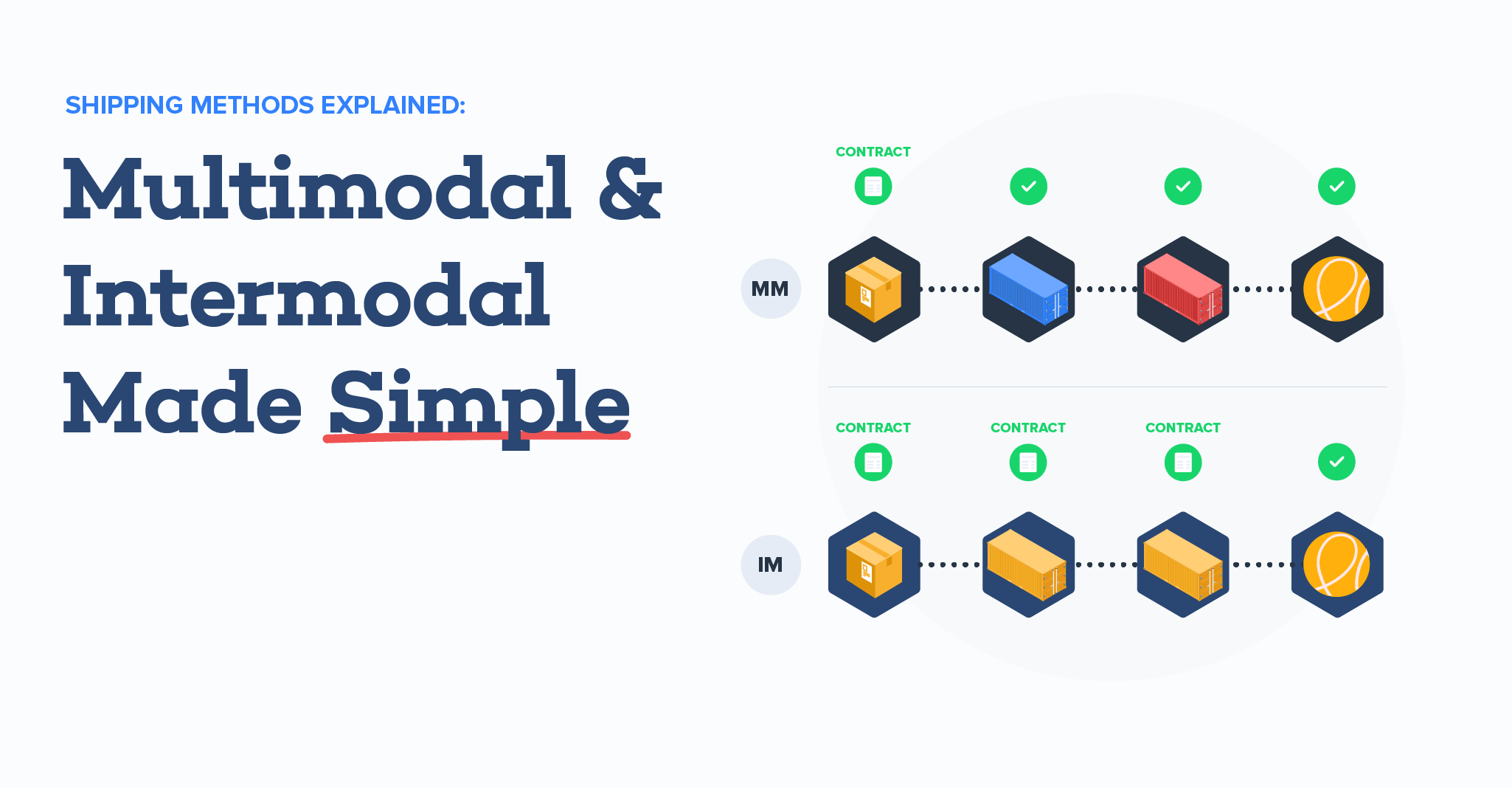
Multimodal transport is also known as ‘combined transport’ because the products are moved using different modes of transportation along the fulfillment journey, but under the terms of a single contract and facilitated by a multimodal transport operator (MTO). Whether by road, sea, air or rail, or a combination of them all, the MTO is liable for the entire journey from beginning to end, although they often use sub-contracted carriers that specialize in each mode of transportation.
Intermodal transport involves the use of an intermodal container which carries products throughout the entire fulfilment journey; regardless of the type of transportation, the same intermodal container will be offloaded from one method and loaded onto the next without ever moving the product inside.
The main difference between multimodal and intermodal transport is: 1) how the product is transferred between transportation modes, and 2) how the contracts are made with each carrier.
With multimodal transport, the products or commodities are loaded and unloaded into transportation-specific containers when transferring, say, between sea and rail, rail and ground, etc. Excessive product transfer may result in product damage or loss; you may have heard the phrase “fallen out of a truck” when asking your relative about an expensive purse they clearly can’t afford. In fact, product damage during transportation costs up to $0.48 per pallet annually, which certainly adds up over time with larger supply chains.
This is the benefit of intermodal transport, because the products are loaded into a single intermodal container to be used for several modes of transportation. The products themselves will remain secure as the container itself is loaded and offloaded from a truck, train, ship or air freight.
Using one intermodal container allows for safer packing of products, which results in less damage and loss, as well as quicker and more efficient movement between freight methods. For this reason, intermodal transport tends to be less costly than multimodal transport.
During a multimodal transport, the shipper creates a single contract with the Multimodal Transport Operator (MTO), which is wholly responsible for the cargo from the origin to the end destination. This allows the shipper to simplify the communication process by just working with a sole transport provider or agent. Also, the simplified communication allows for more accurate shipping updates, tracking notifications, and opportunities for optimization. On the other hand, the shipper must rely on the MTO to select the best/cheapest routes for their cargo, and flexibility is limited.
Conversely, during an intermodal transport, the shipper must create multiple contracts with individual carriers. While there is only one intermodal container, it will be passed between many liable parties, increasing the complexity for the shipper in terms of communication and optimization across carriers; however, the shipper has more flexibility to independently choose each leg of the fulfillment journey.
In summary:
Multimodal Transport
Intermodal Transport
In conclusion, shippers must determine if multimodal or intermodal is the right choice given their circumstances, i.e., is your product fragile or at risk of damage/loss, do you have the resources to schedule and manage carrier contracts, etc. Thankfully, smart fulfillment providers and 3PLs like ShipHero can help you determine the best way to ship.
Be sure to stay tuned to our Shipping Methods Explained series as we deep dive into the specifics of fulfillment.
Learn more about ShipHero’s industry-leading warehouse management software.



.svg)