
.svg)

Let’s stay in touch with the ShipHero Blog.


.webp)
Despite China’s developing economy and huge population, their market is notoriously difficult for foreign businesses to survive, particularly those with a physical presence. Popular companies like Walmart, Home Depot, and Mattel have tried and failed to create a steady business in China, due to conflicts with the government, failing to understand their customers, or just bad luck.
This is actually pretty common across the board. In fact, 48% of foreign businesses fail in China within their first two years, according to the 2013 Australia-China Business Week conference.
China is a bureaucratic one-party state, which means that the lines separating private and public enterprises are very blurry. For this reason, the government tends to own and heavily support Chinese companies, which is one of the reasons why most foreign businesses fail so quickly. They have to jump through bureaucratic hoops, jockey against local competition for market share, and often compete directly with the Chinese government itself.
Despite the fact that e-commerce is estimated to be a $250 billion market for U.S firms in China, in an unexpected twist, smaller DTC companies have had more success in the Chinese market, compared to the likes of major retail brands such as Walmart.
To capture their fair share, international and local companies across industries are partnering up with Chinese e-commerce platforms like JD and TaoBao to create deals that allow the e-commerce platforms to sell their products directly to Chinese consumers. Chinese third-party logistics (3PL) companies are then contracted to help e-commerce companies keep up with their delivery or logistics.
The products are also usually held in Chinese warehouses, waiting for distribution or last-mile delivery from gig workers or delivery companies. In China, order fulfillment must be flexible to keep their customers satisfied. When a customer purchases the product, they only have to use one account due to the e-market's level of integration, and they typically receive it within just a few hours or days.
With 800 million residents in China using internet services, China is the most connected country in the world. As a result, these users are finding the adaptability and accessibility of DTC businesses to be particularly alluring. These businesses, unlike foreign ones, can distribute their products at a moment's notice using local resources and marketplaces, which makes them difficult competition for foreign businesses.
Millions of users visit e-commerce sites like Tmall, JD, and TaoBao to do their daily shopping. It’s become a staple of their everyday life. By leveraging these companies' existing logistics networks, foreign competitors are better equipped make use of China's regional infrastructure.
More and more companies prefer to let local Chinese companies sell their products, rather than investing in the treacherous retail markets. If the customer wants to avoid especially crowded commercial districts, online markets are their best alternative. Most e-commerce companies are using customer behavior data to enhance website layout, presentation, and product lines to make their business more appealing to their customers.
E-commerce is the future of shopping in China, and many other countries as well. In 2019, e-commerce sales in China were estimated to be 36.6% of total sales, which is a huge jump from 12.4% in 2014. By 2023, e-commerce is expected to make up over half of all sales, at 64%.
There still exists a rather large demand for foreign products in China, given their elevated status symbol and expectation of high-quality. However, finding these products can be difficult for Chinese consumers because of the consistent failure of foreign businesses to establish their presence in the Chinese market. Using e-commerce and online shopping, customers can get connected to products they want, which is a win-win for the DTC company, the e-commerce site, and the customer.
Read on to learn some important tips from the most successful DTC brands about what makes their businesses so successful.
Don’t be afraid to use third-party platforms as opposed to your own. Customers in China prefer shopping through platforms like WeChat and Tmall. There is a surprising amount of freedom for brands to make their own space on these platforms.
When asked by Adweek, Allbirds International president Erick Haskell said “It’s not like being on other third-party platforms where it’s hard to control brand presence and pricing. We can run our own retail, have our own ecommerce site [on Tmall].” His statement reflects how, despite popular western perception, Chinese platforms allow plenty of freedom for brands to experiment and express themselves.
Chinese consumers are 10 to 15 years younger than consumers for the same brands in the west. This has a pronounced effect on not just marketing, but how brands present and behave themselves in general. Christina Fontana, the Head of Fashion and Luxury for Tmall, said this about how Chinese customers differ from westerners, “Consumers are very young and demanding. They want to know about brands and their craft. It’s important to tell that story.”
In general, brands will go to great lengths to demonstrate the quality of their products by including extra information about their manufacturing process, materials, location, and work conditions.
Chinese consumers can be very vocal about their purchases. In fact, Fontana says that 80% of all customers on the Tmall platform leave feedback. Feedback has become so vital that the platform now includes a feature that lets brands directly take the feedback they receive and use it in their product development.
The takeaway from all of this is that customers want to be engaged directly with the brand from which they are buying. They want to know that they have a voice in how the product is shaped.
E-commerce brands that want to grow their global empire should find alternate routes in difficult markets like China. With their accessibility, adaptability, and huge inventory of in-demand products, it’s easy to see why more and more brands want to establish an online presence overseas. The question now becomes, will your brand be next to join the success of these DTC businesses?
.svg)
Fleets of cargo planes grow larger, drones soaring the skies replace bike carriers on the ground, and delivery trucks weave through city streets in hectic routes. Why? All for the sake of convenience and speed of delivery for your e-commerce goods.
Recent estimates indicate that e-commerce sales will rise to $5.4 trillion by 2022. At first glance, the carbon-intensive shipping and delivery associated with e-commerce, especially expedited shipping and last mile delivery methods, may seem to contrast our collective value of environmental sustainability. But that doesn’t have to be the case.
In this post, we’ll explore how shipping companies are pursuing new strategies for carbon-neutral shipping and explore what that may mean for the future.
In recent years, terms like “carbon-neutral” and “carbon footprint” have become part of our common vocabulary. But what do they mean? What is carbon-neutral shipping, and why do you need it?
“Carbon” is shorthand for the greenhouse gases associated with climate change; namely, carbon dioxide and methane. A company’s “carbon footprint” refers to the amount of greenhouse gases it puts into the atmosphere. Recent green initiatives have prompted many corporations to reduce their carbon footprint by mitigating their emissions.
Carbon-neutral shipping is an essential strategy for reducing a company’s carbon footprint. On one hand, it’s impossible to eliminate all carbon emissions from the shipping process. But companies can pursue carbon neutrality through various methods.
Carbon-neutral policies protect the environment, but they also offer some immediate, practical benefits to companies who pursue an eco-friendly business strategy. First, many customers prefer to rely on a company that embraces sustainable business practices. That is especially true of millennials and young adults. By some estimates, 87% of customers prefer a company with sustainable business practices.
Additionally, the same sustainable practices that reduce your carbon footprint also work to eliminate waste. So while carbon neutrality may seem like a heavy commitment, it can ultimately help you cut costs while maintaining an eco-conscious customer base.
Currently, it’s simply not feasible to completely eliminate all greenhouse gases that your shipping method produces. But that doesn’t mean it’s hopeless. There are several steps that you can take toward carbon neutrality.
Step 1: Determine Your Emissions
First, you need to determine the impact your company is already having on the environment. The Carbon Fund provides a helpful Business Emissions Calculator that you can use to determine your company’s carbon footprint. You can also break down your carbon footprint by category, which may help you pinpoint the impact your shipping process has on your company as a whole.
Step 2: Re-evaluate Your Packaging
Shipping supplies are essential for protecting e-commerce products during transport. But some of these products do little more than make waste. Did you know that between 1950 and 2015, less than 10% of the world’s plastic was recycled? The rest still clogs our landfills.
Consider investing in recyclable and biodegradable materials, such as the following:
These materials may be an initial financial investment for a shipping company or 3PL, but over time may prove to be more cost-effective than the products you’re currently using.
Step 3: Redesign Shipping Routes
Many logistics companies can help you analyze your shipping routes and find ways to optimize your efficiency. You may even be able to consolidate your shipping needs with third-party LTL carriers.
Step 4: Purchase Carbon Offsets
A carbon offset is any financial contribution to environmental projects and funds. These “carbon credits” can be used to offset the impact of your shipping process. However, this practice is often criticized as merely a financial escape hatch for a company that doesn’t want to make other changes toward sustainability.
Many e-commerce companies and 3PLs already advertise carbon-neutral shipping and delivery, but several notable shipping companies are committed to reducing emissions and pursuing sustainable shipping models.
When you use UPS, you have the option of purchasing carbon offsets to mitigate the environmental impact of the emissions used during the transport. The carbon-neutral option used by UPS is verified by SGS, an inspection, and a verification company, offering one of the most reliable systems for carbon offsets.
FedEx is making a host of changes in the hopes of becoming fully carbon-neutral by 2040. Currently, the company offers carbon-neutral shipping envelopes, and their plans involve electric vehicles, energy-efficient aircraft, and other innovations to achieve sustainability.
ShipHero understands the fast-paced needs of the shipping industry, which is why we provide two-day ground shipping supported by advanced logistics tools powered by AI. Rather than rely on centralized hubs, ShipHero brings products directly to customers’ doorsteps in a shipping method known as distributed fulfillment, which is a proven strategy for minimizing emissions and reducing costs.
Moving forward, we can expect several innovations in emerging technology to lead the way in the first half of the 21st century.
Electric vehicles have already become standard fixtures on America’s highways, and we can imagine that soon these cars will be utilized as an efficient means of shipping. That will drastically reduce, if not eliminate, the carbon released into the atmosphere from combustion engines.
Logistics software will soon govern every company’s delivery route, providing real-time optimization based on traffic patterns, weather conditions, and other considerations relevant to the delivery route.
While many innovations will focus on the trucks and routes themselves, there will be an increased emphasis on the carbon emissions and environmental impact of warehousing facilities. We might even expect federal regulations to stipulate the kinds of packaging and waste produced by shipping facilities, prompting managers and others to pursue sustainable practices at every level of the shipping process.
These innovations may seem like significant investments, but these carbon-neutral strategies are essential for maintaining our environment for future generations. By embracing change today, we leave our children a brighter tomorrow. Cue the American flag… and scene.
Always protect the goods! 1 in 100 packages shipped annually by UPS or FedEx are reported as lost or damaged. Considering together the two carriers ship almost 8 billion packages per year, that’s almost 8 million packages on the receiving end of some extra tough love.
In general, the main risks that cause damage to goods are:
Depending on the fragility of your goods, you should first evaluate what is required for full protection. Take into account the type of box material, packaging materials (e.g., styrofoam aka ‘packing peanuts’), etc., and compare that to the cost of repair/refund for a damaged item. Note that while you can save some money using cheaper alternatives for packing, you may pay more in the long run if items are frequently damaged on their way to customers.
Whether it’s thrown around in transit, dropped down chutes and conveyors, or subject to the harsh elements, retailers must consider these packing tips to avoid the headaches of customer refunds and returns caused by lost or damaged goods.
Fragile products must not have room to shift around during transportation. To prevent fragile products from breaking, we recommend one of the following:
Consider the following packaging materials for impact protection:
Heavy products could deform or collapse weak boxes when stacked. That’s why it’s important to know a box’s ECT (Edge Crush Test) rating, which is the amount of weight that can be stacked on a box wall before it deforms and collapses. When shipping small and medium sized products, single-walled boxes provide enough support. As for larger, heavier products, only use double- or triple-walled corrugated boxes depending on the fragility and value of your items.
For liquids, perfumes, aerosols, especially those that come in easily breakable containers, most carriers advise that they are shipped separately when possible, using padded poly bags or jiffy envelopes.
Before handing off any package to a carrier, we recommend taking a picture of the package contents and condition. That way, you have proof in case a carrier tries to shift blame to your warehouse processes.That’s why ShipHero created a feature that allows warehouses and fulfillment centers to seamlessly take snapshots of packages before completing the packing and shipping. Simply set up a camera and scan a barcode, and the image is automatically uploaded to the order. It fits right inoto your pick and pack processes and gives you the liability protection you need.
Depending on the item value and size, create a playbook for your warehouse workers and pick-and-packers so they can use the correct packaging every time. This ensures that products aren’t damaged in transit and also saves you money from over-packing.
By following these 5 tips, you’ll effectively reduce the likelihood of your goods getting damaged in transit from your fulfillment center or warehouse. This will not only help your bottom line, but will also avoid complications from returned products. Goods, protected.

Ecommerce shipping is a key link of the supply chain that can make or break your business. Think that's a bit of an overstatement? Well, last-mile delivery is recorded as the most costly part of the order fulfillment process - it's one of the most pressing logistical challenges. Moreover, if order inaccuracies occur, and items are shipped to the wrong location, then have to face the additional costs of returns and refunds.
This is why it's so important to optimize the shipping process. You need to cut down labor costs, transit times, fuel costs, and establish a seamless workflow. Easier said than done, though, right?
In this article, we're going to take a look at how you can optimize the shipping process from different angles. Questions such as how much to charge your customers, what sort of hits your business should absorb, how to protect your own investment, and which data-driven tools to use, will be addressed and answered.
Shipping is a vital part of the order fulfillment process for ecommerce merchants. It consists of order receiving, order processing, and order fulfillment.
Fulfillment starts as soon as your customer hits the checkout button on the ecommerce platforms and purchases the products in their shopping cart. Once the site confirms the order, the chain moves forward. Small-scale ecommerce stores often store their inventory in their garages. At the same time, as you go up the scale, vendors usually employ the services of inventory storage facilities and warehouses. Upon confirming the purchase, service providers package, label, and ship the products to the destination address.
Shipping can be pretty challenging to handle on your own, especially if you have a growing business. This is the point where third-party logistics companies can be of big help. They optimize the fulfillment process and cater to your needs, and even help you minimize logistics costs. Various companies have different shipping policies and shipping rates, such as Amazon Prime, which offers overnight shipping.
ut not every business can pull this off. This is why your company’s shipping policy should be based on a combination of your budget and your customers’ needs.
There are many factors that ecommerce merchants have to account for when it comes to shipping. All the seemingly small details contribute to your overall shipping costs and total transit times. These factors ultimately determine customer satisfaction and directly impact your business’s reputation and future growth. Since your company’s ecommerce shipping strategy is so important, it's worth investing time and resources to conduct proper research. Here are some of the best practices that online stores employ for shipping, to help you decide which one may suit your business best.
An effective way to reduce shopping cart abandonment is to provide some incentive to your customers. Companies usually use discounts and coupons to their customers for this purpose. Offering free shipping to your customers makes them feel more comfortable about placing an order.
Contrary to what the name might suggest, free shipping isn’t actually free. Either you take the hit and pay for the fees outright, or the fee is absorbed in a way that customers pay for it. You can do this by incorporating shipping costs into the sale price of your products. This way, you can offer free shipping without compromising on your own profits.
Another popular shipping strategy among online vendors is charging real-time carrier rates. This process is transparent and gives your customers a little wiggle room. How? Well, let's say you partner up with multiple carriers. You can now let customers pick and choose the shipping option that best suits their need.
Shipping labels like FedEx, USPS, and DHL have different shipping costs, and no one carrier offers lower rates across the board - the pricing depends on numerous factors. Ecommerce platforms such as Shopify integrate real-time shipping rates of these carriers into their dashboard so that they are easy to handle. Customers can then choose what works for them, whether it is overnight shipping, two-day shipping, or flat-rate mail.
If you don’t want the hassle of calculating shipping prices for each package, then flat-rate shipping is another reliable option. As the name suggests, this shipping option charges a single rate for each shipping order, regardless of the size or nature of the product.
This option is most suitable for businesses that sell a small variety of products with similar dimensions and weights. However, be sure not to set a very high flat rate for the items- it might scare away the customers. Postal services like USPS usually have several flat-rate shipping options.
If your customer base is near to your inventory storage facility, then offering local delivery is one way to go. Keep in mind, though, that this only works for local customers. You can set up the local delivery zone through the use of zip codes - customers within this area qualify as local customers.
Suppose you are catering to a large customer base outside your local area. In that case, you can still offer the local customers this option by putting an appropriate button at the checkout. The local delivery option can be set to be free of charge or at a low flat rate, depending on your budget. This option is best for strengthening your local customer base.
An essential part of devising your shipping strategy is determining your shipping costs. If you partner up with a shipping label, couriers base their shipping rates on a number of factors. These factors range from the package weight and size to the origin and destination address. The bigger the product is and the farther away you have to send it, the more you'll typically end up paying for shipping.Before settling on your company’s shipping rates, be sure to assess the following factors.
One thing ecommerce merchants should focus on is their profit margins- they determine the success of your business. Shipping fees are a significant part of the total fulfillment expenses- deal with them improperly, and you could end up losing money. Before you set up the total price of a product, consider all the little expenses like shipping costs, credit card fees, and packaging, in addition to the cost of the product. Your sale price should leave room for profit after taking care of all of these expenses.
From a historical perspective, packaging and shipping were just ways to get the products to the customer. The up-gradation of technology and the evolution of business strategies have now transformed packaging and shipping into a marketing opportunity. And why not - telling your brands’ story with your product packaging and creating a memorable unboxing experience is a brilliant opportunity.
Packaging inserts and other items could take the whole experience up a notch when the customer unpacks their order- think of unboxing videos online and the publicity they gather! Of course, this type of marketing is another shipping expense and would add to the total costs.
While you can utilize packaging for marketing purposes, don’t lose sight of its original purpose - the package still has to securely hold all the goods. Of course, the safety level for each product depends on its nature. For example, you can ship sweaters and other clothing items in poly mailers, and they would be secure. But for fragile items with higher value, you might need to invest in sturdy boxes and maybe even packing peanuts.
While the nature and size of the product help determine your packaging needs, your customers’ values and preferences also need to be accounted for. Eco-friendly packaging options are often pricier than the standard options, but they appeal to the growing number of eco-conscious consumers. This is why it pays to at least provide eco-friendly packaging as an option to customers.
Insurance and tracking help increase customer loyalty among online shoppers. They help secure your products and provide you with a safety net in case of any mishap. Shipping labels often provide relatively inexpensive or even free options for insurance and tracking. Like UPS and USPS Priority Mail, some carriers offer free coverage for mail orders above a specific price limit.
International shipping requires proper customs documentation that details the nature and the size of the shipment. More often than not, international shipping also comes with specific regulations and tariffs. Of course, these fees add up to the total shipping cost. Suppose you are catering to a global customer base. In that case, it’s wise to set your shipping policy so that it includes these costs. If you let the customer know of the customs fee beforehand, they won’t be surprised at the unexpected charges once they receive the parcel.
Now that you have an idea of what constitutes the shipping expenditures, the next step is to determine whether to offer free shipping or not. Free shipping options are attractive to customers and directly impact conversion rates, but can your business afford to eat the costs and offer them? Well, several factors determine the feasibility of this decision.
The most important factor to consider is your company's available budget and revenue. If your profit margins are high, offering free shipping probably won’t hurt you. Moreover, package dimensions, and the destination’s zonal distance are also factors to consider. Don't forget to further account for the shipping rates of the shipping company you have partnered up with.
So far, we have discussed costs on the business owner’s end. Your customers are another critical determinant of your decision to offer free shipping. For example, if your target audience isn't really interested in free shipping, then you won't have to offer it in the first place. Of course, you can only determine how important free shipping is to them after doing some A/B testing. To sum things up, every company’s needs are different. As such, their decision to offer free shipping may vary.
Offering free shipping to your customers might not be feasible for every business. Sometimes, you end up losing more money than you make by taking this route. So, how can you realistically offer free shipping without breaking the bank?
Here are some pointers:
If you want to offer free shipping, first determine how it affects your business. As stated earlier, you can utilize shipping as a marketing opportunity. If so, then free shipping expenses can be considered as marketing expenses. This is a profitable investment if it drives your sales up.
If free shipping isn't doing much for your sales though, then the shipping costs might be an addition to the Cost of Goods Sold (COGS), and you may need to adjust your sale prices accordingly. Of course, new businesses might realize that this is more of a hit and trial procedure. You will have to test it first to determine whether the shipping expenses are a marketing expense or COGS.
One way to realistically offer free shipping is to limit the free shipping to specific zip codes and areas. For example, a US-based business might offer domestic free shipping. Still, since shipping to other countries like Canada and Australia comes with tariffs and customs fees, the free shipping offer might not extend to those countries. Shipping carriers base their rates on the zonal distance of the shipment, so it might be expensive to offer free shipping to far-flung areas. The point is to establish your free shipping policy on your carrier’s shipping rates and limit free shipping to nearby areas.
To offset your free shipping expenses, you can increase the rates of expedited shipping. This only works if your expedited shipping option is attractive enough. As an example, between free shipping with 10-day transit time and expedited shipping with 2-day transit time, chances are both options will attract a fair share of customers. So, you’ll be able to offer free shipping to the customers by surcharging the expedited shipping rates.
Setting a shopping threshold for free shipping is among the best practices employed by eCommerce platforms that offer free shipping. Amazon Prime is such an example. The logic behind it is simple enough. Customers must have a fair number of products in their carts before they can avail free shipping. The profit margin from the sold goods covers the free shipping expenses.
Ecommerce sites like Shopify have integrations or built-in shipping cost calculators that determine the total shipping costs based on several factors. These include the shipping partner, package dimensions and weight, the zonal distance between the point of origin and the destination, and the transit time.
You can calculate the total cost of shipping through several determinants - some companies use shipping software for these calculations. These shipping costs include packaging fees, transit fees, and in the case of international shipment, tariffs and customs fees. The transit fees depend on the carrier rates that differ for normal, flat-rate, and expedited shipping options.
Ecommerce stores either go for self-fulfillment or employ the services of a third-party logistics company. In the latter case, the fulfillment partner handles shipping by teaming up with different couriers. Once the eCommerce store confirms the order, the fulfillment partner sources the product from an inventory storage facility, packs it, and sends it out for shipping. The courier then ships the product to the destination.
The cheapest shipping option for a small business is the mail service. USPS is a great shipping carrier with affordable rates. If you want to cut down on the transit time, you could partner up with a third-party logistics company-they also sometimes offer discounts.
ShipHero is a powerful warehouse management solution that seamlessly integrates with your online store and handles warehousing and shipping for you. Shopify merchants can add ShipHero to their existing store on the platform; it is the #1 Warehouse Manager Software on the Shopify app store.
ShipHero integrates seamlessly with major ecommerce platforms such as eBay, Amazon, Shopify, and more.ShipHero aligns its goals with your own, to ensure that your customers are receiving the best services.
With ShipHero, you can enjoy great discounts on shipping rates from our partner carriers. The ShipHero integration on your online store dashboard lets you compare the shipping rates of different carriers like UPS, USPS, and FedEx. You can then determine which option works the best for you and eliminate the chances of overpaying for shipping. The fulfillment software allows you to save on shipping costs by identifying orders that you can merge. Furthermore, our algorithm picks out the fastest shipping routes, saving both on transit times and shipping costs.
ShipHero’s eCommerce integrations make the whole order fulfillment process a breeze. ShipHero’s mobile app lets you manage your operations from anywhere- you can track the inventory movement of your store in real-time. You can set rules to simplify packing and shipping tasks. Inventory synchronization and warehouse automation increase the efficiency of the supply chain - meaning that your customers ultimately receive their orders faster. Additionally, ShipHero sends order shipping confirmation and tracking data to customers when their orders are shipped, earning you the brownie points.
You can access ShipHero’s premium reporting and analytics tools and use the data to enhance your brand's growth strategy. The reporting tools give a comprehensive insight into shipment expenses, sales history, inventory stocks, cost of goods, and team performance. Essentially, it allows you to keep track of everything from one central place.
Ecommerce shipping is a vital part of the supply chain, and one of the most expensive stages too. To avoid hefty transit costs, delayed orders, and unhappy customers, optimizing the shipping process is vital. A powerful ecommerce shipping solution like ShipHero can help you meet your business goals and optimize your shipping process.

The success of any business rests in the hands of the customer. If your customers aren’t happy, they won’t purchase your products or recommend your company. This leads to a reduction in sales that can ultimately drive your business into the ground.
There are many factors that come into play when dealing with customer satisfaction, but one of the biggest is the order fulfillment process. The speed and accuracy with which orders are fulfilled is one of the biggest determining factors in customer satisfaction, but it is also one of the most challenging aspects of running a business. To simplify and streamline this process for reduced costs and improved customer satisfaction, many businesses turn to 3PL providers and 4PL providers to improve their logistics strategy and expand their fulfillment capabilities.
In order to truly understand the difference between third and fourth-party logistics, you first need to understand the basics of how outsourced logistics works. Keep reading to find simple definitions of 1PL, 2PL, 3PL, and 4PL, followed by an in-depth look at the difference between third-party and fourth-party logistics.
An online retailer has a wide variety of options when it comes to fulfilling orders. Choosing the right logistics provider is the key to optimizing your supply chain and maximizing both profit and customer satisfaction. If you make the wrong choice, it could end up costing your company thousands, even millions, of dollars, not to mention end up hurting your customer satisfaction rating as well.
Before getting into the specifics of third-party versus fourth-party logistics, here’s a quick review of logistics terminology to put things in context:
In the above overview, the egg and farmer business is a hypothetical example that could be applied to any eCommerce business.
Every business has its own unique needs for supply chain logistics. For medium to large-sized businesses, however, it usually comes down to choosing between third-party and fourth-party logistics providers. Keep reading to learn the basics of both and to receive some tips for making the best choice for your company.
Simply put, a third-party logistics provider is a model that involves three separate parties. The first is the business itself, the second the logistics provider, and the third is the carrier. In this supply chain model, the business turns over logistics operations for inventory storage, packaging, and managing inventory as well as turning it over to the carrier for shipment. Another way to think of it is that a 3PL becomes the middleman between the business and the shipping carrier, taking care of the tedious aspects of shipping.
This supply chain model has been around since the 1970s, and the first 3PL providers were intermodal marketing companies that received packaged loads from shippers and transferred them to railroads. Today, the role of a 3PL provider has expanded to include services such as managing the movement of parts and materials from suppliers to manufacturers. It also includes transferring finished products from the manufacturer to the distributor or retailer.
In most cases, third-party logistics providers offer bundled supply chain services which may include some or all of the following:
These services can be scaled and customized according to the business’s needs. Generally speaking, businesses hire 3PLs when their supply chain becomes too complicated for internal management. For example, if a small business significantly expands their inventory as sales increase or grows through a merger or acquisition by another company.
If you’re still not sure whether a third-party logistics provider is right for your business, here are some examples of industries that can benefit from hiring 3PL providers:
Hiring third-party logistics companies could help you expedite your order fulfillment while also reducing costs and improving customer satisfaction. Before you commit, however, there is another option to consider – fourth-party logistics. Keep reading to learn more.
In a fourth-party logistics partnership, a business is basically outsourcing the entirety of their supply chain management to a logistics service provider. The 4PL oversees all of the different pieces of their client’s supply chain including warehouses, transportation companies, and agents. The goal is for the 4PL to be the single interface for the business between all aspects of the supply chain.
You can think of 4PLs as a supply chain integrator. It’s the most comprehensive supply chain solution available for a business. A 4PL is often a joint venture for enterprises that want business planning and project management to be handled by a separate entity. For example, companies like Deloitte and Accenture offer 4PL services to their clients.
In most cases, the 4PL does not actually own warehouse or transportation assets. Rather, it coordinates these services with vendors – it may also coordinate the activities of 3PL providers that are handling various aspects of the company’s supply chain. The difference is that 3PL providers are focused on day-to-day operations while 4PL providers focus on integration and optimization. A 4PL provider may also be known as a Lead Logistics Provider (LLP).
The primary benefit of hiring a 4PL organization is that the 4PL focuses on simplifying and streamlining logistics for the highest level of services for the best value. The 4PL becomes your single point of contact for the entire supply chain which is ideal for large businesses that have complex order fulfillment operations.
Here is a quick summary of some of the benefits a 4PL provides:
Now that you know a little more about what a 4PL does take a minute to review the potential pros and cons for hiring a 4PL provider.
If you’re still not sure whether a fourth-party logistics provider is right for your business, here are some examples of industries that can benefit from hiring 4PL providers:
In the industry of medical devices, surgeons often make last-minute orders and order multiple sizes of devices since they don’t know exactly what they’ll need. A 4PL provider is better equipped to manage complex chain-of-custody requirements and tight delivery schedules while reducing inventory costs.
Integrative technology enables a 4PL to optimize all aspects of the supply chain including determining the ideal parts, quantities, and locations based on anticipated demand. Field techs no longer have to double as warehouse operators and parts can be delivered in 30 minutes or less, improving efficiency and maximizing customer satisfaction.
By managing the entire supply chain network, 4PLs can allocate inventory to meet customer demand and to reduce missed opportunities. They also enable companies to provide same-day delivery regardless of location as well as same-day replenishment.
Now that you know the basics about third-party and fourth-party logistics, you may already have a sense for which one might be best for your company. Before making your choice, however, you should take a closer look at the unique differences between 3PL vs 4PL providers.
A 3PL is focused on the day-to-day operations of your supply chain logistics – it is more transaction-focused than a 4PL. That being said, a 4PL takes it a step further by optimizing your entire supply chain, including any 3PL providers your business might have hired. They take over the entire operation and become your single point of contact which leaves you free to pursue other things that might help grow and expand your business.
When an organization already has an effective, high-performance supply chain strategy in place, a 3PL provider can provide the extra support needed to execute that strategy efficiently. This type of relationship usually requires a significant degree of internal management to ensure that the 3PL’s performance meets business standards. While the day-to-day functions may be out of your hands, you still need to retain a certain degree of oversight. You should also keep in mind that because 3PLs are asset-based, some companies may be more concerned with utilizing their own assets than with providing competitive rates or more valuable services.
A fourth-party logistics provider is non-asset based which means that their focus is on finding the ideal combination of service and value. These providers utilize integrated technology to ensure a high level of visibility across the entire supply chain for both strategic and tactical analysis. Your business will still need to utilize some internal resources to oversee and manage 4PL performance, but it takes most of the weight off your shoulders when it comes to optimizing services and minimizing costs.
There are a lot of factors to consider when it comes to choosing between a 3PL and a 4PL, so be sure to do your research before you decide. Keep reading to receive some simple tips to employ as you start making your decision.
Know that you understand a little more about third-party and fourth-party logistics and how they differ, which option is best for your company? Unfortunately, there may not be a clear-cut answer. You’ll need to take a deeper look at your business operations to see where you are struggling and whether hiring a 3PL or 4PL provider might help.
Here are some of the signs that your company could benefit from hiring a 3PL provider:
For many businesses, hiring a 3PL provider is the first step as the business grows and expands. Over time, however, it might make more sense to move to a fourth-party logistics model. If your business has outgrown your in-house capacity for managing supply chain services and you want to optimize the entire process for efficiency and controlled costs, you may do best with a combination of 3PL and 4PL providers. The benefit of hiring a 4PL is, of course, that you can also gain the benefit of 3PL services without having to manage them yourself.
Whether you are hiring a 3PL or a 4PL provider, you need to do your research to ensure that you choose the company that is the best fit for your business. Take the time to delve deep into each company’s set of skills as well as their experience and reputation in the industry. You’ll be turning over a significant portion of your business’s essential operations, so you need to choose a provider you can trust 100%.
ShipHero is a leading 3PL service for ecommerce merchants. We handle logistics and fulfillment for over 4,000 online stores.
Due to our partnerships with major carriers, merchants working with ShipHero get reduced shipping costs for each order. Even better, our use of distributed fulfillment centers means you save even more money on transit costs and can get orders delivered faster.
With ShipHero’s distributed fulfillment network, orders can be delivered to most locations with 1 to 2 days. This allows you to offer the same delivery speeds that Amazon does, without having to let Amazon’s FBA fees reduce your profits.
We don’t just handle fulfillment for your Amazon orders. In addition to Amazon, ShipHero handles multi-channel fulfillment for Walmart, eBay, Shopify, BigCommerce, and most other eCommerce sales channels.
Every business is unique in terms of the services it provides, but all businesses have the same basic needs. Optimizing your supply chain process for reduced costs and improved customer satisfaction should always be a priority and hiring a 3PL or 4PL provider could be your next step to doing so.
Need a warehouse management system (WMS) for your 3PL? ShipHero’s 3PL services will help your eCommerce store run at full potential.
As customers get used to speedy deliveries of their online orders, a slow fulfillment process can lead to abandoned carts and lost sales. So, if you're a Shopify store owner who's thinking of growing their shop, consider looking at your fulfillment process. This under-appreciated channel could be the key to taking your business to the next level.
But planning your logistics operations and order fulfillment process can be daunting, especially if you’re new to the game. Fortunately, many fulfillment service providers are helping Shopify businesses expand their reach every day.
In this guide, we’re going to cover the basics of fulfillment and touch on more complex topics – like, knowing when the right time is to upgrade your fulfillment game, and what you need to know about partnering with a third-party fulfillment provider.
eCommerce fulfillment is the process of fulfilling orders placed by customers through an online store. This can include receiving and processing orders, packing and shipping orders and handling returns and customer service inquiries.
Fulfillment is a critical part of operating an online store, and it can have a major impact on the customer experience.
A well-run fulfillment operation can help to ensure that orders are shipped accurately and on time. Considering that most customers are used to big companies like Amazon promising two-day delivery, online businesses that can keep up with customers' high expectations and deliver in a timely fashion gain a competitive edge over other small businesses.
In turn, small businesses can see their customer satisfaction, customer retention rates and sales soar to new heights.
Shopify store owners have three main fulfillment options:
In-house fulfillment often entails hiring staff and renting a warehouse to manage your Shopify store's inventory, pack orders and ship them to customers.
For businesses that are just starting, this could be a feasible option. But as your business grows, you may find that maintaining a warehouse and staff just contributes to greater overhead costs and takes up too much of your time.
Dropshipping is when stores don't keep the products they sell. Stores that dropship instead buy products from manufacturers or sellers and handle the distribution themselves. In that sense, store owners don't have to think about storage, handling and packing.
Shopify fulfillment services or third-party logistics (3PL) service providers are companies that cover every stage of the fulfillment process. 3PLs for Shopify are alerted of placed orders, take care of picking, packing, labeling, and see through the delivery of each order to customers' doorsteps.
With 3PLs, Shopify store owners don't have to rent warehouses or store stock at home. Instead, they can use the warehouses or fulfillment centers provided by the fulfillment companies.
There are many reasons why you might need a third-party Shopify fulfillment service. Perhaps you have a high volume of orders and can't keep up with the demand yourself. Or maybe you're selling products that are too big or heavy to ship without professional help. Whatever the case may be, fulfillment software and remote fulfillment service providers can help you win back your time and focus on improving other aspects of your business.
A good fulfillment service will be able to handle any size or type of order. They will have a network of warehouses and distribution centers around the country to ensure that your products are shipped quickly and efficiently. They will also have an experienced team of customer service representatives who can help resolve any issues that may arise. In addition, most fulfillment services offer competitive rates, so you can be confident that you're getting the best value for your money.
Look at it this way: 3PLs improve the entire process of fulfillment by providing end-to-end service. Starting with inventory storage down to delivery and customer service, fulfillment services provide help to minimize logistics costs and maximize efficiency. And by teaming up with the best carrier services to provide you with fast shipping options and affordable shipping rates, they keep your customers happy.
Here's a rough guide to how fulfillment solutions work for Shopify stores:
The fulfillment process starts with merchants sending their products to be stored in warehouses and fulfillment centers by the fulfillment service providers. Some 3PLs host a large network of fulfillment centers around the world so that you can choose to store your products at locations nearest to your customers.
Having a network of fulfillment centers at many locations gives Shopify users a geographical advantage as it saves on transportation costs and restocking is done more efficiently upon need. Your products are stored at warehouses that comply with industry standards.
Depending on where the bulk of your customer base is located, 3PLs recommend inventory storage at different inventory levels and locations so that your customers get their products delivered to them faster. For example, if the majority of your customer base is in the United States, it’s smart to have your products stored there.
3PLs know the importance of customer satisfaction and the impact it can have on a business. This is why they provide you with smart suggestions for inventory distribution based on our advanced software.
3PLs partner with carriers to provide a wide range of options for shipping methods. Depending on what suits you and your company’s needs the best, 3PLs provide you with the optimal carrier combination for your shipment. For example, a 3PL like ShipHero partners up with USPS, UPS and DHL.
The shipment process has greatly improved over the last few decades. For example, the use of tracking numbers now makes it easier for stores and clients to keep tabs on their shipped packages as they move from the warehouse to the client's front door.
Aside from this, faster shipment times, lower shipment costs, and more packaging options all come together to provide a better, more enjoyable online shopping experience. And by keeping customers satisfied, you secure yourself great reviews and, in turn, a more promising future for your shop.
The Shopify Fulfillment Network (SFN) is a network of fulfillment centers across North America.
If you have a business with a Shopify integration, you can utilize the Shopify Fulfillment Network to access Shopify warehouses for storage, picking, packing and shipping.
The SFN comes with a bunch of neat features, including:
The advent of the internet coupled with the rise of technology has caused the eCommerce industry to have a massive growth spurt. And due in part to the COVID-19 pandemic, more and more people have turned to online businesses to sustain themselves, whether as producers or consumers. Many existing brick-and-mortar stores have also transitioned to eCommerce platforms to keep up with the growing demand for online shopping.
Most eCommerce companies usually start local and handle inventory management, order fulfillment and shipping on their own by storing products in their garage, for example. But as your business grows, storing products in your garage and handling shipments on your own no longer seems like the smart thing to do. There will come a time in your business journey when you will need to switch to a more robust fulfillment strategy.
So, what are the signs that you should start outsourcing your order fulfillment?
In case your business has already outgrown the inventory space in your garage and you are thinking about investing in a warehouse, take a minute and weigh your options. For companies with a fluctuating frequency of orders throughout the year, it might be counterproductive to spend money on a warehouse.
Such an investment will probably cost you more money than you’re expecting to make by this upgrade. This is where a fulfillment company shines. Fulfillment companies provide you with warehouse services that are adaptable to your needs. If your business is related to a niche that makes the sales uneven, it might be time for you to partner up with a fulfillment company.
A booming business means a greater deal of orders coming in. Sometimes, business owners spend all their time keeping up with the fulfillment of the order instead of improving their business. This can limit the growth of your business in the long run, and no one wants that. If you spend all your time handling orders, it is a clear sign that you’re too busy and you need to switch to other fulfillment options.
External order fulfillment provides you with flexibility that your business might not have encountered while doing self-fulfillment.
Good fulfillment partners are equipped with the infrastructure to meet the needs of your growing business. International shipping is usually much more difficult to handle than local shipping due to the involvement of foreign rules and regulations. This is just one of the major areas where a fulfillment company can help you and keep your order fulfillment smooth and hiccup-free.
While third-party fulfillment providers certainly make the job easy for eCommerce businesses, not all businesses can manage a successful partnership with such fulfillment service providers. So, what type of companies should reconsider before opting for external order fulfillment?
Here are a few indicators that suggest it might not be time for you to switch to outsourced order fulfillment just yet.
If a business is struggling to allocate enough funds for its shipping costs, it might not have enough capital to pay for a third-party fulfillment company at all. Such businesses are better off with the self-fulfillment option because outsourcing your order fulfillment demands a steady inflow of money.
Highly specialized projects with unusual products often demand custom packaging and shipping conditions. Fulfillment companies usually provide clients with standard default options for shipment unless specified.
Even if some fulfillment companies agree to provide fulfillment services for special orders, it might turn out to be costlier than if you went for the option of self-fulfillment. This is why highly specialized businesses are better off going for self-fulfillment rather than outsourcing their order fulfillment.
If your business is only receiving a limited amount of orders per day, it might not be the right time for you to outsource your order fulfillment just yet. You might be able to handle the order fulfillment on your own.
This is because companies save more by bundling their orders. For example, if you have a low influx of daily orders, it can become uneconomical for you to store your inventory at a third-party warehouse because you will end up paying more for storage costs than what you’re making from your business.
So, what should business owners look for when selecting a fulfillment service provider?
Not all eCommerce businesses are alike. Different businesses have different customer bases and different needs. Likewise, different fulfillment companies have different capabilities and offer different services to their clients.
Before committing to a fulfillment service provider, make sure that what they offer aligns with what you’re looking for. While searching for fulfillment companies, look up what business niches they cater to and which industries they specialize in. Base your decision on which companies have a similar industry experience to your company’s demands.
While looking for a service provider, target the companies that cater to sellers of the same business niche as yours. This ensures that the fulfillment company has experience with a company with similar needs and will thus be a suitable option for you. If you are having trouble finding the right fulfillment company, ask for recommendations from merchants in your niche and then weigh your options.
While doing your research, don’t be afraid to contact fulfillment companies and ask any questions you have about their services.
An important determinant while choosing a fulfillment company is the offers and shipping costs that they provide. While it is wise to look for an option that gives you low shipping costs, price should not be the only factor in your decision.
Customer experience is more important in the long run and so you should look for companies that align with your values and your penchant for customer satisfaction. If your company requires custom packaging for products, it is better to invest in this rather than have all your products spoiled. So, look for factors other than price when deciding on a fulfillment service provider.
While choosing a fulfillment partner, look for a company that is up to date when it comes to technology. Having the option of a provider with easy integrations into your existing online platform translates into smooth transitions and better coordination. Shopify integrations for your online shop make your fulfillment process seamless.
With Shopify’s premium technology, we provide our customers with the best fulfillment services. Our fulfillment network uses machine learning to suggest the optimal inventory storage options for you so that you save both time and money.
Data and analytics are powerful tools in the world of e-commerce when used properly. Fulfillment provides you with a fresh set of data that you can then analyze and use to your advantage to improve your services and business.
While working with a fulfillment provider, it is smart to partner up with a provider that provides real-time tracking and analytics. Shopify provides its users with a tracking number for every order so that you can track it in real time. Shopify also provides its users with customer order data so that it can be analyzed to yield points for improvement.
ShipHero is the only commercially available hybrid solution offering both warehouse management software and fulfillment service.
Should you decide to handle fulfillment in-house, ShipHero improves your warehousing capabilities by automating key processes and consolidating information such as real-time stock levels and shipping time into one platform.
And with one-click integrations with platforms like Shopify, you can take care of managing orders and processing returns in just a few simple steps.
ShipHero's Shopify-integrated fulfillment service lets you ditch paper pick lists with its native iOS app so you can cut down errors by up to 99.9%. We also offer seamless connections to top carriers like UPS, USPS and FedEx.
Take your Shopify store to the next level with ShipHero!
For eCommerce brands, the order fulfillment process is what makes or breaks a business. And while small shops can get by handling their own logistics, as brands grow, it's worth considering outsourcing the process to service providers that are designed specifically to streamline this part of eCommerce.
When it comes to choosing the right fulfillment partner, be sure to look for a service provider that offers you value for money, high-tech software and seamless integrations, useful analytics and a similar industry experience. Keep this in mind and make an informed decision to find the best fulfillment partner to help your brand grow sustainably!
A fulfillment service is a logistics service that takes care of things like inventory management, storage, order sorting, packing, shipping and returns.
A Shopify fulfillment network can only be used by businesses that have fulfillment centers in the US and Canada and that are based in the US.
Fulfillment fees are decided by the costs of your inventory storage, picking and packing, receiving, kitting and customer support.
-
About ShipHero: We make it simple for you to deliver your eCommerce. Our software helps you run your warehouse, and our outsourced shipping solutions eliminate the hassle of getting your products to your customers. With over 5,000 brands and 3PLs relying on us daily, we’re here to help with all your logistics needs.
Let us know how we can help you today by scheduling a call HERE.

Order fulfillment is a complex process involving multiple stages such as picking, packing, processing, and shipping customer orders. The smooth operation of these stages is crucial to prevent customer complaints and maintain a high level of customer service. One very cost effective way to manage inventory and streamline the order fulfillment process is by leveraging the expertise of a third-party logistics (3PL) company.
These companies, often referred to as experts in the field, offer access to 3PL software that automates many aspects of the logistics process, enhancing efficiency and reducing errors.
This article will delve into the role of 3PL software and the factors to consider when choosing a top 3PL provider or one, including the consideration of your business requirements, budget, and business goals.
A 3PL warehouse and inventory management system is a software solution designed to aid in a company's logistics operations. A 3PL system’s key features include warehouse task and inventory management, detailed processes for picking, packing, and shipping goods, delivery tracking, and shipping route optimization.
The level of automation provided by these systems can significantly improve warehouse operations, ensuring that items are managed efficiently and errors are minimized. These systems are particularly beneficial for large warehouses where manual inventory management can be time-consuming and prone to errors.
3PL software brings numerous benefits to small businesses, including the ability to streamline processes and manage sales, service and inventory levels effectively. Here are some reasons why small businesses should consider implementing 3PL software:
3PL software can automate tasks such as order tracking, invoice generation, and payment processing, saving significant time and reducing the need for additional employees, thereby cutting operational costs. This efficiency can also improve the customer experience, as orders can be processed and shipped more quickly. In times of high demand, this efficiency can be particularly beneficial.
Manual data entry and processing can lead to errors, especially when information passes through multiple hands. 3PL software automates these processes, reducing the likelihood of costly mistakes. This automation can save time and also improve the quality of good customer service being provided to customers.
Different businesses have different needs, and 3PL software offers the flexibility to customize features according to these business needs. As your business grows, you can scale up the software by adding extra features. This scalability can accommodate the demands of growing retailers and ensure that the software continues to continuously improve to meet their needs.
3PL software comes with reporting tools that provide insights into inventory levels, staff performance, and other crucial business information. These reports enable you to make better decisions based on accurate, real-time data. This data can also be used to inform product development efforts and improve customer relationship management (CRM) strategies.
The success of your own third party logistics partner, provider partner or business largely depends on client satisfaction. In today's marketplaces, customers expect their orders to arrive promptly and appreciate the ability to track their orders throughout the shipping process. For small businesses, these operations can often be managed in-house, but for larger businesses with high-volume supply chain operations, forming a partnership with a third party logistics partner or a 3PL provider can ensure accuracy and efficiency. Here are some benefits of using 3PL software ecommerce business:
3PL software can automate various tasks and integrate processes, saving time for both the logistics services providers and their clients. For example, integrations with eCommerce platforms like Shopify and Amazon can automatically capture orders and add the information directly into your database.
This automation can also improve the customer experience, as customers can receive updates on their orders in real time.
The automation capabilities of 3PL software can reduce costs for logistics and warehousing providers by reducing the need for data entry clerks. These cost savings for a supply chain and logistics company can then translate into lower shipping and warehousing costs for clients. This cost-effectiveness is particularly important for businesses operating on a tight budget.
Manual handling of different stages of the order fulfillment process can increase the risk of errors. 3PL software automates data storage and processing, reducing the likelihood of costly human errors. This automation can save money and also improve the quality of service provided to customers.
3PL software can be customized and scaled to suit the needs of both supply chain management or individual clients, making it easier to manage changes such as adding inventory, opening a new distribution center, or entering a new market. This scalability is particularly important for businesses experiencing rapid growth.
3PL software reports on the entire supply chain activity of most companies, from production to shipping, providing visibility into any part of the business at any time.
This visibility can help businesses to manage their own supply chain, other supply chains, and SKUs effectively and ensure that they have the capacity to meet customer demands.
Entrusting a 3PL partner or logistics partner with your company reputation entire supply chain can be daunting. However, 3PL software and services like ShipHero provides full visibility into logistics performance and current inventory levels from reliable partners, ensuring everything is running smoothly. This transparency can also improve the customer experience, as customers can track their orders in real time.
3PL software can track orders and payments from start to finish, allowing customers to track shipments in real-time and easily make returns. The software also enables the company to offer expedited shipping options like same-day and two-day shipping. This level of customer service can enhance the company' customer experience and improve customer retention.
Every business is unique, and using 3PL software services may be more beneficial for some companies than others. If you're considering transitioning your business to third-party logistics services, it's important to know what to look for when shopping for 3PL software solutions.
When working with a third party logistics provider or third party logistics providers because of third party logistics providers third-party logistics companies, clients entrust the entire order fulfillment process to another entity. Making the wrong choice could cost your company in the long run, potentially leading to client loss and business challenges. Here are some factors to consider when looking for the best 3PL software:
Your third party logistics provider or chosen 3PL provider partner should have access to the latest technology. Advanced 3PL software can save you money and reduce errors through automation.
This technology should include enterprise resource planning (ERP) and transportation management systems (TMS) to ensure comprehensive management of your third party logistics operations.
Many businesses outsource to a 3PL company when they've outgrown the capabilities of their in-house logistics department. If you plan to work with growing companies, choose 3PL software that can scale with their future business too.
Also, consider the capacity of the logistics partner and the software to handle increasing numbers of SKUs and items.
Logistics businesses need to comply with certain rules and regulations regarding product packaging and labeling. Good 3PL software can help you meet these requirements and prevent future issues. This compliance is particularly important to protect the rights of consumers and ensure that goods are correctly labeled.
In a single company, there may be several users of 3PL software as each division needs real-time access to the stored data. Good 3PL software should offer multiple user accounts so people from different divisions can log into the app simultaneously. This feature can improve collaboration and ensure that all employees have access to the information they need.
Most 3PL technology solutions include billing functions to ensure that invoices are paid out properly. This type of software automates put away, receiving, storage, and shipping, ensuring that charges for these services are always accurate and on time. This automation can also improve the customer experience, as customers can receive timely and accurate invoices.
Many clients work with 3PL providers to avoid the cost of logistics software. To provide your clients with the best value and service, choose a top 3PL partner or logistics partner, with software that offers advanced features at an affordable price. This value for money is particularly important for businesses operating on a tight budget.
There are many 3PL software options on the market catering to different needs. If you're planning to become a 3PL provider, research the type of logistics software your potential clients prefer and match your software to the client's needs.
The key to finding the best 3PL software partner is to take the time to examine your company's needs and find a software partner and solution to meet them. Don't forget to include the option for customization and scalability as well.
And remember, the things to consider when choosing a 3PL partner is not just about the software they provide and prioritize customer service, but also about the quality of their technology connecting their customer service, their ability to answer your questions, and their commitment to training their staff to meet your needs.
In the era of online shopping, shoppers have high expectations for fast and accurate delivery. This is where the role of a 3PL platform provider comes into play. A good 3PL platform provider will not only ensure the logistics company ensures efficient transportation of goods but the provider will also provide real-time tracking for shoppers, enhancing their shopping experience.


Third-party logistics (3PL) is one of the ways that a company can outsource order fulfillment. An eCommerce order fulfillment process starts when a customer submits the order and finishes when the product reaches their door.What seems like a simple process can become quite complex depending on the storage location of your company’s inventory, the customer’s location, the size of the order, and the timetable for delivery. It becomes even more complicated when you factor in the potential for returns.Suppose you can’t handle your eCommerce fulfillment in-house. In that case, it’s probably time to outsource and let a third-party logistics company take over.Keep reading to learn everything you need to know about 3PLs.
3PL companies are companies that offer various eCommerce logistics processes to online businesses. Some services they offer include warehousing, inventory management, and order fulfillment.3PL involves the business, the logistics provider, and the shipping carrier. In simple terms, a 3PL provider offers logistics services to manage certain aspects of a company’s shipping operations. 3PLs are renowned for their logistics industry expertise and can help companies better fulfill orders to keep their customers happy.Some people think 3PLs and freight brokers are essentially the same. However, 3PL companies are more active than freight brokers because they take over your fulfillment operations. Meanwhile, freight brokers only connect you to shipping carriers without touching your products.A 3PL becomes integrated into the company’s inventory storage and transportation procedures. Rather than storing, packaging, and shipping orders, companies hire a 3PL to manage the entire process. The 3PL owns or leases its storage and transportation assets to fulfill the client’s orders remotely, ensuring you can focus on growing your business.Third-party supply chain models first appeared in the 1970s when intermodal marketers took packages from businesses and brought them to rail stations for delivery. People developed 3PL software to help companies manage inventory and deliveries as the field grows. Nowadays, all kinds of businesses, from Fortune 500 to small businesses, use third-party logistics.
Here are the benefits of working with a 3PL company:
Third-party logistics companies often have connections in the sector, meaning they have better access to vendors and can negotiate higher discounts for you. By partnering with them, you can use their contacts and influence to reduce shipping supply and warehousing expenses, ultimately saving you money.
Many third-party logistics service experts have decades of combined experience in the industry. When you hire a 3PL company, you get access to this expertise to get insights on transport documentation, shipping regulations, and other logistics issues. They can also answer your questions about how to increase operational efficiencies.
Running an in-house logistics division takes a lot of time and money. By hiring a 3PL company, you can instead focus on core business processes like developing marketing materials and improving sales channels. Better yet, you can do this without dedicating any internal staff or resources to run an in-house logistics division.
3PLs provide custom-made services based on your company’s needs and performance. If your business grows and product orders increase, you can sign them for a more significant contract with more benefits. Conversely, considering downscaling your business, you can opt out of some of their services.
As the name implies, 3PL involves three parties that help bring products to the market. Here are the three parties involved in the 3PL model:
The business is your company – you’re responsible for producing goods and running the eCommerce business. Once people buy your products, you send the orders to your logistics company.
The logistics company is the intermediary between your company and the shipping providers. Third-party logistics companies offer many services, including warehousing, packaging, and inventory management.
The shipper carries your products to physical stores or the buyers’ doors. Major shippers include USPS, UPS, and DHL.
A 3PL can scale and customize its services according to the client’s specific needs. The client still retains some oversight when managing shipping operations. Before signing a contract, you can outline what services you want the 3PL to provide and what services you will maintain in-house. As your business grows, your 3PL provider can take over a significant role in expanding your supply chain and procurement operations.Here’s an overview of the services a 3PL typically provides:
3PL companies provide warehouse spaces to handle order fulfillment for multiple companies in one place. This improves efficiency and reduces costs because they don’t have to switch between numerous warehouse locations to finish orders. Moreover, you don’t have to lease warehouse space, buy forklifts, or rent trucks to handle your merchandise.
Managing inventory involves more than simply storing your company’s products. Integrative technology also syncs your inventory with your online store in real-time, so you can track inventory and predict demand to avoid sell-outs. Your 3PL also helps organize items with multiple parts into proper categories, ensuring nothing is misplaced.
Most 3PL providers have fulfillment centers across the country to store your products. 3PL companies distribute your inventory across the country to ensure fast shipment times.A 3PL automatically routes orders to fulfillment centers based on where the customer resides. 3PLs use extensive automation to save hundreds and thousands of dollars on inventory distribution, raising their clients’ profits.
Alongside storage, 3PL companies assign staff to pick products for each order and package them for delivery.
Once the products are picked and packaged, the 3PL forwards them to a shipping carrier for delivery. Different 3PLs work with other carriers, and a good 3PL will choose the one that offers the best price and delivery speed. Some 3PLs even work with local carriers for less than truckload (LTL) shipping for local orders.
By partnering with a 3PL, your company can offer expedited shipping options to your customers since fulfillment centers send out orders daily. 3PLs often negotiate discounts with carriers like FedEx, DHL, USPS, and others to offer faster delivery speeds at a manageable cost.
In addition to handling the shipping process, a 3PL will also manage the tracing and tracking process. Customers will receive shipping information to track their orders throughout the fulfillment process.
Not only do 3PLs offer shipment services, but they can also provide reverse logistics to handle returns. A 3PL can provide customers with return labels to drop the item off with a carrier for return to the fulfillment center.Again, when you sign a contract with a 3PL company, you can customize its services according to your business’s needs. An experienced 3PL provider will be able to handle the logistics of the entire supply chain from when your customer submits their order to when it arrives on their doorstep.
So you can visualize what this looks like, here is an outline of the order fulfillment process from a 3PL provider’s perspective:
A 3PL needs inventory to complete customer orders, so your first act should be moving inventory to their warehouse. Depending on your business size, your inventory may be divided into several fulfillment centers. Each 3PL has its process for receiving and storing inventory. Most providers can customize this service according to the client’s needs.
Depending on the 3PL’s software, your partner may get the orders automatically, or you may have to send them manually. After placing the order, the 3PL starts the order fulfillment process by packing the items at the warehouse and then passes it to the next stage of the supply chain for packaging.
Once the 3PL has picked up all ordered items, they are prepared for delivery.Standard shipping materials for your products include cardboard boxes, poly mailers, bubble wrap, packing tape, and bubble mailers. The best 3PL company can balance package protection and small dimensional weight, so your products arrive safely and within budget.Some 3PL companies charge extra for packing material, but others fold the costs into the service fee. Depending on your working relationship, 3PL companies may also let brands customize their packaging.
After the products are prepared, they’re handed off to a courier for final delivery.Some 3PLs partner with specific shipping carriers, while other companies have a rotation of transportation services to get the best deals. Either way, 3PL partners are responsible for brokering deals with freight forwarders to bring you the best rates. The courier fleet usually picks items up from your 3PL partner’s warehouses.
The order process doesn’t always finish once the package is delivered to the customer’s door. Specifically, product returns can get complicated if you manage inventory stock levels yourself. When you’re working with a 3PL partner, they receive all returned products to be restocked, scrapped, or processed.To make the return process more manageable, you can ask the 3PL company to provide shipping labels for every package. Customers can fill them out and return their packages if something goes wrong.It should be clear by now that 3PL partnerships benefit companies, but how do you determine whether yours will? Keep reading to learn the signs that it’s time to hire a 3PL.
3PLs are needed when you can’t handle order fulfillment by yourself. Unless you’re running a small retail business out of your garage with no more than a dozen orders a week, the chances are good that your company could benefit from hiring a 3PL provider. To help you decide, here is an overview of the advantages associated with working with a third-party logistics provider:
Still unsure whether hiring a 3PL provider is the next logical step for your business? Here are some of the top reasons to hire a third-party logistics provider:
There is nothing magical about the number “100” – the point is that your company is receiving more orders than you can efficiently manage in-house. Shipping a large volume of items per month means your team spends more time and effort fulfilling orders than doing core business tasks. Once you’ve reached over 100 shipments per month, it’s a good idea to hire a 3PL company to support your operations.
Any retail company’s goal is to have enough orders that it becomes necessary to increase inventory levels. Of course, when this happens, you’ll need space to store all of that extra inventory. Rather than dealing with this predicament each time you add a new product to your store, turn over storage logistics to a 3PL.
Suppose you’re currently managing your order fulfillment in-house. In that case, you may struggle to make it to the post office even once a day, let alone often enough to give your customers expedited shipping options. With a 3PL handling your order fulfillment logistics, you can suddenly offer one-day, two-day, and maybe even same-day delivery.
Working with 3PL providers isn’t cheap, but it could save you loads of time and money. Instead of spending a lot to lease storage space and build an in-house logistics division, consider hiring a 3PL so you can spend the savings on building your business. Additionally, 3PL services speed up product deliveries and give you a competitive advantage.
Every good business person is forward-thinking. From the moment you start your business, you should know where you want to go and how you want to get there. Suppose you expand your offerings throughout the country or around the globe. In that case, a 3PL can help you get there with inventory distribution services. For example, some 3PLs can leverage 2-day or overnight shipping to help eCommerce businesses keep up with Amazon and other giants.Hiring a 3PL provider to manage your supply chain’s logistics is smart if any or all of the signs above are coming into play. Before you start shopping around for a 3PL, however, you should take a moment to consider whether doing so is enough. You may want to consider taking things one step further and hiring fourth-party logistics service providers – keep reading to learn more.
First and foremost, you should know that 3PLs and 4PLs are professional, hired services that help businesses like yours plan and execute inventory management and order fulfillment logistics. You get much more flexibility than you would if you managed fulfillment in-house.As you well know by now, a third-party logistics provider is a company that handles the logistics of your company’s supply chain and order fulfillment processes. Depending on how much control you want to hand over to your 3PL, they can do everything from storing and managing your inventory to picking, packing, and shipping your orders. They can even handle the returns management process for you.So, what is a fourth-party logistics provider, and how does it differ from a 3PL?A fourth-party logistics provider adds another element to the equation, combining various resources and technologies to optimize your supply chain’s design and execution. You can still keep your 3PL to manage the day-to-day details of order fulfillment. Still, a 4PL will become the “control tower” that oversees supply chain management. They will supervise your 3PLs and any other resources or providers you use to ensure your supply chain operates smoothly, efficiently, and cost-effectively. For businesses that want total supply chain visibility, a 4PL provider can be a great option.The critical difference between a 4PL and a 3PL is that many 3PLs are asset-based – they own or lease equipment and warehouses that they use to provide services. As such, a 3PL is concerned with its costs and may not always seek the best deal for you if it means a better deal for them. In contrast, a 4PL’s only concern is integrating and optimizing your supply chain operations.
A third-party logistics provider can offer many services, though many focus on specific supply chain solutions. As a business, this might mean hiring multiple 3PLs to fulfill your supply chain’s different aspects – this is when hiring a 4PL may come in handy.Here is a quick overview of the different types of 3PL providers you may come across:
As part of your transportation 3PL search, you need to consider several factors, including: the company’s location, where your customers are located, delivery timelines, shipping methods, service options, and pricing and discounts. This type of 3PL deals with shipping inventory between locations.
The most common type of 3PL is warehouse and distribution-based. These providers handle the storage, shipment, and returns of your orders. When considering a warehousing 3PL, you’ll need to consider the number of locations and their geographical locations, the pricing model for storage, negotiated shipping rates, delivery insurance, daily cutoffs for order fulfillment, and management tools.
Once your company expands beyond the eight or nine-figure mark in annual revenue, you may want to bring a financial 3PL on board to help you optimize your operations for the industry and to evaluate current trends. These 3PLs offer freight auditing, cost accounting, bookkeeping, tracking, tracing, and inventory management.
Now that you better understand the different types of 3PL providers, you may wonder how much it costs to hire a 3PL. Third-party logistics pricing depends on the services you require and the scope. Several factors that determine 3PL pricing include:
In addition to considering these individual costs, you should also know that most 3PLs offer three pricing models. Here is a quick overview of their differences:
When choosing a 3PL provider, consider all aspects, including costs. Keep reading to receive some additional tips for selecting a 3PL provider.
If you’ve decided that hiring a third-party logistics provider is the next logical step in expanding your business, congratulations! Now comes the hard work – choosing the perfect provider to meet your business’s current needs while offering room for growth.Here are some simple tips to keep in mind when choosing a 3PL provider:
Examples of 3PL Companies for eCommerce and Small BusinessesThere are dozens of 3PL companies vying for your business, so choosing one is challenging. To help you decide, here are four premiere 3PL company options for your eCommerce and small business:
ShipHero is one of the best third-party logistics services for online retailers providing order fulfillment for more than 4,000 eCommerce businesses. Here are some of the benefits you’ll get when partnering up with ShipHero:
ShipHero also integrates with major eCommerce platforms like Shopify Plus, BigCommerce, Shopify, Amazon, and WooCommerce.
ShipBob is a third-party logistics company that helps you ship products worldwide. It promises shipping to all areas of the world through fulfillment centers in North America, Australia, and Europe.ShipBob offers these 3PL services:
ShipBob offers integrations with major eCommerce platforms like Shopify, BigCommerce, and Squarespace.
Whitebox offers end-to-end 3PL services to help your products go from the factory floor to the buyers’ doorstep. Whitebox even has an in-house advertising agency to help you market your business.The services offered by Whitebox include:
FedEx Fulfillment is the 3PL subsidiary of FedEx, which offers third-party logistics to small businesses. It boasts excellent customer service and a resource hub to help new business owners learn entrepreneurship.Here are the services you’ll get from FedEx Fulfillment:
Choosing the right 3PL company can help you cut costs and improve efficiency. Follow these tips to pick the right 3PL provider:
Once you’ve narrowed your list to a few different 3PL options, it’s time to start digging deeper to find the best match for your company. Before talking to any 3PL in-depth, ensure they have and sign a non-disclosure agreement to protect your company.In addition to talking to the 3PL’s representatives, you should also ask for references in the industry to determine whether the company has a solid track record and a positive reputation. Over time, it will become clear whether any of the 3PLs on your list are the right fit for your company or not.Of course, the most important matter when choosing a 3PL partner is the value it offers. Find a 3PL company that caters to your order fulfillment needs at a reasonable price.Finding the perfect third-party logistics partner that will keep your company’s best interests in mind may not be a quick and easy process. Still, it is important that you do it right.For help finding a 3PL provider, check out our online directory or contact ShipHero directly to learn how we can help you with fulfillment.

Third-party logistics involves handing your logistics operations over to another company. A third-party logistics company usually offers warehousing, shipping, and inventory management services.
The main difference between 3PL and 4PL is the number of parties involved. A 3PL company still works under your management to handle your inventory and shipments. In contrast, a 4PL company contracts different 3PL providers to take your products.
The main benefits of working with 3PLs are cost and time savings. You also gain access to their expertise. You don’t have to train in-house logistics employees to handle warehousing and shipping.

Welcome to our Shipping Methods Explained blog series. In this series, we will deep dive into fulfillment methods - that is, how businesses fulfill their online orders and get products to their customers. Sounds simple right? Well, in theory it is. You could hop on your itty-witty bicycle and hand-deliver your product, mission accomplished. But consider the complexity when your company fulfills hundreds to thousands of orders daily, not to mention the skyrocketing shipping costs that could price you out of the market. Managing inventory, navigating each carriers’ specific requirements, calculating the lowest cost from thousands of shipping options… it’s a daunting task. That’s why more and more businesses are outsourcing their fulfillment methods. Are you ready to outsource your fulfillment? Let’s analyze your options to help you decide the best method for your business. In this article, we’ll discuss Dropshipping. What is dropshipping? What are the pros/cons? When is it right for my business? Let’s dive in.(And be sure to check back for future articles where we’ll cover even more fulfillment methods)
Dropshipping is the term used when a product is shipped directly from a manufacturer, supplier, or wholesaler, bypassing the retailer that made the sale entirely.
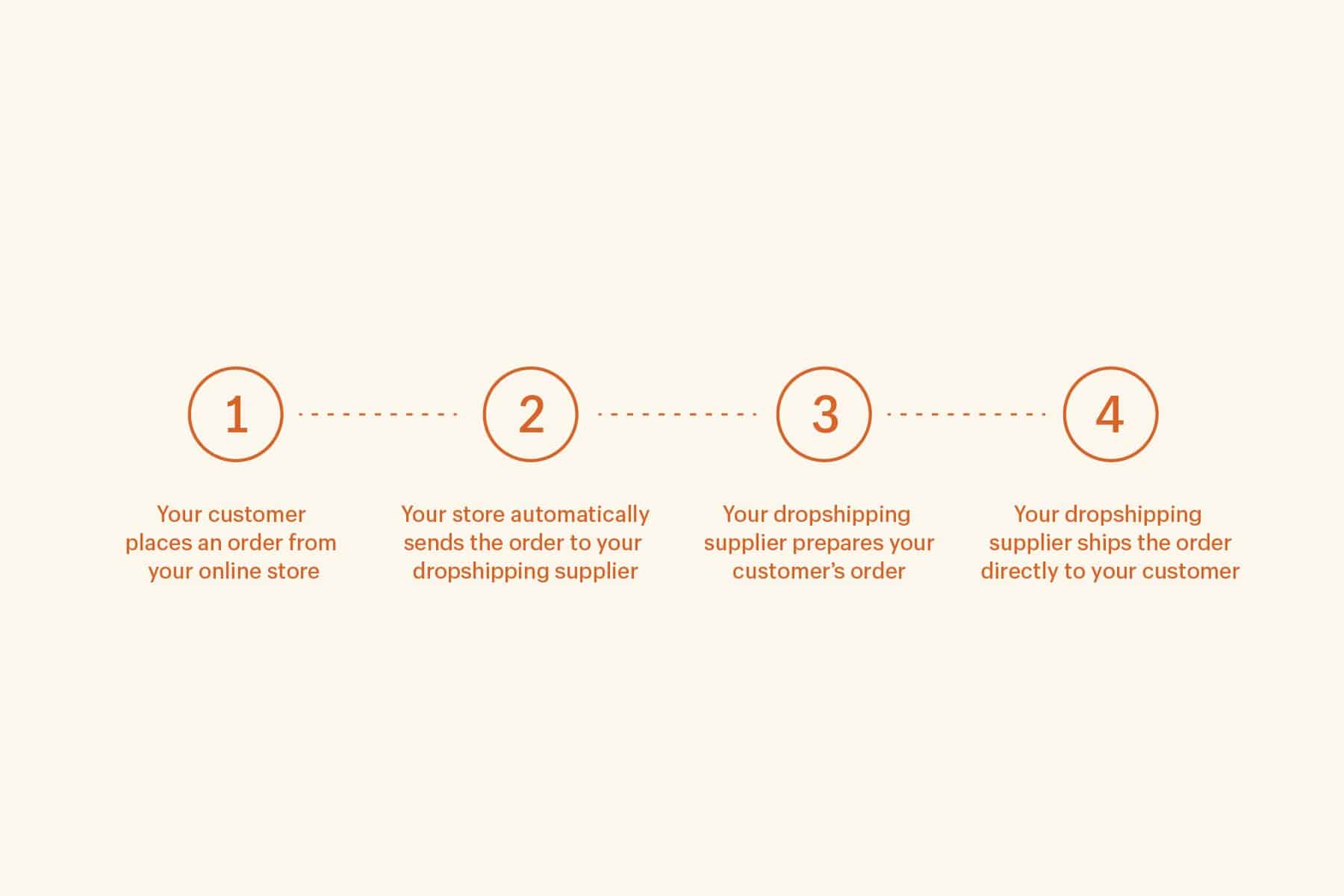
SOURCE: https://www.shopify.com/blog/what-is-dropshipping
Dropshipping businesses are extremely common nowadays, due to the allure of making a passive income matched with the simplicity of setting up a dropshipping business. All it takes is 3 easy steps to get you on your way.Step 1: Choose a Product/NicheThe first step you take in starting a dropshipping business is to choose what you are going to sell. Your product could be a brand new gadget, or a low-cost version of a luxury item, or a luxury version of a low-cost item. As long as there is a market for it, there are no wrong choices here. So do your due diligence and find a product that you think you could sell. ABC… Always be closing.Step 2: Find a Dropshipping SupplierOnce you choose your product, find a dropshipping supplier. You can search a supplier database like Dropship Direct, Alibaba, or AliExpress. (Although be sure to stay up-to-date on news concerning Chinese dropshipping providers)Alternatively, you can use an integrated supplier directory. This means that when you build your online store, say in Shopify (see Step 3), the dropshipper will be linked directly to your online store. Shopify recommends the easiest integration is with the Oberlo marketplace. From here, choose from millions of products and upload them directly to your store. Step 3: Build Your Online StoreAfter you have your product and supplier, have some fun building your online store! This will serve as the grand entrance to your brand. Websites like Shopify, Wix and 3DCart allow you to build your online store from scratch, or select from pre-made templates. When choosing between your options, make sure your choice gives you the ability to easily integrate with your dropshipping supplier.When designing your store, keep in mind who your target audience is, and build your website to reflect their wants and needs. Not just in appearance, but in website functionality. You can turn customers into repeat shoppers through a convenient and fluid shopping experience.
Is dropshipping right for your business? Or would you benefit from a third-party logistics provider or another fulfillment method? Let’s look at the pros and cons of dropshipping so you can decide for yourself.
Dropshipping is the perfect business model for those that want to earn a passive income. It’s simple to start, with little to no cash investment. You can quickly test your ideas with limited risk to you. The three main advantages to dropshipping are:Less Capital is RequiredDropshipping eliminates the need to invest heavily in inventory, warehouse fees, transportation fees, etc. so anybody with a laptop and a dream can start an online business.Able to Offer Wider Range of ProductsWith dropshipping, you don’t have to purchase inventory until the sale is made, which significantly reduces the risk to you. So this gives you freedom to offer a large array of products on your site.Simple to StartWith companies like Shopify that basically make the entire process a drag-and-drop activity, starting an online business has never been easier.
The pros listed above explain why so many people have started an online dropshipping store, and why they use dropshipping to expand their product lines. But for the very same simplicity and low costs that attract these entrepreneurs, dropshipping also presents a set of challenges.Low Profit MarginBecause the barriers to enter the dropshipping market are very low, the competition is fierce. Having many sellers in the market pushes down the cost as they compete with each other. Sure, you can differentiate based on branding, customer service, etc. but at the end of the day, $$$ talks.Little to No CustomizationBecause you are at the will of your supplier, they rarely offer any customization to your products, your packaging, or your unboxing experience. Say you want to make the slightest tweak to the look of your item, or you want to pack it a certain way or in a bundle, this will most likely not be possible. Some Alibaba dropshipping suppliers will accommodate and customize, but even then, they fully control the product and could even turn around and sell your customized goods to the next retailer.Little to No ControlYou entrust the entire fulfillment process to the supplier, and accept the quality of service that they provide. If there are errors or mistakes, you cannot blame your supplier and it will be your brand that pays the price. Maybe not in dollars, but certainly in reputation.So, is dropshipping right for your business? If you’re not sure, stay tuned for our next article as we dive into third-party logistics (3PL) and fulfillment providers like ShipHero.Learn more about ShipHero's industry-leading warehouse management software.
“We’re hiring” seems to be hanging from just about every warehouse door these days. With more people sending more packages, third-party logistics (3PL) companies like Amazon and ShipHero must grow to keep up with the soaring ecommerce industry. And now more than ever, we depend on our people to get the job done.
While there has always been a blend of traditional employees and gig workers, like seasonal workers coming in to help with the holiday rush, 3PL companies are now keeping these workers on longer to keep up with the increased shipping volumes from COVID-19.
Pick-and-Packers and fulfillment specialists are in high demand these days. Are you considering joining the growing number of gig workers that are taking on warehouse jobs? If so, let’s take a look at the future of warehouse work, and why more and more 3PL companies are partnering with the Gig Economy.
As customers have come to expect same-day or two-day delivery, logistics companies and ecommerce fulfillment providers are under pressure to get faster. For that reason, 3PL companies have started increasing the size of their team and investing heavily in people and technology.
There are 400,000 current job openings in US Manufacturing, which is only predicted to increase significantly over the next decade. 3PL companies need to get talent on their team now, or risk getting flogged down with too many orders and not enough people to fulfill them. In order to hire quickly and effectively, 3PL companies are turning to gig workers.
For 3PL companies and fulfillment providers, the biggest expense is warehouse worker salaries. The next largest expense is investing in the training and tools to attract the best candidates and produce highly effective teams.
For that reason, warehouse jobs are being posted on sites like Indeed, ZipRecruiter, GigSmart, and more, so that the companies can quickly and thoroughly find a candidate pool that’s large enough to fill their demand. Companies can choose the right applicants that match their needs, and oftentimes the platform facilitates payment and provides support for gig workers.Through advancements in technology and interconnectedness, companies and workers both have reason to trust in the Gig Economy.
Hiring gig workers provides flexibility for work schedules, and allows the warehouse manager to only hire for what they need. Flexible workforce management reduces overall cost to the customer, and allows the 3PL company to offer its gig workers more competitive hourly wages. For that reason, warehouse and fulfillment jobs are extremely popular gigs on most job-hunting platforms.
Not only that, gig workers in the logistics industry are often hired for a certain expertise or for seasonal availability. These specialty workers can offer their services for a well-defined scope of work.
When you start a warehouse job, what you’re joining is a traditional team of employees as well as some gig workers like you. We engage our temporary workers and regular employees the exact same way, where other industries may treat gig workers like commodities. For that reason, more and more seasonal gig workers are becoming regular employees, because when the gig is up, they feel part of the organization.
Ready to find your side hustle? Whether you’re looking for temporary/seasonal work, or maybe something more long term and fulfilling (excuse the pun), consider a warehouse gig with the local 3PL companies, fulfillment providers or warehouses in your area. Hey, you could even become a ShipHero!
We’re currently building an experienced warehouse team to pick, pack & ship orders in our 150,000 sqft warehouse located in Pennsylvania. You'd be part of a team that helps ship over $5 billion of e-commerce orders a year.
ShipHero is a leading provider of SaaS 3PL software for ecommerce fulfillment.




.svg)