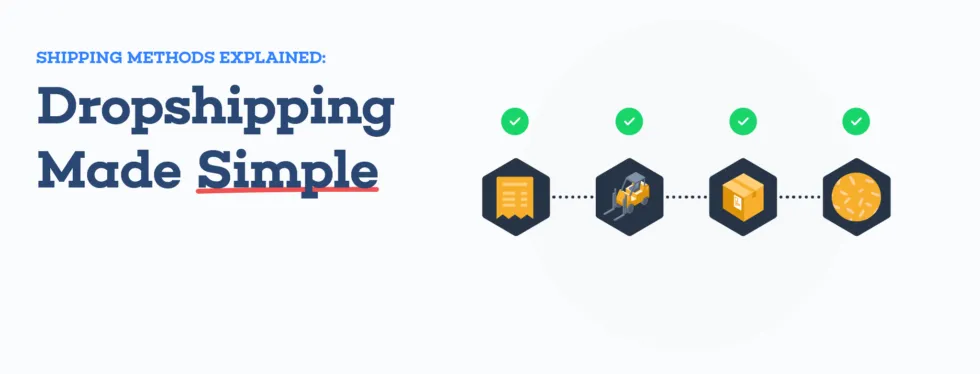

Welcome to our Shipping Methods Explained blog series. In this series, we will deep dive into fulfillment methods - that is, how businesses fulfill their online orders and get products to their customers. Sounds simple right? Well, in theory it is. You could hop on your itty-witty bicycle and hand-deliver your product, mission accomplished. But consider the complexity when your company fulfills hundreds to thousands of orders daily, not to mention the skyrocketing shipping costs that could price you out of the market. Managing inventory, navigating each carriers’ specific requirements, calculating the lowest cost from thousands of shipping options… it’s a daunting task. That’s why more and more businesses are outsourcing their fulfillment methods. Are you ready to outsource your fulfillment? Let’s analyze your options to help you decide the best method for your business. In this article, we’ll discuss Dropshipping. What is dropshipping? What are the pros/cons? When is it right for my business? Let’s dive in.(And be sure to check back for future articles where we’ll cover even more fulfillment methods)
Dropshipping is the term used when a product is shipped directly from a manufacturer, supplier, or wholesaler, bypassing the retailer that made the sale entirely.
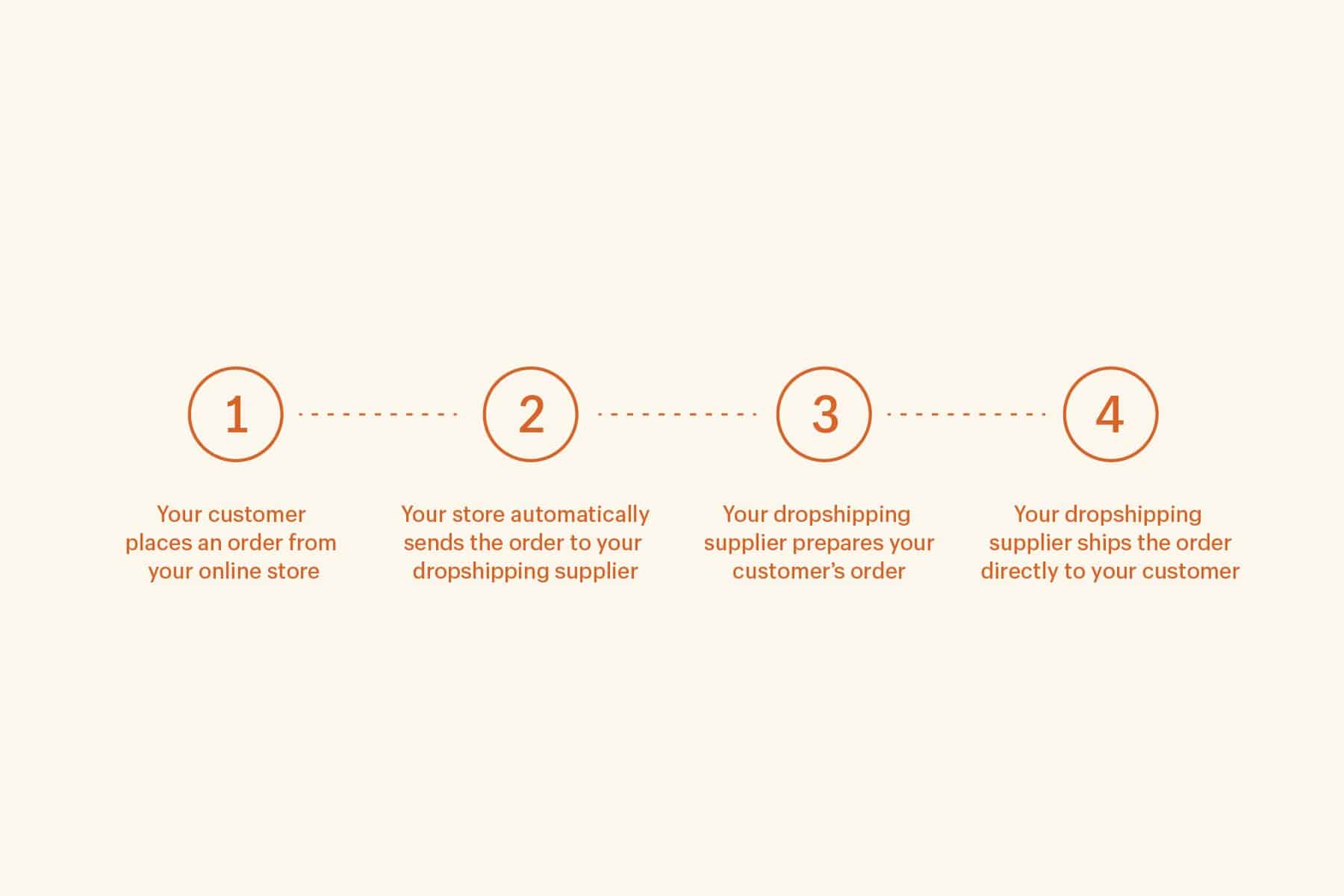
SOURCE: https://www.shopify.com/blog/what-is-dropshipping
Dropshipping businesses are extremely common nowadays, due to the allure of making a passive income matched with the simplicity of setting up a dropshipping business. All it takes is 3 easy steps to get you on your way.Step 1: Choose a Product/NicheThe first step you take in starting a dropshipping business is to choose what you are going to sell. Your product could be a brand new gadget, or a low-cost version of a luxury item, or a luxury version of a low-cost item. As long as there is a market for it, there are no wrong choices here. So do your due diligence and find a product that you think you could sell. ABC… Always be closing.Step 2: Find a Dropshipping SupplierOnce you choose your product, find a dropshipping supplier. You can search a supplier database like Dropship Direct, Alibaba, or AliExpress. (Although be sure to stay up-to-date on news concerning Chinese dropshipping providers)Alternatively, you can use an integrated supplier directory. This means that when you build your online store, say in Shopify (see Step 3), the dropshipper will be linked directly to your online store. Shopify recommends the easiest integration is with the Oberlo marketplace. From here, choose from millions of products and upload them directly to your store. Step 3: Build Your Online StoreAfter you have your product and supplier, have some fun building your online store! This will serve as the grand entrance to your brand. Websites like Shopify, Wix and 3DCart allow you to build your online store from scratch, or select from pre-made templates. When choosing between your options, make sure your choice gives you the ability to easily integrate with your dropshipping supplier.When designing your store, keep in mind who your target audience is, and build your website to reflect their wants and needs. Not just in appearance, but in website functionality. You can turn customers into repeat shoppers through a convenient and fluid shopping experience.
Is dropshipping right for your business? Or would you benefit from a third-party logistics provider or another fulfillment method? Let’s look at the pros and cons of dropshipping so you can decide for yourself.
Dropshipping is the perfect business model for those that want to earn a passive income. It’s simple to start, with little to no cash investment. You can quickly test your ideas with limited risk to you. The three main advantages to dropshipping are:Less Capital is RequiredDropshipping eliminates the need to invest heavily in inventory, warehouse fees, transportation fees, etc. so anybody with a laptop and a dream can start an online business.Able to Offer Wider Range of ProductsWith dropshipping, you don’t have to purchase inventory until the sale is made, which significantly reduces the risk to you. So this gives you freedom to offer a large array of products on your site.Simple to StartWith companies like Shopify that basically make the entire process a drag-and-drop activity, starting an online business has never been easier.
The pros listed above explain why so many people have started an online dropshipping store, and why they use dropshipping to expand their product lines. But for the very same simplicity and low costs that attract these entrepreneurs, dropshipping also presents a set of challenges.Low Profit MarginBecause the barriers to enter the dropshipping market are very low, the competition is fierce. Having many sellers in the market pushes down the cost as they compete with each other. Sure, you can differentiate based on branding, customer service, etc. but at the end of the day, $$$ talks.Little to No CustomizationBecause you are at the will of your supplier, they rarely offer any customization to your products, your packaging, or your unboxing experience. Say you want to make the slightest tweak to the look of your item, or you want to pack it a certain way or in a bundle, this will most likely not be possible. Some Alibaba dropshipping suppliers will accommodate and customize, but even then, they fully control the product and could even turn around and sell your customized goods to the next retailer.Little to No ControlYou entrust the entire fulfillment process to the supplier, and accept the quality of service that they provide. If there are errors or mistakes, you cannot blame your supplier and it will be your brand that pays the price. Maybe not in dollars, but certainly in reputation.So, is dropshipping right for your business? If you’re not sure, stay tuned for our next article as we dive into third-party logistics (3PL) and fulfillment providers like ShipHero.Learn more about ShipHero's industry-leading warehouse management software.
.webp)
One missed check can cost you thousands of dollars. You may have a damaged pallet, a missing fire extinguisher, or a skipped safety step that can put your team at risk.
Warehouse daily checklists serve as a pilot’s pre-flight checklist. Before takeoff, every switch, lever, and system is checked. Why? Because skipping one step can lead to serious problems. The same goes for your warehouse.
Without a solid checklist, you risk delays, missed shipments, or worse, accidents and safety violations. A checklist ensures your team follows the right procedures and nothing falls through the cracks.
Here’s everything you need to include in a warehouse daily checklist, its definition, and templates you could use to get started fast.
A warehouse daily checklist is a structured form that helps warehouse staff systematically inspect, verify, and record essential tasks on a daily basis. It covers all the daily to-dos that keep your warehouse operations running smoothly and safely, such as inventory tracking and forklift inspections.
The warehousing and storage industry reported an injury rate of 4.8 per 100 full-time workers, nearly double the national average of 2.7. Following a daily warehouse checklist ensures the right procedures and safety protocols are followed and nothing important gets missed.
A great warehouse daily checklist supports the safety of your warehouse, reduces errors, and keeps your workflow on point. Here’s how to make a checklist that your warehouse workers will actually use and benefit from.
Every component of your checklist ensures your facility, staff, and inventory remain safe, compliant, and productive.
Common components include:
Instructions should be clear and structured to help your team move through inspections efficiently and consistently.
Your daily warehouse checklist doesn’t have to be very detailed and complicated. It needs to be thorough, practical, and easy to follow.
Here’s how to build a great one:
When your checklist comprehensively details the tasks in a concise manner, it becomes a tool that delivers massive impact. This ensures your warehouse operations run smoothly, safely, and efficiently.
Ready to skip the setup and just get started? Feel free to copy our Warehouse Daily Checklist Template to your Google Docs or Microsoft Word document. It’s accessible, user-friendly, and 100% customizable to your needs.
Simply plug in your specific details, and you’re set. It’s built to save time, support compliance, and help you manage your daily workflow like a pro.
ShipHero’s Warehouse Management System (WMS) boosts warehouse efficiency by automating key processes like inventory tracking, order picking, and shipping. By streamlining these workflows, it reduces manual labor, minimizing errors and delays.
The system’s real-time data updates allow staff to make quick, informed decisions, improving overall productivity. Customizable features enable businesses to adapt ShipHero to their specific operational needs, further enhancing efficiency. With ShipHero, warehouses can achieve faster turnaround times, reduced costs, and improved accuracy.
Review a warehouse daily checklist, weekly, or monthly to maintain accuracy and relevance. Frequent reviews help align the checklist with workflow changes, new safety protocols, or operational updates.
Yes, you can customize a warehouse daily checklist template. Most templates are designed to be modified based on team size, warehouse layout, and operational goals. Customization improves relevance and usability across different warehouse environments.
Yes, basic instruction and simple training on how to use the checklist ensure employees understand how to follow the checklist, report issues, and meet safety or performance standards. Training improves consistency and accountability across shifts.
.webp)

While your team is still walking aisles, your competitors are cutting pick times in half with automation. Guess who’s shipping faster and stealing market share?
Automation isn't the future anymore. It's the present. For growing eCommerce brands or fulfillment centers under pressure to deliver faster, cheaper, and more accurately, automated warehouse picking systems are no longer a luxury. They're a necessity.
In this guide, you'll learn how automated picking systems work, the types available, how to choose the right one, and how ShipHero can help you streamline fulfillment processes with confidence.
Automated warehouse picking systems use software, robotics, and real-time data to locate, retrieve, and prepare items for shipment, without relying solely on human labor. Instead of employees walking long distances and manually selecting items, automated systems bring items to workers or direct them with tools like lights, voice commands, or mobile robots.
For example, in the eCommerce space, brands use Goods-to-Person (GTP) systems to increase operational efficiency and efficiently handle large catalogs of SKUs. In retail, where seasonal order surges can overwhelm manual processes, automated solutions help companies double their picking speed and maintain consistent fulfillment even during peak demand.
The process is surprisingly seamless:
This flow is driven by smart software that integrates with warehouse management systems and supports key warehouse processes, including picking, packing, and tracking real-time inventory.
Want a deeper look at the tech behind it? Read this guide on warehouse automation software.
There’s no universal solution for warehouse automation. The best picking system depends on your space, order volume, and the variety of products you offer. Some work better for high-SKU, high-volume operations; others are ideal for smaller, more focused setups. Below, we break down the top systems and which warehouse types they’re best suited for.
GTP systems deliver inventory directly to a stationary picker, eliminating walking marathons. This setup enhances inventory management, reduces physical strain on workers, and improves worker safety.
It also optimizes order accuracy by minimizing human error. By minimizing walking time and keeping pickers in one place, GTP systems significantly boost pick rates while also cutting down on labor fatigue.
Pick-to-Light is an automated solution that uses LED light bars to guide workers to the right location for picking items, enhancing accuracy, speed, and efficiency while reducing errors.
When paired with Pack-to-Light and Receive-to-Light, your entire workflow is streamlined. Pack-to-Light ensures precise packing, while Receive-to-Light optimizes inventory storage and retrieval. Together, these technologies simplify inventory management, reduce labor costs, and accelerate fulfillment.
At ShipHero, we offer all three solutions, Pick-to-Light, Pack-to-Light, and Receive-to-Light, under one roof, seamlessly integrating with your existing systems to optimize warehouse operations. The combination can help boost efficiency by 20% while also cutting costs by up to 30% for batches of 10 to 30 orders.
Pickers wear headsets and follow voice commands to locate items, like a GPS for your warehouse. This hands-free approach automates repetitive tasks, shortens training time, and reduces picking errors, even in noisy environments. It also improves accuracy, even in noisy environments where traditional methods might fall short.
AMRs, or autonomous mobile robots, navigate the warehouse floor independently, delivering items or bins to human workers or packing stations.
Unlike fixed systems, AMRs offer greater flexibility and adapt to varying warehouse sizes, support scalable operations, and offer the flexibility to grow without major infrastructure changes. They’re also highly scalable, which makes them a smart choice for warehouses looking to grow or adjust operations without major infrastructure changes.
These are high-tech racking systems equipped with robotic cranes or shuttles that automatically store and retrieve inventory. They’re especially well-suited for large warehouses with high inventory turnover, where speed and space efficiency are critical.
Businesses that need to maximize vertical storage find these systems invaluable, and industries such as pharmaceuticals, automotive, and electronics often benefit the most from their precision and scalability.
Still not convinced? The real-world benefits speak for themselves. Automation significantly reduces human error, particularly in fast-paced warehouse environments where accuracy is crucial. It also speeds up fulfillment, often cutting pick times in half or more.
By streamlining operations, businesses can lower labor costs by either reducing headcount or reassigning team members to more valuable tasks.
By transitioning to automation, companies often see dramatic improvements in efficiency and cost savings. For example, automation can reduce warehouse labor costs by up to 60%, allowing businesses to reallocate resources and scale more effectively.
It’s not always smooth sailing when implementing automated picking systems. One of the biggest hurdles is the high initial investment, as hardware, software, and integration can come with a steep upfront cost.
Staff training is another challenge, as teams need time to learn how to use the new technology effectively. There can also be short-term disruption; installation and onboarding may temporarily slow down operations. But the long-term gains are often worth it.
For example, James Enterprise struggled with paper-based picking and processing delays before switching to ShipHero’s Warehouse Management System.
The transition required workflow changes and staff training, but with proper planning, such as going paperless, reorganizing their layout, and utilizing smart pick paths, they boosted productivity by 38%. New hires cut their pick time from 55 to 34 seconds in just five days, proving that smart automation pays off.
Finding the right automated picking system starts with understanding your specific needs. Warehouse size plays a big role, as larger spaces often benefit most from solutions like AMRs or AS/RS that can cover more ground efficiently. If your business manages a high variety of SKUs, systems like GTP or voice picking can offer the flexibility and accuracy you need.
For those working with tighter budgets, starting with light-based or voice-guided systems can provide a solid foundation without breaking the bank. Regardless of your starting point, scalability is crucial; your system should be able to grow in tandem with your business. Partnering with ShipHero ensures you get expert, customized guidance and future-proof solutions designed specifically for your operation.
Implementing warehouse picking automation isn’t just about installing new tech; it’s about doing it strategically. To get the most out of your investment and avoid common pitfalls, follow these proven best practices:
Best Practices for Successful Warehouse Picking Automation
For example, Black Wolf Nation and its 3PL arm, ONE23 Fulfillment, partnered with ShipHero to scale their operations. By adopting ShipHero's warehouse management software, they increased their order volume from 10,000 to over 25,000 per month in less than a year. This strategic implementation allowed them to efficiently manage growth and expand into the 3PL space.
Most companies see a return on investment within 12 to 24 months, depending on the system and order volume.
Yes. Many automated systems are designed to be scalable and cost-effective, which makes them ideal for small warehouses. Solutions like Pick-to-Light and voice picking can start small and expand as your operation grows.
Yes. Advanced systems feature adjustable grippers, sensors, and packaging logic to safely handle delicate or irregularly shaped products.
.webp)

Warehouse management systems make daily warehouse operations efficient. And wave planning is at the heart of it.
As part of the supply chain industry where efficiency is of utmost importance, the fast-paced environment of warehouse management requires every aspect of operations to work on schedule. This is where wave planning comes into play and brings efficiency to the table.
It integrates with warehouse management systems and streamlines end-to-end warehouse operations to meet customer expectations of fast shipping and real-time updates.
Wave planning batches orders for optimized picking routes, shipping, and priority. It supports operational workflows and integrates with warehouse wave picking strategies to maximize productivity, reduce errors, and improve overall daily warehouse output.
This turns warehouse operations into an organized process of handling and systematizing hundreds of orders a day.
Applying the best practices for wave management allows for maximum efficiency in managing daily warehouse operations. Start with these:
Not all orders need to be shipped at the same time. Some can wait, others can’t. Strategic planning means prioritizing orders based on shipping deadlines to ensure they are shipped out and delivered on time. This increases customer satisfaction and overall operational efficiency. To better understand the core workflows that make this strategy effective, explore how we have explained the six key warehouse processes.
Accessing real-time data allows you to monitor every wave that’s happening, from orders getting picked up to those that are delayed. This lets you take action accordingly, especially when spotting issues as they are happening.
Downtimes are red flags in wave management. They are equal to unproductivity and possible shipment delays, both affecting operations to meet quotas and customer satisfaction.
Reduce idle time in operations with these methods:
High-demand periods like holidays, promotions, and occasional spikes can cause chaos, especially if you don’t have a plan in place. That chaos can overwhelm your normal operations and lead to delays and unsatisfied customers.
Avoid this by ensuring scalability for peak periods with effective wave planning:
If you’re preparing your warehouse for high-volume fulfillment, it may be worth exploring how automated warehouse picking systems can make wave execution more efficient and adaptable.
Warehouses have different zones to which pickers are assigned.
Having specific picking zones gives structure to the picking process, making it easier to execute even through high-volume orders.Having defined picking zones helps:
Wave management gives you the flexibility to adapt quickly when an unexpected change occurs during operations.
A common issue often faced in wave management is the sudden changes in order volume. This disrupts the flow of current waves and may have an avalanche effect on the whole operation if not solved immediately.
Here’s how wave management adjusts operations to meet demand fluctuations:
A warehouse management system creates an overall plan that controls the flow of a warehouse's production. Using tools and automation, a WMS simplifies and streamlines wave management to execute warehouse operations from fulfillment to packing and delivery.
The main difference between wave planning and wave management is that the former is where the strategizing happens, while the latter is the execution and overseeing that the plan takes place.
Wave planning is the strategic part of grouping what orders should be fulfilled together, setting the time for wave releases, and adjusting them based on warehouse capacity and labor availability.
Wave management is the main operational part where the production happens. It tracks the real-time progress of wave execution to ensure things are running smoothly according to plan.
The main difference between digital and wholesale waves lies in their order size, wave planning, and operational goal. Due to their differences, each wave type requires different planning and strategy.
Digital waves service the B2C channel, are high in volume, and often have small, single-item orders that require urgent or same-day deliveries. The wave strategy used is frequent and short for flexibility. For this wave type, warehouse managers use WMS-integrated mobile devices for tech support
Meanwhile, wholesale waves are for bulk orders, often for retail distribution, resellers, or B2B supply chains. Wholesale waves have a lower order volume with large shipments and more flexible timelines.
Yes, it can be used if they have large volumes of orders per day, orders with time-blocked pickups, or group orders with shipping deadlines.
Yes. eCommerce and retail, grocery and food distribution, healthcare and pharmaceutical, industrial supply, and consumer packaged goods industries are industries that benefit from wave planning. These are industries with high order volume, delivery sensitivity, and high operational complexity.
Yes, wave management is designed to make warehouse operations, including same-day shipping, possible. Wave management creates a structure that speeds up the order fulfillment, speeding up the process for all warehouse operations, such as same-day shipping.