
.svg)

Let’s stay in touch with the ShipHero Blog.


.webp)
The ShipHero Model Context Protocol (MCP) connects supported AI clients directly to your live ShipHero data, so warehouse teams can ask questions and get specific answers from their own account. It is built for day-to-day operational checks, including inventory levels, open orders, shipment status, holds, returns, purchase orders, and exceptions. For ShipHero customers, it is available at no additional charge and runs on existing API credits.
Every order, shipment, inventory movement, hold, return, and purchase order creates data inside ShipHero. Your warehouse information is right there, but getting to it can be a slow, complex process.
Before the ShipHero MCP, answering a specific operational question often meant logging in, finding the right report, applying the right filters, exporting data, or asking the one person on the team who knew where to look.
Even when the answer was simple, like a quick inventory check, it could turn into a 20 to 45 minute task. A customer question could sit half a day while someone pulled the right numbers. That delay adds friction to the floor. It slows decisions. It keeps teams waiting on data they already own.
The ShipHero MCP gives supported AI clients secure, read-only access to live ShipHero data.
That means operators can ask questions in plain English and get answers from their actual account, not from a generic help article or static knowledge base. A chatbot can tell you where to find a number. The ShipHero MCP can return the number itself.
It works with MCP-enabled AI clients, including Claude, ChatGPT, Cursor, and Codex. Connect it once, authenticate access, and your team can start asking operational questions from the AI tool they already use.
The workflow is simple:
The MCP does not replace ShipHero. It makes the data inside ShipHero easier to reach when your team needs a fast answer.
The ShipHero MCP is designed for everyday operational questions, such as:
If the data lives in your ShipHero account, the MCP gives your team a faster way to ask for it.
Speed matters, but safety matters too.
The ShipHero MCP is read-only by design. It can retrieve information from your account, but it cannot create orders, modify records, delete data, or change warehouse settings.
That gives teams a practical way to use AI for operational visibility without risking accidental account changes. Operators can ask. Managers can check. 3PL teams can answer client questions faster.
The data becomes easier to use, while the records stay protected.
For founders, the MCP can turn a quick inventory check into a simple question.
For operations leads, it can surface shipment status, holds, exceptions, and low-stock SKUs without digging through reports.
For 3PL operators, it can help answer client questions faster, using live account data instead of manual follow-up.
The result is a faster way to reach the information already inside ShipHero.
The ShipHero MCP is available to all ShipHero customers at no additional charge. It runs on existing API credits, so specific questions help keep usage efficient.
To get started, visit developer.shiphero.com or contact your ShipHero account representative.
ShipHero MCP is a read-only connection between supported AI clients and your live ShipHero data. It lets users ask operational questions in plain English and receive answers from their actual ShipHero account.
A chatbot usually answers from fixed, generic information. ShipHero MCP connects to live account data, so it can return specific answers about your orders, shipments, inventory, holds, returns, and other ShipHero records.
ShipHero MCP works with AI clients that support the Model Context Protocol, including Claude, ChatGPT, Cursor, and Codex.
No. ShipHero MCP is read-only. It can query data, but it cannot create, update, or delete records in your ShipHero account.
No. The MCP is built for operators and can be connected from a supported AI client in minutes. Developers may use more advanced tools for deeper analysis, but most day-to-day users can work directly with the MCP.
Yes. ShipHero MCP is available to ShipHero customers at no additional charge and runs on existing API credits.
Transitioning to a new Warehouse Management System (WMS) is a high-stakes decision that often triggers concerns regarding downtime, data integrity, and workforce adaptation. As warehouses prepare for 2026 growth, understanding these common hurdles—and the technical solutions that resolve them—is essential for a successful migration. This guide addresses the five primary barriers to adoption and how a high-velocity infrastructure ensures a seamless transition.
Warehouse operators frequently hesitate to upgrade due to perceived risks that can halt operations. These challenges typically include:
To clear these hurdles, a structured implementation strategy is used to prioritize data density and entity clarity.
In the competitive eCommerce landscape, staying stagnant with manual workarounds is often more costly than the transition itself. Moving to a high-velocity WMS converts your warehouse from a cost center into a growth engine by providing Labor Efficiency and ROI through automated routing and reduced authentication friction.
Because the platform is built for the floor worker, features like Workforce Hero allow seasonal temps and new staff to be authenticated and productive in under an hour.
No. High-velocity infrastructure increases visibility by providing Total Real-Time Control. Managers can monitor exactly what is in the Hospital queue and track replenishment in real-time from a single dashboard.
Before going live, a ground-up audit is performed using cycle counting tools. The system's architecture ensures that every movement on the floor is synchronized with sales channels instantly, maintaining 99.9% accuracy.
Picture a packer at Peak Season. A box is in front of them, a product in each hand, and somewhere on a cluttered desk there's a mouse they need to find to confirm the order. They look down. They hunt. They click. Then they do it again. Thousands of times a day.
That moment of friction is small. But it is never just one moment. Multiply it across your entire pack line, across an entire shift, and you are looking at a measurable and largely invisible drag on your total throughput.
Tap-to-Pack is a purpose-built hardware controller designed by ShipHero to eliminate digital friction at the packing station. It connects via USB-C, requires no drivers or additional software, and syncs automatically with the ShipHero WMS packing app. This new system is now available at the ShipHero Store.
Instead of navigating a screen with a keyboard and mouse, packers execute every high-frequency command — such as selecting box sizes, printing labels, finalizing orders, flagging exceptions — with a single physical tap on one of eight programmable buttons.
Key specifications:
Most warehouses are running 2026 operations on 1990s peripheral standards. The keyboard and mouse were designed for spreadsheets and emails, not high-volume fulfillment. When used at a packing station, they create three compounding problems:
The problem is not your people. It is the tools you are asking them to use.
Tap-to-Pack introduces a "Rodent-Free" packing standard: a workflow where the packer's hands stay on the product, their eyes stay on the work, and the software fades into the background.
The device guides the packer through two feedback systems:
ShipHero customers running Tap-to-Pack are already seeing a 90% reduction in on-screen interactions and a significant increase in the number of orders packed per hour, without adding headcount or changing their warehouse layout.
One of the hardest challenges in fulfillment is absorbing volume quickly, especially during Peak Season, when temporary staff need to reach target productivity fast.
Because Tap-to-Pack's interface is physical and intuitive, there is almost nothing to teach. Pick up the product, follow the light, tap the button. New packers can reach target productivity in minutes rather than hours.
The system is also modular:
Whether you are a growing DTC brand or a high-volume 3PL, Tap-to-Pack is designed so your hardware never becomes a ceiling on what your team can do.
Tap-to-Pack is a programmable, industrial-grade hardware controller that connects to the ShipHero WMS and allows warehouse packers to execute packing station commands, such as printing labels, selecting boxes, and completing orders. All with a single physical button press, eliminating the need for a keyboard and mouse.
The device connects via USB-C and syncs automatically with the ShipHero WMS packing app. It is a true plug-and-play solution: no drivers, no background software, and no manual configuration required.
Yes. Buttons are configurable for a range of packing actions, including Print Label, Complete Order, Select Box Size, and the Hospital function, which flags a problematic order and keeps the line moving without stopping to resolve it on screen.
The system is fully modular. Connect up to two additional 8-button hubs to the Main Hub for a total of 24 programmable buttons, supporting even the most complex multi-step packing workflows.
Tap-to-Pack devices require ShipHero Packing App v1.0 or higher. The current release is v1.1.0.
Imagine running a warehouse where orders are picked quickly, inventory is accurate, and all operations run smoothly without any errors or delays. Thanks to Artificial Intelligence, this can now become a reality with ease.
AI is transforming warehouse management by enhancing efficiency, intelligence, and the ability to meet the rapid demands of today’s eCommerce-driven market.
ShipHero is pioneering this revolution with its AI-powered warehouse solutions, setting new industry benchmarks. This article explores ShipHero’s AI Picking feature, highlighting how it’s transforming warehouse management and enhancing operational efficiency.
The integration of AI technologies, including machine learning, robotics, and predictive analytics, is revolutionizing warehouse operations, driving significant improvements in efficiency, accuracy, and overall performance. These innovations are optimizing processes across various areas, from inventory management to order fulfillment. Below are the key benefits of AI in warehouse management.
A combination of AI technologies is shaping smarter warehouse systems to help revolutionize warehouse management.
ShipHero has taken AI integration to the next level with its AI Picking feature, designed to significantly improve warehouse efficiency. This feature automates the picking process, reducing the reliance on manual labor and enhancing productivity in ways that were once thought impossible.
Let’s dive deeper into how ShipHero’s AI Picking works and the advantages it offers.
AI Picking optimizes warehouse operations in two key ways:
The AI Picking feature delivers a wide range of benefits:
The transformative power of AI extends far beyond just picking. AI is also revolutionizing other aspects of warehouse management, driving improvements in operational efficiency, inventory management, and safety.
AI automates tasks, reducing errors and increasing speed. Automated sorting and real-time inventory tracking ensure accuracy, while real-time monitoring helps managers adapt and ensure timely deliveries.
AI plays a vital role in maintaining accurate inventory levels. By leveraging predictive analytics, AI can forecast demand and optimize stock levels, helping warehouses avoid both stockouts and overstock situations. This leads to better inventory management and fewer disruptions in supply chains.
AI-driven systems can monitor warehouse conditions to ensure safety and compliance with industry regulations. These systems can analyze warehouse data and predict potential hazards before they occur, proactively reducing risks and ensuring a safer working environment.
AI technologies are playing a transformative role in the supply chain and logistics sectors by improving efficiency, reducing costs, and enhancing decision-making.
These intelligent systems effortlessly manage supply chain processes by using data to optimize operations, predict trends, and automate routine tasks. This ultimately reshapes everything, from how goods are moved to stored and delivered.
The future of warehouse management looks promising with greater automation and efficiency, but future warehouse digitization brings challenges, such as high upfront costs and the need for skilled personnel.
AI-powered drones, autonomous robots, and IoT integration are smart warehouse technologies that are revolutionizing warehouse operations. Drones will deliver goods quickly, while robots automate sorting and transportation, thereby reducing the need for manual labor.
IoT and AI integration will enable real-time monitoring and optimization of operations. Smart technology in warehouses is leading to fully automated systems that are faster, scalable, and need minimal human input.
While AI offers immense benefits, businesses must also consider certain challenges. High initial investments in AI technology, data security concerns, and the need for skilled personnel are just a few of the hurdles that must be addressed.
However, with a strategic approach, companies can eliminate the challenges and embrace AI’s full potential to boost accuracy in picking and improve overall warehouse operations.
AI minimizes error by automating tasks like inventory tracking, order picking, and sorting, ensuring greater accuracy and efficiency.
Yes, AI-driven predictive analytics can predict demand, track inventory levels, and improve supply chain efficiency by forecasting needs with greater accuracy to help businesses stay ahead of trends and market fluctuations.
AI solutions are becoming more cost-effective thanks to cloud-based services and subscription pricing models. These options make AI technology more accessible to small businesses, allowing them to take advantage of its benefits without large upfront costs.




By: Aaron Rubin, Founder & CEO of ShipHero
As much as you might wish to hold off discussing the holiday shopping season until the Halloween candy bowl is empty, as eCommerce retailers, you just don’t have that luxury. As evidenced by the sometimes crazy, always unpredictable season of holiday 2020, 2021 doesn’t appear to be any less wacky than its older sibling.
As an eCommerce retailer, you’ve probably struggled with this new post-pandemic norm, especially as it has seesawed between optimism (economically and otherwise) and despair. With the Delta variant inspiring statewide lockdowns once more, entering this high-volume season has come with additional questions, many that appear to already be answered.
Anxiety is only diminished by being prepared, so, let’s get prepared. Below are some of the key lessons eCommerce retailers, warehouse managers and fulfillment teams learned during 2020 and how ShipHero imagines they’ll be applied in 2021.
The proliferation of online shopping 2020 made the novelty of historical mainstays, like Black Friday deals and Cyber Monday promotions, less enticing. Last year, many shoppers couldn’t even go to a store if they wanted to; in 2021, while that option may exist, all evidence suggests that online eCommerce, across categories and industries will remain strong.
In 2020, eCommerce grew by over 32% year over year, and was up by 31% in Q1 2021, according to reporting by Digital Commerce 360. There is no evidence these numbers will be on the downswing anytime soon.
However, there is an indication that a trend that gained steam in 2020 will continue to expand in 2021, click and collect, otherwise known as buy online, pick up in store (BOPIS). The prevailing wisdom is that this allows shoppers to enjoy the instant gratification of shopping in-store without incurring the risk of contracting COVID (or standing in line, or fighting traffic or juggling a toddler, a stroller and a handful of shopping bags).
While it was hoped that the delivery delays and empty shelves that were seen in 2020 (and 2021 if we’re being honest), would be a thing of the past, facts are that these types of disruptions will continue to affect the supply chain from manufacturing to distribution to retail for quite a while. Manufacturers have been unable to increase their output back to pre-pandemic levels and even if materials are ready to ship, there have been issues finding truck drivers (a chronic issue to be sure, but put into starker relief by the rise in demand for shipped goods).
What does this really mean for eCommerce? It means that consumers will continue to push buy online pickup in store options to ensure that they can physically get the product they want in time for gift-giving or holiday entertaining.
There is no doubt that the one key takeaway from Holiday Season 2020 is that consumers will continue to consume, even if they can’t leave their homes. While the rise of eCommerce isn’t new, recent behavior indicates that a variety of shoppers, even those not typically known to shop online (i.e. older adults), have adopted the switch to eCommerce. While the most recent information shows growth for in-store sales, there is uncertainty regarding the Delta variant and how that might impact in-person sales going forward.
The moral of this story is retailers shouldn’t scrap their direct-to-consumer (DTC) fulfillment or eCommerce operations that were brought online throughout 2020. The EY Future Consumer Index released in May 2021, showed that 80% of consumers are changing the way they shop - including 43% who stated they now shop online more frequently for items they had previously purchased in-store.
As Holiday season 2021 truly takes shape we will no doubt see even more changes to how consumers shop, how eCommerce retailers meet their needs and how businesses are staying agile in order to better understand and satisfy their consumer base.
ShipHero is excited to see what this holiday season brings and how we can better help our clients weather these sometimes disruptive, oftentimes invigorating situations. We look forward to working with our current partners and clients to help make Holiday 2021 better than ever, whether through solutions, support or superpowers. We will be posting helpful tips throughout peak season HERE, so be sure to check back frequently!
Schedule a meeting today with our experts to learn more about our WMS software built for ecommerce brands & 3PLs looking to run their best warehouse and how ShipHero works to ensure that organizations invest in the solutions that match their needs, to improve productivity, revenue, and success.
Click HERE to Schedule a Meeting Today
Aaron Rubin, Founder & CEO
About the author: Aaron Rubin is the Founder & CEO of ShipHero. He is responsible for planning and executing the overall vision and strategy of the organization. Rubin’s greatest strengths are leadership, change management, strategic planning and a passion for progression. He is known for having his finger on the pulse of ShipHero’s major initiatives, his entrepreneurial spirit, and keen business acumen. His leadership of ShipHero is grounded in providing excellent customer service that drives improved business operations. His passion for ShipHero comes from the culture and his ability to have an impact on the lives of employees, customers, partners, and investors.
.svg)
By: Aaron Rubin, Founder & CEO of ShipHero
The changes to the world economy have been many and varied since the start of the COVID-19 pandemic in March 2020. However, perhaps the largest change has been seen in eCommerce, where 2020 projections were blown away by a population of shoppers trapped in their homes, with little else to do except shop online.
While this surge in eCommerce has been a good thing for most businesses, perhaps the largest concern moving through the 4th quarter of 2021 is how to maintain the increase in eCommerce sales without overreacting – growth is wonderful, but with the resurgence of the Delta variant, things are a bit more uncertain than they were two months ago, and it appears that eCommerce may be due for another uptick in revenue. Which means a downturn could be on the horizon.
But how can you meet the challenge of ongoing revenue growth without expanding your business to the point that you cannot sustain it when the eventual lull comes? While this has always been a concern for retailers, virtual or not, maybe there’s a better way to manage these ebbs and flows. Let’s examine five ways you can grow your online business and revenue through efficiency and optimization, instead of expansion that often hits your bottom line.
More than likely, your current advertising platforms allow you to remarket without too much additional effort. Google and Facebook make it surprisingly easy to use these features and it can greatly impact your revenue stream. Also, never underestimate the allure of an abandoned cart. Remarketing to folks who have taken the extra step to “add to cart” is an easy way to make some sales.
By implementing some or all of the steps above, you’ll have a better chance of maintaining balance throughout this unprecedented time. And you’ll be poised for future success. It is predicted that eCommerce sales will account for 1 out of every 4 retails sales by 2025. At the height of the pandemic, it was estimated that 3 out of every 10 sales were transacted online.
While experts are not predicting that we will return to such a high number in the next year or so, it is important to realize that higher eCommerce volumes are here to stay and learning how to manage the highs and lows now will better prepare you for success in the future.
ShipHero’s Warehouse Management Software is a complete system that allows you to manage inventory, connect directly to all of your third-party selling channels and provides you with better pick and pack capabilities to reduce errors. ShipHero also has:
If you’re looking for the easiest and most efficient way to grow your eCommerce business, even in uncertain times, we invite you to take advantage of all ShipHero has to offer. You can find a way to stay steady even as the business landscape changes, and often the easiest way to do that is to lean on your partners with superpowers.
Schedule a meeting today with our experts to learn more about our WMS software built for ecommerce brands & 3PLs looking to run their best warehouse and how ShipHero works to ensure that organizations invest in the solutions that match their needs, to improve productivity, revenue, and success.
Click HERE to Schedule a Meeting Today
Aaron Rubin, Founder & CEO
ShipHero
About the author: Aaron Rubin is the Founder & CEO of ShipHero. He is responsible for planning and executing the overall vision and strategy of the organization. Rubin’s greatest strengths are leadership, change management, strategic planning and a passion for progression. He is known for having his finger on the pulse of ShipHero’s major initiatives, his entrepreneurial spirit, and keen business acumen. His leadership of ShipHero is grounded in providing excellent customer service that drives improved business operations. His passion for ShipHero comes from the culture and his ability to have an impact on the lives of employees, customers, partners, and investors.
By: Aaron Rubin, Founder & CEO of ShipHero
Physical inventory counts are an extreme time sink. Employees have to walk around and manually count inventory levels to double-check inventory records. Not only are these physical counts a time-consuming way to track inventory, but they can also be inaccurate due to human error.
Periodic inventory systems that use this manual inventory management system are slowly phasing out to be replaced by more up-to-date processes that are less prone to error. Modern inventory systems save time for employees, so they don't have to count items in storage bins when they have more vital work to do.
A system that has gained popularity as technology has advanced is called perpetual inventory accounting. Perpetual systems are technology-driven solutions that allow for your different software platforms to share information with each other. Companies that take advantage of this new, interconnected system can benefit from things like real-time data, point of sale (POS) integration, more accurate inventory balances, and significant amounts of saved time for employees.
Perpetual inventory systems work by tracking inventory directly through your point of sale software and inventory management software. By leveraging things such as barcode scanners and transaction data, the system automatically tracks stock and inventory items as they are acquired in the warehouse or sold. You can still hold inventory counts, but only to account for potential damages to inventory or theft, not to track your entire inventory system.
There are a handful of excellent advantages to a perpetual system. Due to its automatic nature, as soon as the merchandise is sold or acquired, your COGS account (Cost of Goods Sold) is immediately updated. Through real-time database updates, accounts payable and accounts receivable can instantly and accurately report and analyze inventory and sale data. Perpetual systems also leave a paper trail for all received shipments and purchases, helping with audits and fraud prevention.
Manual counting of inventory numbers isn't used in perpetual systems to the same extent as other systems. Implementing a perpetual sale system that automatically sends inventory data to a central database saves your employees time and your company money. Automatic systems also cut out human error, saving you money on poorly managed and miscounted inventory.
The barrier to entry for perpetual inventory systems is their initial cost. Purchasing all the needed items such as the perpetual inventory software, RFID or barcode scanners, and other additional hardware has a high average cost for companies.
Costs for training are also a consideration when considering the initial investment into a new perpetual system. While you can recoup initial costs in the form of wage savings and inventory management savings, the initial investment may still be too much to justify depending on your stock turnover and inventory.
First-in, first-out (FIFO) processes act as if the first item you received will be the first item sold. In FIFO perpetual methods, the FIFO standards are assumed within the software, indicating that the most recent costs of purchased merchandise are the first to be charged against revenue. Perpetual FIFO is extremely common and often reflects the proper flow of goods through a company.
Last-in, first-out (LIFO) processes assume that the last unit you receive will be the first unit that you sell. Opposite the FIFO method, the last cost of merchandise is what you charge against your company's revenue. Often this method is used for specific accounting purposes, such as tax breaks.
Unlike the automatically driven perpetual systems, periodic systems rely on occasional physical inventory counts to keep track of stock and COGS. Periodic systems require significantly more manual involvement in inventory tracking and data updates. There are a few key advantages to consider for automatic perpetual systems:
Perpetual systems use technology to update inventory data immediately as items are sold and transferred. Instant inventory updates mean that your teams can perform up-to-date analytics at any time while having faith that their inventory numbers are close to accurate. Real-time updates also empower your team to create more consistent, accurate reporting to keep an eye on product and sales performance.
Due to tracking all inventory movements through digital software, you leave a reliable trail of data. Paper trails allow for easier audit compliance, fraud detection, and more accurate insights. Tracking can also help you get an overall view of your supply chain, helping you find areas where you can improve your practices.
Perpetual systems are a considerable investment upfront; however, they will lead to lower inventory management costs over time. Manual systems such as inventory counting are needed significantly less often or not at all. Real-time analytics means that you can prevent things like holding costs as well, saving you money.
Since perpetual systems are constantly updating, you can more quickly see discrepancies in stock data. You can detect things like theft, damaged goods, and fraud through missing stock and inventory. Finding stock discrepancies faster can help give insight into issues that may become much larger if left unhandled, such as store security issues.
Keeping accurate and up-to-date stock information helps you forecast demand. Through reliable analytics and historically tracked inventory data, you can detect trends in your demand and make changes to your purchasing practices accordingly. Preventing running out of inventory during high-demand seasons like the holidays can help your company's profits significantly.
Not all companies require a fully-fledged perpetual inventory system, especially if they have small amounts of stock with little variety. There are specific places in which perpetual inventory systems do shine, including businesses with high inventory turnover or quickly growing companies.
When your business is growing very quickly, implementing a perpetual inventory system can help track your new and growing stock. By implementing a perpetual system as things start growing for your company, you can keep a paper trail to track and project continued growth. Deciding to add a perpetual system set up to your company sooner rather than later can also mean saving future training and rollover costs.
Dozens and dozens of SKUs are hard to track, especially when you have to go through and correctly note them manually. More SKUs mean more potential for human error and longer hours to try and track inventory data. Perpetual systems don't struggle no matter how many SKUs you have, making them a great option if you have a large inventory variety. For example, grocery stores almost always use perpetual systems to track all of their various products.
Slow, manual counts don't often cut it for analytics and tracking when your company has exceptionally high inventory turnover. It is harder to track trends and demand when your inventory moves quickly, so a real-time system is crucial for accurate data collection.
When stock is turning over fast in your company, it also can lead to lost inventory. A perpetual system helps keep precise data tracking and prevents things like theft.
There are a few crucial formulas used within perpetual inventory systems. Cost of goods sold (COGS) and gross profit formulas help make sense of your data and give your company data for future business decisions.
You can calculate the cost of goods sold (COGS) first by adding your beginning purchases and inventory, which is the cost of goods available for sale. Next, you will find the ending inventory and subtract that from your initial numbers. These numbers are tracked easily and automatically in a perpetual inventory, which means you can pull a continually updated COGS report. Beginning Inventory + Purchases - Ending inventory = COGS
The gross profit is your actual profits after subtracting how much your operating expenses cost you during a period. To find this number, all you have to do is subtract your COGS from your total revenue.Revenue - COGS = Gross Profit
Perpetual inventory systems can be an investment to implement, but they have many strengths over periodic systems. While periodic inventory systems can be suitable for companies with lower turnover or less product variety, perpetual inventory systems can provide significant advantages to companies that make many sales or have a broader range of product lines.
Manual tracking used in period systems takes time and is prone to human error. Perpetual systems track your inventory data in real-time, allowing your team to make faster reports, more accurate analytics, and save time in manual counting by leveraging technology. While the initial investment may seem daunting, the long-term profits seen from saved money in areas like inventory management make perpetual systems an excellent move for many growing companies.
Schedule a meeting today with our experts to learn more about our WMS software built for ecommerce brands & 3PLs looking to run their best warehouse and how ShipHero works to ensure that organizations invest in the solutions that match their needs, to improve productivity, revenue, and success.
Click HERE to Schedule a Meeting Today
Aaron Rubin, Founder & CEO
About the author: Aaron Rubin is the Founder & CEO of ShipHero. He is responsible for planning and executing the overall vision and strategy of the organization. Rubin’s greatest strengths are leadership, change management, strategic planning and a passion for progression. He is known for having his finger on the pulse of ShipHero’s major initiatives, his entrepreneurial spirit, and keen business acumen. His leadership of ShipHero is grounded in providing excellent customer service that drives improved business operations. His passion for ShipHero comes from the culture and his ability to have an impact on the lives of employees, customers, partners, and investors.
By: Aaron Rubin, Founder & CEO of ShipHero
Ecommerce websites are constantly shifting to keep up with buyer expectations. With competition from gigantic online stores such as Amazon, keeping up with ecommerce giants can be tricky. Luckily, there are a few key ecommerce trends that online retailers can look to in order to keep up with the wants of online shoppers.
With the rise of the ecommerce industry, more customers than ever are making purchases online. While brick-and-mortar retailers aren’t dead yet, many of them are seeing their customers flock to online stores. With a rise in ecommerce sales comes ecommerce trends.
Here are the 15 trends to keep in mind to help grow your ecommerce business.
Top ecommerce stores are implementing AI and automation to help boost their ad campaigns and messaging across marketing initiatives and social media platforms. Through machine learning and artificial intelligence technology, companies have been able to make hyper-personalized advertising allowing for tailored messaging to customers. Specialized messages can include content specifically targeted at the user's interests or product recommendations that fit their previous browsing history.
On top of being able to personalize messaging to specific users, AI can track the performance of these campaigns and let marketing leads know how each initiative is performing. By carefully examining you and your competitor's marketing success, automation can pick out trends from the complex and time-consuming data, something hard for a human to discover manually.
While AI is helping us customize our marketing experience for customers, we have to tailor the process from start to finish. For example, when searching through an online marketplace, users are more likely to purchase items they are interested in if they find them through sidebar suggestions based on their browsing habits throughout your site. Personalized product recommendations can help prevent cart abandoners and can help you sell more inventory too!
Retail giants like Amazon have used their significant logistics network to ensure that 2-day shipping has become the new normal. Longer shipping times, though sometimes tolerated, are not going to be seen as the usual farther into the future. Finding shipping and logistics solutions to keep up with this 2-day expectation is difficult, but it is, unfortunately, a strong trend that will separate some sellers from their competitors. For ecommerce merchants that want to leverage 2-day shipping, consider working with a 3PL.
Big ecommerce sites have made it possible for 1-day and same-day shipping, especially during the boom in online shopping during COVID-19. Customers can easily have food, snacks, household goods, or other products delivered to their homes overnight or even on the same day.
While many smaller companies have trouble keeping up with this high bar, many people have found the convenience of it even better than visiting a brick-and-mortar store to grab an item.
Chatbots, often powered by automation, can help guide customers through their shopping experience. By answering frequently asked questions or directing the customer to their desired page, chatbots can help users through any confusion or concerns without taxing your customer support staff. The answers are instant, customizable depending on your preference, and work on multiple devices.
Headless commerce, where the frontend and backend of your website are separated, can help you drive innovation on your site. The flexibility of being able to customize, brand, and play with your customer-facing front end while not harming the utilities within your backend lets companies make more considerable changes without stress or danger.
Separating your front and backend also helps improve customer experience by enhancing the website functionality and speed.
Subscriptions create a commitment, whether with SaaS in b2b, or monthly product boxes in b2c. Subscription models keep customers interested in your products and brand.
Even when your subscriptions aren't your main product line, they can help buyers get connected and familiar with your messaging and quality, making them more likely to open their wallets when looking at your other product lines. Subscriptions are also a regular reminder that your business exists, keeping you at the forefront of a customer's mind.
With millennials taking up much of the ecommerce buying power, it is crucial to tap into things that often sway them. A Nielsen report has shown that 73% of millennials would pay more for sustainable products. Some examples of industries that benefit from this trend include upcycled products, consignment, and local p2p transactions. Tapping into these markets will require new initiatives and green product lines to appeal to these wants.
Mobile devices have become more and more prominently used when shopping online, so much so that Insider Intelligence stated that mobile commerce would reach $488.0 billion (44% of ecommerce) by 2024. One-click shopping and easily accessible social commerce ads on apps have driven mobile shopping. In order to tap into the mCommerce market, it will be essential to make sure your website has mobile-friendly shopping or a mobile app.
The oldest of the Gen Z era are now in their early 20s, meaning they are quickly becoming more common customers within the ecommerce world. For a generation that has always known the conveniences of ecommerce and online ordering, a smooth customer experience will be vital. Gen Z is more partial to social commerce, meaning Facebook, Pinterest, TikTok, and Instagram are key places to garner their interest.
Influencers have grown in popularity within marketing, especially when selling products through social media sites. Having a trusted celebrity or influencer tout your product can immediately get thousands of eyes on your business and markets much more directly to a group of consumers than SEO or content marketing.
Both TikTok and Instagram are rising as major sales channels, especially with Gen Z starting to become a larger and larger part of the ecommerce market. Pew Research Center saw that 48% of United States adults between 18-29 years old use TikTok, a number that falls dramatically to 20% in the 30-49 age range. When marketing to younger consumers, both TikTok and Instagram will be a vital piece of the puzzle.
With Instagram and TikTok investing significantly in commerce capabilities, ordering directly from these apps is going to become much easier.
Score saw that 55% of those who do online shopping prefer to buy from stores with a physical location rather than an online-only shop. Being able to do returns, try on clothes in the store, or see products in person is still valuable to consumers. You shouldn't overlook the advantages of a brick-and-mortar location, especially in specific sectors such as apparel.
Buy Now Pay Later has become a wildly popular payment method for consumers. Services like Affirm, Sezzle, and Klarna make it easy for customers to make purchases on installment payments. Shopify has implemented the option natively with Shop Pay.
Apple Pay is launching a similar service. Having these installment-like payment options helps those without credit cards finance payments and creates accessibility for many shoppers. Having flexibility in payment systems also means that customers can make big-ticket item purchases that they may not have entertained otherwise.
Many platforms such as Shopify have made the checkout experience extremely smooth. Ensuring an easy and painless checkout can prevent cart abandonment and improve the crucial last parts of the customer experience. Poor checkout experiences are also more common on mobile devices, so make sure this process is simple across all of your platforms!
Are you worried about keeping up with these ecommerce trends? ShipHero can help. Our software connects with your warehouse, outsourced shipping processes, and 3PLs to help you deliver your ecommerce. We help you elevate your experience through:
ShipHero offers standard, expedited, and overnight shipping so that you can keep up with top ecommerce retailers like Amazon and Walmart. We facilitate fast shipping without the hassle and frustration. ShipHero has no hidden fees, and we help you find the cheapest overnight options to save money.
Our software can help you handle your order fulfillment through a nationwide network of warehouses. By creating distributing processes throughout these warehouses, delivery delays are minimized, and orders arrive at your customers quicker. Multi-channel fulfillment allows us to offer overnight and 2-day shipping without the worry.
Returns happen. When managed correctly, they can help you grow your sales and create repeat customers. Through built-in self-service options for your customers and easy label printing through connected shipping accounts, returns become simple for customers.
Keeping up with ecommerce trends is crucial to staying on top of the competition. From AI and chatbots to a heavier social commerce presence, adapting to the new normals can help you stay relevant and bring in new audiences. To give yourself an edge, implement technology and software such as ShipHero to help facilitate faster shipping and smoother fulfillment processes.
Schedule a meeting today with our experts to learn more about our WMS software built for ecommerce brands & 3PLs looking to run their best warehouse and how ShipHero works to ensure that organizations invest in the solutions that match their needs, to improve productivity, revenue, and success.
Click HERE to Schedule a Meeting Today
Aaron Rubin, Founder & CEO
About the author: Aaron Rubin is the Founder & CEO of ShipHero. He is responsible for planning and executing the overall vision and strategy of the organization. Rubin’s greatest strengths are leadership, change management, strategic planning and a passion for progression. He is known for having his finger on the pulse of ShipHero’s major initiatives, his entrepreneurial spirit, and keen business acumen. His leadership of ShipHero is grounded in providing excellent customer service that drives improved business operations. His passion for ShipHero comes from the culture and his ability to have an impact on the lives of employees, customers, partners, and investors.
By: Aaron Rubin, Founder & CEO at ShipHeroWhile seeing into the future of your supply chain may be impossible, predicting what may happen can be estimated by looking at the past. When a company wants to know how their finances, supply chain, and marketing may perform in the future, they often examine how things went in previous years.Historical business data can help you successfully estimate things like seasonal trends and product success. One of the processes for looking at this data in the supply chain world is called demand forecasting.
Demand forecasting is the practice of looking at a company's historical data for things such as finances, marketing, and supply to understand likely future trends. Demand forecasting methods end up within one of three categories, either qualitative forecasting, time-series analysis, or casual models. Forecasting can include looking at different lengths of time, using statistical methods, or looking at external influences on your future business.
Businesses use forecasting in many ways to help gain an advantage over the competition. From inventory and supply chain management to cash flow and spend, there are many areas where you can use demand forecasting within your planning.
When preparing your budget, demand forecasting helps you get a glimpse into your company's needs during an upcoming season or year. By knowing positive (and negative) trends, your business is better able to reduce risk and plan through data-backed decision-making. Whether it be inventory needs, staffing, or cash flow, you will be able to estimate your budget more accurately when forecasting.For example, in the ecommerce industry, the holiday shopping season is one of the busiest times of the year. Ecommerce merchants use past holiday shopping data to forecast how much inventory they’ll need for the holiday season.
One area that demand forecasting is extremely useful for is production management. Through analysis of your past seasonal demand, your company can better prepare for needed production before running out. Ramping up production only when needed means customers get items when they want them, and you don't have to put in guesswork and waste money by overproducing.
Warehouse stock needs can be hard to predict, which is why demand forecasting for inventory can help identify your future needs. Looking at inventory needs of the past and rising or falling demand trends, you can better gauge how much stock you will need throughout the year. Like production, having enough to continue providing services and goods is necessary, while having too much inventory can cost you unnecessary storage fees.
External and internal forecasting are two of the many ways to garner insight into the market and potential areas of business growth. Looking at the competition and trends in the historical market, you can better price your items advantageously in relation to rising and falling trends.
There are different types of demand forecasting methods, all using unique forecasting techniques and statistical methods to examine potential future demand. Understanding which demand forecasting you should use is vital to gauge possible trends and future customer demand accurately.
Passive forecasting is the most straightforward when looking for a basic, non-nuanced prediction. In this type of forecasting, you look at historical data from your sales in the past to estimate future sales. Unfortunately, this model doesn't take into account variables, such as retailers that will have seasonal fluctuations. Passive forecasting models often can only be accurately used for analytics with businesses that are highly steady in sales and have robust historical sales data.
The active demand model is most commonly used for businesses that are either very new or have aggressive growth within their marketing campaigns. Because your company may not have the past sales data to have accurate demand forecasts, active forecasting often looks at other resources such as market research, economic data, and supply chain management data.
In the short-term forecast method, insights such as seasonal demand, cyclical patterns, and other similar anomalies are included in the trend projection, making this a great way to examine your inventory management and supply chain. You can also use short-term forecasts to think about new products and their performance. The time span that the short-term method looks at is from three to 12 months.
Compared to short-term projections, long-term forecasting looks quite a bit further out from one to four years into the future. Rather than thinking about recent data sets and sales trends, future projections look at long-term demand, potential business decisions, business growth planning, and marketing planning.
When examining your company’s goals, sometimes you will want to look at how outside forces may affect your forecast accuracy and sales channels. Whether you look at competitor and market trends or other outside factors, external macro forecasting can help you look at some complex factors that may affect your goals. Using external forecasting is excellent if you have concerns about your supply chain, are thinking about expansion, or are concerned about risk mitigation.
If you are looking to create accurate forecasts on your internal operations, such as your sales, a specific product, or a manufacturing division, internal business forecasting is ideal. Internal forecasting is excellent if you need an expert opinion on how things such as your warehouse distribution, purchases, cash flow, or profit margins are trending.
Examining your current trends and predicting future possibilities makes demand forecasting important for any company. Even just using the most straightforward methods can help a company of any size gain insight into how to follow their goals and which goals to set.
Using methods such as short-term forecasting, you can closely examine seasonal trends around your products. By predicting and understanding your customer demand spikes, you can better know how to handle your supply chain and inventory needs. Knowing your seasonal trends can also reveal markets and niches you have yet to tap into during your slower months.
Examining your past cash flow and comparing it to future predictions can help you better understand where your cash flow is going and how much you will have to invest in the future. Having a better understanding of your potential financial health in the future can help you make crucial decisions and goals.
Looking at demand trends, especially seasonal spikes, can help you better plan your supply chain needs. Rather than running out of inventory during your peak seasons, you can invest in more from your suppliers before these higher-demand periods. Knowing when your lulls are in demand for certain products, you can better plan your marketing strategy and only stock as much inventory as is needed during these periods.
External macro forecasting gives you an in-depth look at how outside factors can influence your product performance, sales, marketing, and supply chain. As you understand how different risks may harm your suppliers, products, or business, you can appropriately prepare for changes in external markets to better protect your company. Looking at outside influences can also help your company become more flexible and robust to react to these changes and take advantage of them quicker.
Predictions are a great way to gather data about potential future trends for your company. From threats that you need to prepare for to new markets you should break into, forecasts can help your company make big moves for the future. Whether changing your marketing strategies or reinforcing your supply chain, different forecasts will help you make decisions across your business to bring future success.
ShipHero makes demand forecasting simple, helping you easily gain insight into fulfillment operations, products, shipments, and returns. Our data reporting helps you see everything going on in your warehouse operations to help you make educated and data-backed decisions.We facilitate day-to-day actionable reporting to help keep your team organized while streamlining the process, actionable shipping reporting, and individual team member stats. ShipHero tracks:
Demand forecasting and data analysis help your company make big decisions to give you an edge over the competition. From inventory analysis to marketing initiatives, your company will be able to reduce risks for new endeavors and make profitable decisions. Programs like ShipHero can help.Schedule a meeting today with our experts to learn more about our WMS software built for ecommerce brands & 3PLs looking to run their best warehouse and how ShipHero works to ensure that organizations invest in the solutions that match their needs, to improve productivity, revenue, and success.Click HERE to Schedule a Meeting TodayAaron Rubin, Founder & CEOShipHeroAbout the author: Aaron Rubin is the Founder & CEO of ShipHero. He is responsible for planning and executing the overall vision and strategy of the organization. Rubin’s greatest strengths are leadership, change management, strategic planning and a passion for progression. He is known for having his finger on the pulse of ShipHero’s major initiatives, his entrepreneurial spirit, and keen business acumen. His leadership of ShipHero is grounded in providing excellent customer service that drives improved business operations. His passion for ShipHero comes from the culture and his ability to have an impact on the lives of employees, customers, partners, and investors.Follow Aaron on Twitter&LinkedIn.
By: Maggie M. Barnett, Esq., COO at ShipHeroInvolved procurement strategies are complex and too often ignored by top-level executives. Supplier relationship management (SRM), for example, is a powerful tool that businesses can use to help evaluate vendors and streamline processes to help create a more efficient and beneficial relationship.A study by PwC showed that of companies that implemented SRM strategies, 50% mentioned more efficient processes as a significant benefit of the strategy, and over 40% cited inventory reduction, better customer satisfaction, and more sustainable processes and products.One of the main concepts of SRM is to create better relationships with suppliers to enhance your workflow and working relationships. Rather than just working independently from your supplier entirely, you create a closer relationship that leads to improved reliability, trust, and efficiency. By developing these partnerships, you gain a competitive edge and create a more positive working environment for both parties.
Supplier relationship management is the process of examining all suppliers’ performances and measurables to see how well they match your company's goals while also coordinating strategies with these vendors to improve workflows and collaboration. Through professionally developed partnerships with your suppliers, innovation will flourish, and cooperative, streamlined processes will save time and money for both companies.
Fostering improved relationships with your vendors not only can give you a competitive advantage but can prove to have significant cost savings for your company. By examining your supply chain and the suppliers within it, you can create better SRM strategies that will protect and advance your business through a handful of advantages.
Supplier management helps you carefully examine if your vendors are meeting procurement expectations. Upon looking at supplier data and KPIs, you may find that they are not meeting all initial goals. Taking a close look at these insights can help you find the best-performing suppliers that you should foster more intimate relationships with and those that may not be a good fit.
Strong relationships with your suppliers are essential for collaboration and mutual growth. Looking at the current supplier strategies in place and finding ways to innovate your process with your distributor can help both businesses flourish. By finding areas where your KPIs aren't quite hitting the mark, you can work together to improve and monitor those metrics.
The resources required to set up new relationships and contracts with suppliers can be costly and complex. Through supply chain management, you can foster relationships with strategic suppliers to create long-term, mutually beneficial relationships that save both parties money.
Growing more high-quality partnerships with suppliers means that operations between companies become more streamlined and efficient. Through long-term relationships, your teams learn workflow tactics and new approaches to the procurement process that saves time while still ensuring quality production.
As buyers work more closely with their suppliers and grow a positive relationship, disputes, and hostile negotiations become much less common. A happy working relationship is worth a lot to both companies, enough so that it can create stable pricing agreements as your company commits to continue bringing business to vendors without volatility.
Through the process of SRM, you start examining supplier segmentation within your supply base to analyze better your interactions with individual vendors and those supplier capabilities. Within your supplier management process, you will see which suppliers you can consolidate down to and which may be less ideal import sources.
Working closely with your manufacturers can help prevent issues if supply chain disruption events occur. With strong relationships and long-term protective strategies, you can ensure that you have a stocked inventory and your suppliers are prepared as best as possible for unexpected events.
Improving supplier relationships doesn’t have to be complicated. Here are some ways you can improve relationships with suppliers.
By examining value mapping such as vendor risk and revenue growth potential, you find truly what a supplier's contribution will be to your supply chain. You protect your company when you look at the actual value of a supplier beyond just the product price the company hides behind.
To ensure SRM best practices across the company, getting buy-in from stakeholders and top-tier executives is essential. Like with customer relationship management (CRM), business leaders can easily undermine the entire process without a total company commitment.
When looking at your SRM strategy, make sure you are critically examining cost savings and cost modeling. Through value mapping and supplier analysis, you can find ways to optimize your company's spending better, ultimately improving its bottom line.
Suppliers can be a considerable risk for a company if you don't do the proper research into their previous work and expertise. Ask for references, and examine their financial performance, especially in comparison to competitors and their pricing. A wholesaler with the lowest price may seem attractive, but paying a bit more for more reliable service is a big deal for the strength of your supply chain.
Proving the ROI of SRM processes can get buy-in from the C-suite and stakeholders. Through case studies, value mapping, and risk assessment, demonstrate and continue to back the positive ROI that these processes can bring to your company.
SRM software helps communications with vendors and helps streamline and add visibility to crucial processes like invoicing, payments, approvals, and collaboration. By empowering your team with technology and software, you can take a lot of the risk out of these processes and ensure that supplier processes run smoothly and on schedule as much as possible while being transparent and gathering vital data.
Just like you want your goods or services on time, suppliers rely on being paid promptly. If something goes wrong and payment will be late, communicate directly and openly with the supplier as soon as you know of the issue.
Keeping all of your supplier data tracked accurately can be overwhelming, which is where a SIM system comes in handy. All of the information you may need about a supplier, such as contact details or transaction data, is stored and managed within your SIM system. Creating an accessible and visible way to collect this data makes SRM easier and more effective overall.
Not sure if your current suppliers are meeting their requirements? Here are some ways you can evaluate their performance.
Continuously evaluate missed deliverables and incomplete orders. Make sure that products or services received are of the quality expected on a continuous basis. Ensuring SLAs are met is crucial to supplier performance.
Supplier scorecards can be favorable for both the vendor and your evaluation methods. By setting transparent goals for your suppliers, you both will know what you are working towards and the pain points of the process.
When deciding how you will benchmark your suppliers, consider what your goals are from your supplier scorecard or other value strategies. Having measurables to look at for suppliers won't always give a complete picture but can help point out prominent trends, strengths, and weaknesses in your supplier process.
You and your supplier's needs and capabilities will most likely change over time. Rather than be resistant to change, review and update your contracts with your suppliers as situations shift for either party. Instead of keeping unhealthy expectations, morph these agreements to best fit needs across the board.
Supplier relationship management is crucial for a company looking to improve its bottom line and develop its procurement process. Creating solid and long-term relationships with valuable, low-risk suppliers can create a stable and reliable supply chain that will continue to fuel your company for years to come. Developing these partnerships can not only protect your company from future supply chain disruption but from having to create new, costly contracts with potentially high-risk suppliers.If you’re new to ShipHero Fulfillment, please schedule a meeting today with our experts to learn more about how we can help you get your orders picked, packed, and delivered with our fulfillment service. No setup fees - simply pay as you go. ShipHero works to ensure that organizations invest in the solutions that match their needs, to improve productivity, revenue, and success.Click HERE to Schedule a Meeting TodayMaggie M. Barnett, Esq., COOShipHeroAbout the author: Maggie M. Barnett, Esq., is the COO of ShipHero. She is responsible for planning and executing the overall operational, legal, managerial and administrative procedures, reporting structures and operational controls of the organization. Barnett’s greatest strengths are leadership, risk mitigation, change management and a passion for business transformation. She is known for her expertise in delivering operational excellence and an ability to provide guidance and mitigating risk. Her leadership of ShipHero is grounded in a servant mentality, always doing the right thing for our stakeholders. Her passion for ShipHero comes from the ability to drive operational excellence throughout the organization impacting the lives of our employees, customers, and partners.Follow Maggie on Twitter&LinkedIn.
By: Maggie M. Barnett, Esq., COO at ShipHeroShortages and bottlenecks have battered global supply chains throughout 2020 and 2021. The COVID-19 outbreak and other unexpected events caused critical suppliers worldwide to suddenly have short supplies, leaving companies reaching for alternate sources of supply that often had dramatic price increases. It has become more evident than ever that companies, manufacturers, and retailers need to build resilience against the uncertainty of the supply chain and the events that can upend it.To better prepare for supply chain challenges, company leaders and supply chain managers need to develop a plan for how to avoid supply constraints. Flexibility also needs to be considered so that when emergencies do happen, the company can adapt to unexpected changes, whether short-term or long-term. One of the first steps to creating resilience against shortages and other supply chain issues is understanding what causes these disruptions.
Supply chain disruption is when a crisis or unexpected change causes problems with the normal flow of goods between entities all along the supply chain. The coronavirus outbreak is an excellent example of a crisis that caused supply chain disruption, such as when personal protective equipment became inaccessible for many hospitals in North America. Other examples of changes that can cause supply chain disruption include dramatic changes in consumer demand, tariffs, or natural disasters such as earthquakes.
2021 has been a large scale example of how supply chain disruption can upend entire industries. Among a handful of other complexities such as the Suez Canal blockage, COVID-19 caused immense constraints on raw material supplies, semiconductors, and other commodities. Understanding today's issues and their effects helps us to have better visibility of future supply chain disruptions.
COVID-19 had dramatic effects on global companies. The beginning of the pandemic saw consumers panic-buying in bulk. Inventory levels couldn't keep up with the sudden increase in demand for essential products such as toilet paper, food, PPE, and water. Large-scale workforce safety measures inevitably increased lead times, and outbreaks of the virus slowed companies even further.
The Suez Canal sees around 13% of the volume of global trade, as it is a gateway for expedited transportation between the Atlantic Ocean and the Western Pacific and Indian Oceans. The nearest alternative route is navigating around the Cape of Good Hope in South Africa, eight or more days of extra travel. On March 23rd, a huge container ship called The Ever Given got lodged diagonally in the canal due to high-speed winds and was stuck there for six days.Over 350 ships were stuck finding alternate routes or waiting during the Suez Canal blockage, leading to a ripple effect throughout the supply chain. Inventory shortages, loss of perishable goods, and a domino effect of delays caused a supply management nightmare. The waves from this event continued to be felt months after the event as warehouses and shipping companies got set significantly behind.
Auto dealerships are facing shortages as they try to replenish their inventory from the pandemic. Simultaneously, car sales are up 48% over their lowest point in the pandemic. Retailers' inventory to sales ratio is only 1.07, and inventories for retailers have shrunk 5% YoY. Due to tight capacity across the global supply chain and high demand, companies have had to extend lead times for inventory planning. Not helping the matter is the shortage of semiconductors that is affecting car production levels.
Lead retailers such as Walmart have also had to lengthen lead times as the inventory to sales ratio dropped to 1.23 in March 2021, according to the Census Bureau, the lowest ever recorded.
The pandemic impacted all supply chain members and their ties simultaneously in a way we have never seen before. Border closures, supply market lockdowns, labor shortages, and shipment interruptions caused problems across all supply tiers. At the beginning of the pandemic in March of 2020, 94% of Fortune 1000 companies already saw supply chain disruptions.Many factors caused a critical shortage of hospital PPE, including the fact that at the time, more than 70% of respiratory protection supplies used in the United States were made in China. Manufacturers pivoted to help production, but demand worldwide was extreme. The US government stepped in to help, though federal policy like tariffs also added further disruption. Simultaneously, the general public was panic-buying resources such as PPE, grocery items, sanitizing agents, and household items like toilet paper. The reliance on just-in-time ordering and instant warehousing meant that average consumers could not reliably purchase essential items.
There are dozens of reasons why a supply chain can be disrupted. Here are some of the most common reasons.
COVID-19 is a prime example of pandemic-related supply chain disruption. These large-scale events can cause a ripple effect in the global supply chain that is extremely hard to recover from due to the worldwide impact.
Hurricanes, fires, and floods all can cause supply chain disruption. Hurricane Katrina is a great case study, where large-scale power outages and the inability to use transportation routes caused significant supply issues.
Around the same time as the Suez Canal incident, a COVID-19 outbreak shut down one of China's busiest ports, the Yantian Port. Incidents like the canal blockage and the temporary shutdown at Yantian can disrupt entire supply chains for months.
Recalls of incorrectly made or unsafe products can sometimes be isolated incidents but also can cause much larger ripples. For example, if a large supplier recalls a part used by many manufacturers, it could cause a delay across many parts of the sector.
In May, a cyberattack caused the Colonial Pipeline to shut down its network. The pipeline sources close to half of the East Coast's fuel, about 2.5 million barrels per day of gas. Cyberattacks are growing more common, and many crucial parts of the supply chain are incredibly vulnerable to these threats.
Tariffs and trade wars can cause significant issues for manufacturers and suppliers. We have seen this with the US trade with China throughout 2021 and continuing shortages because of these policies.
If necessary materials are affected by supply chain disruption, you need to have an alternate action plan. Whether having backup suppliers, an emergency budget, or a stockpile of these essential items, you will already be more resilient by coming up with a strategy.
Stockpiling essential items for your company can help you prepare for any situation. Order ahead a handful of months so that your business will have plenty of time to enact its supply chain emergency plan before running out.
By looking at where your risk is within your supply chain, you can help your supply chain leaders know where they need to create more flexibility. By predicting potential pain points before they become problems, you can encourage trade agility and find alternatives.
If your leading suppliers suddenly lost the capability to get you your goods, what would you do? Identifying backup suppliers for all of your goods and services categories can help provide resilience against issues in the future.
When picking suppliers, try to pick those in different locations that ship to you through various avenues. When you diversify your supply base, you ensure that while one supplier may be unable to get to you, the others should still be functional.
Collaborating with a supply chain logistics expert can help you find alternatives in case of an emergency. Professional logistics leaders also can help you find ways to make your supply chain more robust and resilient. 3PL can also help you grow your company's ability to have flexibility in times when some areas or resources may be unavailable.
Technology is adapting to help try to prevent these widespread supply chain issues in the future. Implementing some of these AI-driven risk evaluation tools can provide ways to predict and combat cyber threats. Automation and AI often have a better ability to find potential shortages before most suppliers even know they exist.
Clearly explain to your customer base what is happening within the industry and what steps you are taking to resolve the issue. By keeping an open line of honest communication, they will be more accepting and understanding of your predicament.
Decide which parts of the supply chain are the most vital to getting your product out. Once you have identified the most critical components of your supply chain, find alternative suppliers for those items as soon as possible.
Calculate how much inventory you have left and how long it will last you. Evaluating where you are at with your stock will help you figure out the urgency with which you need a new supply line.
If customer behavior is causing part of your disruption, start assessing buyer behavior. By seeing how your customer base is purchasing, you can better react to their needs and shift in needed areas.
In the case of an event like COVID-19 or a natural disaster, consider the safety of your suppliers and employees. Ensuring the safety of all involved people and parties should be paramount. Consider staggered shifts, remote work, and alternative schedules to guarantee a safe working environment as much as possible.
Not every item you are receiving during a supply chain disruption is as crucial as the others. Just as you identified things that are the most essential to your company's function, also provide slowdown and flexibilities with those that are not. Communicating this information to your suppliers can help you get what you need more readily and not clog them up with less important items.
Adjust your overhead so you can cover and financial impact or issues with your cash flow. Determine what areas will suffer the most, and find ways to cover these losses in a way that is as financially healthy as possible.
Supply chain disruption is inevitable to some degree. The best thing your company can do is encourage visibility and resilience to ensure that if something does happen, you can combat it in a way that is healthy financially and for your workforce. Preparation and plans in case of emergency go a long way in protecting your company from disruption and can buy you precious time to implement alternatives and backup plans.Examine your supply chain, and consider ways that it may be affected in the future, and how you can create robust practices that will help soften the blow of any issues.If you’re new to ShipHero Fulfillment, please schedule a meeting today with our experts to learn more about how we can help you get your orders picked, packed, and delivered with our fulfillment service. No setup fees - simply pay as you go. ShipHero works to ensure that organizations invest in the solutions that match their needs, to improve productivity, revenue, and success.Click HERE to Schedule a Meeting TodayMaggie M. Barnett, Esq., COOShipHeroAbout the author: Maggie M. Barnett, Esq., is the COO of ShipHero. She is responsible for planning and executing the overall operational, legal, managerial and administrative procedures, reporting structures and operational controls of the organization. Barnett’s greatest strengths are leadership, risk mitigation, change management and a passion for business transformation. She is known for her expertise in delivering operational excellence and an ability to provide guidance and mitigating risk. Her leadership of ShipHero is grounded in a servant mentality, always doing the right thing for our stakeholders. Her passion for ShipHero comes from the ability to drive operational excellence throughout the organization impacting the lives of our employees, customers, and partners.Follow Maggie on Twitter&LinkedIn.
By: Aaron Rubin, Founder & CEO at ShipHero
Effective July 1, 2021, the EU & UK will begin enforcing the eCommerce VAT Package and One Stop Shop (OSS), which includes new rules regarding eCommerce and VAT. These rules will impact all businesses in the supply chain, including individual sellers and marketplaces. All distance sellers within and trading with the EU & UK must update their VAT requirements as this package replaces existing distance-selling rules and extends the Mini One Stop Shop (MOSS) into a wider-ranging One Stop Shop (OSS). Full details from the European Union may be found online.
There will be a lower pan-EU & UK threshold of €10,000 (€0 for businesses established outside the EU), which means businesses will need to account for VAT on additional supplies.
One Stop Shop (OSS):
Many businesses may be able to register in one Member State and report all EU & UK transactions through a single OSS return. Your payments will be collected and distributed from the tax authority in the Member State to other states where VAT is to be paid.
New OSS Schemes:
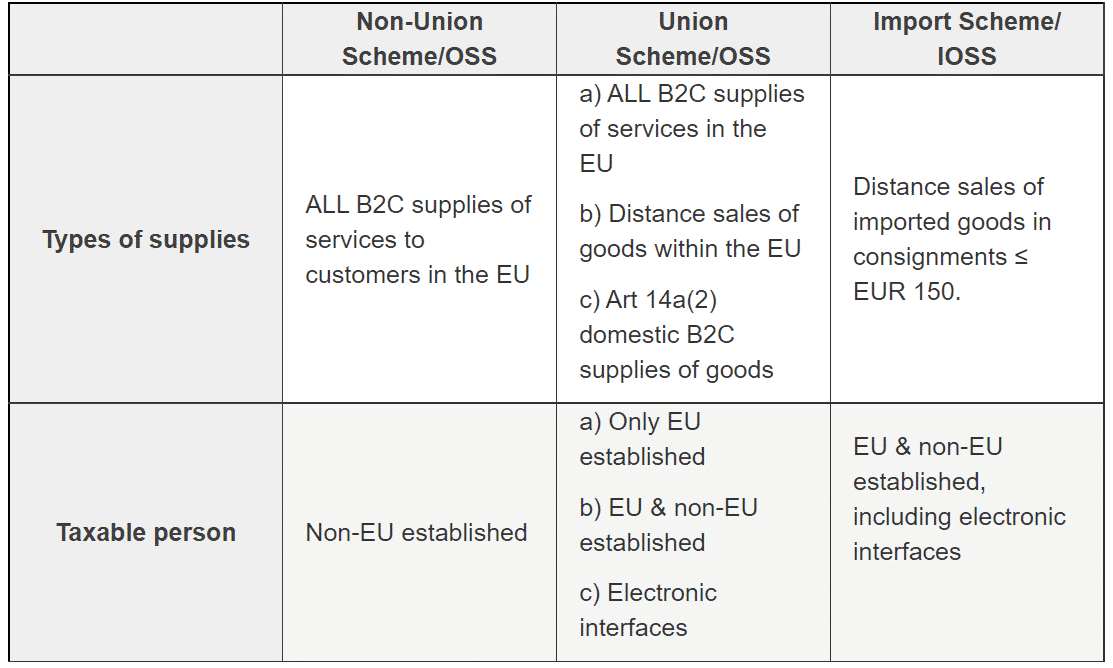
European Commission, New Future Proof VAT Rules
Important Facts:
ShipHero Software Updates:
Your ShipHero software includes a new VAT field to help automate the new processes. Please read the ShipHero knowledgebase article on how to set up eCommerce VAT in ShipHero today HERE.The following have been updated to support the new fields:
For carriers, the following are done:
In progress are:
If you’re an existing ShipHero customer, you can contact your Customer Success Manager (CSM) today to find out how ShipHero can help you navigate the new EU & UK eCommerce VAT and OSS Package requirements.
If you’re new to ShipHero, please schedule a meeting today with our experts to learn more about our WMS software built for ecommerce brands & 3PLs looking to run their best warehouse and how ShipHero works to ensure that organizations invest in the solutions that match their needs, to improve productivity, revenue, and success.
Click HERE to Schedule a Meeting Today
Aaron Rubin, Founder & CEO
About the author: Aaron Rubin the Founder & CEO of ShipHero. He is responsible for planning and executing the overall vision and strategy of the organization. Rubin’s greatest strengths are leadership, change management, strategic planning and a passion for progression. He is known for having his finger on the pulse of ShipHero’s major initiatives, his entrepreneurial spirit, and keen business acumen. His leadership of ShipHero is grounded in providing excellent customer service that drives improved business operations. His passion for ShipHero comes from the culture and his ability to have an impact on the lives of employees, customers, partners, and investors.
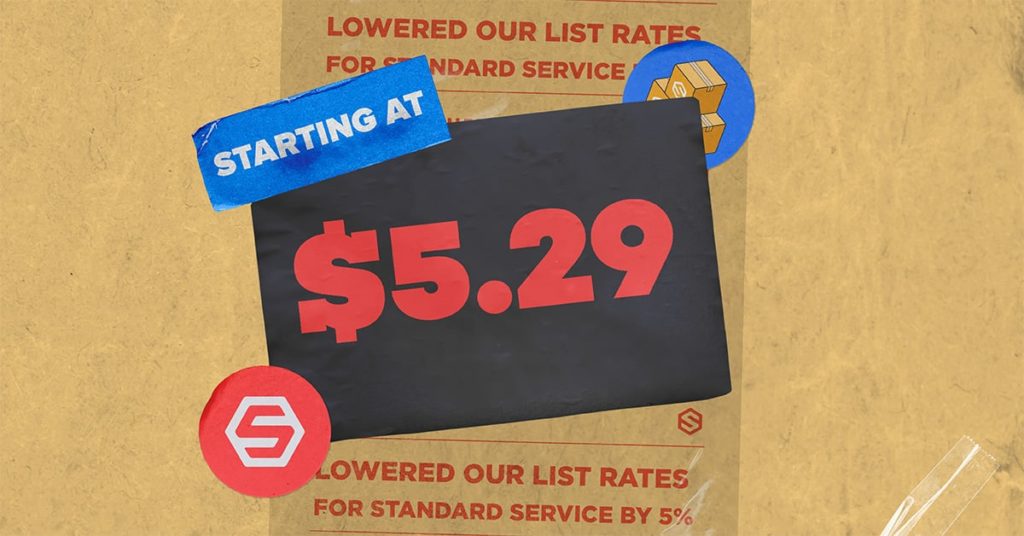
By: Aaron Rubin, Founder & CEO at ShipHeroShipHero Fulfillment is excited to announce that effective today, July 7, 2021, we have lowered our list rates for Standard Service by 5%, which now start at $5.29! Our 2 day service retains the same very low pricing; for example, 5lbs anywhere within the 48 lower states in 2 days is $13.97 - no residential surcharges, no fuel surcharges.ShipHero understands how important it is to be able to offer customers the lowest available shipping rates. This is the driving purpose behind our reduced standard shipping rates, we want to help our customers to reduce their overall shipping costs. Our team continues to focus on quality and service above all and we're expanding our footprint with an additional 400,000 sq ft of warehouse space in Las Vegas and the southeast.
If you’re an existing ShipHero Fulfilment customer, you can contact your Customer Success Manager (CSM) today for any questions you may have.If you’re new to ShipHero Fulfillment, please schedule a meeting today with our experts to learn more about how we can help you get your orders picked, packed, and delivered with our fulfillment service. No setup fees - simply pay as you go. ShipHero works to ensure that organizations invest in the solutions that match their needs, to improve productivity, revenue, and success.Click HERE to Schedule a Meeting TodayAaron Rubin, Founder & CEOShipHeroAbout the author: Aaron Rubin the Founder & CEO of ShipHero. He is responsible for planning and executing the overall vision and strategy of the organization. Rubin’s greatest strengths are leadership, change management, strategic planning and a passion for progression. He is known for having his finger on the pulse of ShipHero’s major initiatives, his entrepreneurial spirit, and keen business acumen. His leadership of ShipHero is grounded in providing excellent customer service that drives improved business operations. His passion for ShipHero comes from the culture and his ability to have an impact on the lives of employees, customers, partners, and investors.Follow Aaron on Twitter&LinkedIn.
By: Aaron Rubin, Founder & CEO at ShipHero
Mis-picks in your company’s order fulfillment process: frivolous mistakes or detrimental problems on your warehouse floor? Well, considering that distribution centers lose an average of almost $585,000 a year because of mis-picks, it may not just be a harmless error after all.
To help your organization spot and fix errors in your pick-pack process, we’ll list the most common errors that lead to mis-picks, and give you solutions to avoid mis-picks in your warehouse.
The pick-pack process is defined as the process of collecting, or picking, ordered items from the inventory, and then packing these items for shipment to customers.
Warehouses are a busy place, with employees meandering from bin to bin and picking items, all while heavy machines move products to the right place at the right time. Of course, mistakes are bound to happen in such a hectic work environment, with an estimated 35% of facilities experiencing constant mis-pick rates of about 1% or more.
But any extra, unnecessary movement by an employee, in the case of a mis-pick, can jeopardize the flow of your whole operation and cost your business in the long run. The cost of the mis-pick (on average) is about $30 per incident.
If you want to increase your order fulfillment rate, accurately and efficiently picking ordered items is vital. An error at this first step can have detrimental downstream effects, cause shipping delays, and increase your shipping costs. Here are some common mistakes.
Among all the possible mistakes in the end-to-end order fulfillment process, picking mistakes happen to be the most common. As a result, distribution centers lose an average of almost $390,000 a year due to mis-picks.
The severity of these errors can vary for your organization; for example, while an incorrectly picked item could be more detrimental to your customer’s trust, a mistaken additional item shipped along with the correct item impacts your margins.
Mis-picks are usually a result of minor errors made by warehouse workers, whether it’s from poor lighting, fatigue, or miscommunication. Here are some of the most common mistakes to avoid.
Picking the Incorrect Item from the Correct Location
In this scenario, the picker heads to the correct bin and grabs the item inside, but it’s not the correct item. This occurs due to a problem with the inventory replenishment process. As a result, the picker will have to find the correct item from somewhere else.
Substituting Incorrect Items
If your business is experiencing stock-outs of certain items, pickers may be unsure what to do when they cannot locate the exact item. Similarly, a picker may accidentally pick the wrong item due to unclear instructions or products that look the same.
Adding Incorrect Items
In the case of bulk orders, your picker might accidentally throw in one product too many, or maybe one wrong item altogether. While the customer might be enthused, this has the potential to impact your margins and inventory levels over time.
The scenarios above typically occur when warehouses are using a paper-based, pick-pack process, where pickers follow orders written/printed on physical paper. Some organizations are vastly reducing their error-rate by moving to a mobile device-based system.
Here are some ways to reduce these mistakes and keep your company warehousing running efficiently and smoothly.
To accurately understand the situation and measure any progress, you should start collecting the necessary data.
Set up KPIs (i.e., key performance indicators) to measure picking accuracy. We recommend setting the following KPIs to get the full picture on your order fulfillment capabilities.
Order Fulfillment and Accuracy
No one likes to receive an order that isn’t theirs. This KPI lets you know how many packages you’ve shipped that have successfully arrived at the appropriate destination. If the order fulfillment values start to dip, then you’ll need to consider the influence it can have on customer opinions about your business.
Order accuracy data will also let you know whether your 3PL delivery line needs to be improved. If you’re sitting on an unusually low percentage of accurate orders, then there may be line errors at your warehouse that you need to address.
Inventory Levels
Whether you have invested in warehousing solutions or store your own inventory, you need to know where your inventory levels stand on a day-to-day basis. Rely on inventory level KPIs to replenish your stock when necessary and to calculate your business’s average supply-to-demand ratio.
If you’re manufacturing products several months in advance, you need to know how much of your inventory goes out per month on average. Order volume KPIs calculate your sales by day, month, or quarter, depending on your needs. You can use year-out estimates to track the ebb and flow of your sales and to pre-produce inventory for each month.
Be sure to communicate your order fulfillment goals and progress, and reward your staff for any improvements made in certain fields.
While this may sound like common sense, mislabeling boxes is a common mistake. Properly identifying and labeling items will help lower the risk of picking the wrong items.
With barcode scanning technology, your pickers can scan items into locations and optimally place the necessary signs, rack labels, and aisle markers to help pickers easily and quickly identify storage locations.
Tired employees make more mistakes, so keeping them alert and rested is crucial to lowering picking mistakes. Collaborative mobile robots can help improve pick rates simply by reducing the need for your workers to walk unnecessarily.
Mobile robots can also help keep employees on task by effectively leading them to choose locations through optimized routes, as well as displaying ordered items and the quantities to pick.
Paper-based operations, while inexpensive and easy to set up, leave your company vulnerable to errors, product loss, and reduced order fulfillment rates.
That’s why more and more companies are transitioning to mobile-based processes. With small investments in mobile devices and the right warehouse management software, your organization unlocks the potential for warehouse staff to independently organize their pick/pack tasks, as well as scan products and bins at each step to minimize human error with built-in redundancies to double-check and triple-check their items.
Additionally, a software solution like ShipHero can directly integrate with e-commerce stores on Shopify, BigCommerce and more, so order information can be distributed right to the picking staff. Also, you can also monitor inventory levels in real-time and coordinate replenishment right when you run out.
Picking errors have the potential to drastically impact order fulfillment operations, leading to shipping delays, damaging your reputation, and hurting your bottom line. Developing a reliable and accurate pick, pack, and shipping process is vital to scaling your business, so consider investing in mobile-based picking processes, as well as the right software to drastically increase your order fulfillment rate.
That’s why more and more companies trust ShipHero WMS. Pick-packers can scan products at each step of the process with everyday mobile devices.
Schedule a meeting today with our experts to learn more about our WMS software built for ecommerce brands & 3PLs looking to run their best warehouse and how ShipHero works to ensure that organizations invest in the solutions that match their needs, to improve productivity, revenue, and success.
Click HERE to Schedule a Meeting Today
Aaron Rubin, Founder & CEO
About the author: Aaron Rubin the Founder & CEO of ShipHero. He is responsible for planning and executing the overall vision and strategy of the organization. Rubin’s greatest strengths are leadership, change management, strategic planning and a passion for progression. He is known for having his finger on the pulse of ShipHero’s major initiatives, his entrepreneurial spirit, and keen business acumen. His leadership of ShipHero is grounded in providing excellent customer service that drives improved business operations. His passion for ShipHero comes from the culture and his ability to have an impact on the lives of employees, customers, partners, and investors.



.svg)