
.svg)

Let’s stay in touch with the ShipHero Blog.


.webp)
The ShipHero Model Context Protocol (MCP) connects supported AI clients directly to your live ShipHero data, so warehouse teams can ask questions and get specific answers from their own account. It is built for day-to-day operational checks, including inventory levels, open orders, shipment status, holds, returns, purchase orders, and exceptions. For ShipHero customers, it is available at no additional charge and runs on existing API credits.
Every order, shipment, inventory movement, hold, return, and purchase order creates data inside ShipHero. Your warehouse information is right there, but getting to it can be a slow, complex process.
Before the ShipHero MCP, answering a specific operational question often meant logging in, finding the right report, applying the right filters, exporting data, or asking the one person on the team who knew where to look.
Even when the answer was simple, like a quick inventory check, it could turn into a 20 to 45 minute task. A customer question could sit half a day while someone pulled the right numbers. That delay adds friction to the floor. It slows decisions. It keeps teams waiting on data they already own.
The ShipHero MCP gives supported AI clients secure, read-only access to live ShipHero data.
That means operators can ask questions in plain English and get answers from their actual account, not from a generic help article or static knowledge base. A chatbot can tell you where to find a number. The ShipHero MCP can return the number itself.
It works with MCP-enabled AI clients, including Claude, ChatGPT, Cursor, and Codex. Connect it once, authenticate access, and your team can start asking operational questions from the AI tool they already use.
The workflow is simple:
The MCP does not replace ShipHero. It makes the data inside ShipHero easier to reach when your team needs a fast answer.
The ShipHero MCP is designed for everyday operational questions, such as:
If the data lives in your ShipHero account, the MCP gives your team a faster way to ask for it.
Speed matters, but safety matters too.
The ShipHero MCP is read-only by design. It can retrieve information from your account, but it cannot create orders, modify records, delete data, or change warehouse settings.
That gives teams a practical way to use AI for operational visibility without risking accidental account changes. Operators can ask. Managers can check. 3PL teams can answer client questions faster.
The data becomes easier to use, while the records stay protected.
For founders, the MCP can turn a quick inventory check into a simple question.
For operations leads, it can surface shipment status, holds, exceptions, and low-stock SKUs without digging through reports.
For 3PL operators, it can help answer client questions faster, using live account data instead of manual follow-up.
The result is a faster way to reach the information already inside ShipHero.
The ShipHero MCP is available to all ShipHero customers at no additional charge. It runs on existing API credits, so specific questions help keep usage efficient.
To get started, visit developer.shiphero.com or contact your ShipHero account representative.
ShipHero MCP is a read-only connection between supported AI clients and your live ShipHero data. It lets users ask operational questions in plain English and receive answers from their actual ShipHero account.
A chatbot usually answers from fixed, generic information. ShipHero MCP connects to live account data, so it can return specific answers about your orders, shipments, inventory, holds, returns, and other ShipHero records.
ShipHero MCP works with AI clients that support the Model Context Protocol, including Claude, ChatGPT, Cursor, and Codex.
No. ShipHero MCP is read-only. It can query data, but it cannot create, update, or delete records in your ShipHero account.
No. The MCP is built for operators and can be connected from a supported AI client in minutes. Developers may use more advanced tools for deeper analysis, but most day-to-day users can work directly with the MCP.
Yes. ShipHero MCP is available to ShipHero customers at no additional charge and runs on existing API credits.
Transitioning to a new Warehouse Management System (WMS) is a high-stakes decision that often triggers concerns regarding downtime, data integrity, and workforce adaptation. As warehouses prepare for 2026 growth, understanding these common hurdles—and the technical solutions that resolve them—is essential for a successful migration. This guide addresses the five primary barriers to adoption and how a high-velocity infrastructure ensures a seamless transition.
Warehouse operators frequently hesitate to upgrade due to perceived risks that can halt operations. These challenges typically include:
To clear these hurdles, a structured implementation strategy is used to prioritize data density and entity clarity.
In the competitive eCommerce landscape, staying stagnant with manual workarounds is often more costly than the transition itself. Moving to a high-velocity WMS converts your warehouse from a cost center into a growth engine by providing Labor Efficiency and ROI through automated routing and reduced authentication friction.
Because the platform is built for the floor worker, features like Workforce Hero allow seasonal temps and new staff to be authenticated and productive in under an hour.
No. High-velocity infrastructure increases visibility by providing Total Real-Time Control. Managers can monitor exactly what is in the Hospital queue and track replenishment in real-time from a single dashboard.
Before going live, a ground-up audit is performed using cycle counting tools. The system's architecture ensures that every movement on the floor is synchronized with sales channels instantly, maintaining 99.9% accuracy.
Picture a packer at Peak Season. A box is in front of them, a product in each hand, and somewhere on a cluttered desk there's a mouse they need to find to confirm the order. They look down. They hunt. They click. Then they do it again. Thousands of times a day.
That moment of friction is small. But it is never just one moment. Multiply it across your entire pack line, across an entire shift, and you are looking at a measurable and largely invisible drag on your total throughput.
Tap-to-Pack is a purpose-built hardware controller designed by ShipHero to eliminate digital friction at the packing station. It connects via USB-C, requires no drivers or additional software, and syncs automatically with the ShipHero WMS packing app. This new system is now available at the ShipHero Store.
Instead of navigating a screen with a keyboard and mouse, packers execute every high-frequency command — such as selecting box sizes, printing labels, finalizing orders, flagging exceptions — with a single physical tap on one of eight programmable buttons.
Key specifications:
Most warehouses are running 2026 operations on 1990s peripheral standards. The keyboard and mouse were designed for spreadsheets and emails, not high-volume fulfillment. When used at a packing station, they create three compounding problems:
The problem is not your people. It is the tools you are asking them to use.
Tap-to-Pack introduces a "Rodent-Free" packing standard: a workflow where the packer's hands stay on the product, their eyes stay on the work, and the software fades into the background.
The device guides the packer through two feedback systems:
ShipHero customers running Tap-to-Pack are already seeing a 90% reduction in on-screen interactions and a significant increase in the number of orders packed per hour, without adding headcount or changing their warehouse layout.
One of the hardest challenges in fulfillment is absorbing volume quickly, especially during Peak Season, when temporary staff need to reach target productivity fast.
Because Tap-to-Pack's interface is physical and intuitive, there is almost nothing to teach. Pick up the product, follow the light, tap the button. New packers can reach target productivity in minutes rather than hours.
The system is also modular:
Whether you are a growing DTC brand or a high-volume 3PL, Tap-to-Pack is designed so your hardware never becomes a ceiling on what your team can do.
Tap-to-Pack is a programmable, industrial-grade hardware controller that connects to the ShipHero WMS and allows warehouse packers to execute packing station commands, such as printing labels, selecting boxes, and completing orders. All with a single physical button press, eliminating the need for a keyboard and mouse.
The device connects via USB-C and syncs automatically with the ShipHero WMS packing app. It is a true plug-and-play solution: no drivers, no background software, and no manual configuration required.
Yes. Buttons are configurable for a range of packing actions, including Print Label, Complete Order, Select Box Size, and the Hospital function, which flags a problematic order and keeps the line moving without stopping to resolve it on screen.
The system is fully modular. Connect up to two additional 8-button hubs to the Main Hub for a total of 24 programmable buttons, supporting even the most complex multi-step packing workflows.
Tap-to-Pack devices require ShipHero Packing App v1.0 or higher. The current release is v1.1.0.
Imagine running a warehouse where orders are picked quickly, inventory is accurate, and all operations run smoothly without any errors or delays. Thanks to Artificial Intelligence, this can now become a reality with ease.
AI is transforming warehouse management by enhancing efficiency, intelligence, and the ability to meet the rapid demands of today’s eCommerce-driven market.
ShipHero is pioneering this revolution with its AI-powered warehouse solutions, setting new industry benchmarks. This article explores ShipHero’s AI Picking feature, highlighting how it’s transforming warehouse management and enhancing operational efficiency.
The integration of AI technologies, including machine learning, robotics, and predictive analytics, is revolutionizing warehouse operations, driving significant improvements in efficiency, accuracy, and overall performance. These innovations are optimizing processes across various areas, from inventory management to order fulfillment. Below are the key benefits of AI in warehouse management.
A combination of AI technologies is shaping smarter warehouse systems to help revolutionize warehouse management.
ShipHero has taken AI integration to the next level with its AI Picking feature, designed to significantly improve warehouse efficiency. This feature automates the picking process, reducing the reliance on manual labor and enhancing productivity in ways that were once thought impossible.
Let’s dive deeper into how ShipHero’s AI Picking works and the advantages it offers.
AI Picking optimizes warehouse operations in two key ways:
The AI Picking feature delivers a wide range of benefits:
The transformative power of AI extends far beyond just picking. AI is also revolutionizing other aspects of warehouse management, driving improvements in operational efficiency, inventory management, and safety.
AI automates tasks, reducing errors and increasing speed. Automated sorting and real-time inventory tracking ensure accuracy, while real-time monitoring helps managers adapt and ensure timely deliveries.
AI plays a vital role in maintaining accurate inventory levels. By leveraging predictive analytics, AI can forecast demand and optimize stock levels, helping warehouses avoid both stockouts and overstock situations. This leads to better inventory management and fewer disruptions in supply chains.
AI-driven systems can monitor warehouse conditions to ensure safety and compliance with industry regulations. These systems can analyze warehouse data and predict potential hazards before they occur, proactively reducing risks and ensuring a safer working environment.
AI technologies are playing a transformative role in the supply chain and logistics sectors by improving efficiency, reducing costs, and enhancing decision-making.
These intelligent systems effortlessly manage supply chain processes by using data to optimize operations, predict trends, and automate routine tasks. This ultimately reshapes everything, from how goods are moved to stored and delivered.
The future of warehouse management looks promising with greater automation and efficiency, but future warehouse digitization brings challenges, such as high upfront costs and the need for skilled personnel.
AI-powered drones, autonomous robots, and IoT integration are smart warehouse technologies that are revolutionizing warehouse operations. Drones will deliver goods quickly, while robots automate sorting and transportation, thereby reducing the need for manual labor.
IoT and AI integration will enable real-time monitoring and optimization of operations. Smart technology in warehouses is leading to fully automated systems that are faster, scalable, and need minimal human input.
While AI offers immense benefits, businesses must also consider certain challenges. High initial investments in AI technology, data security concerns, and the need for skilled personnel are just a few of the hurdles that must be addressed.
However, with a strategic approach, companies can eliminate the challenges and embrace AI’s full potential to boost accuracy in picking and improve overall warehouse operations.
AI minimizes error by automating tasks like inventory tracking, order picking, and sorting, ensuring greater accuracy and efficiency.
Yes, AI-driven predictive analytics can predict demand, track inventory levels, and improve supply chain efficiency by forecasting needs with greater accuracy to help businesses stay ahead of trends and market fluctuations.
AI solutions are becoming more cost-effective thanks to cloud-based services and subscription pricing models. These options make AI technology more accessible to small businesses, allowing them to take advantage of its benefits without large upfront costs.




If you're in the warehouse management software (WMS) market, you might be weighing the pros and cons of ShipHero and Mintsoft. To make an informed decision, keep reading to explore the features and benefits of each provider and see which one fits your business needs.
ShipHero offers robust warehouse management software, often named as the top option in the market by third-party reviewers like G2. With features like inventory management, sales reporting, and picker and packer efficiency tracking, their WMS streamlines warehouse operations as effortless, one-click integrations for order and return management with major eCommerce platforms.
In addition to WMS, ShipHero offers end-to-end eCommerce fulfillment services, using nine fulfillment centers across North America for timely product delivery. You can simply send your products to a ShipHero warehouse, and they take it from there.
ShipHero’s powerful Warehouse Management Software streamlines warehouse operations, integrates with major eCommerce platforms, and offers automation features for faster processing. Businesses can rely on ShipHero to manage their inventory, orders, and shipping, making it a convenient and efficient choice for eCommerce operations.
Mintsoft is a cloud-based order fulfillment software designed to assist eCommerce businesses in meeting customers' demands across multiple sales channels.
Based in the UK, Mintsoft offers over 60 integrations with online shopping platforms and more than 80 courier integrations, making it compatible with many partners. With its automation capabilities, Mintsoft provides real-time visibility and traceability of inventory that can be accessed from any location.
Mintsoft's strength is its automation capability that enhances order fulfillment accuracy and efficiency. It also provides real-time visibility into inventory and traceability from anywhere, helping businesses manage their operations more effectively.
ShipHero and Mintsoft offer similar functionalities such as inventory management, warehouse management, order processing, and fulfillment. However, ShipHero excels in extensive integrations, sales forecasting, and end-to-end control. Mintsoft distinguishes itself by utilizing efficient warehouse space and centralized order processing. These two solutions will ultimately depend on your specific business requirements and priorities.
ShipHero: Its strengths lie in its extensive integrations, enabling seamless synchronization of inventory data with various eCommerce platforms and shipping carriers.
Mintsoft: They focus on warehouse space optimization, making it suitable for businesses looking to maximize space efficiency.
ShipHero: They stand out with an extensive integration network, empowering businesses with seamless connectivity to eCommerce platforms, shipping couriers, and industry leaders.
Mintsoft: Their warehouse management tools optimize space utilization and offer real-time reports.
ShipHero: They streamline order processing and fulfillment with automation rules for faster picking and packing. ShipHero’s extensive integration ecosystem simplifies order processing by connecting seamlessly with various eCommerce platforms, streamlining the entire order fulfillment process.
Mintsoft: They focus on centralized order processing and a user-friendly order management tool that may appeal to businesses with high-order volume scenarios.
ShipHero: Their strength is in their diversity and breadth of integrations, ensuring smooth data flow across the eCommerce ecosystem.
Mintsoft: While Mintsoft provides integrations, it will need to expand its integration ecosystem to match ShipHero's connectivity options.
ShipHero is an excellent choice for businesses that value smooth integration with eCommerce platforms and shipping carriers, and it’s particularly useful for those who require advanced features such as sales forecasting to enhance their inventory management.
If you need a comprehensive solution that provides complete control and transparency over your warehouse operations, from stock monitoring to packaging recommendations, ShipHero is the perfect fit for your business.
Highly adaptable and priced transparently, ShipHero is the preferred choice for businesses seeking extensive eCommerce integrations, advanced features like sales forecasting, and end-to-end control over their warehouse operations.
Mintsoft presents a viable option for businesses seeking a warehouse management system that can effectively optimize space utilization and centralize order processing. Those looking to streamline operations across particular sales channels can benefit from Mintsoft's integration options.
Mintsoft is a warehouse management system focusing on specific features like warehouse space optimization and centralized order processing. However, compared to ShipHero, some might perceive it as offering relatively less value. While Mintsoft provides automation capabilities and a range of integrations, its system might face challenges computing all the features together. For businesses seeking a more comprehensive solution with extensive eCommerce integrations, advanced features like sales forecasting, and complete control over warehouse operations, ShipHero could be a better choice, as it offers superior overall value.

ShipHero’s warehouse management software helps you throughout the fulfillment process, from receiving to shipping. It gives you robust order tracking, real-time inventory monitoring, sales reporting, and more.
ShipHero does compare with Mintsoft due to their similar features. However, ShipHero has the edge in the much larger number of integrations it offers and its all-in-one pricing model.
ShipHero has an open API that lets you build solutions and integrations based on ShipHero’s platform.
.svg)

ecomspaces’ search for a solution that could integrate with their 3PL was challenging until they found ShipHero. Discover how this revolutionary end-to-end solution helped ecomspaces offer swift service and satisfy customers.
Founded by Maïré Rosa, ecomspaces is committed to providing business owners with the resources and support they need to succeed in the world of eCommerce. They understand that running an eCommerce business is a complex and multifaceted endeavor.
That's why they offer a one-stop-shop solution that provides all the services and support a business owner could need, all under one roof. From product photography to order fulfillment and international shipping, ecomspaces is the go-to destination for businesses looking to streamline their operations and scale their growth.
“I have a waiting list of clients [now],” Rosa said. “We have 50 right now and are working to bring on more once we have the room and the headcount.”
Training new employees and managing inventory was like navigating a labyrinth for Rosa. Clients could not access their Shopify inventory, and integrations needed to be improved. Everything had to be done manually, which was an incredibly daunting task. It all changed when Rosa had to travel to handle a family emergency in Puerto Rico.
Her phone and laptop were buzzing non-stop as everyone clamored for her attention. This was her breaking point. Then she remembered the ShipHero demo she had seen before. It might have been a little more expensive than what she was using, but clearly, what she was using wasn't working. So, she decided to take the plunge and invest in ShipHero.
Rosa was particularly drawn to the billing automation and customer dashboard. This effective duo simplified processes and saved her valuable time, allowing her to focus on growth. Setting up everything only took a week, further enhancing her experience.
“Billing was a nightmare before. Now, it’s so much easier.” - Maïré Rosa.
Ecomspaces struggled with the tedious tasks of answering questions and putting out fires. That was until they got ShipHero's WMS up and running in their facility. With the software in place, ecomspaces was able to provide an unprecedented level of visibility to their clients, freeing up Rosa's time to focus on growing her business. Rosa’s clients and customers could manage their accounts without constantly contacting her for support. With ShipHero, she had found the perfect solution to keep her business running smoothly.
ShipHero's end-to-end solution has proven perfect for 3PLs like Rosa's, with special features tailored to manage clients efficiently. Now, Rosa reports that ecomspaces has been enjoying incredible growth thanks to the benefits of ShipHero's system, including allowing clients to use their shipping accounts and manage cash flow more effectively. No wonder more companies are turning to ShipHero to streamline operations and drive growth.
“We went from shipping less than 100 orders a day to shipping up to 1,000 orders a day (thanks to bulk ship!).” - Maïré Rosa.
Ultimately, there was no question that ShipHero was the perfect solution for Rosa and ecomspaces. With special features tailored to 3PLs, Rosa and her team could move away from navigating a labyrinth and start growing their business. Now, more than ever, business owners can access the resources they need to succeed in eCommerce.
Take advantage of these tools by trying a ShipHero demo today! Investing in your business is the first step toward success.
ShipHero works with 3PLs just like ecomspaces to streamline processes and give them control of their warehouse operations. We’d love to help you do more with your warehouse - contact our team today to sign up for a demo.
Let’s Get Shipping!

As a 3PL, warehouse manager, or COO managing the operations of your warehouse, it's essential to understand how to audit warehouse technology and processes. Auditing effectively assesses areas that need improvement while enabling businesses to maximize inventory accuracy and improve efficiency.
By evaluating current warehouse practices, you can quickly identify internal process gaps and explore potential technological solutions that can enable optimization within all activities related to order fulfillment. So, what should be considered when auditing your warehouses? Let’s dive into the specifics so you can apply best practices for successful business operations!
A warehouse audit comprehensively reviews your warehouse's technology and processes. It systematically and objectively examines your warehouse's operations to identify improvement areas and optimization opportunities. The audit helps you evaluate the effectiveness of your warehouse processes, technology efficiency, and inventory management accuracy.
Auditing a warehouse requires a systematic and structured approach. The following steps can guide you through auditing your warehouse technologies and processes:
Develop a comprehensive warehouse audit checklist that covers all aspects of your warehouse operations. Your audit checklist should include all relevant areas, such as receiving and put away, order picking, packing and shipping, inventory management, and technology systems. This checklist will serve as a roadmap for your audit, ensuring you cover all the necessary areas.
A warehouse's layout and design can significantly impact how efficient your operations are, regardless of what type of warehouse you have. Consider factors such as aisle width, storage density, and the flow of goods through your warehouse to ensure it is optimized to meet your needs.
Receiving and putaway are two essential functions that play a vital role in the daily operations of a warehouse and should be audited regularly to ensure that they are working correctly and efficiently. To achieve this, you should ensure that the receiving team thoroughly examines all incoming shipments and stores them in the correct location once they are inspected.
Warehouse operations depend heavily on order picking, and inefficient processes can lead to errors and delays. You must analyze your order picking processes to ensure they are optimized for speed, accuracy, and proper procedures, as well as the right technology to help your employees complete their tasks as efficiently as possible.
The packaging and shipping processes are essential components of warehouse operations that must be evaluated to ensure they are efficient and error-free. In addition, it is important to ensure that your packers use the correct packaging materials and follow the proper packing procedures throughout the process.
To ensure a successful warehouse operation, you will need to confirm that your inventory tracking systems are up-to-date and that your warehouse staff is properly managing stock levels in your warehouse.
As modern warehouse operations have become more technical and complex, you will need to evaluate your technology systems to ensure they are working correctly and fully integrated with your warehouse processes. You will also want to ensure that your technology systems are up-to-date and optimized for the needs of your warehouse.
If you are planning to conduct a warehouse audit, the procedures will differ depending on your specific needs and the complexity of the operations in your warehouse. However, following some general guidelines can provide you with some helpful guidance to ensure that your audit is thorough and effective:
The scope of your warehouse audit should be clearly defined, including the specific aspects of your operations that you plan to examine. This will allow you to concentrate your audit on the most critical areas and ensure all aspects of your warehouse operations have been covered.
The first thing that needs to be done is to assign tasks to the individuals responsible for leading, performing, and implementing any changes that need to be made due to the audit.
During the audit, it is important to take detailed notes and document any areas of concern or opportunities for improvement so that you can refer back to them later. Ensure you follow your warehouse audit checklist to cover all relevant areas.
Utilize your audit checklist and notes as a guide for analyzing your audit results. Be sure to include key stakeholders in the process to identify any areas of concern or opportunities for improvement.
After you have analyzed the situation and identified the areas you are concerned about, it is time to develop an action plan to help you address them. Your action plan should be specific, measurable, achievable, relevant, and time-bound to address these areas.
As part of your action plan, implement the changes identified and monitor their effectiveness. Make sure to communicate any changes to your team, as well as to provide training if necessary.
Taking the time to regularly audit your warehouse technologies and processes helps ensure that operations are running efficiently and that tasks are being completed accurately. This careful review can also uncover areas for improvement and provide the opportunity to troubleshoot any issues.
To implement a successful audit, define the scope of the audit, assign responsibilities, conduct the audit and analyze the results. Create an action plan, including implementing any necessary changes, for process improvement.
A warehouse management system is extremely beneficial in this process as it streamlines tasks and reduces errors. Give ShipHero a try today and get ultimate control over your inventory with improved visibility into daily activities - perfect for performing an absolutely successful audit!
About ShipHero: We make it simple for you to deliver your eCommerce. Our software helps you run your warehouse, and our outsourced shipping solutions eliminate the hassle of getting your products to your customers. With thousands of brands and 3PLs relying on us daily, we’re here to help with all your logistics needs.

Shipping operations play a pivotal role in the world of eCommerce businesses. Regardless of how exceptional your product is, its true value to both customers and investors is only realized when it's delivered without hitches. Even outstanding product reviews can be overshadowed by shipping problems such as delays, incorrect shipments, or goods arriving damaged. These issues can range from minor problems to major disruptions that can significantly impact the business.
To truly scale your eCommerce business, it's essential to refine your shipping processes. This not only ensures timely and cost-effective deliveries but also broadens your customer reach. Many shipping companies face problems in their operations, from cargo handling to tracking shipments. The scale of these issues can vary, but they often impact the business's bottom line and investor confidence.
In This Article:
Shipping operations encompass the various processes that eCommerce companies put in place to guarantee timely deliveries. Effective management of these operations is paramount. Disruptions in areas like warehousing, inventory, or the broader supply chain can lead to significant losses. Whether you're a small business sending out daily packages or a global enterprise handling vast cargoes, shipping operations are the backbone of your success. From shippers and carriers to importers and exporters, everyone in the shipping lines plays a crucial role. A cohesive team, including the shipper and shipowner, ensures that the freight reaches its destination safely.
Shipping operations, although they might differ across industries, generally involve four primary stages:
This stage involves a dedicated team, often referred to as pickers, retrieving items from warehouse storage for packaging. Efficient warehouse picking is crucial for meeting customer demands and ensuring worker safety. Modern software solutions can guide pickers in selecting the right products and maintaining accurate documentation. Learn more about warehouse processes here.
In larger operations, picking and packing are distinct processes. Proper coordination ensures optimal use of resources, from equipment to personnel. It's also essential to consider the consolidation of goods, and shipping label especially when dealing with containers.
Proper labeling of shipping carrier is paramount. Incorrect or missing labels can lead to issues with customs clearance, delivery, and trade rights. Understanding how shipping labels work is essential.
Once products are en route, especially via sea vessels or other ships, control diminishes. Challenges can arise, emphasizing the importance of insurance for all shipments. Discover more about expedited shipping options here. It's also vital to consider maritime regulations, port criteria, and charter agreements. Effective tracking systems and efficient terminals play a significant role in ensuring the cargo reaches its destination.
While the core stages remain consistent, nuances arise when comparing domestic shipping rates to international shipping:
Shipping within a region offers more control. Choices offering free shipping range from UPS to local couriers, depending on the delivery area. Local terminals and ports play a significant role in ensuring smooth transportation.
Shipping overseas, for instance to Canada or France, introduces complexities like customs and tariffs. Shipowners and shipping companies must be aware of the rights and responsibilities associated with international freight. Exporters must also navigate maritime regulations and charter agreements that dictate the terms of cargo transport.
Such software aids in managing product shipping operations. Most warehouse management systems incorporate shipping features, streamlining the logistics and transportation processes. This includes tracking containers, managing storage facilities, and ensuring the right equipment is used to ship products.
Consider the entire operational cost, not just shipping expenses. Having multiple warehouses might reduce shipping times and costs but could increase maintenance and storage expenses.
Utilize warehouse and eCommerce software to assess shipping cost and efficiency. Base strategies on concrete information, not mere assumptions.
Minimizing manual processes reduces errors, ensuring accurate order fulfillment and efficient handling free shipping of goods.
Worker safety should always come first. Avoid potential legal and financial repercussions by ensuring a safe working environment.
Continuously assess and adapt your shipping strategy to changing market conditions and business criteria.
In the dynamic world of eCommerce shipping operations, sustainability emerges as a guiding star. Beyond the seamless delivery of products, a growing focus on environmental responsibility is steering the conversation. Embracing sustainable shipping practices entails utilizing eco-friendly packaging materials, optimizing routes to curb emissions, and harnessing renewable energy sources within logistics. This harmonious approach not only ensures business success but also contributes to a greener planet. Dive into the realm of sustainable ecommerce shipping solutions and discover the fusion of commerce and conservation.
Amid the tapestry of the ecommerce shipping process, the final stretch known as last-mile delivery unveils innovation's vibrant tapestry. Picture a realm where drones soar with packages, autonomous vehicles navigate streets, and crowdshipping paints a collaborative canvas. This realm is now. The veil between order and doorstep is thinning, driven by cutting-edge technologies that redefine the eCommerce experience. These innovations are not mere concepts; they are tangible threads knitting the future of shipping.
In the dance of eCommerce, returns play an unforeseen role – enter reverse logistics. This backstage choreography involves handling returns with grace, orchestrating restocking, and nurturing customer satisfaction. Embracing returns as part of the performance, businesses can pivot this process into a symphony of efficiency. The spotlight shines on managing expectations and orchestrating returns seamlessly. Unravel the script of reverse logistics and find harmony amid the complexity.
Within the world of international eCommerce, a hidden labyrinth awaits – the realm of global trade agreements. The tapestry of cross-border commerce is woven with the threads of trade pacts, shifting regulations, and intertwined destinies. Here, businesses voyage through a sea of complexities, adapting their sails to ever-changing winds. Understanding this landscape is akin to deciphering a map to success across international waters.
Beneath the logistics, a heartbeat echoes – the rhythm of customer experience. Transparent communication, timely deliveries, and the art of the unboxing experience converge to create a symphony of delight. Nurturing this customer-centric melody sets the stage for applause. Here, the curtain rises on strategies that transform shipping into a captivating experience, where customers become avid fans and brand advocates.
Amid the whirlwind of shipping, unforeseen storms can arise. The anchor that steadies the ship is risk management and insurance. A safety net woven with insights, strategies, and contingency plans shields businesses from financial tempests. This narrative of preparedness weaves together the significance of understanding insurance types, risk assessment, and sailing through the waves of uncertainty.
In the realm of shipping, packaging is not just a cover but an art form. Imagine a world where packages are shields against damage, bearers of eco-friendliness, pioneers of privacy with discreet shipping, and creators of enchanting unboxing experiences. This world exists. Innovative packaging and shipping solutions redefine the ordinary, crafting a symphony of protection and aesthetics. Let the journey through inventive packaging unveil a new dimension of shipping's visual and tactile poetry.
On the horizon of shipping, a dazzling sunrise emerges – the age of technology. Blockchain brings transparency to tracking, AI predicts the tides of demand, and IoT breathes life into real-time monitoring. This symphony of innovation orchestrates a harmonious future where data dances, machines collaborate, and the efficiency of shipping is transformed. Unveil the future, where tech's crescendo shapes the destiny of shipping operations.
Across the seas of international shipping, cultural currents flow. Navigating these waters entails more than charts and coordinates – it requires an understanding of cultural nuances, customer preferences, and the art of respectful interactions. Each shore is a tapestry of traditions, and each customer a unique chapter. By embracing cultural considerations, businesses unfurl the sails of cross-border success.
In the symphony of shipping, partnerships are the harmonies that elevate the melody. Shipping carriers, couriers, and freight forwarders weave a fabric of collaboration that carries the eCommerce chorus to distant shores. Nurturing these alliances is more than a transaction; it's the secret to seamless logistics. Discover the art of synergy, where partnerships propel the rhythm of successful ecommerce shipping strategy.
After the applause of delivery fades, the analysis takes center stage. Post-delivery analytics, a symphony of data, offers insights into performance and points towards the future. Feedback from customers, patterns in delivery times, and a scorecard of satisfaction compose this insightful melody. By embracing this data-driven tune, businesses refine their shipping operas and shape the encore of success.
Dropshipping involves selling products stored at a third-party location, often an online store without the seller maintaining a physical inventory.
Land, sea, and air are the primary shipping methods. The choice of shipping method depends on the product, its value, and the destination.
For U.S. tax purposes, shipping costs should not be included in the cost of goods sold.

In the world of e-commerce, picking items from your warehouse is a pivotal part of the order fulfillment process. Without a reliable picking list, there's a risk of sending products that might be out of stock or on backorder. Delays in generating pick lists can also postpone customer orders, especially when items are requested for delivery by a specific date. Dive deeper into the world of picking lists and discover ways to enhance their creation. Read more about warehouse picking strategies here.
A picking list is a vital document used by warehouse personnel during the order fulfillment phase of ecommerce businesses. This list provides the necessary information to find the items ordered within your warehouse or fulfillment center. In the fast-paced manner of e-commerce operations, it's essential to have accurate picking lists. Relying solely on memory can lead to errors, especially when dealing with a high volume of orders or when items are on backorder. For example, if one product is out of stock, the system can flag it, ensuring that available alternatives are considered.
With the rise of e-commerce, picking lists have evolved. These digital pick lists are accessed via devices like smartphones, tablets, or even more advanced tablets with specialized software. They've become increasingly popular due to their convenience. With digital lists, warehouse managers can automatically generate order details, including the quantity and bin location, and forward them to pickers. These lists can also provide comprehensive product information, ensuring pickers don't mistakenly select the wrong item. Discover the best practices for warehouse bin storage systems here.
A picking list should contain specific details about the customer order to guide warehouse pickers. Here are the crucial elements of pick tickets:
To enhance your picking and packing operations:
Integrating picking lists with your WMS offers numerous advantages. A WMS can auto-generate picking lists when a customer places an order, eliminating manual creation. It also tracks stock movements in real-time, enhancing inventory management. This real-time data ensures that manual stock checks aren't required after each order. A WMS digital picking list can also suggest temporary containers for pickers to place items before forwarding them to packers.
Imagine a dance of efficiency within the warehouse - the art of optimal picking routes. Just as choreography guides dancers, optimized routes lead pickers through a symphony of productivity. By sequencing the order of item retrieval, businesses can cut down on unnecessary travel, decrease aisle congestion, and create a ballet of streamlined warehouse operations.
In the vibrant tapestry of business, no two threads are alike. Extend this notion to picking lists by exploring the realm of customization. Unveil the power of tailoring lists to specific orders or customer quirks. Whether it's prioritizing high-value treasures or grouping similar gems, customization of pick lists adds a bespoke touch to the art of order fulfillment.
In a world where seconds matter, the magic of real-time inventory comes alive. Dive into the fusion of picking lists with real-time updates, ensuring that pickers aren't led astray by phantom stock. Imagine a harmony where customers access real-time product availability, enhancing transparency and trust.
Imagine a puzzle where pieces reside in different realms. This is the essence of multi-location digital picking lists. Illuminate the complexity and benefits of managing inventory across diverse warehouses or fulfillment centers. From warehouse to warehouse, the orchestration of picking lists shifts to encompass a world of diverse storage landscapes.
In the sea of text, visuals emerge as guiding stars. Welcome the concept of visually enriched picking lists - a world where images and QR codes guide the pickers' hands. Like an artist's palette, visual aids simplify the picking process, and reduce errors born from similar-looking items.
In the symphony of the order fulfillment process, harmony is maintained through routine audits. Envision the rhythm of picking list audits, where meticulous checks ensure alignment between paper and reality. Uncover how these rhythmic checks keep the performance accurate and the applause unmarred.
Amid the crescendo of picking, metrics emerge as the scorecards of success. Enter the world of measuring performance with KPIs - pick accuracy, pick to order, fill rates, and picker productivity. This is where numbers paint a vivid picture of efficiency and guide the melody of improvement.
Imagine a world where words hold the power of action. Enter voice-powered picking, where spoken commands guide the hands of pickers. Unshackled from screens or paper, pickers navigate the warehouse with seamless commands, like a symphony conducted by speech.
Extend the narrative to a realm where accuracy becomes synonymous with customer delight. Showcase how precision in picking list details translates to seamless order fulfillment. This journey uncovers how accurate and discrete picking list also influences the chorus of customer satisfaction.
In the tapestry of commerce, seasons cast their spell. Unveil the art of adapting picking lists to the ebb and flow of demand. As seasons change, picking lists transform, ensuring that both the quantities and right products dance forward in sync with customer desires.
In the realm of order fulfillment, pickers wield expertise. Explore the significance of training and onboarding, where pickers master the art of deciphering picking list details, navigating warehouse maps, and finding their rhythm in the symphony of operations.
As the curtain falls on order fulfillment, returns take center stage. Extend the spotlight to picking lists in the realm of returns. Unveil how a well-crafted pick list, guides the choreography of return processing, ensuring that items find their way back to the warehouse with grace.
From warehouses to the world, the concept of picking lists journeys beyond your own warehouse. Embrace the broader canvas, where picking lists guide not only warehouse staff but also retail employees replenishing store shelves or orchestrating in-store pickup experiences.
Take a look at what a picking list in our ShipHero software looks like!
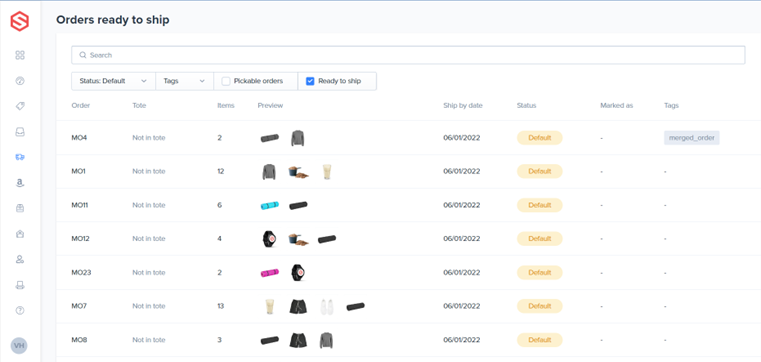
A document detailing a customer's order, aiding warehouse staff in selecting the right items for shipping.
It helps locate the correct items in the warehouse to fulfill customer orders.
Efficient order picking ensures order accuracy, leading to fewer returns, reduced costs, and enhanced customer satisfaction.
The efficiency of order fulfillment is the cornerstone of success for any eCommerce business. Whether venturing into Direct-to-consumer (DTC) sales or exploring diverse channels like dropshipping, prompt and accurate product delivery is paramount.
Choices related to eCommerce fulfillment services, encompassing shipping costs, logistics, and carriers, hold immense importance in the online sales arena. These decisions impact customer trust, brand loyalty, and profitability.
At its core, eCommerce fulfillment involves storing goods from suppliers in a warehouse, processing orders, and delivering products to customers. This journey encompasses stages after production and quality control.
However, effective eCommerce fulfillment extends beyond storage to utilizing tools, technologies, and the best fulfillment systems for efficient stock management and seamless returns handling. Informed decisions about warehousing, carriers, and shipments are vital for maximizing operational efficiency and customer satisfaction.
Every online purchase hinges on five crucial warehouse processes that define the best eCommerce fulfillment is:
Goods arrive at the warehouse, awaiting storage until orders are placed. Seamlessly integrating the entire fulfillment process at this step ensures accurate and prompt deliveries. Efficient warehouse layout and management software enhance this process.
Optimal inventory storage location and duration significantly impact both fulfillment cost and efficiency. Maintaining appropriate inventory levels and accessible item positioning are vital. Businesses using third-party fulfillment or dropshipping must be mindful of storage fees.
This phase involves picking and packaging customer orders. Efficient order processing is a hallmark of well-organized warehouses. Software aids workers in locating items swiftly, redirecting resources to critical areas like customer support and marketing.
Shipping decisions are data-driven, considering customer demands, shipping rates, and logistics. Strategically located warehouses minimize shipping distances, enhancing the customer experience.
The fulfillment journey extends beyond order dispatch. A robust customer support system, efficient order tracking, and hassle-free return policies are pivotal for customer satisfaction.
No universal fulfillment model exists. Brands may excel with drop shipping, print on demand, or other traditional methods. The rise of 3PL and logistics solutions provides various options. Making the right choice for outsourcing fulfillment often requires asking pertinent questions and gathering information, emphasizing collaborative partnerships between businesses and chosen fulfillment services.
While industry giants like Amazon and Rakuten are notable, surveying multiple fulfillment centers is crucial. Consider network size, manufacturer partnerships, and platform reputation. Every decision influences the customer experience.
When formulating a fulfillment strategy, evaluate shipping and warehouse expenses. Use data to identify cost-saving opportunities and enhance accuracy. Employ appropriate tools, practices, platforms, and systems for tracking shipments and managing inventory. Business growth, operational scale, and available networks factor into decision-making.
At its core, eCommerce fulfillment involves storing goods in a warehouse, processing orders, and delivering products to customers. This includes stages after production and quality control. Effective eCommerce fulfillment goes beyond storage, using tools for efficient stock management and returns handling. Decisions on warehousing, carriers, and shipments are vital for efficiency and customer satisfaction.
Goods arrive at the warehouse, awaiting storage until orders are placed. This step, when integrated properly, ensures accurate and prompt deliveries. Warehouse layout and management software are crucial.
Optimal storage location and duration significantly affect efficiency. Maintaining inventory levels and accessible item positioning is essential. For businesses using third-party fulfillment or dropshipping, storage fees must be considered.
This phase involves picking and packaging customer orders. Efficient order processing is a hallmark of well-organized warehouses. Software helps workers locate items swiftly, reallocating resources to critical areas like customer support and marketing.
Shipping decisions are data-driven, considering customer demands, shipping rates, and logistics. Strategically located warehouses minimize shipping distances, enhancing the customer experience.
The fulfillment of the customer demand journey extends beyond order dispatch. Robust customer support, efficient order tracking, and hassle-free return policies are pivotal for customer satisfaction.
eCommerce businesses can excel with various models such as dropshipping, traditional methods, and third-party logistics (3PL). The right choice requires pertinent questions, information gathering, and fostering collaborative partnerships.
While Amazon and Rakuten are giants, surveying multiple fulfillment centers is crucial. Consider network size, manufacturer partnerships, and platform reputation. Each decision influences the customer experience.
A comprehensive solution offering software and warehouse management services.
Collaborating with Amazon provides access to a vast seller network.
Established in 2006, Shopify rivals global powerhouses with its online store and fulfillment offerings.
Formulating a strategy involves evaluating shipping and warehouse expenses. Use data to identify cost-saving opportunities and enhance accuracy. Employ tools, platforms, and systems for tracking shipments and managing inventory. Business growth, operational scale, and available networks factor into decision-making.
Efficient eCommerce fulfillment enhances customer experience and cost savings. The ecommerce order fulfillment process involves various post-production activities. Effective fulfillment fosters brand loyalty and supports business expansion.
Amazon enables businesses to market products on its platform while storing them in warehouses.
These warehouses store merchandise for various eCommerce businesses, facilitating cost-effective storage and dispatch.
ShipHero stands out based on popularity and trust.

Stock-keeping units (SKUs) are essential for retailers. They let you track inventory quantity and stock movements without having to do physical checks every day.
But what do SKUs really do, and how do you make them? Read on for a comprehensive guide on SKUs!
A stock-keeping unit (SKU) is an alphanumeric code assigned to each of your products. They usually come in the form of scannable barcodes printed on labels. An SKU usually contains the product’s details like its price, variant, size and more.
Each product variant has a unique SKU. So, for example, you have purple and yellow T-shirts in three sizes each: small, medium and large. Each variant of these T-shirts has its own SKU, meaning you have six SKUs.
Why do you need unique SKUs for each variant? This is to prevent mix-ups during the picking process. If an SKU only registers the color, your picker might retrieve T-shirts of the wrong size.
SKUs are important for stock tracking and sales data collecting. Tracking the movement of SKUs alongside customer orders means you know what products are selling and which variants are most popular. This way, you can anticipate high demand by stocking up on popular items.
SKUs are also often used for product recommendations in online stores. Let’s say a customer puts an action movie DVD in their cart. Your system can search for similar SKUs and recommend them to other action movies. This might trigger an extra purchase and increase your profits.
SKUs and UPCs are used for similar things. They both track inventory and stock levels. But there’s one key difference.
SKUs are retailer-specific. Even if two companies sell identical items, the SKUs will be different. Meanwhile, UPCs are universal, as the name implies. The same product will have the same UPCs across all retailers.
SKUs are more flexible than UPCs because they can either be printed in text or as a barcode. Meanwhile, UPCs can only be printed as a barcode. This means humans can easily read SKUs, while UPCs need a barcode scanner.
You can create SKU numbers by splitting an alphanumeric string into different parts and defining each of them. Let’s take a look at the steps to create a SKU number:
What does an SKU number look like? Here’s an example SKU for an item sold at a clothing retail store:
Here’s the code broken down:
As you can see, the SKU system defines everything about the item to its most minute details. By reading the code, a picker can tell it’s a small yellow Style 01 jacket. They can also tell this is the first jacket of that type in the warehouse. From this information, they can send out the right item when a customer orders it.
Now that we’ve learned what SKUs are and how to make them, it’s time to learn their uses. There are five major uses of SKUs in businesses.
SKUs can track which items are selling and which ones aren’t. This helps you anticipate customer demand by purchasing more or less of certain products.
You can use SKU tracking data to predict which items might be top sellers so you can order more and maximize revenue. Conversely, you can reduce orders on items that aren’t selling well to prevent overstocking. Keeping inventory levels manageable also lets you save money on storage space.
SKUs don’t just give you insight into inventory. You can glean some behavioral insights, like learning which items are often bought together. This way, you can consider selling them as a package to further drive sales.
SKU barcodes make inventory management easier through real-time tracking. As products arrive and leave your warehouse, your staff will scan their barcodes. This lets you monitor the stock levels of each item you have, even if you have multiple fulfillment centers.
More advanced warehouse management systems will even alert you when items are low in stock. By setting reorder points, you can prevent your most popular products from running out of stock. This prevents customers from shopping from other stores if something isn’t available.
SKUs organize your products so your warehouse team can easily find them. This means they can pick and pack goods faster, decreasing customer wait time. Faster deliveries mean happier consumers. This is especially important if you promise two-day delivery for your products.
Some eCommerce retailers use SKUs when advertising their products. They use this to ensure customers view the items they’re selling.
SKUs also work as an anti-poaching measure. When you promote a product based on its SKU, competitors can’t easily see which products you’re promoting because SKUs aren’t usually public. This makes customer poaching with lower prices and discounts tougher.
SKUs categorize items to make product recommendations easier. Your eCommerce platform can upsell or cross-sell other products to your customers based on what items they have in the cart.
Product recommendations usually show up on the checkout page just before people get their credit cards out. It can also “save” a sale by recommending similar products when the product a customer wants is out of stock.
SKUs don’t just help your pickers retrieve the right items. You can use SKU information for a variety of purposes, like behavioral analytics, demand prediction and product recommendations.
However, managing hundreds of SKU codes isn’t easy. You might need inventory management software to reliably handle all of them.
A barcode isn’t an SKU by itself. A SKU can be converted into a barcode, but barcodes can contain a variety of information.
A good SKU needs to contain the key details of a product without being overly long. Some essential details to include are size, color, category and order it arrived in the warehouse.
SKUs are used in eCommerce in many different ways. Some of the more popular uses include inventory management, product recommendations and analysis.

Ordering costs are expenses that businesses incur when making purchases. These setup costs can take many forms, from the price of raw materials and insurance to taxes and other fees. It's important for businesses to understand these costs, so they can properly budget for them and make smart purchasing decisions.
Ordering costs include all the expenses related to a purchase order and buying and receiving inventory items. These might be administrative costs such as paperwork, taxes, and insurance. It's essential for businesses to be aware of these costs because they directly affect the total budget a company makes for purchasing inventory.
There are several types of ordering costs that businesses need to account for. Some of these might be direct costs such as the cost of the goods themselves. Others might be indirect order costs, such as holding inventory, which includes costs like insurance and taxes. Changes in market conditions might also impact the total examples of ordering costs themselves, making it a complex problem for businesses to manage.
The Economic Order Quantity (EOQ) formula can be used to calculate the optimal number of inventory items a business should order at once. This quantity EOQ formula helps businesses balance the costs of ordering with the costs of your inventory position, thereby minimizing the total annual holding and ordering costs.
Holding costs are the other side of the inventory management coin. They represent all the costs associated with storing and maintaining inventory items. This could include costs incurred for storage space, insurance, taxes, and even potential loss due to theft or damage.
The Average Inventory Formula is used to calculate the total cost of holding inventory over a certain period. This formula allows businesses to estimate the total inventory cost and the annual inventory carrying cost. Understanding these costs helps businesses maintain a healthy balance in order cost of their inventory management.
Holding costs, the expenses associated with inventory carrying costs, and with storing and maintaining inventory, can significantly impact a business's bottom line. To enhance profitability and operational efficiency, organizations need to implement effective strategies to reduce holding costs while ensuring adequate inventory levels. Here are several actionable approaches to achieve efficient inventory reporting and minimize holding expenses:
Accurate demand forecasting is essential to avoid overstocking or understocking inventory. Utilize historical data, market trends, and predictive analytics tools to forecast customer demand more precisely. With a clear understanding of demand patterns, businesses can optimize inventory levels and reduce the need for excess storage, ultimately lowering holding costs.
Just-In-Time inventory management aims to receive goods only as needed, eliminating the need for excess stockpiling. By maintaining lean inventory levels and having reliable supplier relationships, businesses can reduce holding costs associated with storing excessive quantities of goods.
Conduct an ABC analysis to categorize inventory items based on their value and usage. Classify items as A (high-value, low-quantity), B (moderate-value, moderate-quantity), and C (low-value, high-quantity). Focus on optimizing the replenishment and storage strategies for each category. This targeted approach ensures that valuable resources are allocated efficiently, reducing unnecessary holding costs.
Determine the optimal reorder points for inventory items based on lead times, demand variability, and safety stock considerations. By setting reorder points accurately, businesses can avoid unnecessary stockpiling and prevent long periods of stockouts, leading to reduced holding costs and improved customer satisfaction.
Conduct regular inventory audits to identify slow-moving or obsolete items. These items tie up valuable storage space and contribute to higher holding costs. By identifying and addressing such items promptly through promotions or liquidation, businesses can free up space, labor and resources for other expenses.
Work closely with suppliers to establish consignment agreements where suppliers retain ownership of inventory until it's used. This arrangement reduces the burden of holding costs on your company front end while ensuring a steady supply of materials when needed.
Efficiently organize your warehouse layout to maximize space utilization and labor costs. Implement vertical storage solutions, efficient racking systems, and clear aisle designs. By optimizing space usage, you can store more inventory without the need for excessive storage space, thereby reducing holding costs and shipping fees.
Leverage technology such as RFID tags and barcode systems for real-time inspection and tracking of inventory movements. This level of visibility enables better inventory management, reducing the chances of overstocking and improving inventory turnover rates.
With VMI, suppliers monitor inventory levels at your location and restock as needed. This process eliminates the need for you to hold excess inventory, as your supplier manages replenishment. VMI fosters a collaborative relationship and ensures you have what you need when you need it.
Strategically plan promotions and bundle complementary items to clear out slow-moving inventory. By offering discounts or package deals, for example, you can encourage customers to buy items that might otherwise contribute to higher holding costs.Efficiently managing holding costs requires a holistic approach that aligns inventory levels with actual demand. By implementing these strategies and continuously monitoring and adjusting your inventory management practices, you can strike the right balance between meeting customer needs and minimizing holding costs, contributing to your organization or company's overall success.
Understanding ordering costs and holding costs is essential for businesses to manage their inventory effectively. By using tools like the EOQ and Average Inventory formulas, businesses can find the right balance between total ordering cost and purchasing and holding inventory. This ensures that they keep their total costs in check, enabling them to run their operations more efficiently and profitably.

Once a customer places an order on your own online store platform, the pick and pack order fulfillment process kicks in. It's a two-step procedure:
This involves fetching the required products from the various warehouse shelves based on a picking list. This list specifies the item's quantity, SKU, and location. For example, a picker might need to pick and pack operations to fetch a specific number of items from a particular shelf.
After the picking process, the items are securely packed in suitable packages. This step in the fulfillment process also involves attaching shipping labels before handing them over for delivery. Different types of warehouses require different strategies. The packing method and materials used can vary based on the size and type of the product.
Your order fulfillment journey encompasses three primary stages, mainly executed in your fulfillment centers and warehouse post receiving goods from suppliers:
Initiated upon receiving an online order, a pick list is generated detailing the item's name, its location in the fulfillment warehouse, the inventory management of the warehouse, and the quantity required.
Here, the picked items are placed in the correct box, the right box. The team ensures the items are cushioned with packing materials like packing peanuts or bubble wrap to prevent any damage. Once packed, the boxes are labeled and readied for shipment.
This isn't a separate phase of the pack fulfillment process like the previous two. It's about outsourcing your fulfillment center. By hiring a fulfillment company, you can delegate the pick and pack tasks, allowing you to focus on other business operations. These services often leverage the latest technology and systems to ensure efficiency and top-notch service, adding a lot of value to your operations.
Different businesses require various pick and pack methods and varied picking strategies. Here's a glimpse into four primary pick and pack fee picking methods:
Ideal for businesses with limited warehouse space or fewer orders. Workers can pick and pack a warehouse of items for one order before moving to the next.
Here, workers can pick and pack services of items for multiple orders simultaneously, especially to ship orders if they share common items. This approach reduces movement within the warehouse, enhancing efficiency.
The warehouse is divided into zones, each housing specific items. Workers who pack are assigned zones and pick items only from their designated areas. If an order requires items from multiple zones, it's either passed between all the zones, or sent to a central packing station.
This method merges batch and zone of picking and packing methods. Workers in each zone can pick and pack software items in batches and then move them to the next zone if necessary.
Packing strategies are crucial to ensure cost-effectiveness. Here are three pack software strategies tailored for eCommerce:
This involves determining the best packaging setup considering box sizes, packing materials, inventory storage system, shipping costs, product quantity, and type.
Packaging is often the first physical touchpoint for customers. Customized, brand-centric packaging can make your product memorable and distinguish you from competitors.
Bundling multiple products into a single package often at a discounted rate can appeal to customers. It's also a strategy to promote less popular items by pairing them with bestsellers.
In the symphony of packing strategies, the texture of materials matters. Dive into the world of packaging with a focus on materials. Beyond lightweight choices, explore the realm of eco-friendliness. By adopting sustainable packaging materials, businesses not only reduce their carbon footprint but also align with the eco-conscious mindset of modern consumers.
The future whispers of automation. Illuminate the evolution of packing strategies with the infusion of automation. Detail how automated packing warehouse systems streamline the process, reduce human error, and accelerate the order fulfillment process. This chapter unveils the fusion of technology and packing, a duo that harmonizes precision and speed.
The story doesn't end with a shipped order; it continues with returns. Unravel the importance of return-focused order packing strategies. Delve into our pack methods, where items are packed with an easy return journey in mind. As customers appreciate hassle-free returns, this approach dances in sync with customer-centric commerce.
Packing isn't just about protection; it's also about emotions. Embark on a journey of personalized packing experiences. Imagine a world where every package carries a touch of personalization - handwritten notes, tailored recommendations, or curated surprises. This narrative paints the packing process with strokes of intimacy and connection.
Beyond the box lies the origin of appropriate packing materials. Expand the horizon to sustainable sourcing of packing materials. Illuminate the significance of ethical material procurement - from recycled cardboard to biodegradable cushioning. This journey doesn't just embellish packing; it elevates the essence of responsible business practices.
The screens in our hands are the new scrolls of guidance. Introduce the concept of mobile-friendly packing lists. Paint a picture where pickers glide through the warehouse with digital lists on smartphones or tablets. This transformation in pack method melds tradition with technology, enhancing efficiency and reducing paper usage.
In the age of instant connectivity, packing takes on a new dimension. Delve into the realm of real-time packing updates. Imagine a scenario where each step of the packing process is relayed to the customer in real-time. Transparency emerges as the star, building anticipation and trust.
Packing isn't merely transactional; it's an opportunity for social impact. Explore how businesses infuse social responsibility into their packing strategies. This can range from supporting local artisans for packaging to contributing a portion of packing costs to charitable causes. Unveil the tapestry where packing carries a purpose beyond products.
Step into the realm of innovation with virtual reality-powered packing simulations. Detail how businesses can use VR to train packing teams, simulate complex packing scenarios, and identify bottlenecks. This immersive experience transforms packing into an art of precision and mastery.
Behind every package stands a person. Illuminate the importance of packing ergonomics and worker well-being. Discuss the strategies that ensure pickers and packers operate in ergonomic conditions, reducing physical strain and enhancing overall job satisfaction.
The packing process holds secrets that data can unveil. Explore the world of packing analytics and continuous improvement. Imagine a scenario where each packing action is logged, analyzed, and refined. This data-driven approach refines the symphony of packing, fine-tuning efficiency with each note.
Beyond borders, packing enters a realm of regulations. Navigate the seas of international packing regulations. Detail how businesses ensure compliance with packaging laws, customs requirements, and safety standards when shipping across international boundaries.
In the world of packing, hybrids emerge as stars. Unveil the fusion of packing methods - a blend of cartonization, kitting, and branded packaging. This fusion creates a symphony of strategy where each note harmonizes to create a memorable unpacking experience.
Picking and packing are crucial as they set the stage for product delivery. Improving pick and pack efficiency means you can get more orders delivered more accurately, boosting customer satisfaction.Collaborating with a reliable 3PL and pick and pack service services provider, like ShipHero, can significantly improve your pick and pack processes.
It's the method of fetching and preparing customer orders for shipment from the warehouse.
The best method varies. It's essential to identify one that aligns with your business needs.
Warehouses, storage facilities and 3PL providers are primary sources for pick and pack tasks.
Embarking on the journey of international shipping can feel like navigating uncharted waters. With a plethora of regulations, customs duties, and potential costs, it's easy to feel overwhelmed. But, with the right guidance and a comprehensive guide, you can make international package shipment sail smoothly.
This guide will provide you with insights into the world of international shipping, ensuring you're well-equipped for your global business endeavours, whether you're a small online store or a large e-commerce business or platform.
The art of international shipping involves a series of steps. Begin by identifying the origin and destination of your items. Ensure they're permissible for international delivery and transit. Then, select a carrier that aligns with your needs, considering factors like rates, shipping services, and delivery times.
Whether you're using UPS, USPS, or another such carrier or courier service, and whether your destination is Canada, Australia, or Italy, proper packaging and accurate customs documentation are crucial. Remember, international shipping comes with its own set of rules, so consulting with a shipping company or using resources like ShipHero's discreet shipping guide can be invaluable.
Each country has its own customs forms and own set of international shipping regulations. These can range from prohibited items to specific labelling requirements. For instance, while one country might ban certain goods, another might have unique requirements for food labels. To ensure compliance, delve into the details of regulations of your destination country. Most other countries and territories will have customs agencies that provide essential information. Additionally, resources like the World Customs Organization offer insights into international shipping norms. It's also essential to stay updated on cross-border trade regulations and the global economy.
The world of international shipping services offers various transportation methods. Pallets, typically made of wood or plastic, simplify the loading process of multiple packages. Containers, on the other hand, are sturdy boxes designed for long-haul transport. Depending on the nature of your shipped goods, you might opt for specialised containers, like those for perishable items. Cargo shipments, which encompass a range of items from cars to consumer goods, utilise cargo ships for transportation.
The intricacies of overseas shipping span from inventory management in the warehouse to delivery. Collaborating with a trusted shipping agent can simplify this process. Remember to consider transit times and to address potential destination restrictions. For instance, certain countries might have product restrictions or need extra customs documentation. With access to the right partner and tools like advanced tracking, you can ensure your customer has a seamless shopping experience.
In today's digital age, tracking shipments is more accessible than ever. By partnering with a reliable carrier or freight forwarder, for example, you can monitor your shipment or package's journey in real-time. The feature is specially helpful if the shipment is urgent or the customer has specifically requested expedited shipping for the item. Keeping essential documents organised and at hand can also expedite any necessary interventions during transit. Utilise tracking numbers, online platforms, links, and even YouTube tutorials to understand the best ways to track your shipments effectively.
Shipping restrictions play a pivotal role in international trade and commerce. While most are aware of common prohibitions, it's essential to understand the nuances of restricted shipping internationally for items.
Common Restricted Items:
Always consult with a shipping expert or the specific country's customs department to understand the exhaustive list of restricted items for being shipped to your destination.
Import Taxes and Duties represent the charges that the importing country's government levies on foreign shipments. These fees are typically a percentage of the international shipment itself's CIF value (Cost, Insurance, and Freight). They play a dual role – protecting domestic industries from foreign competition and generating revenue for the government.
It's vital to factor in these costs when pricing products and services for international customers or when considering shipping options.
In international shipping companies, cultural nuances and sensitivities matter. Sending a product that's taboo or offensive in the receiving culture can have adverse effects on business relationships and reputation.
When doing business in a foreign country, always ensure you're culturally informed to prevent unintentional faux pas.
Shipping documentation is the backbone of international trade and shipping services. These documents act as a proof of transaction, facilitate the movement of goods, and ensure regulatory compliance.
Ensuring that all documentation is accurate and in order is key to preventing delays, penalties, or even seizure of goods at customs.
Costs vary based on factors like destination address, shipment size, and method of transit. However, strategies like comparing rates, using promotions, and consulting with freight forwarders can help customers reduce costs.
Express shipping for packages, offered by carriers and packages like DHL and UPS, is typically the quickest. However, speed often comes at a premium price.
While it can be complex business, with access to the right resources and knowledge, international shipping can be streamlined and efficient.



.svg)