
.svg)

Follow Aaron through our PA warehouse as he explains what replenishment is and the tools you need to do it better and faster.
Hello, I’m Aaron Rubin, CEO of ShipHero. I’m at one of our owned facilities and I want to explain what replenishment is and what your typical process will be of doing it. So if you look out here, you’ll see a typical picking area where you have lots of small boxes, each of which have different products, which is the ideal way to pick.
But if you look on this side. You’ll see we have pallets which have many, many boxes of the exact same product. Now, why don’t you just pick from a pallet? And it’s like if you replace each of those little boxes with the pallet it originally came on. There would not be enough room in the warehouse and you would also end up walking for mile because would just take up so much more space.
So when stock comes in, oftentimes you get a pallet worth of the goods, you need to store that pallet. But then you only want to be able to pick out of a single box of it.
So replenishment is the process of moving one or a few boxes out of a pallet and putting it into the pickable area.
If you have a really fast mover where you’re picking from the pallet, you still end up replenishing because what often happens is…With a SKU, with that velocity, you have a full container of a SKU. So, you’ll have 24 pallets, let’s say, of the single SKU. So you still need to keep most of it up in the air and on racks. And then one pallet at a time to be pickable. So you replenish that.
So, in our software it tells you what products need to be replenished. So, I’m not going to go into too much detail on that, but I’ll show you the physical process of how we do it.
When you’re replenishing from your pallet positions, if it’s on the floor loaded position.
It’s pretty easy to just grab a box. If it’s higher up, you can do things like a rolling ladder, but typically what you’re doing is you’re grabbing a forklift, pulling down a full pallet, taking out the box or two that you need.
Then, putting the pallet back up into that original position.
An ePicker makes it a lot easier where you can go up, remove the box or two that you need, drive it to where it needs to go without having to pull the full pallet down and put it back.
So, it’ll take about half the time. And ePickers are generally cheaper and easier to operate than a forklift. So if you have the need to do a lot of replenishment, making an investment in an ePicker will often be a smart idea.
.webp)
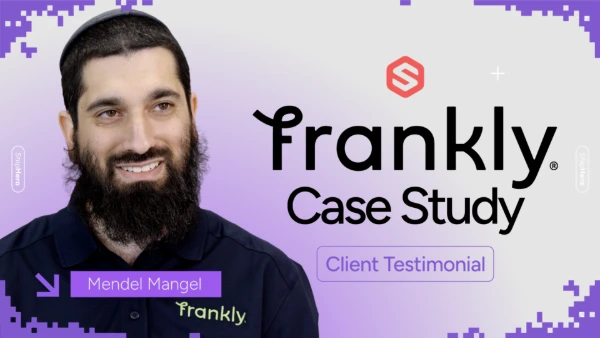
Frankly Fulfillment CEO Mendel Mangel once saw ShipHero as a competitor — until switching changed everything. Zero churn, 25,000 orders/month, and new staff onboarded in minutes. Watch the full story.
.svg)
.webp)
A new ShipHero case study with Mitch Mammoser, COO and Co-Founder of Frost Buddy, exploring how they managed a "rocket ship" growth trajectory to nearly $80 million in sales. Watch to learn why the believe "ShipHero is the Apple of shipping software."
.webp)
Meet the Packer Performance Dashboard, ShipHero’s latest feature that goes beyond simple pack rates. 📦 Tracks key packing events (Tote Scan, Item Scan, Print Label, Order Complete) 📈 Scores efficiency based on expected vs. actual pack time ⚡ Factors in order complexity & shipment type for real-world
.webp)
.svg)
.webp)
.webp)
.webp)
.webp)
.webp)



.svg)



.webp)