
.svg)

Let’s stay in touch with the ShipHero Blog.


.webp)
The ShipHero Model Context Protocol (MCP) connects supported AI clients directly to your live ShipHero data, so warehouse teams can ask questions and get specific answers from their own account. It is built for day-to-day operational checks, including inventory levels, open orders, shipment status, holds, returns, purchase orders, and exceptions. For ShipHero customers, it is available at no additional charge and runs on existing API credits.
Every order, shipment, inventory movement, hold, return, and purchase order creates data inside ShipHero. Your warehouse information is right there, but getting to it can be a slow, complex process.
Before the ShipHero MCP, answering a specific operational question often meant logging in, finding the right report, applying the right filters, exporting data, or asking the one person on the team who knew where to look.
Even when the answer was simple, like a quick inventory check, it could turn into a 20 to 45 minute task. A customer question could sit half a day while someone pulled the right numbers. That delay adds friction to the floor. It slows decisions. It keeps teams waiting on data they already own.
The ShipHero MCP gives supported AI clients secure, read-only access to live ShipHero data.
That means operators can ask questions in plain English and get answers from their actual account, not from a generic help article or static knowledge base. A chatbot can tell you where to find a number. The ShipHero MCP can return the number itself.
It works with MCP-enabled AI clients, including Claude, ChatGPT, Cursor, and Codex. Connect it once, authenticate access, and your team can start asking operational questions from the AI tool they already use.
The workflow is simple:
The MCP does not replace ShipHero. It makes the data inside ShipHero easier to reach when your team needs a fast answer.
The ShipHero MCP is designed for everyday operational questions, such as:
If the data lives in your ShipHero account, the MCP gives your team a faster way to ask for it.
Speed matters, but safety matters too.
The ShipHero MCP is read-only by design. It can retrieve information from your account, but it cannot create orders, modify records, delete data, or change warehouse settings.
That gives teams a practical way to use AI for operational visibility without risking accidental account changes. Operators can ask. Managers can check. 3PL teams can answer client questions faster.
The data becomes easier to use, while the records stay protected.
For founders, the MCP can turn a quick inventory check into a simple question.
For operations leads, it can surface shipment status, holds, exceptions, and low-stock SKUs without digging through reports.
For 3PL operators, it can help answer client questions faster, using live account data instead of manual follow-up.
The result is a faster way to reach the information already inside ShipHero.
The ShipHero MCP is available to all ShipHero customers at no additional charge. It runs on existing API credits, so specific questions help keep usage efficient.
To get started, visit developer.shiphero.com or contact your ShipHero account representative.
ShipHero MCP is a read-only connection between supported AI clients and your live ShipHero data. It lets users ask operational questions in plain English and receive answers from their actual ShipHero account.
A chatbot usually answers from fixed, generic information. ShipHero MCP connects to live account data, so it can return specific answers about your orders, shipments, inventory, holds, returns, and other ShipHero records.
ShipHero MCP works with AI clients that support the Model Context Protocol, including Claude, ChatGPT, Cursor, and Codex.
No. ShipHero MCP is read-only. It can query data, but it cannot create, update, or delete records in your ShipHero account.
No. The MCP is built for operators and can be connected from a supported AI client in minutes. Developers may use more advanced tools for deeper analysis, but most day-to-day users can work directly with the MCP.
Yes. ShipHero MCP is available to ShipHero customers at no additional charge and runs on existing API credits.
Transitioning to a new Warehouse Management System (WMS) is a high-stakes decision that often triggers concerns regarding downtime, data integrity, and workforce adaptation. As warehouses prepare for 2026 growth, understanding these common hurdles—and the technical solutions that resolve them—is essential for a successful migration. This guide addresses the five primary barriers to adoption and how a high-velocity infrastructure ensures a seamless transition.
Warehouse operators frequently hesitate to upgrade due to perceived risks that can halt operations. These challenges typically include:
To clear these hurdles, a structured implementation strategy is used to prioritize data density and entity clarity.
In the competitive eCommerce landscape, staying stagnant with manual workarounds is often more costly than the transition itself. Moving to a high-velocity WMS converts your warehouse from a cost center into a growth engine by providing Labor Efficiency and ROI through automated routing and reduced authentication friction.
Because the platform is built for the floor worker, features like Workforce Hero allow seasonal temps and new staff to be authenticated and productive in under an hour.
No. High-velocity infrastructure increases visibility by providing Total Real-Time Control. Managers can monitor exactly what is in the Hospital queue and track replenishment in real-time from a single dashboard.
Before going live, a ground-up audit is performed using cycle counting tools. The system's architecture ensures that every movement on the floor is synchronized with sales channels instantly, maintaining 99.9% accuracy.
Picture a packer at Peak Season. A box is in front of them, a product in each hand, and somewhere on a cluttered desk there's a mouse they need to find to confirm the order. They look down. They hunt. They click. Then they do it again. Thousands of times a day.
That moment of friction is small. But it is never just one moment. Multiply it across your entire pack line, across an entire shift, and you are looking at a measurable and largely invisible drag on your total throughput.
Tap-to-Pack is a purpose-built hardware controller designed by ShipHero to eliminate digital friction at the packing station. It connects via USB-C, requires no drivers or additional software, and syncs automatically with the ShipHero WMS packing app. This new system is now available at the ShipHero Store.
Instead of navigating a screen with a keyboard and mouse, packers execute every high-frequency command — such as selecting box sizes, printing labels, finalizing orders, flagging exceptions — with a single physical tap on one of eight programmable buttons.
Key specifications:
Most warehouses are running 2026 operations on 1990s peripheral standards. The keyboard and mouse were designed for spreadsheets and emails, not high-volume fulfillment. When used at a packing station, they create three compounding problems:
The problem is not your people. It is the tools you are asking them to use.
Tap-to-Pack introduces a "Rodent-Free" packing standard: a workflow where the packer's hands stay on the product, their eyes stay on the work, and the software fades into the background.
The device guides the packer through two feedback systems:
ShipHero customers running Tap-to-Pack are already seeing a 90% reduction in on-screen interactions and a significant increase in the number of orders packed per hour, without adding headcount or changing their warehouse layout.
One of the hardest challenges in fulfillment is absorbing volume quickly, especially during Peak Season, when temporary staff need to reach target productivity fast.
Because Tap-to-Pack's interface is physical and intuitive, there is almost nothing to teach. Pick up the product, follow the light, tap the button. New packers can reach target productivity in minutes rather than hours.
The system is also modular:
Whether you are a growing DTC brand or a high-volume 3PL, Tap-to-Pack is designed so your hardware never becomes a ceiling on what your team can do.
Tap-to-Pack is a programmable, industrial-grade hardware controller that connects to the ShipHero WMS and allows warehouse packers to execute packing station commands, such as printing labels, selecting boxes, and completing orders. All with a single physical button press, eliminating the need for a keyboard and mouse.
The device connects via USB-C and syncs automatically with the ShipHero WMS packing app. It is a true plug-and-play solution: no drivers, no background software, and no manual configuration required.
Yes. Buttons are configurable for a range of packing actions, including Print Label, Complete Order, Select Box Size, and the Hospital function, which flags a problematic order and keeps the line moving without stopping to resolve it on screen.
The system is fully modular. Connect up to two additional 8-button hubs to the Main Hub for a total of 24 programmable buttons, supporting even the most complex multi-step packing workflows.
Tap-to-Pack devices require ShipHero Packing App v1.0 or higher. The current release is v1.1.0.
Imagine running a warehouse where orders are picked quickly, inventory is accurate, and all operations run smoothly without any errors or delays. Thanks to Artificial Intelligence, this can now become a reality with ease.
AI is transforming warehouse management by enhancing efficiency, intelligence, and the ability to meet the rapid demands of today’s eCommerce-driven market.
ShipHero is pioneering this revolution with its AI-powered warehouse solutions, setting new industry benchmarks. This article explores ShipHero’s AI Picking feature, highlighting how it’s transforming warehouse management and enhancing operational efficiency.
The integration of AI technologies, including machine learning, robotics, and predictive analytics, is revolutionizing warehouse operations, driving significant improvements in efficiency, accuracy, and overall performance. These innovations are optimizing processes across various areas, from inventory management to order fulfillment. Below are the key benefits of AI in warehouse management.
A combination of AI technologies is shaping smarter warehouse systems to help revolutionize warehouse management.
ShipHero has taken AI integration to the next level with its AI Picking feature, designed to significantly improve warehouse efficiency. This feature automates the picking process, reducing the reliance on manual labor and enhancing productivity in ways that were once thought impossible.
Let’s dive deeper into how ShipHero’s AI Picking works and the advantages it offers.
AI Picking optimizes warehouse operations in two key ways:
The AI Picking feature delivers a wide range of benefits:
The transformative power of AI extends far beyond just picking. AI is also revolutionizing other aspects of warehouse management, driving improvements in operational efficiency, inventory management, and safety.
AI automates tasks, reducing errors and increasing speed. Automated sorting and real-time inventory tracking ensure accuracy, while real-time monitoring helps managers adapt and ensure timely deliveries.
AI plays a vital role in maintaining accurate inventory levels. By leveraging predictive analytics, AI can forecast demand and optimize stock levels, helping warehouses avoid both stockouts and overstock situations. This leads to better inventory management and fewer disruptions in supply chains.
AI-driven systems can monitor warehouse conditions to ensure safety and compliance with industry regulations. These systems can analyze warehouse data and predict potential hazards before they occur, proactively reducing risks and ensuring a safer working environment.
AI technologies are playing a transformative role in the supply chain and logistics sectors by improving efficiency, reducing costs, and enhancing decision-making.
These intelligent systems effortlessly manage supply chain processes by using data to optimize operations, predict trends, and automate routine tasks. This ultimately reshapes everything, from how goods are moved to stored and delivered.
The future of warehouse management looks promising with greater automation and efficiency, but future warehouse digitization brings challenges, such as high upfront costs and the need for skilled personnel.
AI-powered drones, autonomous robots, and IoT integration are smart warehouse technologies that are revolutionizing warehouse operations. Drones will deliver goods quickly, while robots automate sorting and transportation, thereby reducing the need for manual labor.
IoT and AI integration will enable real-time monitoring and optimization of operations. Smart technology in warehouses is leading to fully automated systems that are faster, scalable, and need minimal human input.
While AI offers immense benefits, businesses must also consider certain challenges. High initial investments in AI technology, data security concerns, and the need for skilled personnel are just a few of the hurdles that must be addressed.
However, with a strategic approach, companies can eliminate the challenges and embrace AI’s full potential to boost accuracy in picking and improve overall warehouse operations.
AI minimizes error by automating tasks like inventory tracking, order picking, and sorting, ensuring greater accuracy and efficiency.
Yes, AI-driven predictive analytics can predict demand, track inventory levels, and improve supply chain efficiency by forecasting needs with greater accuracy to help businesses stay ahead of trends and market fluctuations.
AI solutions are becoming more cost-effective thanks to cloud-based services and subscription pricing models. These options make AI technology more accessible to small businesses, allowing them to take advantage of its benefits without large upfront costs.




ShipHero provides warehouse management software and outsourced ecommerce order fulfillment to over 4,000 brands, processing an annual gross merchandise volume (GMV) of over $5 billion.In an effort to provide useful data to the DTC community during Covid and the rapid changes occurring in our industry, we are sharing some of the broad segment trends from the products on our platform. Here is the data for the week ended November 23, 2020:
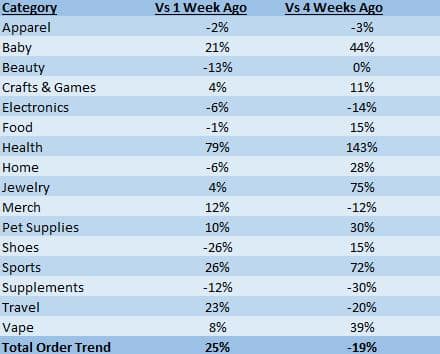
More charts available on data.shiphero.com.Do you find this information useful? Let us know! Twitter: @weareshiphero or Email al@shiphero.com.
.svg)

Based on ShipHero’s sales volume, today, November 16, appears to be the unofficial kickoff of the holiday shipping season for DTC brands. It was ShipHero’s busiest shipping day ever. Three of our brands shipped over $1 million of goods today. Total volume was up 14% from last Monday and far eclipsed Cyber Monday of 2019.
ShipHero is here to handle your ecommerce order fulfillment, handling even the busiest days smoothly. Find out more here.
Introducing the ShipHero weekly shipping trends report. ShipHero provides warehouse management software and outsourced ecommerce fulfillment to over 4,000 brands, processing an annual gross merchandise volume (GMV) of over $5 billion.In an effort to provide useful data to the DTC community during Covid and the rapid changes occurring in our industry, we are sharing some of the broad segment trends from the products on our platform. Here is the data for the week ended November 16, 2020:

More charts available on data.shiphero.com.Do you find this information useful? Let us know! Twitter: @weareshiphero or Email al@shiphero.com.
Merchandise: the capitalistic solution for our innate human need to signal our fandom and find our tribe. Who doesn’t own a jersey from our coveted hometown or college sports team, or maybe you bought a t-shirt from your favorite performer? And now that presidential hopefuls act more like rockstars than politicians, political merchandise has infiltrated the United States’ presidential elections in a major way. From mugs to fly swatters to a bright red hat with the four-letter acronym that defined a presidential campaign, it seems that Merchandise Allows Giant Advantages; MAGA indeed.
So while the presidential candidates continue to duke it out through speeches, rallies, and debates, there is another constant underlying battle happening at the gift shops. Political merchandise has now become a crucial element in the United States’ presidential elections in terms of both fundraising revenue as well as brand awareness and reputation. In an election where everything rides on the candidate’s reputation, the logistics company outsourced by the campaign doesn’t just fulfill the orders, it also fulfills the promise of the candidate. Let’s dive into the role that merchandise plays in politics, and examine how nimble, outsourced logistics could be the defining competitive advantage in the upcoming election. So keep your eyes ON the merchandise!
Throughout recent elections, political marketing has produced a booming multibillion-dollar industry, so campaign managers have closely collaborated with their merchandise team to develop and distribute trinkets, tokens, gag gifts, and apparel as an impactful way to effectively communicate the candidate’s campaign message and brand reputation. Political merchandising and promotional products have seen a giant spike in recent elections due in large part to the marketing minds behind the Donald J Trump presidential campaign, who was able to turn his patented “Make America Great Again” slogan into a $45 million market, reaping massive benefits for his campaign budget and influence.
During the 2020 election cycle, the Joe Biden Victory Fund and the Donald J Trump site each offer approved and sponsored political merchandise and promotional products, and all of the revenue from sales goes directly to fundraise for the political campaign. Conversely, websites like RedBubble and Etsy carry all types of items with the candidate’s name, likeness, and message; whether it is actually sponsored by the candidate remains unknown in many cases and the revenue from these products may or may not end up in the hands of the candidate. Such an example could be the Trump flag that boasts him with the muscular body of Rambo holding a massive rocket launcher.
Candidates have allowed these unauthorized third party sales to continue because it still propagates their message and grants them an extended reach, with the risk being that they could lose control of their message through decentralized distribution. However, in the 2016 election, Trump’s campaign began sending cease-and-desist letters to online retailers, providing a warning that the use of Trump’s name, likeness, and trademarked slogan is illegal infringements of a trademark. This year in 2020, that has not yet been the case.
One recent merchandise success story of the 2020 election stems from the famous fly that perched on Vice President Mike Pence’s silver spider web hair during the 2020 Vice Presidential debate. Before you could even utter “shoo fly” the Biden campaign was already selling “Truth Over Flies” fly swatters and the $10 knickknacks sold out by the next morning. A short three days later, bobbleheads of Pence with the fly sprung up as pre-orders by the National Bobblehead Hall of Fame.
The battle of merchandised political messages is all about reach, speed, and fulfillment: where can you deliver your message, how quickly can it be delivered, and how confident are you in fulfilling that message? With that in mind, how the respective campaigns plan to fulfill their merchandising promises requires further speculation.
“After the Democratic National Convention, it’s only a matter of months for a candidate to identify a brand, reinforce it, and promote it before the general election,” says Bruce Newman, a marketing professor at DePaul University and editor-in-chief of the Journal of Political Marketing. And in the instance of Mike Pence and the fly swatter, it could boil down to a matter of hours. So how do campaigns ensure that they can fulfill their merchandising promises and uphold their ever so important reputation?
Looking into the Joe Biden Victory Fund page, the site advertises that it is administered through bumperactive.com, which is a company that specializes in custom logos and decals on promotional products. The Biden campaign has wholly outsourced the manufacturing and logistics of their political merchandise for the sake of speed and expertise. They advertise on their site that delivery is in 7-10 days and any problems should be addressed through bumberactive.com.
Comparing this to the Donald J Trump shop page, the site does not indicate a third-party distributor. Instead, all inquiries should be routed directly through shop.donaldtrump.com. What is no doubt a strategic move by the Trump campaign to keep this information concealed to avoid meddling, the Trump campaign understands that any hiccup in fulfillment could cost them dollars, but more importantly, votes. The Donald J Trump shop website also advertises similar delivery times of 7-10 days.
Beyond just delivery, the ability to source, price, manufacture, and ship an item quickly is a huge competitive advantage, as seen with the Biden Fly Swatters example. In a statement to CBS News, the merchandise director for the Biden campaign was quoted as saying, “We saw the internet and our supporters sharing a viral moment online, so our digital team came together on the fly to show that Joe Biden and Kamala Harris will always choose truth over lies, science over fiction, and unity over division.”
With the goal of shipping quickly, the respective campaigns need to elect logistics companies that can be quick and nimble, and innovate on the fly (pun intended). Smart fulfillment companies like ShipHero allow e-commerce companies to source, pack, and ship quickly and to every corner of the United States. ShipHero boasts an average time to ship orders for new brands within as little as 3 days from signup. And through smart warehouses, state of the art technology, and innovations in transportation, ShipHero offers 2-day ground shipping reach for 98.4% of the contiguous US population. When deciding on a logistics solution, vote for speed, for reach, and for trustworthiness. Having a robust ecommerce order fulfillment solution is critical to the success of your business.For the 2020 US elections, please do your part and vote! — https://www.headcount.org

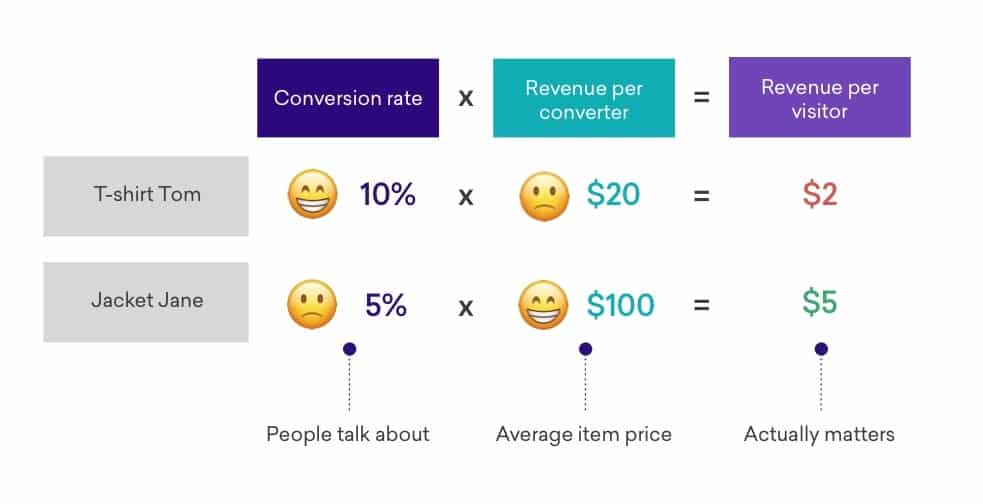
The trinity to e-commerce digital marketing excellence lies in three metrics: Average Order Value (AOV), Conversion Rate (CR), and Revenue per Visit (RPV).
In this series, we will introduce how these metrics are gathered, how they impact your business, and how to improve each.In this first part, we will discuss Revenue per Visit.
Revenue per Visit (RPV) is calculated as Total Revenue ($) divided by the Number of Visitors (#)
RPV is also calculated as Average Order Value ($) multiplied by Conversion Rate (%)
Revenue per Visitor and Your Business
Revenue per Visitor basically translates to: how much money does my business make for every person that visits my website.
RPV also allows you to gauge your new visitor acquisition efforts: are you attracting the right kind of visitor?
Notice it says visitor, not visit. The RPV metric does not use the total number of visits to your site in its calculations; rather, it counts only unique visitors, with each individual person counting as one visitor.
Revenue per Visitor (RPV) as a metric carries an important distinction from Average Order Value (AOV) and Conversion Rate (CR) -- discussed in our AOV and CR blogs. WIth AOV and CR metrics, you are able to set targets, a desired number or percentage to achieve. For RPV, the importance lies in how the metric is trending, whether upwards or downwards.
RPV allows you to measure and determine your budget for spending on user acquisition, such as your advertising budget.
Let’s look at how to calculate RPV, and show the implications it can make for your business. Consider the following scenario:
Example 1
Example 2
In both examples, it is apparent that Company B is attracting higher-quality and more qualified customers than Company A. Company B is also spending half of what Company A does in customer acquisition.
So, improving RPV could be the competitive advantage you need to succeed. Ready to start climbing?
If you want to start on the path towards positively increasing your PRV, you need to start attracting the right customers to your site and providing them with the best experience. Here are the Top 3 Proven ways to do just that:
Attracting the right customer to your website is the best way to improve your RPV. Now, who are the right customers?
The right customers are those specific website visitors that are more likely to convert and hopefully contribute towards a higher Average Order Value (AOV). Oftentimes these are referred to as ‘qualified’ customers. These customers also have growth potential for their lifetime value -- calculating Customer Lifetime Value is a great way to understand who the right customers are.
In analyzing your customer base of those that successfully converted, what common factors did they share if any? Any demographic or location similarities? Did they look at the same products? Did they check your ‘About Us’ page or Company Mission statement before converting?
Questions like these are what Data Analytics departments strive to answer, and it is the basis for your ecommerce business to take a data-driven and targeted approach towards marketing your business and finding the high-value customers or customers with a potentially large lifetime value. You should focus on retaining valuable customers, and getting rid of the rest.After you identify and attract the right customers to your website, what’s next?
As discussed in our past blog about AOV, providing product recommendations, and upselling or cross-selling complementary products along the customer journey is an effective method to increase AOV.
To recap, the strategies to increase AOV are:
Product recommendations
Set order minimumsIncrease prices
Upselling
Cross-selling
Urgency and Scarcity
Reward Programs
As discussed in our blog about Conversion Rates (CR), you must think about your customer journey from landing page to purchase confirmation. Each step in this process needs to be streamlined to reduce friction and increase your conversion rates.
To recap, the strategies to increase CR are:
Adding pop-ups
Simplify the first step
Chat boxes
Reduce form fields
Eliminate noise and distractions
Retargeting and remarketing
The above three methods are the top three proven ways to increase your company’s RPV.
Identify and market to your high-value customers
Sell more product per transaction and Improve the average order value (AOV)
Optimize the customer experience and improve conversion rate (CR)
This is the first part of our 3-part blog series covering essential e-commerce metrics: RPV, AOV, and CR. We hope you have a better grasp of how to measure the success of your e-commerce business. We'll cover AOV and CR in future posts.
The beauty of your ecommerce company is that it can be easily measured and optimized; all you have to know is what to look for and how to turn the dials. Check back here to learn more about other metrics and tools of the trade.
And, if your warehouse is getting a surge of volume, we can help. We believe we have the best warehouse management software on the market. It will make your warehouse run like a finely-tuned Swiss watch, with great efficiency and minimal mistakes.
You are an eco-conscious consumer. Maybe you turn off and unplug your lights, or you try to reduce water consumption. You may buy second-hand products, or perhaps you are well-studied on the long, long list of rules for recycling.
Maybe you carpool or ride a bike, or you have a garden and shop for organic produce. You do all the eco-friendly things that would make Al Gore blush; but now consider this inconvenient truth: each and every time a package arrives on your doorstep within 48 hours of ordering, also known as same-day delivery or two-day delivery, the environmental costs of such an expedient service are wasting all of your carbon-diminishing habits.
"The time in transit has a direct relationship to the environmental impact. I don't think the average consumer understands the environmental impact of having something tomorrow vs. two days from now. The more time you give me, the more efficient I can be." That is a quote from Patrick Browne, director of global sustainability at UPS.
The advent and booming popularity of same-day and two-day delivery have forced delivery and fulfillment companies to take more inefficient and carbon-intensive routes, passing both the financial and environmental costs on to the consumers. Yes, the shipping may appear to be ‘free’, but that is because notable e-commerce giants are fronting the logistics costs for competitive reasons while doing all they can to disguise the true costs, the harm to our environment. Cue Captain Planet.
Let’s delve into the environmental impacts of the services provided by these e-commerce giants, and then examine carbon-friendly solutions with promises of the exact same delivery times.
The Cost of Consumer Expectations
You wake up in a cold sweat. It is your dear mother’s birthday tomorrow, and you have nothing, nada, zip, zilch, diddly-squat... just like last year. You’re out of excuses, and more importantly, out of time. What is a desperate son or daughter to do? Well have no fear; up in the sky, look! It’s a bird, it’s a plane, no! It’s a delivery drone coming to your rescue. Ah, the future.
The trend of faster delivery times, from click to door, has always been a point of competition amongst e-commerce companies, with a 2019 study conducted by Rakuten Intelligence showing that delivery times have been steadily decreasing the previous two years from 5.2 days to 4.3 days. And today, over 50% of shoppers between 18-35 years old have reported that they expect same-day shipping and will opt for speed of delivery; however, 90% of consumers reported that they would opt for free delivery over speedy delivery.
So, are you willing to trade speed for the eco-friendly, green alternative? If so, you are in the vast minority. A study by Forbes in 2019 showed that 95.6% of consumers were not willing to make the trade-off of speed for package consolidation, and 54% of consumers mention ‘speed of delivery’ as their top delivery consideration when shopping.
Our expectations as consumers are trending towards not only the same day but within 1-3 hours for some products. The promise of e-commerce was economies of scale, allowing companies to synergistically ship orders to your door in a more environmentally-friendly way when compared to each consumer driving to the store in their own cars. These initial environmental benefits are now at risk as shipping gets artificially pushed to be faster and faster.
Environmental Costs of Shipping
You may be thinking, how bad is bad? Well, in the worst-case scenario, a package delivered the same-day could result in carbon emissions up to 35 times more than if the delivery had been done efficiently. These abhorrent emission numbers can stem from carriers relying heavily on air freight, which values speed, instead of the lower carbon option of ground freight.
Transporting 2 tons of freight over 500 miles with a truck creates just 12% of the carbon emissions used to do the same with a plane. That’s right, give a trucker a hug. The air freight option is much more expensive and carbon-intensive than ground freight and is used solely in the case where goods need to be shipped long distances, quickly. This, of course, requires a lot of energy and fossil fuel.Not only does air freight emit over 8 times the carbon, but the effects of these emissions are also 2 to 3 times more harmful compared to carbon emissions from ground transportation because airplanes release the carbon at high altitudes into the atmosphere, where they contribute much more to the greenhouse effect.
While larger delivery companies are able to combat a portion of these added carbon emissions by purchasing more carbon-neutral vehicles or packaging, the large majority of companies that are struggling to compete, such as meal kit delivery or razor subscription box companies, just cannot afford to be environmentally-friendly, and unfortunately, it will be all of us that will pay the price.
Solutions for Low Carbon Delivery
“But it’s my mom’s birthday tomorrow and I need to get something, like, today!”, you may be saying to yourself. Or, “Shouldn’t that be the company’s job to be environmentally friendly?” Well, absolutely. Here are some ways that companies are meeting consumer expectations for quick service, all while reducing the added carbon footprint.
Implementing Machine Learning
One of the major trends in 2020 for delivery and fulfillment will certainly be the injection of Artificial Intelligence (AI) and Machine Learning into the supply chain. According to McKinsey & Company, businesses can expect to gain between $1.3 trillion to $2 trillion a year in economic value by using AI in their supply chains.
These computing solutions have limitless potential to transform the supply chain and logistics network. The main impact of these solutions can be found in the following areas:
Delivery and smart fulfillment companies like ShipHero are realizing the potential of Artificial Intelligence and Machine Learning to solve the complex problems presented by logistics and supply chain operations; and when configured correctly, Machine Learning has the ability to help key business leaders get the real-time information they need to make smart decisions.
Considering the present-day state of shipping and delivery during the COVID -19 pandemic, with shipping carriers at capacity and consumer demands at all times high, companies must rise to meet this watershed moment where e-commerce has seen 5 years of growth... in just four months. So being able to combine these new technologies, a wide fulfillment network, and transportation optimization will present a radical new shift for e-commerce logistics.
Reducing Waste
Single-use and disposable materials are terrible for our environment, filling up landfills, waterways, and the bellies of poor turtles. Fulfillment companies like ShipHero are switching to recyclable packaging, thereby eliminating single-use materials, and using sustainably sourced paper and recyclable packaging.
Waste can also be created by overproduction, unnecessary inventory, and unnecessary transportation, all of which can be addressed and reduced through a smart fulfillment platform set with a goal to lower and optimize carbon emissions. So how can companies measure their carbon emissions?
Transparent Reporting and KPIs: A Competitive Advantage
Almost half (46%) of surveyed global consumers said they would be willing to forgo a brand name in order to buy environmentally friendly products. In this information era ripe with cancel culture, brands should be sure to show-not-tell their customers how they are being eco-conscious, lest join the expanding list of canceled brands.
Over 73% of global consumers say they would definitely change habits to reduce environmental impact and over half of shoppers choose brands based on sustainability; so, brands that are notably eco-friendly like Lush Cosmetics, Patagonia, and TOMS make sure to advertise just how eco-friendly they are. In order to meet the expectations for this majority of consumers, companies must be able to demonstrate this competitive advantage through transparent reporting and Key Performance Indicators (KPIs).
When warehousing, distribution, and fulfillment activities are all performed by a singular entity, carbon emissions and footprint are much easier to monitor, optimize, and report. These are brand new reporting capabilities that could not have been made under standard fulfillment methodologies, and now these capabilities can be developed even further. Taking the approach to continually build out more eco-friendly reporting services at a steady pace, ShipHero can make a difference now, all while continuing to evolve them over time; and they even envision a future service where carbon savings are published and available for every shipment with a simple scan of a QR code included on the shipping label. What’s important to note is that ShipHero does all of this while maintaining the exact same delivery times (between 3-5 days) that you and your consumers have come to expect.
Then, these carbon emission optimization metrics are passed onto you, so that you can communicate them to your loyal, eco-aware customer base.
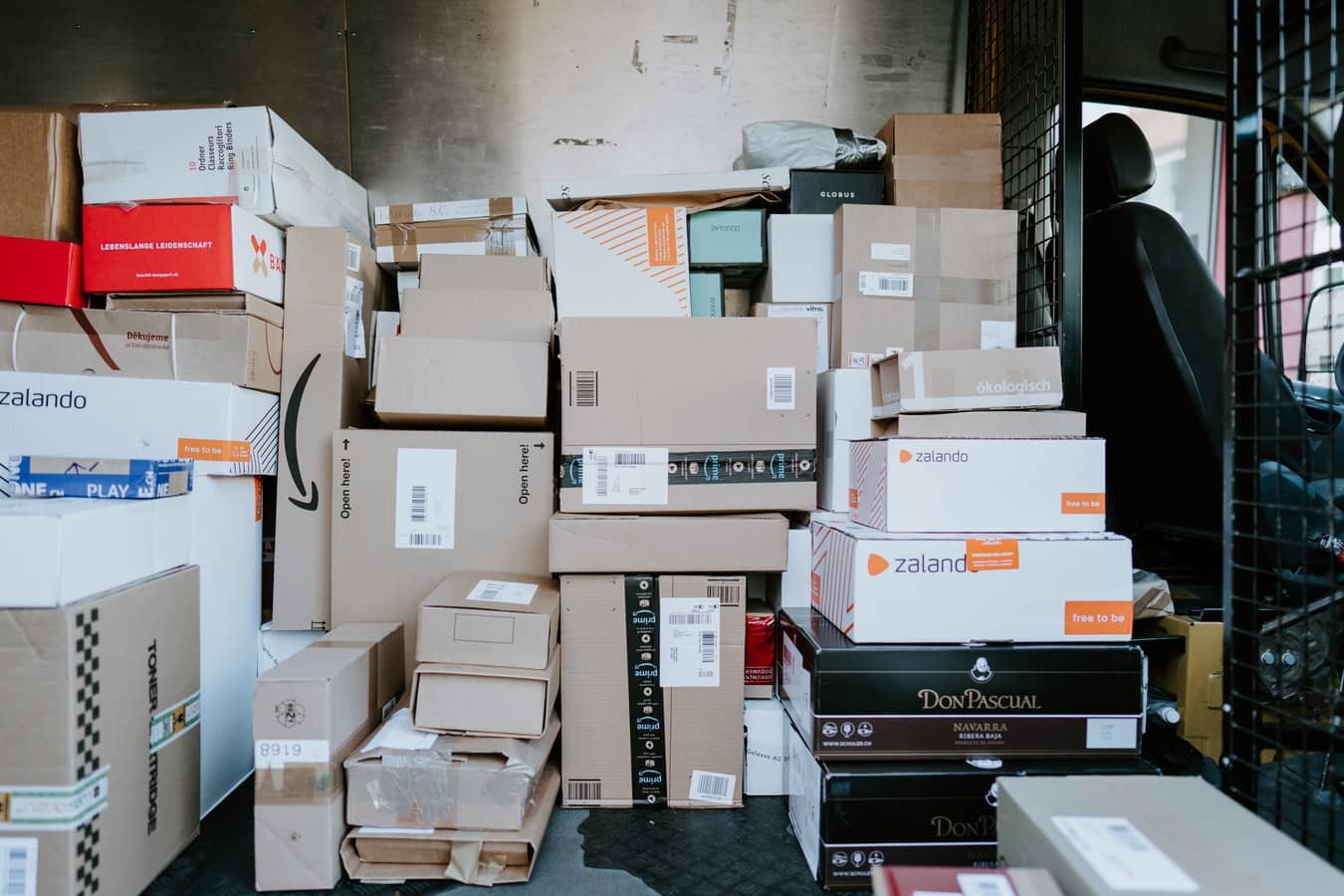
Ah yes.
The instant dopamine rush of seeing your name on that big, brown package sitting on your doorstep. You pick up the box and scurry inside, grab your trusty pair of scissors, open the box and… it’s not what you ordered. Dang.
ShipHero - We Have a Full Range of Ecommerce Fulfillment Services to Handle Your Returns and Much More
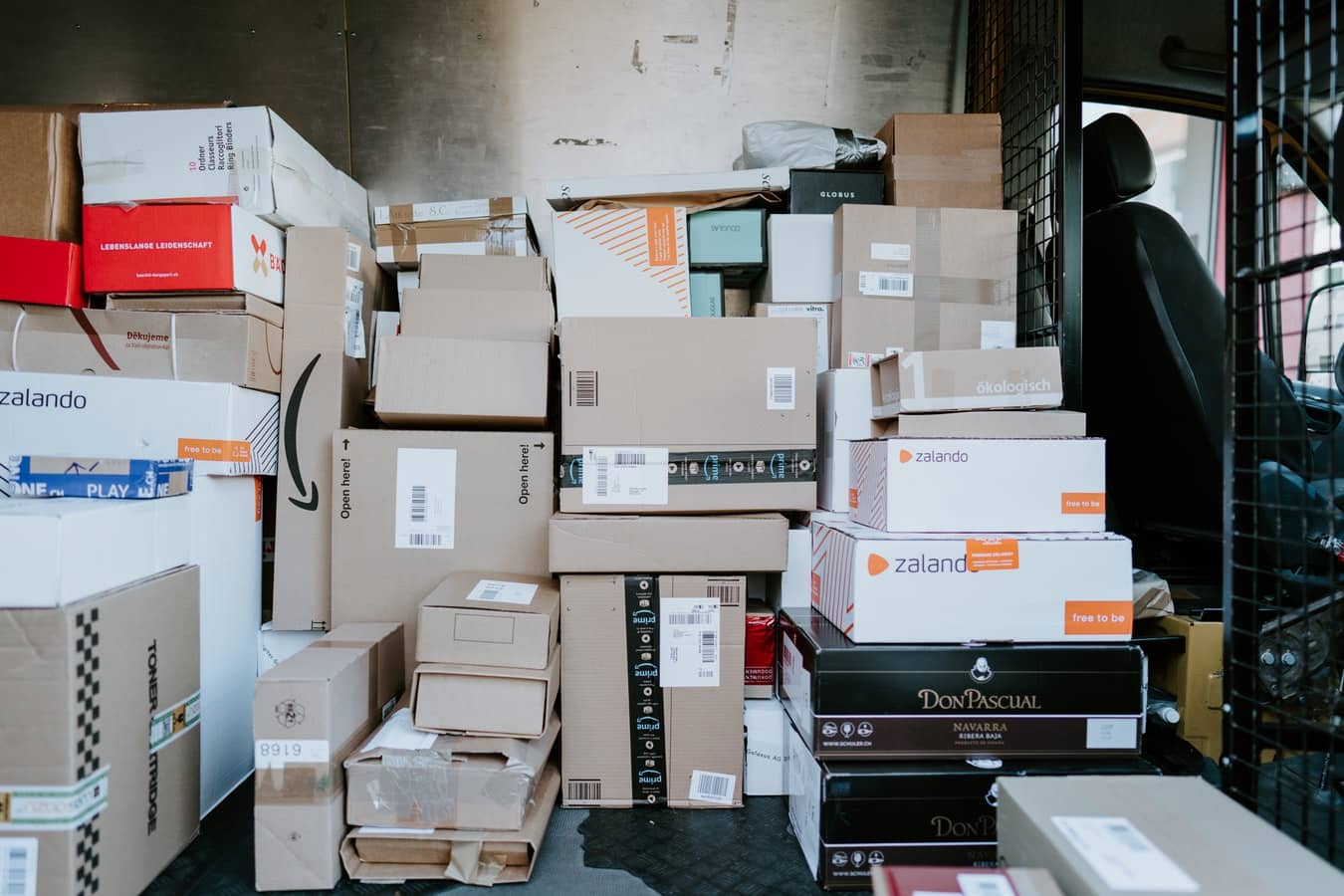
Is there a bigger frustration in the shopping experience than having to return an item? Long lines, obscure policies, unhelpful employees, and where the heck did you put that receipt?
And that’s just pre-COVID, back when you could go to the store and meet the perpetrators face-to-face.And what’s more, in the age of rising e-commerce sales where shopping, browsing and just about everything is done online, approximately 30% of orders are returned, which translates to 3 in every ten packages you can expect to return. This figure rises to a whopping 50% for clothing retail. Not only that, those percentages only account for when the shopper purchases items for themselves, not as a gift. Oh, and speaking of…
Black Friday Cyber Monday shopping is right around the corner, with most shoppers reporting to start shopping in October. 2020’s holiday season will smash ecommerce delivery records and with delivery companies like UPS, USPS and FedEx already strained or at capacity, let’s talk about the returns aftermath.
Online Returns
National Returns Day is January 2nd, so don’t forget to get your mailperson something nice.
In case you weren’t aware, National Returns Day is known as the day in which American shoppers return the highest amount of packages back to retailers. In fact, Reuters stated that “UPS estimated that it processed 1.9 million Christmas returns for U.S. retailers on National Returns Day 2020 (January 2, 2020), equating to a 26% year-over-year increase.”
When compared to purchases made in a traditional brick-and-mortar retail location, purchases made online are returned three times more frequently. The major cause of online returns stems from a disconnect between what is advertised online versus what is actually shipped to the consumer, and the main culprit seems to be issues with how the product is portrayed, such as low-quality images or incorrect size and style comparisons for clothing. In fact, discrepancies in sizing with each manufacturer are responsible for more than half of all customers that are returning clothing items due to a wrong size or fit.Considering that e-commerce sales revenue is growing 15 percent year over year, and the product return rate sits around 30 percent of sales, that leads to about 4 billion additional units that need to be delivered and shipped.
Considering the effects of the pandemic, with delivery companies already at capacity and demand only increasing, you would assume that this has an impact on what companies accept for returns. But, you can just return them for free, can’t you?
The Cost of Free Returns
We as consumers have come to expect relatively liberal return policies from our stores. With Amazon Free Returns, Walmart Free Returns, Nordstrom, and L.L. Bean all having notoriously generous return policies, almost 32% of shoppers in the US reported that they would forego an online purchase if there wasn’t an offer of free returns.
The process of preparing returned products to be sold further diminishes profit margins, and the term ‘Free Return’ comes with a lot of hidden costs, either tacked onto the price of goods by way of margins, or fronted by the retailer for competitive reasons.
In order to successfully reduce the adverse effects that returns have on your e-commerce business without taking the margins hit of ‘Free Returns’, you need to know why, when, and how customers return items, especially during these uncertain times. This is where reverse logistics supply chain capabilities are able to help your business maintain inventory, reduce operational costs, and provide your customers with a phenomenal return experience. So, what is reverse logistics?
Reverse Logistics: The Solution to Returns
Reverse logistics supply chain is defined as the operations involved in the moving of product from the end consumer back to the seller or manufacturer for the purpose of satisfying returns, salvaging value, or recycling and disposal.
According to a 2020 report by Tech HQ, “The global reverse logistics market is forecast to hit US$603.90 billion by 2025, and businesses can save millions of dollars if reverse logistics management is implemented and done properly. With the expansion of the e-commerce industry emerging in parallel with the closure of many brick-and-mortar stores, retailers can expect to see a hike in return goods once the reopening of the sector begins.”
While brick-and-mortar retailers have the ability to leverage their COVID-19 solutions of contactless check-out and curbside pick-up and dropoff to handle the onslaught of returns, those without a physical location must handle this through delivery and fulfillment companies.
If you are an online retailer, this should signal to you that solving returns will absolutely be an essential component of your business if you want to properly maintain inventory, retain revenue, avoid exorbitant operating expenses, increase customer loyalty, AND increase your company’s sustainability and eco-friendliness.
The answer seems to boil down to a data-driven approach fueled by big data, and in some cases, blockchain.
Partnering with companies like Happy Returns and Returnly will allow e-commerce businesses to turn logistical challenges into business opportunities, as well as transform return policies and processes into a holistic returns strategy. This translates to understanding all aspects like why, how, and when customers make returns, and using a data-driven approach to optimize the return process.
Smart fulfillment companies like ShipHero leverage their partnerships with companies like Happy Returns as well as their expansive big data collection and analysis capabilities in order to forecast returns and plan accordingly, ensuring that your customers are happy, your margins are intact, and your company is sustainable. Check out ShipHero's full line of ecommerce fulfillment services that can handle your company's fulfillment, returns, and much more.
We realized there was no way we’d be able to continue filling orders one year down the road at the rate we were growing. We were excited by the growth, but we needed a software solution like ShipHero.-- Jake Rajsky, Vice President, American Tall
Scaling fulfillment with rapid business growth
Finding high-quality, well-tailored men’s clothing online can be a tall order—especially for men who are 6’3” or taller. So there was high demand when American Tall, a men’s apparel brand, launched their direct-to-consumer ecommerce site.
At first, the small family business relished picking and packing each order by hand. They even enclosed personalized thank- you cards with each order. But as their business grew, keeping up with order fulfillment became a challenge.
The e-commerce industry has experienced unprecedented growth over the past decade and it shows no signs of slowing down. Research shows that e-commerce could account for $4.88 trillion in global retail revenue in 2021. But what factors are driving this change?
Today we’re going to be taking a look at the 2019 e-commerce trends that account for this massive growth and how you can utilize them for the benefit of your own business.
Let’s dig in...
An e-commerce business can live or die by its customer service strategy, and advancing technology continues to provide new ways to engage with and meet the needs of your customers. Chatbots, for example, are a new trend that enhance the customer experience with minimal cost when compared to traditional customer service teams.
If you’re unfamiliar, chatbots are live chat services that run via an algorithm. Think of it as a “if the customer says X, the chatbot says Y”. Statistics show that the majority of consumers find the greatest benefit of chatbots to be 24-service. While these automated chat services are still in their infancy, they still give e-commerce businesses the ability to scale certain aspects of their customer service department.
If you’re interested in integrating a chatbot into your store, there are hundreds of different services and chatbot use strategies, based on your e-commerce platform, to fit your needs.
Consumers want to receive their orders quickly, correctly, and at the best price possible. A tactic many e-commerce companies are starting to use is direct-to-consumer sales. This model eliminates middlemen such as wholesalers and retailers while building a closer relationship with the customer.
Studies show that 52% of consumers will go directly to a businesses website in order to purchase their products. Why? Much of the reason comes down to the relationship that businesses are able to create selling direct. All channels — from marketing to shipping — are consistent under the umbrella of the brand itself. Businesses in all industries are taking notice of the direct-to-consumer rise. Tesla cut out car dealers in order to sell direct to their customers, Nike is predicted to grow their direct sales to $16 billion in 2020 and, remarkably, 61% of wine sales in 2017 came from direct-to-consumer sales.
To succeed in direct-to-consumer sales you need a top-notch ecommerce fulfillment partner. ShipHero can help.
According to new research, over 35 million Americans used a voice-activated device at least once a month in 2017 – this number represents a nearly 130% increase over 2016. Smart home assistants and voice recognition systems are on the rise for various aspects of home automation, and 2019 will see a rise in the use of these systems for e-commerce. E-commerce giant Amazon is betting heavily on it. According to an Amazon press release, customers use of Alexa for shopping more than tripled this year compared to last year. The reasoning behind its growth is simple — consumers are looking to technology as a way of gaining back their time. Rather than having to click around in search of an item you’re out of, you can simply request it from Alexa in seconds. The algorithm will scour your past purchases to make a relevant product suggestion and after you confirm, the order is placed.
Integrated technology and analytics platforms such as Google Analytics provide e-commerce businesses with valuable data about the performance of their customer base, sales, and products. However, current analytics is almost exclusively used to show what has happened in the past and not what could happen in the future. The relatively new field of Predictive Analytics provides e-commerce businesses with a deeper understanding of customer habits and preferences by analyzing past data and using it to help increase conversion rates. The best current representation of predictive analytics in action would be the rise in product recommendation sections on e-commerce sites. These products are not random. More often than not, they are unique to the visitor based on viewing habits, past purchases, and more. As technology advances further, machine learning will allow for even greater predictability and e-commerce personalization.
Over the years, Amazon has become an e-commerce powerhouse. In 2018 they dominated the industry with record profits and often hover around the most valuable company in the world. In 2019, it is likely that Amazon will continue to dominate the market, which leaves smaller companies with just one option – to find new ways to remain competitive.
The goal is not to compete directly with Amazon but find ways to integrate it into your e-commerce model by using their marketplace for your own products or fill in the gaps that Amazon has. One of the best ways you can do this is by building a remarkable brand on your own platform. Amazon, while widely used, doesn’t have the ability to offer a fully cohesive brand because they sell products from other vendors. Think of it as the difference between your local grocery store and Trader Joe’s — which has a greater brand appeal? By selling your products direct, as mentioned above, you have the ability to create a more consistent brand experience, which allows for a stronger relationship between your business and the customer.
Each year, the supply chain for e-commerce businesses grow shorter. This no better visualized than in the meteoric rise of B2B marketplace, Alibaba. Today, all you need is an idea and some cash (or credit) to turn it into a reality. Don’t have access to investment capital? You can still bring your idea to market with sites like Kickstarter and Indiegogo. The middlemen and third-party distribution channels, are starting to fade away as the need for their services becomes obsolete.
Though there are still situations where cash is king, e-commerce platforms will always rely on digital payment platforms. However, the type of digital payment will begin to shift.
As mobile traffic accounts for nearly half of global web traffic, it is estimated that global mobile payment revenue will rise from $450 billion in 2015 to over $1 trillion in 2019.As an e-commerce business, review your analytics to see where your traffic and conversions are coming from. Are you seeing an upward trend in mobile visits? Consider implementing Apple Pay and Android Pay to allow for seamless payment. Remember this: Consumers are more likely to convert when there are less steps to completing a purchase.
Over the past few years, subscription boxes like Dollar Shave Club have become extremely popular. While this realm of e-commerce began with the intention of delivering highly used consumer goods (e.g. meal delivery boxes) they have expanded to include almost every industry imaginable — from coffee to clothing. From 2014 to 2017, the subscription box market has grown by an incredible 890%. This growth is due to two factors. First, businesses are looking for every way possible to increase customer lifetime value by turning products into services. Second, customers are looking to receive highly-used products on a regular basis without having to put extra effort or thought into the purchase.
In recent years, social media has become the number one channel for e-commerce businesses to grow and develop their brand. This, in turn, has led to an increase in sales. According to data from BigCommerce, online stores that have a social presence have 32% more sales on average than stores that don’t. Why is this? It comes down to the ability to build a relatable brand that stays top of mind. Also consider that organic social costs are relatively minor in the world of digital marketing and yet they play the biggest factor in building a relationship with customers.
Social media platforms like Instagram already provide excellent opportunities for brands to convert followers to customers, and we’ll continue to see this as a major trend for 2019. Research shows that 80% of Instagram users already follow at least one business and 60% use Instagram to find new products. Furthermore, 75% of those who use the platform to find new products end up engaging further with the brands they discover. To put this trend to work for your business, upload your product catalog to Facebook. This will allow you to “tag” posts with products that will lead followers (Facebook and Instagram) back to the page on your site where they can make a purchase.
One of the downsides of shopping online versus in a brick-and-mortar store is that you can’t physically try the product before you buy. One way online retailers have started to bypass this hurdle is by incorporating mixed reality technologies into their e-commerce platform. For example, IKEA’s Place app makes it possible for customers to catch an augmented reality-powered glimpse into what the products would look like in their own homes. Though AR and VR technology isn’t a perfect fit for every e-commerce industry, it could help some retailers stand out from their competitors. To best analyze whether your business could benefit from augmented reality, ask yourself the following questions…
If you answered “yes” to any of these questions, consider integrating augmented reality into the future of your e-commerce store. With e-commerce giants like Shopify investing in it for their customers, it’s becoming easier than ever to integrate into your own site.
According to recent research, nearly 4 billion individuals (just over half the world's population) can now be classified as “middle class”. Of that number, almost 9 in 10 of the next billion middle-class consumers will be Asian. With more money comes more purchasing power. Though expanding into international markets has its fair share of challenges, it does present a gigantic opportunity for some companies.
If you’re considering expanding into international markets, understand how you can properly serve this newly evolving Asian middle class. To put this opportunity into perspective, consider that research shows the middle class markets in China will account for $14.1 trillion and India will account for $12.3 trillion in 2030.
In the end, a successful e-commerce business is one that provides a valuable product or service and creates an overall satisfying customer experience (from interacting with the brand to using the product). Don’t feel compelled to utilize all of these trends in the coming year. Rather, review these trends and start to think about the current state of your own business to understand what areas of your supply chain or marketing strategy provide the most potential for growth.
In the vastly competitive world of e-commerce, it can be a challenge to stand apart from the crowd. With limitless options available at their fingertips, consumers are always looking for the lowest price and the greatest value. As a business owner, you must walk the fine line between offering competitive prices and still keeping your head above water in terms of margins.
When it comes to grabbing the attention of consumers and converting them into paying customers, it is sometimes the little things that matter most. While most business owners understand the importance of branding, marketing, and advertising when it comes to improving sales, many underestimate the true value of offering free shipping.
You may be surprised to learn that high shipping costs are attributed to an astounding 55% of abandoned carts. So, the answer is clear — offer free shipping, and the sales will come, right? Well, it’s not that simple.
Keep reading to learn more about the pros and cons of offering free shipping and how to effectively make it work for your business without going bankrupt.
One of the greatest benefits of shopping online is that it is incredibly easy to compare prices. Amazon, Jet, and even Google want to show you the highest rated products, at the lowest prices, with the least expensive (or free) shipping options. With so much competition out there, e-commerce stores need to find ways to convert visitors into paying customers and to keep those customers coming back.
That’s where free shipping comes in.Free shipping is a huge benefit for customers, and it is often the deciding factor between one site and another. Though shipping is free for the customer, however, they are not free for the merchant, and those costs can add up quickly. That’s why you see so many websites offering free shipping for a minimum spending amount – the sale of those add-on items helps the company recoup the costs associated with shipping the order.
To give you an idea of just how powerful offering free shipping can be, consider recent research that showed 58% of shoppers will add additional items to their cart in order to qualify for free shipping at a set dollar amount. Not only that but shoppers will also spend 9.4 percent more when they need to meet a free-shipping minimum. So, while you may still be eating the cost of shipping yourself, by using free shipping strategically, you’re able to generate more revenue from it.
The question any e-commerce business owner wants to know is, “Does free shipping really work?” The benefits for the customer are obvious, but how do you actually make it work for your business without dipping into your margins too much? The first step in answering this question is learning about the psychology behind free shipping.
First and foremost, it must be mentioned that free shipping is rapidly becoming the norm. Consumers are less likely to think of it as an option and more likely to think of it as a staple. Everyone from giant online retailers like Zappos and Wayfair to department stores and small businesses have begun to offer free shipping. For many of those companies, free shipping is only available for customers who meet a spending minimum but, for others, all orders ship free.
What’s the psychology behind the free shipping strategy? It all comes down to the consumers perceived value of shipping. Prior to purchasing, a customer determines the overall value of their purchase by performing quick subconscious math, weighing the costs and benefits associated with buying the product. If shipping ends up being too expensive for an item that we could just as easily get at a nearby store, the math doesn’t add up and the cart is abandoned.
Another reason why free shipping is so powerful has less to do with the shipping part and more to do with free part. According to Dan Ariely, Professor of Psychology and Behavioral Economics at Duke University, people change their behavioral patterns when something free comes along. In his book, “Predictably Irrational”, Ariely gives us a real-world example of the power of free in action. When Amazon introduced free shipping on some of its European sites, the number of orders increased dramatically. However, not in France. That is because instead of being reduced to zero, the shipping price in France was reduced to only 1 franc (about 10¢ USD). Yet this minor cost was enough to prevent a jump in sales.
Though free shipping is everywhere, companies use this tactic in various ways. Here are some of the different free shipping techniques you’ll typically see in action:
Every e-commerce store is different, so the free shipping policy you select will be unique to your company. You’ll need to find the right strategy that keeps your customers happy, that drives sales, and that helps you recoup the costs for offering the program.
Though the idea behind free shipping is sound, it isn’t fool-proof. There will certainly be times when the customer simply isn’t interested in adding more items to their cart to qualify for the discount. There are also cases where the additional revenue from those add-ons doesn’t actually cover the cost of shipping. Additionally, and most importantly, free shipping may fail to work if the consumer isn’t in the right phase of the buying cycle.
The buying cycle begins when the consumer becomes aware of a need that must be filled. Next, the consumer considers ways (products) to meet that need and starts to assess the pros and cons of different options. Eventually, the consumer settles on a particular product and makes the purchase. Free shipping comes into play during the final stage of this process – the purchase. If the consumer isn’t ready to make a purchase, the lure of free shipping may not be enough to close the sale.
On the other hand, when free shipping DOES work, it provides several benefits. Here is a quick summary of the potential benefits free shipping has to offer for e-commerce business:
Free shipping is a tool e-commerce businesses can use to increase conversion rates and keep customers coming back, but it is not a perfect system. Keep reading to understand how to make it work for your shop.
If implemented properly, free shipping could make a big difference for your business. You’ll need to design a free shipping policy that suits your business and ensures that you recoup the costs of shipping on most orders.
Here are some simple steps to follow when designing a free shipping policy for your business:
Any of these free shipping strategies might work for your business, but you’ll have to take the time to choose the right one. To give you an idea what these strategies look like in action, here are some statistics from companies that have successfully implementing a free shipping strategy:
As you can see, there are many ways to work free shipping into your business plan. It may take some work to find the right tactic, but it is definitely worth implementing.
Now that you have a better understanding of the psychology behind free shipping and the benefits of offering it to your customers, you may be wondering where to start. Here are some simple tips to help you implement a free shipping strategy for your online business:
Though including free shipping on your e-commerce store has the potential to increase sales and customer loyalty, it might not be right for your business at this time. If your profit margins are already low, for example, adding free shipping to the mix may cut your profits even more or negate them entirely.
Free shipping is an excellent marketing tool that has led to incredible benefits for many e-commerce businesses. Before you tack on a free shipping policy for your own business, however, you need to weigh the pros and cons – you also need to think practically about whether it will work and how to implement a free shipping policy.
When considering a free shipping policy, there are three questions you need to answer:
Answering these questions will help set you on the right path toward determining whether free shipping could be a beneficial tool for your company. If you decide that it is, take the time to choose the best policy and follow the tips you’ve received here to start implementing your policy.
Need great software to run your warehouse? ShipHero is a leader among warehouse management software companies. See what we can do for you here.



.svg)