
.svg)

Let’s stay in touch with the ShipHero Blog.


.webp)
Ready or not, the future of 3PLs is here! Companies are constantly seeking strategies to optimize workflow and ensure their goods get to customers quickly and efficiently. To stay competitive in this ever-evolving landscape and remain successful, 3PL providers must embrace new technologies, stay organized, and boost efficiency. In this blog post, we'll explore the future of 3PLs and discuss strategies for getting organized and becoming more efficient.
3PL organization can be tricky, but it’s essential for operating at peak efficiency. Not only is there the challenge of keeping up with daily tasks and staying organized in the present, but 3PL centers must also look to the future and plan accordingly.
Establishing an efficient 3PL organization structure will enable your operation to remain competitive for years. Implementing organizational solutions like strategic product grouping, ergonomic layouts, and optimized replenishment cycles are all examples of what 3PL companies should use when creating a successful warehouse system now and in the future.
If 3PL organizations want to optimize their existing warehouse space, creating a more organized facility is the key. It starts with ensuring inventory is accurate for better visibility and then investing in 3PL warehouse management software for improved automation and 3PL billing software for efficient payments.
Then, you can reach new heights through vertical space utilization with stackable pallets that take up less space. Visual aids are like mini cheat sheets that make picking easier, so take advantage of that. Finally, don’t forget the power of cleanliness—keep your 3PL facility neat and tidy for a painless experience at every step.
Maximizing warehouse efficiency is vital, but it requires the proper organization to make the necessary improvements within your warehouse management software and overall procedures. If done correctly, these steps could help your 3PL organization save time and money and allow a competitive edge in the market.
With so much opportunity in modernizing warehouses, 3PL organizations should carefully consider automation to improve efficiency and reduce worker efforts for maximum output success. Moreover, 3PL organizations should always consider the return on investment (ROI) when evaluating costs associated with investing in technology and integrating lean best practices into their operations.
In short, improving efficiency may seem expensive at first glance; however, by prioritizing significant investments over minor ones, 3PLs can genuinely reap the benefits of their improved warehouse productivity.
Warehouse efficiency can be the key to success for 3PLs, leading to the following:
A 3PL organization's success may be rooted in the soil of warehouse efficiency. With a well-oiled operation, they can provide remarkable logistical services while enjoying all of the abovementioned benefits.
3PLs have enough going on without constantly worrying over disorganized 3PL services - that's where warehouse management software (WMS) comes in. Put your 3PL organization to the test with a seamless, integrated platform that clients can customize to each customer's needs; no getting lost in the sauce trying to make sense of chaotic processes when you implement WMS.
Cross-docking and advanced tracking capabilities mean 3PLs don't have to worry about time-consuming, tedious tasks. They can keep all their 3PL services running smoothly, saving them from missteps or costly delays.
3PLs must be ready - because technology isn't standing still. In an increasingly fast-paced and competitive world, 3PL providers must stay ahead by embracing new technologies and getting organized with efficiency-boosting strategies.
Luckily, there are several ways to boost efficiency in your warehouse. You can increase organization and efficiency with a warehouse management system and proper use of warehouse space. After all, since 3PL operations are responsible for such an essential role in many businesses' success, you must keep up with the times and stay ready for whatever comes next.
If you're looking for ways to make your operation run smoother, try ShipHero's Warehouse Management Software today! And remember - an efficient 3PL is a happy 3PL.
—
About ShipHero: We make it simple for you to deliver your eCommerce. Our software helps you run your warehouse, and our outsourced shipping solutions eliminate the hassle of getting your products to your customers. With thousands of brands and 3PLs relying on us daily, we’re here to help with all your logistics needs.
Stay informed about everything in third-party logistics by following ShipHero on LinkedIn and subscribing to our newest blogs and updates.

.svg)

By: Aaron Rubin, Founder & CEO of ShipHero
Warehousing has been around for a long time, but in recent years, technology has advanced warehouse processes tremendously. As a result, businesses can optimize fulfillment operations and cut down logistics costs significantly.
Largely because of the COVID-19 pandemic, the eCommerce market grown rapidly over the past 2 years, increasing the need for optimized warehouse fulfillment. eCommerce fulfillment can be more complicated than it is for its brick and mortar counterpart, and thus the need for more optimized, tech-enabled warehouse processes has increased.
Warehouse processes are categorized into the following 6 key components:
In the receiving process, warehouse teams accept the inventory from suppliers. The team also verifies that the correct items are delivered and that they comply with the agreed quality standards. If any discrepancies are found, a report is generated, detailing the missing products.
After the warehouse receives the products, your putaway staff transports the goods from the loading space to the warehouse storage location.
Products are putaway in areas that are easy to access, making it convenient for your picking team to locate them later. During the putaway stage, it’s important to transport products carefully and store them strategically to prevent damages.
In the picking stage, your fulfillment team locates and collects items to fulfill customer orders. Order picking can be costly and time-consuming, making up for an estimated 55% of your total operating expenses.
Some ways to reduce your picking costs and optimize the process are:
After picking the products, they are brought to the packing station, where your fulfillment team prepares them for shipping. In the packing stage, it’s important to handle items carefully and to choose the right packaging, padding and dunnage.
Shipping damages are responsible for a whopping $1 billion annually in the U.S., as they invite costly returns, shipping costs and refunds. To mitigate these costs, packaging orders properly is essential.
The package’s size depends on the items' dimensions, whereas the packaging material, padding and dunnage depend on the type of items. Fragile items, like glass or ceramics, are typically stored in cushioned packages, after being covered in bubble wrap.
After the items are carefully packed, they’re labeled with a packing invoice or sales order, ready for dispatch.
After the warehouse has successfully picked and packed the correct order, it's time to dispatch the package to the right address. In the dispatch stage, fulfillment teams should make sure orders are shipped to the correct address to prevent costly wrong order complaints. Moreover, if packages are scheduled to arrive/be picked up in a given timeframe, your team should arrange the dispatch accordingly.
Retailers work hard to prevent the dreaded returns stage, but eCommerce returns are currently at a rate of 30%, making them an inevitability. The returns process involves costly reverse logistics; depending on your policy, you may have to pick up old items and ship the replacement order.
Businesses are bound by their return policy, which means you have to eat the costs if customers initiate the returns process. However, brands can implement the best pick and pack practices to optimize fulfillment and reduce return requests.
Warehousing costs make up a large percentage of your brand’s expenses, and fulfillment operations directly contribute to customer experiences. Slow pick and pack times (and thus slower shipping), wrong orders and damaged shipments make it difficult to maintain customer loyalty.
Thus, when hiring warehouse managers, look for experienced professionals that can optimize internal operations and streamline your team’s workflow. Good managers should:
Above all, good managers should be committed to continually monitoring your warehousing operations and identifying areas of improvement. They should actively work to remove both short-term and long-term friction from the supply chain, to cut fulfillment times and costs down.
Your workers are on-the-ground and actively engaged with fulfillment operations, which means they might pick up on problem points that executives overlook. Check-in with your workers regularly, find out how they’re finding the workload and whether they have any suggestions to improve warehouse efficiency.
Logistics software has advanced significantly over the years, allowing businesses to minimize human error and optimize productivity. Warehouse management systems (WMS) are powerful software that streamlines supply chain operations by providing real-time inventory insights, meaningful data and analytics, automation rules and more.
WMS optimizes productivity and saves businesses from stock shortages (or surplus) by forecasting demand and tracking inventory. Additionally, mobile WMS tools help workers verify items and orders, minimizing pick and pack errors.
Auditing your warehouse processes bi-annually doesn’t just help with identifying problem areas, but also monitoring the success of efficient practices. For example, if one of your warehouses has a lower ‘wrong order’ rate than others, you can identify the cause of their efficiency and implement it across the board.
Additionally, half-yearly audits help businesses avoid stagnation. For example, is your warehouse layout still optimal, or does it need improving because of new stock? Or, do you have deadweight stock that’s eating up space and increasing overhead costs? Don’t neglect to audit your warehouse processes regularly - they’re vital to optimizing supply chain efficiency and should be regularly vetted.
Supply chain problems and bottlenecks don’t necessarily occur after warehousing operations commence - some issues may arise earlier. For example, fulfillment operations might be delayed because your supplier is delaying the warehouse delivery. Reviewing the entire supply chain is important because, for this example, you might need to negotiate with the supplier (or change suppliers entirely) to optimize order fulfillment.
Emerging brands might lack the resources to hire experienced fulfillment experts and optimize warehouse processes. This is why many growing DTC brands partner with third-party logistics providers to affordably scale their fulfillment operations.
Leading 3PLs provide businesses with complete transparency into their operations, and optimize your warehousing, inventory management, shipping and reverse logistics. The right 3PL partner can help you reduce errors and damages, cut down fulfillment costs and offer expedited shipping offers to customers.
Optimized warehouses have minimal errors and damages, fast pick and pack times, and optimal inventory management. Here's how eCommerce stores benefit from them.
Growing your logistics network is only sustainable if your warehouse operations are optimized. Otherwise, businesses that scale with inefficient fulfillment processes may suffer from late deliveries, increased wrong order complaints, and more damaged goods.
With optimized warehouses, fast-growing brands can scale their fulfillment operations without hurting their bottom line.
Warehouses with organized, strategic layouts make it convenient to locate required items. Additionally, optimized warehouses are designed to minimize picking times by leveraging shipping zones and implementing a clear route structure.
Optimized warehouses enhance the efficiency and speed of your warehouse operations, including packing and picking processes. As a result, your fulfillment teams can pick, pack and dispatch items quicker, leading to faster shipping times.
Working with a third-party logistics provider helps brands scale their fulfillment operations sustainably while focusing on growth.
3PLs optimize each stage of your fulfillment process, including warehousing, inventory management, pick and pack processes and shipping.
Leading 3PLs have multiple warehouses nationwide, allowing partners to distribute inventory across various, strategically-located warehouses. By distributing your inventory, your 3PL can ship orders from locations closest to each customer, cutting down delivery times and costs.
Third-party logistics providers have skilled fulfillment teams and advanced software to optimize your fulfillment operations, saving time and cutting down costs.
In addition to the cost-saving benefits of a distributed inventory, 3PLs also use software to automate tedious processes and determine optimal picking routes and equip their pick and pack teams with mobile tools to minimize errors. The result is improved fulfillment efficiency and reduced expenses.
Thanks to their teams of fulfillment experts, 3PLs use optimized warehouse layouts and strategic organizational systems to make the most of the warehouse space. For example, items that are regularly bought together might be stored closely. As a result, items are easier to locate, and they can be picked conveniently with minimal risk of damages. In larger warehouses, fulfillment teams typically divide the storage areas into dedicated zones, to reduce complexity and make it easier to identify items.
Access to real-time data and analytics is vital to optimizing fulfillment operations. Otherwise, businesses are at risk of shortages, overselling, errors and delays. Advanced 3PL software provides real-time inventory analytics, implements automation rules, syncs your eCommerce store and inventory data, and provides more accurate demand forecasting.
Since warehouse management systems play such a vital role in optimizing your warehouse processes, here are three important features to look for:
eCommerce inventory management can be complicated because although your store is digital, the goods are still physical. Look for warehouse management systems that directly integrate with your store, syncing real-time inventory data to protect merchants from overselling.
Additionally, after connecting to your store, the WMS should provide your fulfillment team with important data like customers’ shipping addresses or picking lists. More advanced 3PL software even provides displayed vs actual shipping costs, so businesses can accurately monitor delivery expenses.
Look for WMS that's compatible with your warehouse equipment; leading 3PLs make their API accessible to facilitate custom integrations. WMS that's compatible with your equipment can set automation rules, sync important data (like humidity or temperature settings from sensors) through IoT, and streamline analytics.
Pick a WMS that has a demonstrated track record of increasing ROI for fast-growing businesses. A record of ROI improvements gives you the confidence that you're choosing software that can help you achieve your growth goals.
ShipHero's industry-leading warehouse management software (WMS) helps the fastest-growing DTC brands optimize their warehouses. Our WMS integrates directly with your eCommerce store, syncing inventory and store data and allowing you to set automation rules.
ShipHero's WMS is compatible with modern warehouse equipment and provides vital data and analytics, including team reports and accurate demand forecasting. Additionally, we have a proven record of decreasing brands' warehousing costs and increasing ROI.
Optimizing your warehouse operations is a comprehensive process; brands need to improve the efficiency of their warehouse operations to keep up with demand as their business grows.
For brands looking to run the best warehouses possible, check out ShipHero to learn how we can help improve warehouse operations so you can focus on growing your business.
Schedule a meeting today with our experts to learn more about our WMS built for eCommerce brands & 3PLs looking to run their best warehouse and how ShipHero works to ensure that organizations invest in the solutions that match their needs, to improve productivity, revenue, and success.
Click HERE to Schedule a Meeting Today
Aaron Rubin, Founder & CEO
ShipHero
About the author: Aaron Rubin is the Founder & CEO of ShipHero. He is responsible for planning and executing the overall vision and strategy of the organization. Rubin’s greatest strengths are leadership, change management, strategic planning and a passion for progression. He is known for having his finger on the pulse of ShipHero’s major initiatives, his entrepreneurial spirit, and keen business acumen. His leadership of ShipHero is grounded in providing excellent customer service that drives improved business operations. His passion for ShipHero comes from the culture and his ability to have an impact on the lives of employees, customers, partners, and investors.
One day, robots will run most functions within a warehouse. Outfitted with the latest in artificial intelligence, they’ll be able to manage warehouses very efficiently. However, we’re not there yet. In the interim, you have to find technologies that can give you more flexibility and agility, while making the lives of employees and customers better.
Underlying all technology in a warehouse is automation. Automated processes, tools and machines make your daily warehouse life easier. Warehouse management software (WMS) has grown in its functionality over the past 10 years, often incorporating some of the latest technologies to make running your business more efficient. No doubt you already use some of these features in your warehouse operations. Let’s examine a few different aspects of this type of automation and identify ways to know if your organization is ready for it.
At the center of any warehouse automation is WMS. It is the engine that makes your warehouse technology run. Without the right software in place, automated processes wouldn’t be possible.
This is true because WMS incorporates a wide range of your warehouse processes, including receiving and put-away, inventory management, order fulfillment, picking and packing and shipping. In every step, there is an algorithm or a program or an advanced piece of machinery that makes things more efficient and each of these is controlled by WMS.
Since the invention of the conveyor belt, workers and companies have been automating physical procedures in the modern warehouse. Conveyors, lifts and other machines that work to make warehouse employees’ lives easier are the first step in warehouse technology, often referred to as basic automation. These are the types of tools and features you would expect to see in any modern facility.
Other common automated tools include barcode scanners and smart devices. Each was designed to streamline warehouse and eCommerce fulfillment processes to reduce errors.
However, more advanced technology has brought more advanced automation with things like automatic pickers and labeling machines. The most recent introduction and perhaps the most progressive of these technologies is autonomous robots. These can include everything from shelf loaders to forklifts with sensors so that they can operate without human supervision.
There is the concern that so much automation and the advancement of robotics and artificial intelligence could lead to reduction in the workforce. A recent article in MIT Technology Review, discussed this topic, and concluded that while that may eventually happen, there is still a large gap between the number of warehouses that have robots and the ones that don’t.
The adoption process is steady, but slow. Additionally, companies view the role of human workers changing in this new workplace, moving from manual labor to more oversight and maintenance of the machines. So, you’re probably not going to lose your job to a robot, you’re just going to end up doing something different.
Automating warehouses comes with an upfront cost that is off-putting to many business owners. Especially since the true benefit of the automation won’t be felt for a few months or a year until after implementation. However, there are some tell-tale signs that your company is ready to take the plunge. Review the list below and see if any of these instances apply to you and your organization.
If any of these sound like your organization, it might seriously be time to investigate WMS options. In the long run, increasing customer satisfaction, ensuring employee morale and maintaining accurate inventory counts will lead to more success across the board; and higher revenue.
There has always been a slight resistance to technology. However, it has become apparent in the past decade that in order to be competitive, successful and profitable you must adopt technology and automation to its fullest extent. If you’re ready to do so, ShipHero is ready to help.
By: Aaron Rubin, Founder & CEO of ShipHero
Physical inventory counts are an extreme time sink. Employees have to walk around and manually count inventory levels to double-check inventory records. Not only are these physical counts a time-consuming way to track inventory, but they can also be inaccurate due to human error.
Periodic inventory systems that use this manual inventory management system are slowly phasing out to be replaced by more up-to-date processes that are less prone to error. Modern inventory systems save time for employees, so they don't have to count items in storage bins when they have more vital work to do.
A system that has gained popularity as technology has advanced is called perpetual inventory accounting. Perpetual systems are technology-driven solutions that allow for your different software platforms to share information with each other. Companies that take advantage of this new, interconnected system can benefit from things like real-time data, point of sale (POS) integration, more accurate inventory balances, and significant amounts of saved time for employees.
Perpetual inventory systems work by tracking inventory directly through your point of sale software and inventory management software. By leveraging things such as barcode scanners and transaction data, the system automatically tracks stock and inventory items as they are acquired in the warehouse or sold. You can still hold inventory counts, but only to account for potential damages to inventory or theft, not to track your entire inventory system.
There are a handful of excellent advantages to a perpetual system. Due to its automatic nature, as soon as the merchandise is sold or acquired, your COGS account (Cost of Goods Sold) is immediately updated. Through real-time database updates, accounts payable and accounts receivable can instantly and accurately report and analyze inventory and sale data. Perpetual systems also leave a paper trail for all received shipments and purchases, helping with audits and fraud prevention.
Manual counting of inventory numbers isn't used in perpetual systems to the same extent as other systems. Implementing a perpetual sale system that automatically sends inventory data to a central database saves your employees time and your company money. Automatic systems also cut out human error, saving you money on poorly managed and miscounted inventory.
The barrier to entry for perpetual inventory systems is their initial cost. Purchasing all the needed items such as the perpetual inventory software, RFID or barcode scanners, and other additional hardware has a high average cost for companies.
Costs for training are also a consideration when considering the initial investment into a new perpetual system. While you can recoup initial costs in the form of wage savings and inventory management savings, the initial investment may still be too much to justify depending on your stock turnover and inventory.
First-in, first-out (FIFO) processes act as if the first item you received will be the first item sold. In FIFO perpetual methods, the FIFO standards are assumed within the software, indicating that the most recent costs of purchased merchandise are the first to be charged against revenue. Perpetual FIFO is extremely common and often reflects the proper flow of goods through a company.
Last-in, first-out (LIFO) processes assume that the last unit you receive will be the first unit that you sell. Opposite the FIFO method, the last cost of merchandise is what you charge against your company's revenue. Often this method is used for specific accounting purposes, such as tax breaks.
Unlike the automatically driven perpetual systems, periodic systems rely on occasional physical inventory counts to keep track of stock and COGS. Periodic systems require significantly more manual involvement in inventory tracking and data updates. There are a few key advantages to consider for automatic perpetual systems:
Perpetual systems use technology to update inventory data immediately as items are sold and transferred. Instant inventory updates mean that your teams can perform up-to-date analytics at any time while having faith that their inventory numbers are close to accurate. Real-time updates also empower your team to create more consistent, accurate reporting to keep an eye on product and sales performance.
Due to tracking all inventory movements through digital software, you leave a reliable trail of data. Paper trails allow for easier audit compliance, fraud detection, and more accurate insights. Tracking can also help you get an overall view of your supply chain, helping you find areas where you can improve your practices.
Perpetual systems are a considerable investment upfront; however, they will lead to lower inventory management costs over time. Manual systems such as inventory counting are needed significantly less often or not at all. Real-time analytics means that you can prevent things like holding costs as well, saving you money.
Since perpetual systems are constantly updating, you can more quickly see discrepancies in stock data. You can detect things like theft, damaged goods, and fraud through missing stock and inventory. Finding stock discrepancies faster can help give insight into issues that may become much larger if left unhandled, such as store security issues.
Keeping accurate and up-to-date stock information helps you forecast demand. Through reliable analytics and historically tracked inventory data, you can detect trends in your demand and make changes to your purchasing practices accordingly. Preventing running out of inventory during high-demand seasons like the holidays can help your company's profits significantly.
Not all companies require a fully-fledged perpetual inventory system, especially if they have small amounts of stock with little variety. There are specific places in which perpetual inventory systems do shine, including businesses with high inventory turnover or quickly growing companies.
When your business is growing very quickly, implementing a perpetual inventory system can help track your new and growing stock. By implementing a perpetual system as things start growing for your company, you can keep a paper trail to track and project continued growth. Deciding to add a perpetual system set up to your company sooner rather than later can also mean saving future training and rollover costs.
Dozens and dozens of SKUs are hard to track, especially when you have to go through and correctly note them manually. More SKUs mean more potential for human error and longer hours to try and track inventory data. Perpetual systems don't struggle no matter how many SKUs you have, making them a great option if you have a large inventory variety. For example, grocery stores almost always use perpetual systems to track all of their various products.
Slow, manual counts don't often cut it for analytics and tracking when your company has exceptionally high inventory turnover. It is harder to track trends and demand when your inventory moves quickly, so a real-time system is crucial for accurate data collection.
When stock is turning over fast in your company, it also can lead to lost inventory. A perpetual system helps keep precise data tracking and prevents things like theft.
There are a few crucial formulas used within perpetual inventory systems. Cost of goods sold (COGS) and gross profit formulas help make sense of your data and give your company data for future business decisions.
You can calculate the cost of goods sold (COGS) first by adding your beginning purchases and inventory, which is the cost of goods available for sale. Next, you will find the ending inventory and subtract that from your initial numbers. These numbers are tracked easily and automatically in a perpetual inventory, which means you can pull a continually updated COGS report. Beginning Inventory + Purchases - Ending inventory = COGS
The gross profit is your actual profits after subtracting how much your operating expenses cost you during a period. To find this number, all you have to do is subtract your COGS from your total revenue.Revenue - COGS = Gross Profit
Perpetual inventory systems can be an investment to implement, but they have many strengths over periodic systems. While periodic inventory systems can be suitable for companies with lower turnover or less product variety, perpetual inventory systems can provide significant advantages to companies that make many sales or have a broader range of product lines.
Manual tracking used in period systems takes time and is prone to human error. Perpetual systems track your inventory data in real-time, allowing your team to make faster reports, more accurate analytics, and save time in manual counting by leveraging technology. While the initial investment may seem daunting, the long-term profits seen from saved money in areas like inventory management make perpetual systems an excellent move for many growing companies.
Schedule a meeting today with our experts to learn more about our WMS software built for ecommerce brands & 3PLs looking to run their best warehouse and how ShipHero works to ensure that organizations invest in the solutions that match their needs, to improve productivity, revenue, and success.
Click HERE to Schedule a Meeting Today
Aaron Rubin, Founder & CEO
About the author: Aaron Rubin is the Founder & CEO of ShipHero. He is responsible for planning and executing the overall vision and strategy of the organization. Rubin’s greatest strengths are leadership, change management, strategic planning and a passion for progression. He is known for having his finger on the pulse of ShipHero’s major initiatives, his entrepreneurial spirit, and keen business acumen. His leadership of ShipHero is grounded in providing excellent customer service that drives improved business operations. His passion for ShipHero comes from the culture and his ability to have an impact on the lives of employees, customers, partners, and investors.
By: Aaron Rubin, Founder & CEO at ShipHero
Mis-picks in your company’s order fulfillment process: frivolous mistakes or detrimental problems on your warehouse floor? Well, considering that distribution centers lose an average of almost $585,000 a year because of mis-picks, it may not just be a harmless error after all.
To help your organization spot and fix errors in your pick-pack process, we’ll list the most common errors that lead to mis-picks, and give you solutions to avoid mis-picks in your warehouse.
The pick-pack process is defined as the process of collecting, or picking, ordered items from the inventory, and then packing these items for shipment to customers.
Warehouses are a busy place, with employees meandering from bin to bin and picking items, all while heavy machines move products to the right place at the right time. Of course, mistakes are bound to happen in such a hectic work environment, with an estimated 35% of facilities experiencing constant mis-pick rates of about 1% or more.
But any extra, unnecessary movement by an employee, in the case of a mis-pick, can jeopardize the flow of your whole operation and cost your business in the long run. The cost of the mis-pick (on average) is about $30 per incident.
If you want to increase your order fulfillment rate, accurately and efficiently picking ordered items is vital. An error at this first step can have detrimental downstream effects, cause shipping delays, and increase your shipping costs. Here are some common mistakes.
Among all the possible mistakes in the end-to-end order fulfillment process, picking mistakes happen to be the most common. As a result, distribution centers lose an average of almost $390,000 a year due to mis-picks.
The severity of these errors can vary for your organization; for example, while an incorrectly picked item could be more detrimental to your customer’s trust, a mistaken additional item shipped along with the correct item impacts your margins.
Mis-picks are usually a result of minor errors made by warehouse workers, whether it’s from poor lighting, fatigue, or miscommunication. Here are some of the most common mistakes to avoid.
Picking the Incorrect Item from the Correct Location
In this scenario, the picker heads to the correct bin and grabs the item inside, but it’s not the correct item. This occurs due to a problem with the inventory replenishment process. As a result, the picker will have to find the correct item from somewhere else.
Substituting Incorrect Items
If your business is experiencing stock-outs of certain items, pickers may be unsure what to do when they cannot locate the exact item. Similarly, a picker may accidentally pick the wrong item due to unclear instructions or products that look the same.
Adding Incorrect Items
In the case of bulk orders, your picker might accidentally throw in one product too many, or maybe one wrong item altogether. While the customer might be enthused, this has the potential to impact your margins and inventory levels over time.
The scenarios above typically occur when warehouses are using a paper-based, pick-pack process, where pickers follow orders written/printed on physical paper. Some organizations are vastly reducing their error-rate by moving to a mobile device-based system.
Here are some ways to reduce these mistakes and keep your company warehousing running efficiently and smoothly.
To accurately understand the situation and measure any progress, you should start collecting the necessary data.
Set up KPIs (i.e., key performance indicators) to measure picking accuracy. We recommend setting the following KPIs to get the full picture on your order fulfillment capabilities.
Order Fulfillment and Accuracy
No one likes to receive an order that isn’t theirs. This KPI lets you know how many packages you’ve shipped that have successfully arrived at the appropriate destination. If the order fulfillment values start to dip, then you’ll need to consider the influence it can have on customer opinions about your business.
Order accuracy data will also let you know whether your 3PL delivery line needs to be improved. If you’re sitting on an unusually low percentage of accurate orders, then there may be line errors at your warehouse that you need to address.
Inventory Levels
Whether you have invested in warehousing solutions or store your own inventory, you need to know where your inventory levels stand on a day-to-day basis. Rely on inventory level KPIs to replenish your stock when necessary and to calculate your business’s average supply-to-demand ratio.
If you’re manufacturing products several months in advance, you need to know how much of your inventory goes out per month on average. Order volume KPIs calculate your sales by day, month, or quarter, depending on your needs. You can use year-out estimates to track the ebb and flow of your sales and to pre-produce inventory for each month.
Be sure to communicate your order fulfillment goals and progress, and reward your staff for any improvements made in certain fields.
While this may sound like common sense, mislabeling boxes is a common mistake. Properly identifying and labeling items will help lower the risk of picking the wrong items.
With barcode scanning technology, your pickers can scan items into locations and optimally place the necessary signs, rack labels, and aisle markers to help pickers easily and quickly identify storage locations.
Tired employees make more mistakes, so keeping them alert and rested is crucial to lowering picking mistakes. Collaborative mobile robots can help improve pick rates simply by reducing the need for your workers to walk unnecessarily.
Mobile robots can also help keep employees on task by effectively leading them to choose locations through optimized routes, as well as displaying ordered items and the quantities to pick.
Paper-based operations, while inexpensive and easy to set up, leave your company vulnerable to errors, product loss, and reduced order fulfillment rates.
That’s why more and more companies are transitioning to mobile-based processes. With small investments in mobile devices and the right warehouse management software, your organization unlocks the potential for warehouse staff to independently organize their pick/pack tasks, as well as scan products and bins at each step to minimize human error with built-in redundancies to double-check and triple-check their items.
Additionally, a software solution like ShipHero can directly integrate with e-commerce stores on Shopify, BigCommerce and more, so order information can be distributed right to the picking staff. Also, you can also monitor inventory levels in real-time and coordinate replenishment right when you run out.
Picking errors have the potential to drastically impact order fulfillment operations, leading to shipping delays, damaging your reputation, and hurting your bottom line. Developing a reliable and accurate pick, pack, and shipping process is vital to scaling your business, so consider investing in mobile-based picking processes, as well as the right software to drastically increase your order fulfillment rate.
That’s why more and more companies trust ShipHero WMS. Pick-packers can scan products at each step of the process with everyday mobile devices.
Schedule a meeting today with our experts to learn more about our WMS software built for ecommerce brands & 3PLs looking to run their best warehouse and how ShipHero works to ensure that organizations invest in the solutions that match their needs, to improve productivity, revenue, and success.
Click HERE to Schedule a Meeting Today
Aaron Rubin, Founder & CEO
About the author: Aaron Rubin the Founder & CEO of ShipHero. He is responsible for planning and executing the overall vision and strategy of the organization. Rubin’s greatest strengths are leadership, change management, strategic planning and a passion for progression. He is known for having his finger on the pulse of ShipHero’s major initiatives, his entrepreneurial spirit, and keen business acumen. His leadership of ShipHero is grounded in providing excellent customer service that drives improved business operations. His passion for ShipHero comes from the culture and his ability to have an impact on the lives of employees, customers, partners, and investors.

Want to know the most effective and the most important step towards optimizing your warehouse output?
There are plenty of opinions on the internet from reliable experts, with “50+ tips for warehouse efficiency”, that cover resolving certain issues or improving minor practices, but we wanted to cut through the noise to find the ONE suggestion that will have the most impact on your supply chain, inventory management and order fulfillment.
We searched for the single pearl of wisdom amongst many best practices and our own warehousing innovations. Notable suggestions to boost warehouse productivity included:
While effective, each of the aforementioned suggestions rely on one major capability, and without it, your supply chain will NEVER improve productivity. So, what is the #1 capability for improving your warehouse productivity?
Simply put, your business must have the right tools in place to measure and access vital data relating to the productivity of your warehouse in each departmental area. The quality of the information you receive directly impacts how effectively you set realistic productivity goals and speed up work pace in a sustainable manner.
Picking, packing, and inventory replenishment are the three areas of focus when beginning to make systemic improvements to your warehouse. It’s important not to measure everything at once; rather, start by identifying your biggest cost-drivers or bottlenecks and address those first, such as labor hours, units of work, etc. In each area of focus, ask yourself the following questions:
Picking is the process of walking through the warehouse and selecting products that constitute one or more orders. You can begin measuring this process by asking the following:
Packing is the process of verifying the order contents and putting the ordered items into the shipping package. You can begin measuring this process by asking the following:
Inventory replenishment is the process of restocking bins with products so that orders can be picked, and errors in replenishment can result in serious cascading bottlenecks in the picking and packing processes. You can begin measuring this process by asking the following:
The most efficient supply chains run on information. The key to improving warehouse productivity is asking the right questions, measuring the actual outcome, and planning for incremental improvements. Without measurements and benchmarks, you will be stuck reacting to issues, rather than proactively planning and systematically working towards a better warehouse.
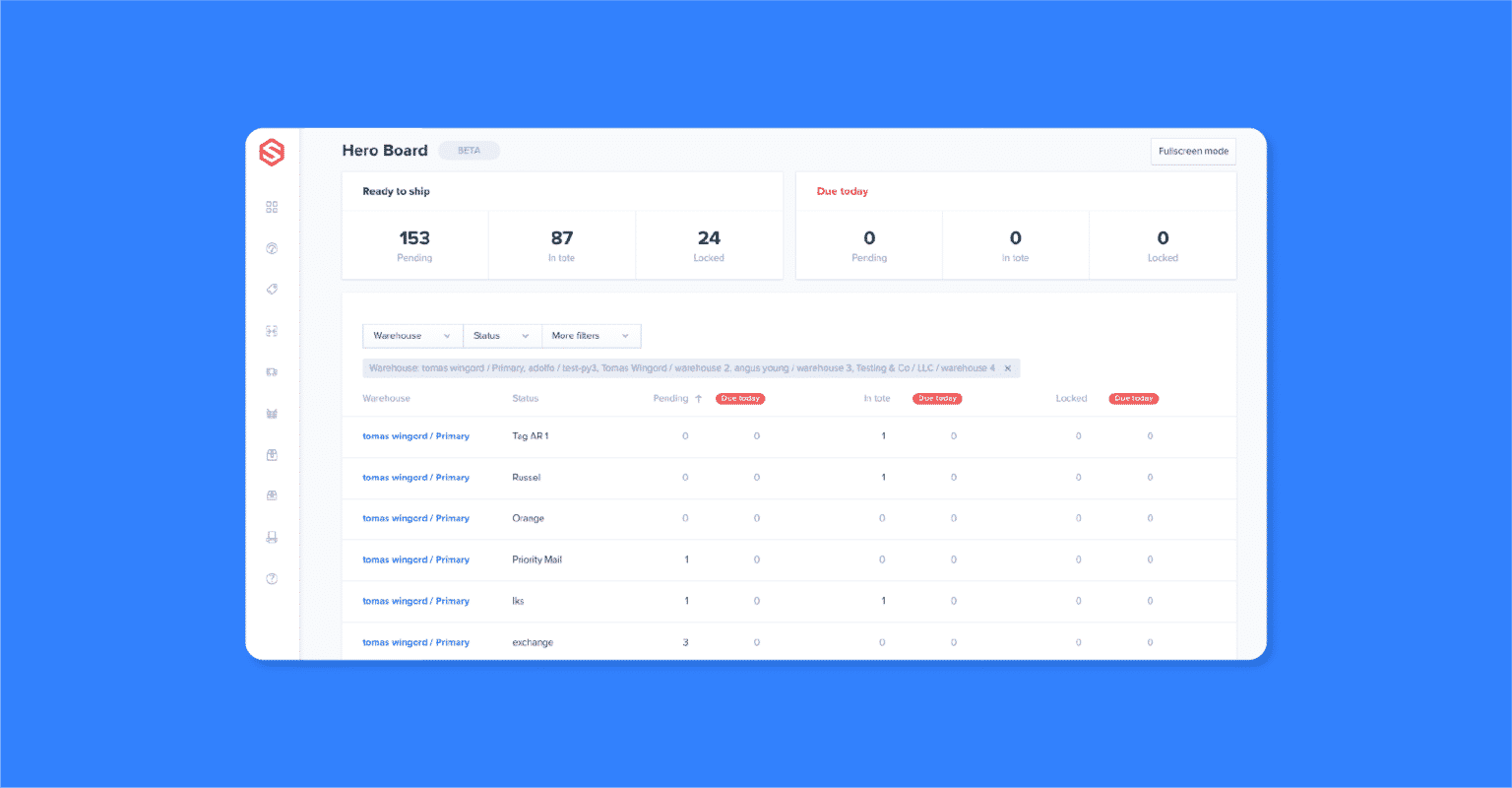
ShipHero WMS constantly strives to provide you with the information that you need to make intelligent decisions regarding your warehouse management and order fulfillment. That’s why we built the HeroBoard -- a personalized dashboard designed to give an at-a-glance view of your fulfillment operations.
The HeroBoard overview dashboard refreshes every 30 seconds for real-time monitoring of your shipments. Want to get into the specifics? HeroBoard users can easily drill down into specific order information for better customer service and flexible decision-making.
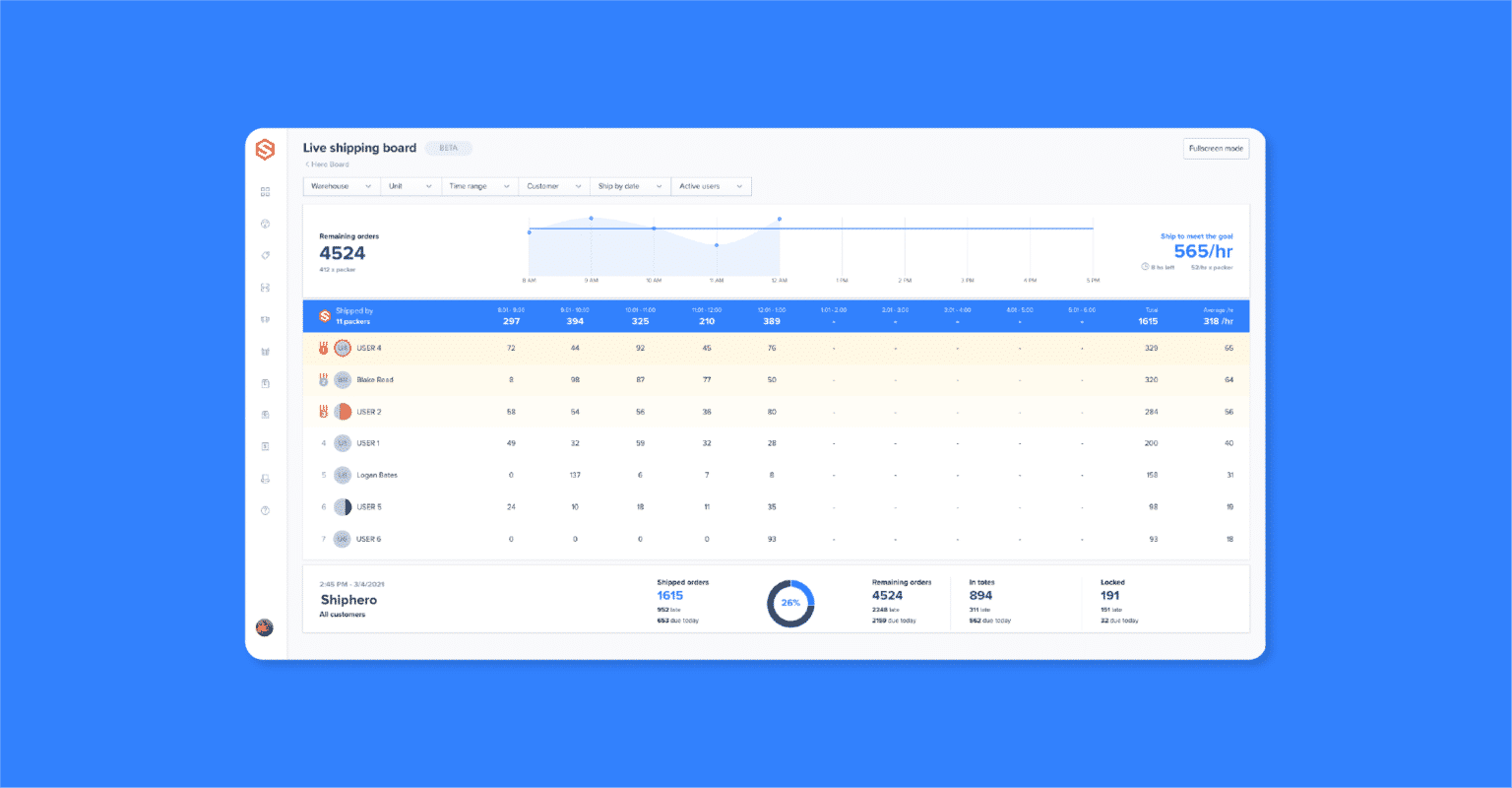
The Live Shipping Board is the newest update to the HeroBoard that gives you a view into the stats for each packer, remaining orders, and more!Schedule a demo today.

The incumbent President of the United States made quick work in demonstrating to our citizens and the rest of the world exactly what our country’s priorities will be for the next four years and beyond. Within his first week of taking office, President Joe Biden enacted a long list of executive orders that sought solutions to the pressing issues stemming from the COVID-19 pandemic, immigration, and climate change.
Sustainability has been of great importance to the Biden administration since his Vice Presidency, and continued to be a main aspect of his campaign during the 2020 election, so it came as no surprise when President Joe Biden signed an executive order to initiate his plan to combat climate change through a Clean Energy Revolution and Environmental Justice.
No matter who you voted for, it’s time to get acquainted with his stance on climate change, what measures the government will be taking to lower our carbon footprint, and how the logistics industry will be impacted. In essence, it comes down to carbon emissions and the railroad.
Under Biden’s leadership, the United States rejoined the Paris Agreement on climate change, which calls us to determine a reduction target for emissions and direct our federal agencies to execute on that promise.
For example, US agencies have been directed to purchase American-made, zero-emission vehicles, and suspend new oil and natural gas leases on public lands in hopes to conserve at least 30% of federal lands and waters over the next ten years.
The Biden Plan for a Clean Energy Revolution and Environmental Justice also promises to make major public investments in automobile infrastructure, including 500,000 electric vehicle charging stations, while accelerating R&D on battery technology and battery production. This is sure to increase production and widespread use of EV vehicles, buses, and trucks for transportation.
Sustainability
As the current pandemic situation unfolds, sustainability in the supply chain has gone by the wayside as urgency and necessity push for speed and reliability in shipping. But even still, some shoppers opt to use the Amazon Day feature to try and offset their purchases with their rationale being, if they have to come here, at least let them bring more than one thing. Post-COVID however, sustainability will be sure to resume as a large priority for consumers and retailers once more.
For fulfillment providers, retailers will push for low-carbon and zero-carbon (if not negative) emissions throughout the supply chain. There will be a push for clean transportation options, namely electric vehicles (EV) including electric trucks for long-distance shipping, whereas air freight has the worst carbon emissions.
Although it remains unclear what Environmental Justice specifically entails, we don’t find it out of the realm of possibilities that a national carbon tax could be introduced similar to Canada, Britain or some US states, or rather an incentivized stimulus for low-emitting companies. If enacted, a carbon tax could make logistics companies like Amazon rethink their air-heavy fulfillment strategy and make way for 3PLs that are built on sustainable practices.
But where, WHERE, are these sustainable transportation methods coming from?, you may have shouted into your computer screen. Well, toot toot, the answer to that falls on…
Biden’s plan aims to spark “The Second Great Railroad Revolution”, a push to modernize US rail infrastructure, which will ensure that we have the cleanest, safest, and fastest rail system in the world — for both passengers and freight.
A US Rail Revolution will not only reduce pollution, by working with Amtrak and private freight rail companies to further electrify the rail system, but also provide workers with “good, union” jobs and stimulate investment in communities better linked to major metropolitan areas. In order to streamline the loan process and make capital more available for the railway industry, Biden has tapped existing federal grant and loan programs at the US Department of Transportation.
Multi-modal
Currently, fulfillment is dominated by ground travel, with long-distance trucking and last-mile delivery vans. Although rail freight can carry 400 times what a single truckload can with much fewer emissions, the current process for fulfillment by rail is too complex and downright costly. However, Biden’s plan could be the answer for this.
By modernizing rail freight and designing it for today’s eCommerce world, rail freight could once again become a viable option, and 3PL providers that account for this shift could disrupt the logistics industry entirely by cornering the multi-modal transportation space.
Multi-modal transport (also known as combined transport) is the transportation of goods under a single contract, but performed with at least two different modes of transport, often performed by contracted sub-carriers. The carrier responsible for the entire carriage is referred to as a multimodal transport operator, or MTO.
So, any 3PL that can become the leading MTO could position themselves to become the 4th major player in logistics and fulfillment, with UPS and Fedex at capacity, and Amazon weighed down by its traditional infrastructure.
We’re no fulfill-osophers, but we do predict that a smart logistics provider like ShipHero, one built to scale through agility, will be perfectly positioned to quickly claim market share and delight their customers with sustainable shipping and multi-modal options.
Through use of already existing clean energy and green technologies, the logistics industry can lead the way towards sustainable practices in eCommerce supply chains. Moreover, the pandemic-caused boom of eCommerce has given rise to a plethora of opportunities and growth in the fulfillment space; and where money goes, progress follows.
Investments to improve fulfillment practices driven by big data and blockchain will be the spark necessary for companies to derive ROI from their sustainable practices, and effectively contribute to Green Joe’s climate plan.
Learn more about ShipHero's industry-leading warehouse management software.
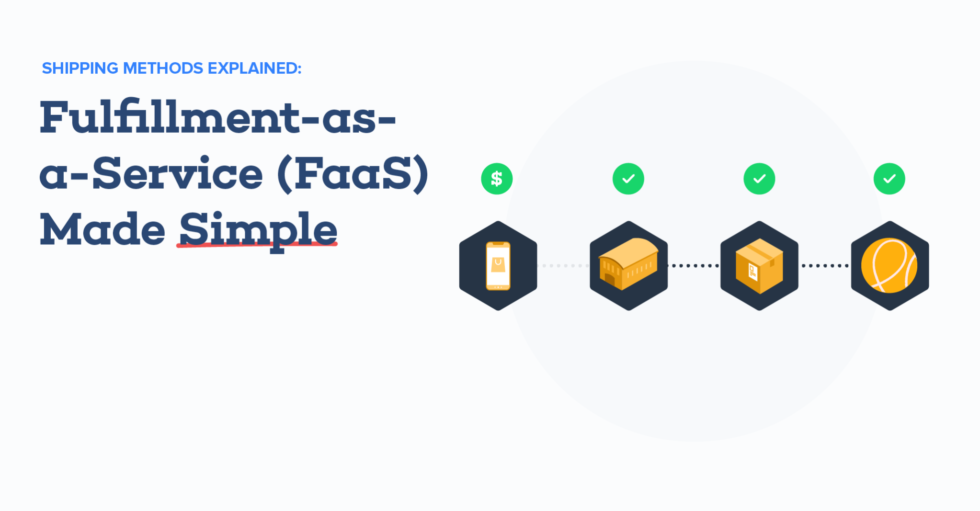
Welcome to our Shipping Methods Explained blog series. In this series, we will deep dive into fulfillment methods - that is, how businesses fulfill their online orders and get products to their customers.
Sounds simple right? Well, in theory, it is. You could hop on your itty-witty bicycle and hand-deliver your product, mission accomplished. But consider the complexity when your company fulfills hundreds to thousands of orders daily, not to mention the skyrocketing shipping costs that could price you out of the market.
Managing inventory, navigating each carriers’ specific requirements, calculating the lowest cost from thousands of shipping options… it’s a daunting task. That’s why more and more businesses are outsourcing their fulfillment methods.
Are you ready to outsource your fulfillment? Let’s analyze your options to help you decide the best method for your business. In this second article, we’ll discuss Fulfillment-as-a-Service (FaaS). What is FaaS? What are the pros/cons? When is it right for my business? Let’s dive in.
(Check out our first article on Dropshipping here. And be sure to check back for future articles where we’ll cover even more fulfillment methods)
Simply put, Fulfillment-as-a-Service (FaaS) is where your company employs a third party company or warehouse to prepare and ship orders for you. This allows you to tap into fulfillment capabilities with no upfront investment of capital, and only pay for the services that you use.
Think about it like a subscription to Netflix. As long as you pay the subscription price, you have access to the content and services. Same with FaaS. As long as you partner with a third party logistics (3PL) provider, you can use them to pick, pack, and ship your product.
Now consider the alternative: in-house fulfillment, where companies must invest heavily in warehouse space, labor, management, and software to keep things running smoothly. With FaaS, this is all included in one subscription price, and you can pick and choose the specific capabilities that you need.
We wrote previously about how to choose which fulfillment method is right for you. Take a look here.
With seamless integration between your business systems and their fulfillment cloud-based platforms, getting started with a fulfillment provider has never been easier. All it takes is 3 easy steps to start delivering the goods.
The first step to outsourcing your fulfillment is to find the right FaaS partner for you.There is an endless list of fulfillment companies vying for your business. So when you are vetting each, ask questions like:
Not all 3PLs operate the same way: some value customization over speed, some strive to be the low cost option at the expense of service, so be sure to select the fulfillment partner that aligns with your specific strategic goals.
Once you decide on a fulfillment provider, it’s time to integrate.
FaaS providers offer cloud-based software solutions so that your business can utilize their warehouse management capabilities to control the flow of your products. These solutions offer great value to your business because this allows for highly customized options when it comes to fulfillment - custom packing, custom unboxing, custom bundles - you name it.
Also, smart fulfillment companies like ShipHero provide you with the ability to create automated workflows and a frictionless return process through strategic partnerships with companies like Alloy and Returnly.
The final step is to send your inventory to your 3PL’s warehouses and get to shipping.
Once the inventory is received, the warehouse will begin to pick, pack and ship your products for you. If you picked a good fulfillment provider that is built for performance and scale, the 3PL will also disperse inventory across their network of warehouses, bringing the products closer to where the orders are coming from.
ShipHero is able to provide 2-day ground shipping for the contiguous US due to intelligent forecasting solutions powered by AI. We bring the products to where your customers are located, instead of a central fulfillment hub. This allows us to lower costs and our carbon footprint through an emphasis on ground transportation.
Is FaaS right for your business? Or would you benefit from dropshipping or another fulfillment method? Let’s look at the pros and cons of fulfillment-as-a-service so you can decide for yourself.
Business with big goals, fluctuating sales, and not enough time all find great value in the FaaS model. Beyond the obvious benefit of saving time and effort by having a third party fulfill your order for you, FaaS provides advantages in terms of skill specialization, agility, and scalability.
Flexible Pricing
As you grow, 3PLs are able to adapt to your needs and adjust costs accordingly. Conversely, when your business goes through a bit of a slow down (hopefully not), the costs can reflect this as well, and you won’t be weighted down with high overhead. FaaS allows you to forego the high costs, risk, and commitment of leasing and operating your own warehouse.
Skill Specialization
When you choose FaaS, you don’t just get a fulfillment provider, you get a business partner. Most 3PLs employ teams of logistics experts and support staff to help you with your shipping needs, and this comes standard with years of experience with fulfillment best practices and software solutions.
Not only do they provide shipping expertise, but also when handling the dirty business of returns. As online shopping continues to grow, so do the number of returned products. 3PLs can help you manage the nightmare of returns and offer a frictionless return experience for your customers.
Agility
If there is one thing that FaaS providers do well, it’s move quickly. Whether it’s shipping times or software development, 3PLs embody the spirit of agility. Many fulfillment providers like ShipHero offer 2-day shipping to anywhere in the US; this would require an immense investment from a business, so more and more retailers are partnering with 3PLs to achieve a level of agility they otherwise wouldn’t achieve.
The advantages above explain why more and more retailers are partnering with third party logistics providers and fulfillment specialists. Despite the pros, FaaS is not right for every business.
Need Consistent Orders
If you are a startup or a small business still getting their feet wet, it may be better to handle your orders in-house due to the costs associated with fulfillment-as-a-service. But when customers are knocking down your door and you can’t handle the growing number of orders, 3PLs are standing by to help you as needed.
Lose Full Customization and Control
You’d be surprised with the range of customization that 3PLs can offer, but still there is a limit when compared to the full autonomy that you would have with in-house fulfillment. So if you have very detailed and highly specialized requirements when it comes to fulfillment, handling your fulfillment in-house may be a better option.
So, is FaaS right for your business? If you’re not sure, stay tuned for our next article as we dive into Fulfillment by Amazon (FBA).
Learn more about ShipHero's industry-leading warehouse management software.

Even as the holiday decorations go back into storage and Mariah Carrey retires her microphone for another 11 months, business is still ba-hooming for online brands and retailers. With the encroaching cold of January and talks of more lockdowns on the horizon, more and more shoppers are turning from their old brick-and-mortar ways, to finally enter the new era of online shopping.
As online brand owners and digital retailers, we owe these potential new customers a great first impression into the online shopping community. So let’s look at five things you can do to delight your new and existing customers as they evolve to meet the new world around them.
Someone has to say it. In today’s understatedly hectic marketplace, with traditional carriers like USPS, UPS, FedEx and even Amazon stretched to their limits due to the massive surge in online shopping, the most important step you can take during right now to secure the success of your online store is to solidify your Fulfillment strategy AKA make sure that customers can actually get your product.
At a time when market uncertainties and shopper anxieties are at an all time high, online retailers must take every precaution to retain their customers’ trust. Retailers that have relied solely on traditional carriers or FBA (Fulfillment by Amazon) in the past are now finding resiliency in their operation by diversifying their shipping methods and outsourcing to third party logistics (3PL) companies.
3PL companies easily handle warehousing, forwarding, packing, consulting, order fulfillment, brokerage and transportation documentation, while offering fulfillment management software that seamlessly integrates into your business systems; e.g., Shopify.
Not only that, high shipping costs and long shipping durations are the leading factors in stopping people from purchasing online. Online stores that have been able to reduce both are realizing immense competitive advantages and quickly growing their customer base, as would-be brick-and-mortar customers are confidently becoming online shoppers.
Whether you are just starting an online business or already operate a successful brand, prioritizing your fulfillment strategy is the #1 way to navigate the ecommerce realm during the COVID-19 pandemic.
You may have already noticed, but customers have been forced to change their shopping habits quite a bit. According to a study by JP Morgan, e-commerce now accounts for 16.1% of all U.S. sales, up from 11.8%, and news outlet BBC reported that COVID-19 has effectively eliminated the marginal store revenue accrued through a customer browsing in-person.
What this means is that online retailers need to have a clear picture of their online shoppers and their in-store shoppers, as well as how both of them engage with the digital store. You may already know your customers and have well-defined customer segments and demographic information, so you mustn’t reevaluate who they are, but rather how they now act.
Traditionally, technologically-native shoppers in the Gen Z or Millennial generation have been more inclined to browse in-store followed by purchasing online, while the older generation has statistically favored in-store transactions. COVID-19 has flipped this mantra for some, especially those that are less willing to venture out to shop.
So be sure to understand who is visiting your site now that wasn’t before. You may be welcoming new shoppers that could get frustrated with complicated browsing and checkout processes, or perhaps your customers are engaging with your brand in an entirely new way.
Since online shoppers lack the ability to physically touch, try on, and compare items, they may need more product information to feel comfortable completing a purchase. Not only that, customers will be less likely to return a product that is accurately displayed on your store.
For that reason, consider implementing the following to provide the most accurate information to your customers:
Once your customer decides to purchase, make it as easy as possible with a frictionless checkout process. Up until now, the majority online shoppers have been technological natives (i.e., younger), so many retailers may have settled on overly-complicated websites that rely on the customer being tech savvy.
Be aware that new online shoppers could get frazzled by complexity and subsequently abandon the checkout process when it loses them. To avoid this from happening, reevaluate your user journey from landing page to checkout confirmation, paying special attention to:
Customer support options like a live chat box needs to be clearly visible so the customer can reach out if they need assistance. Additionally, consider using heat-mapping or other anonymous tracking tools to find where exactly customers are getting frustrated and abandoning the process. This method of discovery along with design and testing is an important way to improve the user experience (UX) of your shopping journey.
Returns are the unavoidable fallout of online shopping, and the best thing online companies can do is to prepare for them to happen. In our past blogs we’ve detailed the rising number of returns and how online retailers can turn returns into a profitable venture.
When making an online purchase, your brand’s return policy is often the very first thing a customer will look for, along with your shipping options and data privacy policy. So make sure your returns policy is highly transparent and overly generous.
Beyond that, a smooth returns process creates loyal, repeat customers. Be sure to give your customers the ability to, at a minimum, print labels, track their returns, and know the status of their refund.
Refunds are a messy business, and that’s why many 3PLs like ShipHero are partnering with returns management companies like Returnly to automate the return process including the issuance of credit/refund, to make it as easy as possible for the retailers and their customers.
The most effective way to weather a crisis and maintain relationships is to keep sustained communication with your customer base, according to Harvard Business Review. In times of chaos, customers may seek to know how your brand is responding, and determine if their brand loyalty should remain. HBR suggests the following approach to communicating with your customer base during a crisis, and it has a lot of HEART.
By following the above five recommendations, your brand will be sure to win your fair share of the growing number of online shoppers, whether it’s their first time or their millionth.
Ready to tackle fulfillment for your online store? ShipHero is a leading provider of SaaS 3PL software for ecommerce fulfillment that is trusted by over 4000 ecommerce brands and 3PLs every day.
Learn more about ShipHero’s industry-leading warehouse management software.
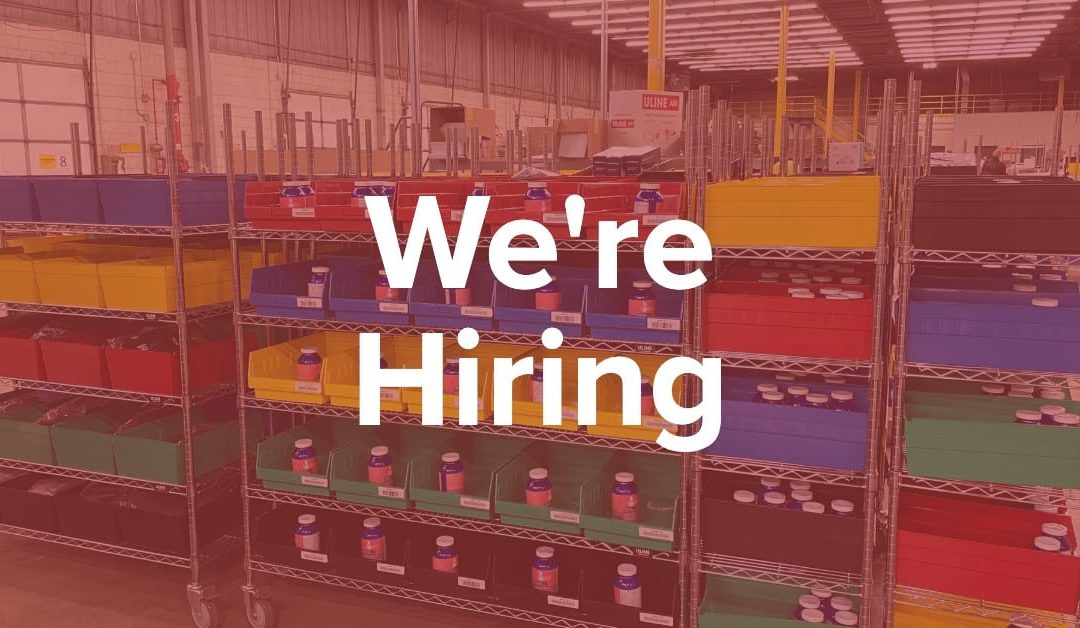
“We’re hiring” seems to be hanging from just about every warehouse door these days. With more people sending more packages, third-party logistics (3PL) companies like Amazon and ShipHero must grow to keep up with the soaring ecommerce industry. And now more than ever, we depend on our people to get the job done.
While there has always been a blend of traditional employees and gig workers, like seasonal workers coming in to help with the holiday rush, 3PL companies are now keeping these workers on longer to keep up with the increased shipping volumes from COVID-19.
Pick-and-Packers and fulfillment specialists are in high demand these days. Are you considering joining the growing number of gig workers that are taking on warehouse jobs? If so, let’s take a look at the future of warehouse work, and why more and more 3PL companies are partnering with the Gig Economy.
As customers have come to expect same-day or two-day delivery, logistics companies and ecommerce fulfillment providers are under pressure to get faster. For that reason, 3PL companies have started increasing the size of their team and investing heavily in people and technology.
There are 400,000 current job openings in US Manufacturing, which is only predicted to increase significantly over the next decade. 3PL companies need to get talent on their team now, or risk getting flogged down with too many orders and not enough people to fulfill them. In order to hire quickly and effectively, 3PL companies are turning to gig workers.
For 3PL companies and fulfillment providers, the biggest expense is warehouse worker salaries. The next largest expense is investing in the training and tools to attract the best candidates and produce highly effective teams.
For that reason, warehouse jobs are being posted on sites like Indeed, ZipRecruiter, GigSmart, and more, so that the companies can quickly and thoroughly find a candidate pool that’s large enough to fill their demand. Companies can choose the right applicants that match their needs, and oftentimes the platform facilitates payment and provides support for gig workers.Through advancements in technology and interconnectedness, companies and workers both have reason to trust in the Gig Economy.
Hiring gig workers provides flexibility for work schedules, and allows the warehouse manager to only hire for what they need. Flexible workforce management reduces overall cost to the customer, and allows the 3PL company to offer its gig workers more competitive hourly wages. For that reason, warehouse and fulfillment jobs are extremely popular gigs on most job-hunting platforms.
Not only that, gig workers in the logistics industry are often hired for a certain expertise or for seasonal availability. These specialty workers can offer their services for a well-defined scope of work.
When you start a warehouse job, what you’re joining is a traditional team of employees as well as some gig workers like you. We engage our temporary workers and regular employees the exact same way, where other industries may treat gig workers like commodities. For that reason, more and more seasonal gig workers are becoming regular employees, because when the gig is up, they feel part of the organization.
Ready to find your side hustle? Whether you’re looking for temporary/seasonal work, or maybe something more long term and fulfilling (excuse the pun), consider a warehouse gig with the local 3PL companies, fulfillment providers or warehouses in your area. Hey, you could even become a ShipHero!
We’re currently building an experienced warehouse team to pick, pack & ship orders in our 150,000 sqft warehouse located in Pennsylvania. You'd be part of a team that helps ship over $5 billion of e-commerce orders a year.
ShipHero is a leading provider of SaaS 3PL software for ecommerce fulfillment.




.svg)