.svg)

Let’s stay in touch with the ShipHero Blog.


.webp)
The ShipHero Model Context Protocol (MCP) connects supported AI clients directly to your live ShipHero data, so warehouse teams can ask questions and get specific answers from their own account. It is built for day-to-day operational checks, including inventory levels, open orders, shipment status, holds, returns, purchase orders, and exceptions. For ShipHero customers, it is available at no additional charge and runs on existing API credits.
Every order, shipment, inventory movement, hold, return, and purchase order creates data inside ShipHero. Your warehouse information is right there, but getting to it can be a slow, complex process.
Before the ShipHero MCP, answering a specific operational question often meant logging in, finding the right report, applying the right filters, exporting data, or asking the one person on the team who knew where to look.
Even when the answer was simple, like a quick inventory check, it could turn into a 20 to 45 minute task. A customer question could sit half a day while someone pulled the right numbers. That delay adds friction to the floor. It slows decisions. It keeps teams waiting on data they already own.
The ShipHero MCP gives supported AI clients secure, read-only access to live ShipHero data.
That means operators can ask questions in plain English and get answers from their actual account, not from a generic help article or static knowledge base. A chatbot can tell you where to find a number. The ShipHero MCP can return the number itself.
It works with MCP-enabled AI clients, including Claude, ChatGPT, Cursor, and Codex. Connect it once, authenticate access, and your team can start asking operational questions from the AI tool they already use.
The workflow is simple:
The MCP does not replace ShipHero. It makes the data inside ShipHero easier to reach when your team needs a fast answer.
The ShipHero MCP is designed for everyday operational questions, such as:
If the data lives in your ShipHero account, the MCP gives your team a faster way to ask for it.
Speed matters, but safety matters too.
The ShipHero MCP is read-only by design. It can retrieve information from your account, but it cannot create orders, modify records, delete data, or change warehouse settings.
That gives teams a practical way to use AI for operational visibility without risking accidental account changes. Operators can ask. Managers can check. 3PL teams can answer client questions faster.
The data becomes easier to use, while the records stay protected.
For founders, the MCP can turn a quick inventory check into a simple question.
For operations leads, it can surface shipment status, holds, exceptions, and low-stock SKUs without digging through reports.
For 3PL operators, it can help answer client questions faster, using live account data instead of manual follow-up.
The result is a faster way to reach the information already inside ShipHero.
The ShipHero MCP is available to all ShipHero customers at no additional charge. It runs on existing API credits, so specific questions help keep usage efficient.
To get started, visit developer.shiphero.com or contact your ShipHero account representative.
ShipHero MCP is a read-only connection between supported AI clients and your live ShipHero data. It lets users ask operational questions in plain English and receive answers from their actual ShipHero account.
A chatbot usually answers from fixed, generic information. ShipHero MCP connects to live account data, so it can return specific answers about your orders, shipments, inventory, holds, returns, and other ShipHero records.
ShipHero MCP works with AI clients that support the Model Context Protocol, including Claude, ChatGPT, Cursor, and Codex.
No. ShipHero MCP is read-only. It can query data, but it cannot create, update, or delete records in your ShipHero account.
No. The MCP is built for operators and can be connected from a supported AI client in minutes. Developers may use more advanced tools for deeper analysis, but most day-to-day users can work directly with the MCP.
Yes. ShipHero MCP is available to ShipHero customers at no additional charge and runs on existing API credits.
Transitioning to a new Warehouse Management System (WMS) is a high-stakes decision that often triggers concerns regarding downtime, data integrity, and workforce adaptation. As warehouses prepare for 2026 growth, understanding these common hurdles—and the technical solutions that resolve them—is essential for a successful migration. This guide addresses the five primary barriers to adoption and how a high-velocity infrastructure ensures a seamless transition.
Warehouse operators frequently hesitate to upgrade due to perceived risks that can halt operations. These challenges typically include:
To clear these hurdles, a structured implementation strategy is used to prioritize data density and entity clarity.
In the competitive eCommerce landscape, staying stagnant with manual workarounds is often more costly than the transition itself. Moving to a high-velocity WMS converts your warehouse from a cost center into a growth engine by providing Labor Efficiency and ROI through automated routing and reduced authentication friction.
Because the platform is built for the floor worker, features like Workforce Hero allow seasonal temps and new staff to be authenticated and productive in under an hour.
No. High-velocity infrastructure increases visibility by providing Total Real-Time Control. Managers can monitor exactly what is in the Hospital queue and track replenishment in real-time from a single dashboard.
Before going live, a ground-up audit is performed using cycle counting tools. The system's architecture ensures that every movement on the floor is synchronized with sales channels instantly, maintaining 99.9% accuracy.
Picture a packer at Peak Season. A box is in front of them, a product in each hand, and somewhere on a cluttered desk there's a mouse they need to find to confirm the order. They look down. They hunt. They click. Then they do it again. Thousands of times a day.
That moment of friction is small. But it is never just one moment. Multiply it across your entire pack line, across an entire shift, and you are looking at a measurable and largely invisible drag on your total throughput.
Tap-to-Pack is a purpose-built hardware controller designed by ShipHero to eliminate digital friction at the packing station. It connects via USB-C, requires no drivers or additional software, and syncs automatically with the ShipHero WMS packing app. This new system is now available at the ShipHero Store.
Instead of navigating a screen with a keyboard and mouse, packers execute every high-frequency command — such as selecting box sizes, printing labels, finalizing orders, flagging exceptions — with a single physical tap on one of eight programmable buttons.
Key specifications:
Most warehouses are running 2026 operations on 1990s peripheral standards. The keyboard and mouse were designed for spreadsheets and emails, not high-volume fulfillment. When used at a packing station, they create three compounding problems:
The problem is not your people. It is the tools you are asking them to use.
Tap-to-Pack introduces a "Rodent-Free" packing standard: a workflow where the packer's hands stay on the product, their eyes stay on the work, and the software fades into the background.
The device guides the packer through two feedback systems:
ShipHero customers running Tap-to-Pack are already seeing a 90% reduction in on-screen interactions and a significant increase in the number of orders packed per hour, without adding headcount or changing their warehouse layout.
One of the hardest challenges in fulfillment is absorbing volume quickly, especially during Peak Season, when temporary staff need to reach target productivity fast.
Because Tap-to-Pack's interface is physical and intuitive, there is almost nothing to teach. Pick up the product, follow the light, tap the button. New packers can reach target productivity in minutes rather than hours.
The system is also modular:
Whether you are a growing DTC brand or a high-volume 3PL, Tap-to-Pack is designed so your hardware never becomes a ceiling on what your team can do.
Tap-to-Pack is a programmable, industrial-grade hardware controller that connects to the ShipHero WMS and allows warehouse packers to execute packing station commands, such as printing labels, selecting boxes, and completing orders. All with a single physical button press, eliminating the need for a keyboard and mouse.
The device connects via USB-C and syncs automatically with the ShipHero WMS packing app. It is a true plug-and-play solution: no drivers, no background software, and no manual configuration required.
Yes. Buttons are configurable for a range of packing actions, including Print Label, Complete Order, Select Box Size, and the Hospital function, which flags a problematic order and keeps the line moving without stopping to resolve it on screen.
The system is fully modular. Connect up to two additional 8-button hubs to the Main Hub for a total of 24 programmable buttons, supporting even the most complex multi-step packing workflows.
Tap-to-Pack devices require ShipHero Packing App v1.0 or higher. The current release is v1.1.0.
Imagine running a warehouse where orders are picked quickly, inventory is accurate, and all operations run smoothly without any errors or delays. Thanks to Artificial Intelligence, this can now become a reality with ease.
AI is transforming warehouse management by enhancing efficiency, intelligence, and the ability to meet the rapid demands of today’s eCommerce-driven market.
ShipHero is pioneering this revolution with its AI-powered warehouse solutions, setting new industry benchmarks. This article explores ShipHero’s AI Picking feature, highlighting how it’s transforming warehouse management and enhancing operational efficiency.
The integration of AI technologies, including machine learning, robotics, and predictive analytics, is revolutionizing warehouse operations, driving significant improvements in efficiency, accuracy, and overall performance. These innovations are optimizing processes across various areas, from inventory management to order fulfillment. Below are the key benefits of AI in warehouse management.
A combination of AI technologies is shaping smarter warehouse systems to help revolutionize warehouse management.
ShipHero has taken AI integration to the next level with its AI Picking feature, designed to significantly improve warehouse efficiency. This feature automates the picking process, reducing the reliance on manual labor and enhancing productivity in ways that were once thought impossible.
Let’s dive deeper into how ShipHero’s AI Picking works and the advantages it offers.
AI Picking optimizes warehouse operations in two key ways:
The AI Picking feature delivers a wide range of benefits:
The transformative power of AI extends far beyond just picking. AI is also revolutionizing other aspects of warehouse management, driving improvements in operational efficiency, inventory management, and safety.
AI automates tasks, reducing errors and increasing speed. Automated sorting and real-time inventory tracking ensure accuracy, while real-time monitoring helps managers adapt and ensure timely deliveries.
AI plays a vital role in maintaining accurate inventory levels. By leveraging predictive analytics, AI can forecast demand and optimize stock levels, helping warehouses avoid both stockouts and overstock situations. This leads to better inventory management and fewer disruptions in supply chains.
AI-driven systems can monitor warehouse conditions to ensure safety and compliance with industry regulations. These systems can analyze warehouse data and predict potential hazards before they occur, proactively reducing risks and ensuring a safer working environment.
AI technologies are playing a transformative role in the supply chain and logistics sectors by improving efficiency, reducing costs, and enhancing decision-making.
These intelligent systems effortlessly manage supply chain processes by using data to optimize operations, predict trends, and automate routine tasks. This ultimately reshapes everything, from how goods are moved to stored and delivered.
The future of warehouse management looks promising with greater automation and efficiency, but future warehouse digitization brings challenges, such as high upfront costs and the need for skilled personnel.
AI-powered drones, autonomous robots, and IoT integration are smart warehouse technologies that are revolutionizing warehouse operations. Drones will deliver goods quickly, while robots automate sorting and transportation, thereby reducing the need for manual labor.
IoT and AI integration will enable real-time monitoring and optimization of operations. Smart technology in warehouses is leading to fully automated systems that are faster, scalable, and need minimal human input.
While AI offers immense benefits, businesses must also consider certain challenges. High initial investments in AI technology, data security concerns, and the need for skilled personnel are just a few of the hurdles that must be addressed.
However, with a strategic approach, companies can eliminate the challenges and embrace AI’s full potential to boost accuracy in picking and improve overall warehouse operations.
AI minimizes error by automating tasks like inventory tracking, order picking, and sorting, ensuring greater accuracy and efficiency.
Yes, AI-driven predictive analytics can predict demand, track inventory levels, and improve supply chain efficiency by forecasting needs with greater accuracy to help businesses stay ahead of trends and market fluctuations.
AI solutions are becoming more cost-effective thanks to cloud-based services and subscription pricing models. These options make AI technology more accessible to small businesses, allowing them to take advantage of its benefits without large upfront costs.




The main purpose of poly mailers is to provide a secure and efficient poly shipping bags' solution. These are versatile shipping bags, popularly used by every brand shop for mailing bags of items, including a variety of things like DVDs, small items like phone cases, and even magazines. The interior is often spacious enough to accommodate various dimensions, sizes and shapes.
Poly mailers bags, also known as polythene bags or plastic mailers' bags, are a popular choice in the realm of shipping supplies. Their popularity stems from their lightweight design, low amount, and tear proof capabilities, which can help reduce postage costs with carriers like USPS. They also offer protection from moisture and minor damages, ensuring the packages reach their destination in good health.
There are different types of poly mailers, each with a unique purpose. The most common ones are the standard poly mailers, poly bubble mailers, poly shipping bags, and the sustainable packaging option - compostable mailers. Kraft mailers, another option, have a sturdy build and offer the same opening mechanism with a peelable lip. This guide will help you understand the difference between each type of poly mailers and their benefits.
Standard Poly Mailers: Standard poly mailers are the most commonly used shipping mailers. Brands often make poly shipping bags and use these for shipping items such as clothes, shoes, and documents. These poly mailers are made of a thin layer of polyethylene, which is a type of recycled plastic. They often have a peel-and-seal opening for easy packaging and tamper-evident envelopes for security.
Poly Bubble Mailers: Poly bubble mailers serve a similar purpose but come with a layer of bubble padding inside. This extra padding makes them suitable for shipping fragile items like electronics. Unlike traditional packing peanuts, bubble mailers' padding ensures secure packaging without the mess. The same mailers' exterior is smooth, perfect for attaching shipping labels and enhancing the visibility of branding.
Compostable Mailers: Compostable mailers are a green alternative to regular plastic shipping bags. They are made from compostable materials, providing a more eco-friendly shipping solution. They are becoming increasingly popular among businesses conscious of their low environmental impact.
Custom Poly Mailers: Custom poly mailers are perfect for businesses looking to add a personal touch to their website and shipments. They can be custom-printed with brand logos or other designs, increasing brand visibility and reinforcing branding.
It's important to note that the length and size of these mailers vary by site and shop. Be sure to check the dimensions before making a purchase from your shop or preferred packaging company. The right size can ensure the safety of your items and reduce expedited shipping costs.
Poly mailers, in all their forms, offer several benefits. They're lightweight, which can save you money on postage. They're also waterproof, protecting your packages from moisture damage. Their tamper-evident feature adds an extra layer of security, ensuring your items reach their destination intact. Moreover, they're customizable, allowing you to add your products' own style and personal touch, reinforcing your brand's identity with every shipment you ship.
Switching to poly mailers can offer numerous advantages over traditional cartons or paper mailers. Not only are they lighter and more protective, but they're also more flexible, able to accommodate and ship a wide range of sizes of items.
For packaging materials like poly bags or poly mailers, consider the contents, the ideal shipping conditions, and the potential for damages. Your choice of packaging used can make a significant difference in your brand's reputation and the environment.
So, whether you're shipping clothes, electronics, or using discreet shipping; poly mailers can be a reliable and cost-effective solution. But remember, the key lies in choosing the right type that best serves your purpose.
Yes, you can put poly mailers in the mailbox. They are the bags designed to fit in standard mailboxes and are often the shipping bags used by USPS.
Standard poly mailers made from polythene, a type of recycled plastic, are recyclable. However, it's always good to check with your local recycling program to be sure.
Yes, poly mailers can go through USPS. They are a popular packaging choice for many products from many brands due to their light weight and durability, which make them ideal for shipping various items.
Most poly mailers come with a peel-and-seal closure. Simply peel off the strip to expose, add the adhesive, fold the lip over, add, and press to secure the seal.
Yes, poly mailers are waterproof. They are waterproof and are designed to resist moisture, offering extra protection for your items during transit.
Poly bubble mailers are typically not recyclable due to their interior layer of bubble padding. However, compostable poly mailers are, an eco-friendly alternative, are made from compostable materials and are recyclable.

.svg)
Effective warehouse operations rely on smart picking strategies. These strategies, involving everything from the placement of goods to the use of automation, are critical to improving customer service and the bottom line for warehouse managers.
The process of order picking is integral to warehouse operations. The role of warehouse workers and order pickers, who hand-select goods from storage, is crucial to fulfilling customer orders efficiently. The right order picking methods can significantly improve operations, reducing downtime and human error, and operating costs while increasing profits.
Different facilities have different needs, and the size and nature of your warehouse operations matter. Companies must look at the specifics of their operation, such as the weight and size of goods, cross picking up, the layout of shelves and racks, and the demand for certain stock units. An organization's choice in picking methods can impact everything from labor costs to customer service.
Piece picking is a common warehouse order picking strategy where order pickers select individual items for each customer order. This method is suitable for warehouses with a diverse stock range and smaller customer orders. However, the physical demands on staff and potential for the picking errors, may necessitate considering other strategies or technologies.
"Zone picking method involves dividing the warehouse space into distinct zones. Each picker is responsible for one zone, picking all goods for customer orders from their area. This parallel picking method improves the flow and control of operations, reduces the distance people have to travel, and minimizes the risk of errors.
In batch picking, order pickers gather several customer orders at once. This approach reduces travel distance within the warehouse and can boost order picking efficiency. However, careful organization and control of discrete picking up are necessary to prevent mix-ups and ensure customer service quality.
Automation technologies, from scanners to automated storage and retrieval systems, offer vast improvements to warehouse picking, distribution centers and shipping operations strategies. While warehouse automations can be considered costly, they increase visibility of stock, minimize labor costs, and reduce the risk of human error. However, companies must weigh these benefits against the cost and potential disruption of implementing such systems.
Ergonomics isn't just about protecting staff. The placement of boxes, containers, and parts on racks and shelves can impact warehouse picking process, speed, risk of errors, and staff wellbeing. High-demand goods line items should be placed at eye-level for easy visibility and access, improving the flow of the picking process.
Using data from warehouse operations can provide insight into things like stock cycle, sales trends, and the effectiveness of current picking methods and warehouse processes. Webinars and online learning can offer valuable advice on using this data for continuous improvement.
Batch picking and wave picking are two popular order picking methods that warehouses often employ to increase efficiency. Batch picking involves picking multiple orders simultaneously, while wave picking separates order picking process, and packing into distinct phases. Choosing between these methods depends on factors like order volume, product diversity, and staffing capabilities. Batch pick and pass picking suits warehouses with small orders, while wave picking is ideal for higher order volumes. The right balance between these methods can optimize productivity and minimize order fulfillment times.
Voice picking technology has transformed warehouse operations by providing hands-free, voice-guided instructions to order pickers. This technology increases picking accuracy and speed, reduces training time for new employees, and enhances safety by allowing workers to keep their eyes and hands free. Voice picking systems also integrate with warehouse management systems (WMS), ensuring real-time updates on order lines and accurate inventory management. With its ability to streamline order fulfillment and picking processes, voice picking technology is becoming a must-have for modern warehouses.
Cross-docking is an innovative warehouse strategy for minimizing storage time by transferring goods directly from inbound to outbound trucks. This approach reduces handling costs, shortens delivery times, and lowers the need for long-term storage. Cross-docking is particularly effective for perishable items, time-sensitive products, and high-demand items. Implementing efficient cross-docking and best practices requires careful planning, coordination with suppliers and carriers, and a robust warehouse management system.
Picking accuracy is paramount to customer satisfaction and operational success. Implementing quality control measures in the whole order fulfillment process and picking and process improvements can significantly reduce errors and returns. Techniques like random order checks, barcode scanning, and verification systems help ensure that the right products are picked and packed accurately. Regular training programs, performance metrics, and continuous improvement initiatives contribute to maintaining high levels of picking accuracy.
Dynamic slotting involves strategically placing products in the warehouse based on their popularity and demand patterns. High-demand items are positioned closer to the packing area of warehouse order to minimize travel time, while slower-moving items are stored further away. By optimizing the layout, different types of warehouses can improve picking efficiency, keep inventory accuracy reduce labor costs, and enhance order fulfillment speed. Dynamic slotting is an ongoing process that requires regular analysis of product data and adjustment of storage locations.
Remember that each a warehouse manager's needs and operations are unique. Choosing the right warehouse order picking equipment, strategy or technology depends on factors like product characteristics, order volume, available resources, and technological capabilities. A comprehensive analysis of these factors, along with continuous evaluation and improvement, will lead to a warehouse that operates at peak efficiency, enhances customer satisfaction, and drives overall profitability.
Determining the right picking strategy for your warehouse operations isn't a one-size-fits-all affair. It's about understanding your entire warehouse side's specific needs, evaluating the nature of your stock and demands, managing inventory, and finding the right balance between labor, automation, and customer service. It's a continuous cycle of improvement – because when it comes to warehouse operations, every little bit of efficiency translates into money saved and profits earned.
Imagine embarking on a strategic journey, akin to a meticulously planned road trip. In the business landscape, logistics serves as the roadmap that ensures smooth operations. Inbound and outbound logistics are pivotal components of this roadmap. In this article, we will delve into the intricacies of both outbound logistics focuses and provide insights on optimization. Just as a well-charted route is essential for a successful road trip, a robust logistics strategy is vital for seamless business operations.
Logistics management, in the commercial sphere, pertains to the systematic movement of goods, materials, and inventory from one location to another. It is a comprehensive process that includes inventory management, adding packing slips, transportation, and final delivery of incoming goods. To meet evolving customer demand and expectations, businesses must maintain a high level of coordination and oversight throughout these processes. This involves a complex web of relationships with suppliers, carriers, and partners. The difference between a successful logistics operation and an inefficient one often lies in the quality of these relationships and the systems in place.
Logistics is instrumental in determining a business's success trajectory. It is the backbone that ensures timely delivery of goods in optimal condition. By refining logistics processes, businesses can realize cost efficiencies, enhance operational effectiveness, and carve a niche in their respective markets. Effective logistics operations also involve data-driven decision-making, technology integration, and a network of reliable partners to optimize inbound logistics. In some areas, the use of ltl (less-than-truckload) carriers, efficient routes, and trucks can make a significant impact on the efficiency of outbound logistics services and operations.
Inbound logistics revolves around the movement of raw materials and goods into a company's premises, encompassing activities from sourcing to warehousing. Conversely, the outbound logistics process is about delivering the final products to the end-users, from ecommerce fulfillment to transportation. While both are interlinked, they necessitate distinct strategies. Mastery over both is crucial for a company's success, and their optimization demands meticulous planning and execution. For example, the relationship between a company's inventory planning and its manufacturing process can determine the efficiency of its supply chain management.
Inbound logistics is the linchpin that ensures timely availability of raw materials at competitive prices, facilitating efficient production. On the other hand, outbound logistics is pivotal for swift and efficient product delivery to customers, enhancing customer satisfaction. By streamlining both, businesses can achieve reduced delivery times, curtailed shipping costs, and heightened customer satisfaction. The control system in place, from order packaging in the warehouse to distribution centers to outbound transportation via carriers, plays a vital role in this service process.
Leveraging software, such as ShipHero's warehouse management software, can significantly enhance the management of both inbound and outbound logistics operations. It is paramount to select a solution that caters to both processes comprehensively. Incorporating systems that offer visibility into stock information and freight rates can further optimize how outbound logistics services handle their operations.
A robust, efficient inbound logistics framework is a precursor to efficient, outbound logistics processes. Any disruption in the inbound process can ripple into production delays, affecting the outbound process. Hence, prioritizing inbound logistics is essential for optimizing the entire supply chain.
Inbound logistics faces several challenges, including limited real-time shipment visibility, capacity constraints leading to bottlenecks, inefficient processes, communication gaps between suppliers and warehouses, and inventory costs and unexpected disruptions causing shipment delays. The lack of a robust inventory planning warehouse management system can exacerbate these inefficiencies.
Optimization hinges on areas like supplier management, transportation planning, warehouse operations and inventory management. Building strong supplier relationships can lead to better pricing and delivery terms. Employing transportation planning tools can further enhance efficiency. For instance, understanding the difference in transportation costs when choosing between various carriers can lead to significant cost savings.
Outbound logistics grapples with challenges like increased costs due to inbound delivery delays, efficiency bottlenecks, need for meticulous planning, communication hurdles, and inbound logistics focuses and leveraging technology for supply chain optimization. The vics (Voluntary Interindustry Commerce Solutions) standards, for example, can help streamline some of these processes.
To enhance outbound logistics, businesses should focus on inventory accuracy, transportation mode selection, carrier coordination, cost management, and efficient order fulfillment. A blend of technology, automation, and effective communication across distribution channels is the key. Incorporating freight management and packaging solutions can further streamline the process.
The synergy between e-commerce fulfillment and logistics is pivotal for success. It's like merging two streams to create a powerful river of efficiency. The synchronization of real-time inventory updates, automated order processing, and efficient fulfillment ensures a seamless transition from virtual shopping to real-world sales process and satisfaction. This collaboration between systems amplifies the triumph of online businesses.
Returned products find new life within the supply chain. Reverse logistics reshapes the journey of returns into opportunities for enhanced efficiency. From reinvigorating electronics to recycling packaging materials, it's about maximizing utility and fuel costs and minimizing waste. Beyond handling, it's a process that transforms returns into a circular approach for greater sustainability and customer goodwill.
Blockchain technology guarantees transparency in the supply chain. It's like a secure digital ledger ensuring every step is traceable. This clarity fosters trust among stakeholders, mitigates fraud risks, and upholds authenticity. Think of it as a conductor ensuring each note is played correctly; blockchain ensures the notes of logistics are authentic and tamper-proof.
Businesses form collaborative and delivery networks, to optimize logistics efficiency. Collaborative logistics networks share transportation resources, warehouses, and insights to reduce costs and environmental impact. Just as musicians collaborate to create harmonious music, businesses collaborate to create a harmonious supply chain where efficiency is the melody.
Global trade compliance ensures smooth international trade operations. It's about understanding and harmonizing diverse regulations to facilitate cross-border movements. Like translators interpreting various languages, global trade compliance ensures that goods traverse international borders seamlessly in line with regulations.
Warehouses equipped with AI and sensors execute precision in inventory management. It's akin to a choreographed performance where products transition smoothly from shelves to shipping. With heightened accuracy in inventory management and streamlined order fulfillment, it's like orchestrating a dance of efficiency where products move seamlessly from distribution center to their intended destinations.
Green logistics initiatives focus on eco-friendly transportation modes and strategies to reduce environmental impact. It's akin to adopting sustainable practices to deliver goods while minimizing carbon footprints. The focus lies on minimizing environmental impact while ensuring efficient logistics. Trends like Print on Demand are helping overcome inventory wastage.
Logistics data transforms into actionable insights that harmonize operations. It's like crafting a symphony where each instrument plays in sync. Analytics orchestrate efficient inbound logistics processes, ensuring all elements of the operation are well-coordinated and in tune.
Navigating international borders involves the expertise of customs brokerage services. These services ensure smooth movements through customs procedures, ensuring compliance and uninterrupted transportation operations and cross-border logistics.
Emergency logistics coordinate backup plans and swift actions, ensuring uninterrupted operational rhythm, even in challenging situations.
Inbound logistics involves managing the movement material handling of raw materials and supplies into a company’s facilities. For instance, a manufacturer procuring PCBs from a supplier, coordinating its transportation, and storing it in the warehouse is an example.
Outbound logistics pertains to delivering finished products to customers. A clothing retailer whose outbound logistics involves fulfilling an online order by picking, packing, and shipping the item to the customer exemplifies this.For a deeper dive into supply chain efficiencies, check out this article. To understand the nuances of warehousing, explore what is warehousing.
Inventory management is key to a company's operations. A critical part of this is making sure all products are accounted for. An effective inventory and inventory audit report helps in achieving this and minimizing errors that can harm the company's profits and brand.
An inventory report is a crucial document detailing a company's physical inventory. It lists each item, its quantity, location, and condition. This information helps companies understand their own inventory analysis, report stock levels, identify out-of-stock items, and decide the necessary restocking. This insight aids in knowing your company's assets and the profits tied to them.
Good, accurate inventory reporting is essential for smooth operations and high-quality customer service. Having a categorized inventory list with details about each item is invaluable for any business.
Grouping products based on attributes like type, size, color, or use helps understand stock levels and detect patterns. This grouping aids in allocating resources and maintaining popular items on the shelf, making ordering more efficient.
Accurate tracking of inventory items helps avoid over-ordering and excess inventory. It also helps identify slow-moving items, which can be liquidated to free up resources and reduce costs.
Accurate inventory reporting metrics impacts customer service directly. Knowing what products are available and their location is key to fulfilling orders quickly, which leads to satisfied customers.
Analyzing inventory data over time helps predict future inventory needs, preventing stockouts and reducing waste. This information can help calculate the exact amount you need to spend on new inventory.
Inventory reports come in several types:
Here's how to perform a monthly inventory report that helps you understand your inventory position effectively:
The inventory accuracy rate calculates the percentage of units correctly accounted for. It's a useful tool for understanding how well your company is managing its inventory.
Inventory turnover is a key metric in inventory management and provides valuable insights into a company's sales and purchasing effectiveness. It measures both how much inventory and often a business sells and replaces its inventory within a certain period, typically a year.
The formula for calculating inventory turnover is:
Inventory Turnover = Cost of Goods Sold (COGS) / Average Inventory
A high inventory turnover rate could suggest strong sales or effective inventory management. However, if the rate is too high, it might indicate inadequate inventory levels, which could lead to stockouts and lost sales. Conversely, a product inventory usage report with low turnover rate might indicate slow sales, excess inventory, or issues with product pricing or quality.
Understanding your inventory turnover rate allows for better stock control, aids in managing cash flow, and helps you make data-driven business decisions.
Understanding the cost of keeping unsold goods is critical for inventory management. This cost is sometimes hidden but contributes significantly to the total value of a company's expenses.
Keeping inventory has several costs:
Why should you care about the cost of keeping inventory? It informs decisions on how much stock to keep. If holding costs are high, you might want less inventory. But, if running out of stock means losing sales and making customers unhappy, holding more inventory could be worth the cost.
To sum up, knowing the cost of keeping inventory is essential for smart inventory management. You need to balance between having enough stock to meet demand and reducing the costs of keeping unsold goods.
Inventory valuation is crucial for accurately reporting a company's financial status and calculating the cost of goods sold - an essential component of the inventory turnover equation.
There are several inventory valuation methods, each with its benefits and drawbacks:
Selecting the right inventory valuation method depends on your business model, tax situation, and financial goals. It's a crucial decision that should align with your overall inventory management strategy.
Remember, effective management of inventory turnover and inventory valuation are key to maintain optimal stock levels, minimize costs, and maximize profitability. Understanding these concepts forms an essential part of a successful inventory management system.
Cycle counting is an ongoing process that counts a portion of the inventory at different times. Regular cycle counts help discover stock discrepancies early, allowing for prompt action.
Regular weekly and monthly reports on cycle counts offer real-time data on inventory and allow for better forecasting. They also help uncover cases of theft and damage, providing a chance to improve control measures.
Digital solutions are becoming more popular for inventory control. Today's systems offer dashboard views of inventory levels, barcodes for quick stock taking, free inventory report templates and automated processes to reduce human error.
Excel is a handy tool for inventory management. Templates in Excel format help monitor inventory effectively, for inventory managers with records of SKUs, cycle counts, and inventory discrepancies.
Employees play a vital role in inventory management. Regular training sessions should be held to educate them about the importance of inventory control.
Inventory accuracy is crucial to a company's success. By incorporating regular cycle counts, investing in technology, and educating employees, companies can optimize their product inventory and storage, enhance customer experience, and build a stronger brand reputation.
If you're new to the world of eCommerce or shipping, you might be wondering what shipping labels are and how they work. Shipping labels are an essential component of any shipping process, whether you're shipping items to customers or sending packages to family and friends. They provide critical information to carriers and allow your package to be routed to its destination accurately. Without them, your packages could get lost!
A shipping label is a sticker or tag you attach to a package or envelope you are sending to someone. It includes important information like the recipient's address, the sender's address, and the weight of the package. These addresses and packing information help the shipping carriers know where to send the package and how much it weighs so they can charge you the correct shipping rates. Shipping labels can come in many different shapes and sizes, and they can be printed on a variety of materials. Some common types of shipping labels include peel-and-stick labels, integrated labels, and label sheets that you can print on using a regular printer.
The purpose of a shipping label is pretty straightforward - it's basically a way to make sure your package gets to where it needs to go! Think of a shipping label as a sort of "travel guide" for your package. It includes all the important information that the carrier needs to know in order to get your package to its final destination. This might include the recipient's name and address, the weight of the package, and any special handling instructions that need to be followed.
Shipping labels are essential for eCommerce businesses because they provide a quick and efficient way to manage the shipping process. By using shipping labels, eCommerce businesses can streamline their shipping operations, and project a professional image to customers. We all know how important customer satisfaction is when it comes to an eCommerce business, and having a streamlined delivery process with clear packing slips helps the process. Shipping labels can help speed up white glove fulfillment so packages are delivered to the correct address, reducing the risk of misdelivery or lost packages. Additionally, shipping labels can help eCommerce businesses save money on shipping costs by accurately calculating the weight and dimensions of the contents within the package, which helps carriers charge the correct shipping fees.
Shipping labels work by providing critical information about a package or shipment to carriers, including its origin, destination, weight, and any special handling instructions. Once the package is in transit, carriers use the information on the shipping label to quickly route the package to its intended destination. This might be done through shipping software where the carrier uses barcode technology to scan the labels at various checkpoints along the way to verify the package is moving in the right direction. Once the package reaches its destination, the shipping label and the barcodes included on it are used to identify the recipient and ensure the package is delivered to the correct address. This might involve the carrier companies obtaining a signature from the recipient to confirm delivery, depending on the type of shipping service that was used.
Here are some necessary steps to take when creating your own shipping label:
A shipping label typically includes the following information:
Printing a shipping label is a relatively simple process that can be done using a few different methods. One common way to print a shipping label is to use an online shipping tool provided by the carrier you're using. To do this, simply navigate to the carrier's website, log in to your account, and follow the instructions for creating a new shipment. Once you've inputted all the necessary information, you should be able to preview and print the label directly from the website. Another option is to use a third-party shipping platform, such as ShipHero or Shippo, which can help simplify the shipping process and allow you to print labels for multiple carriers from a single dashboard. Whichever method you choose, make sure the label is printed clearly and legibly, and all necessary information is included.
The best place to put a shipping label on a box is on the largest, flattest surface of the package, ideally the top or one of the sides. Make sure the label is affixed securely and all of the information is legible and easy to read. Avoid placing the label on a seam or a corner, as this can make it difficult for people to scan the label or for the information to be easily read.
Here are some best practices to keep in mind when creating and using shipping labels:
Shipping labels are a crucial part of any shipping process, and they provide critical information to carriers and by allowing packages to be routed to their intended destination accurately. eCommerce businesses, in particular, rely on shipping labels to streamline their supply chain and shipping operations and provide a positive customer experience through the logistics process. And, by following best practices, you can ensure your shipping labels are accurate, legible, and easy to read so they arrive at their destination smoothly.
Printing your own shipping labels can often be cheaper because carriers offer discounted rates for online shipping tools or third-party shipping platforms. This saves you money on shipping costs and avoids additional fees for manually processing shipments or printing labels at retail locations. However, savings will depend on factors like package size, weight, shipping service, and location. Compare rates and options from different carriers to find the most cost-effective solution.
It is not recommended to just tape a shipping label onto a package. Shipping labels should be affixed securely to the package using adhesive that is appropriate for the surface of the package. This ensures the label stays in place during transit and can be easily read by the carrier. If a label is only taped to a package, it can easily become detached or damaged, which can cause delays or result in the package being lost.
Creating a shipping label may or may not be free depending on the carrier you're using and the method you choose. Some carriers offer free online shipping tools that allow you to create and print shipping labels from your computer, while others may charge a fee for this service. Additionally, some carriers may offer free shipping labels as part of a promotion or discount program, while others may charge a fee for each label printed.

A packing slip is more than just a random piece of paper that accompanies shipments. In essence, it serves as a commercial invoice, a vital touch point between buyers and sellers in the realm of commerce. Let's delve into the world of packing slips, its importance, its usage, and the key differences from other shipping documents.
Essentially, a printed packing slip just serves as a practical document that outlines the specifics of a shipment. It helps carriers like UPS, FedEx, or the post office in determining the content of packages. It's integral to the entire packaging and shipping processes and transportation process, and it's particularly handy for merchants to keep track of their stock and volume of deliveries.
A packing slip, legal shipping document and an invoice doesn't just list the contents of the boxes but also includes crucial contact details of the parties involved, namely the purchaser (consignee) and the seller. It provides proof of ownership and also serves as a delivery note in some cases.
A packing slip is an essential document that accompanies each shipment, providing a detailed list of items inside the package, including descriptions, quantities, and order specifics. Unlike invoices or bills of lading, it doesn’t involve payment or contractual obligations.
Instead, it acts as a reference for both the seller and buyer to confirm the shipment's contents, ensuring accuracy in the order fulfillment process. This simple yet crucial document helps enhance communication and minimize errors among all parties involved.
On top of the billing address of the first packing slip inside, you typically find the names and addresses of the buyer and seller. It also lists out the quantity, description, and UPC (Unique Product Code) of each item in the shipment.
In some versions of the packing slip, there are additional elements like the price, order number of items and the carrier involved in the transportation process. It may also include details like the type of packaging used, especially if the items are breakable.
Packing slips, in practice, provide an array of advantages to all involved parties. For merchants, it provides a basis for inventory management software used to monitor the products leaving their warehouses. It gives a clear sense of the flow of goods and helps maintain customer satisfaction.
On both the seller and buyer's end, it offers proof of what was ordered and received, which is essential in cases of discrepancies or refund requests. A 3PL system depends on clear shipping labels as one of its levers for efficient movement of goods. Moreover, in the event of return or exchange, packing slips make the shipping process easier by providing all necessary information.
The packing slip, lading document, and invoices share some similarities but also have distinct differences. A bill of lading serves as a contract between the carrier and the consignee, while an invoice is a request for payment. A packing slip, on the other hand, does not involve a payment method, money exchange or contractual obligations but serves as a document detailing the shipment contents.
Creating a packing slip template doesn't have to be a complex process. There are several packing slip templates available online, many of which can be customized in Excel, to cater to individual needs.
Once the template is ready, input all the necessary shipping details, including price, items, and buyer and seller's contact information. Make sure to print a hard copy and keep it in the shipping pouch attached to the package. This ensures it's the first document the buyer or any shipping carrier or intermediary party sees upon delivery.
Packing slips provide merchants with a sense of control and order date to help in precise order management and maintain smooth operations in the shipping department of their warehouses. They also offer a sense of reassurance to buyers, knowing what to expect in their shipment.
They're essential in all ecommerce businesses in the world of e-commerce, where purchases are made virtually, and the touchpoint of the product with the buyer is at the delivery stage. Packing slips ensure no discrepancies in the purchase order and lead to enhanced customer satisfaction.
Digital packing slips are modern forms of the shipping labels and documents. They're sent through email or online links. They cut down on paper and are faster to access. With real-time updates, they make business smoother.
Packing slips linking with inventory systems makes tracking easy. This connection lets you watch, report, and manage what's in stock. By using barcodes or QR codes to create your own packing slip or slips, you can make changes without errors, save time, and keep things moving.
Keeping information on packing slips private is very important. You must protect things like addresses and product details. By using encryption and limiting who sees the information on the packing slip helps the list, both sellers and buyers stay safe.
When shipping across borders, packing slips need extra care. You must follow international rules and provide details like what's in the shipment and where it's from. Mistakes can cause big problems, so you have to know what to do.
Packing slips can help the environment. You can use digital versions or make physical copies from recycled materials. You might even talk about green practices on the front print packing slips themselves. These steps fit with a movement towards more responsible business.
Real stories show how packing slips really work.
Digital Packing Slips
Amazon, a leading e-commerce giant, recently implemented digital packing slips for all of its shipments. This transition has reduced paper usage by 30% within a year. Customers and suppliers have praised this move, as it has streamlined the delivery and packing process, and enabled quick access to shipment details.
Walmart successfully integrated packing slips with its own inventory management system since their order fulfillment system was operating at a massive scale. By only one packing slip and incorporating QR codes and real-time tracking, they achieved a 15% decrease in inventory errors. This also allowed them to manage restocking efficiently, improving overall operational agility.
In 2020, a mid-sized online retailer suffered a data breach, exposing sensitive shipping address packing slip information. By learning from this incident and investing in advanced encryption and access controls, they ensured that similar breaches did not happen again. This restoration of security strengthened customer trust.
FedEx, an international shipping company, has a specialized protocol for handling packing slips in international shipments. By adhering to global regulations and automating much of the documentation process, they managed to reduce customs clearance delays by 20%. Their system is often cited by shipping carriers as an industry best practice.
Etsy, a platform for unique and creative goods, promotes sustainability by encouraging sellers to use digital packing slips or environmentally friendly materials for shipping label of physical ones. This initiative aligns with their broader mission to foster a sustainable global marketplace and has garnered positive public response.
To put it in a nutshell, packing slips are indispensable elements in the e-commerce world. They serve as a critical checkpoint in the commerce supply chain, fostering trust between sellers and purchasers. Having a well-detailed packing slip can save time, money, and potential headaches in the long run. It's a good business practice that every merchant should adopt to ensure smooth and efficient operations.
While not legally required, packing slips are highly recommended. They help verify the contents of a package, reduce errors, and improve customer satisfaction, especially in e-commerce.
No. A packing slip lists the items in the package, while a shipping label provides delivery details, such as addresses and tracking information.
A packing slip lists the contents of a shipment, while an invoice is a request for payment that details the amounts due for the items.

The journey of goods from stores to your doorstep for same day delivery, often involves the delicate dance of shipping and handling. If you've ever been in a situation where you needed something delivered urgently, you've likely encountered the term "expedited shipping." In this blog post, we delve into the world of expedited shipping to bring you a comprehensive understanding.
Expedited shipping is a term used by couriers and delivery services to describe a delivery process that is quicker than regular shipping or standard ground shipping. To give you an idea, think of it as ordering food at a restaurant but needing it faster than usual. You'd pay extra money for the speed, and expedited shipping works much the same way.
Delivery times for expedited shipping can vary quite a bit. The size of your package, the destination it's being sent to, and the other expedited shipping speed of delivery or service you're using can all play a part. Generally, however, you can expect your expedited shipment to take anywhere between 1-3 business days – a much shorter frame compared to regular ground shipping.
An interesting thing to note is that during expedited shipping services, drivers often make fewer stops, ensuring that packages get to their destinations as quickly as possible. The fewer the stops, the faster the journey.
Expedited shipping rates can be influenced by several things. The shipping rates set by a variety of delivery services like USPS, couriers, or your local post office are one factor. These rates can depend on anything from the size and weight of your package to the shipping cost of the destination it's going to.
But there's more to it than average order value. For additional examples, some stores promise their shoppers free expedited shipping, at a flat rate, regardless of the order value. Often, discreet shipping might be offered as an add-on for the customer at an additional charge. While this could potentially cost the store money on larger orders, it could boost sales by offering an attractive convenience to the buyer. On the other hand, smaller orders might work out in favor of the store, balancing out the costs.
Additionally, businesses can sometimes negotiate discounts with shipping providers based on volume, adding another layer of complexity to shipping costs.
Is expedited shipping worth it? The answer isn't a one-size-fits-all. From a buyer's perspective, if they need a product urgently, the expedited shipping option makes perfect sense. There's also a psychological element to consider when offering expedited shipping – the quicker people get their goods, the more likely they are to become repeat shoppers.
From a business standpoint, these expedited shipping options can give them a chance to gain a competitive edge. If their competitors are offering this offer free expedited shipping service and they aren't, they could miss out on chances for additional sales. They need to weigh this against the additional handling required and the potential for delays that might harm their reputation.
Expedited shipping isn't just for domestic orders – it can also be used for international ones. Of course, this often comes with higher costs due to the need for customs clearances and the handling of additional documents. Delays might also be more common with express delivery or expedited shipments due to the workings of the post office in certain countries.
However, for time-sensitive items (for example, certain documents or perishable food items), offering expedited shipping or international shipping might be the only feasible shipping option.
Certainly! Here's a revised version based on your instructions:
Tracking Systems: Technology in expedited express shipping includes real-time tracking. Customers can see where their package is at any moment. It's quick and clear.
Route Planning: Software plans the fastest routes, considering things like traffic. This makes shipping faster.
Warehouse Automation: Robots in warehouses pick and pack orders. This speeds up shipping.
AI Customer Service: AI chatbots answer questions about shipping right away. Customers get quick answers.
Ecommerce Integration: Online stores offer fast shipping options at checkout. It's simple and fast.
Drones: Some companies use drones for delivery. They're fast, especially in busy areas.
Technology makes standard and expedited shipping faster, quicker and more reliable.
Amazon Prime: Amazon's quick shipping service is a famous example of the many expedited shipping services. They use many methods to ship fast.
Medical Industry: Hospitals use the expedited services for shipping for things like organs. Any delay can be a big problem.
Small Businesses: Some small businesses use fast, shipping and delivery services to compete with big companies. It makes customers happy and loyal.
Disaster Relief: Fast shipping helps in disasters by moving things like food and medicine quickly. It can save lives.
Failures: Some companies have problems with fast shipping. These stories teach other businesses what not to do.
Small businesses often face unique challenges when it comes to expedited shipping. Unlike large corporations, they may not have the extensive infrastructure or bargaining power to get reduced rates. Every cost from shipping labels to inventory storage costs is a big deal for them. However, offering expedited shipping can be a way for small businesses to attract and retain customers by meeting their immediate needs. They might collaborate with larger carriers or find local courier services that specialize in fast delivery. By exploring these various expedited delivery options, small businesses strive to find a balance between the extra cost of expedited shipping and the potential increase in customer satisfaction and loyalty.
Each shipping company, whether it's a major global carrier like FedEx and UPS or a smaller local service, handles expedited shipping differently. Large carriers often have specific services tailored for rapid delivery, leveraging their vast networks and resources. Smaller companies might rely on personalized service and local knowledge to provide fast shipping. There's a wide variety of services, pricing models, and guarantees across different carriers. Understanding these differences helps customers and businesses choose the right affordable expedited delivery option for their needs, ensuring that the packages reach their destination as quickly as possible.
The topic of insurance and liability is a vital consideration in expedited shipping. When a package is lost or damaged, especially if it's of high value or time-sensitive, it becomes a significant concern. Many carriers offer different levels of insurance coverage that protect against various risks. Some might cover just the value of the goods, while others might include shipping costs. Customers and businesses need to understand these insurance options, evaluating the terms and cost to decide if it's worth the additional investment. Having the right insurance can give peace of mind and avoid potential disputes if something goes wrong during expedited shipping work.
Expedited shipping faces unique challenges during peak seasons, such as holidays or major sales events. The increase in package volume puts more pressure on the delivery network, leading to potential delays and increased costs. Carriers may have to hire extra staff, extend working hours, or secure additional transportation to handle the surge. Customers might find that expedited shipping costs more or takes slightly longer, even with the premium service. Both businesses and customers must plan ahead, and clear communication becomes essential. By understanding how expedited and standard shipping shipping changes during these busy times, all parties can better navigate the complexities and ensure timely delivery.
Small businesses face challenges with expedited shipping. They don't have big networks like larger companies. But they can still get noticed by offering quick shipping. Working with bigger carriers or using local solutions can help. It's all about finding the balance between costs and keeping customers happy.
Different shipping companies have their own ways of handling fast shipping. Big names like FedEx and UPS offer special speedy services. Smaller ones might use a personal touch. Each one has unique services, prices, and guarantees. So, businesses and customers can find the right fit for their needs.
If something goes wrong with a package in expedited shipping, insurance and liability become important. Carriers often offer coverage for the value of the goods and sometimes more. Customers and businesses should understand these terms. It helps to decide if the extra cost is worth it for the added peace of mind.
During busy seasons like holidays, expedited shipping means more changes. More packages mean more pressure. Carriers might add staff or resources. Customers might see higher costs or slightly longer times. Both businesses and customers need to plan and communicate. It helps everyone deal with the busy shipping times more smoothly.
Expedited shipping plays a pivotal role in modern commerce. While it can cost more, the potential advantages often outweigh the expense. For instance, ensuring the timely delivery of a birthday gift, a vital business document, or an order from overseas, expedited shipping is an indispensable tool in the world of ecommerce.
One last thing to remember: the convenience of expedited overnight shipping now is at your fingertips – literally. Many online stores let you choose this overnight priority shipping only option right from their virtual shopping carts, and you can usually track your orders on your phone. This way, you can have peace of mind knowing exactly when your package will arrive.
We hope this blog post has given you a clearer look at the world of expedited shipping. As always, feel free to explore other posts on our website for more shipping and ecommerce insights.

Warehouses and fulfillment centers both play essential roles in supply chain operations, but people often get confused about their specific functions. While they share some commonalities such as the need for space utilization and product flow, understanding their differences is vital for efficient planning and quality control in logistics processes.
For most businesses, a warehouse serves as a large storage facility where the layout's design, including the arrangement of aisles, racks, and skus, is pivotal for space optimization and quick product retrieval. This design not only aids pickers in navigating the various warehouse space, reducing confusion and time spent searching for items but also has a direct impact on productivity. Employees in a warehouse face challenges, and their training is paramount. They handle various tasks, from manual labeling of products to making job adjustments due to inventory changes or the introduction of new categories. With different sizes and amounts of items to manage, a proper plan to tackle potential problems and issues is crucial for smooth operations.
A fulfillment center, on the other hand, focuses on order processing and packaging for sales. Its primary reason for existence is to fulfill customer orders efficiently. Here, warehouse optimization methods, like zoning lease warehouse space and categorizing items into different zones, streamline the picking fulfillment process. Robots, automated systems, and IoT devices play a pivotal role in amplifying productivity, diminishing human error, and ensuring the quality of service, thus reducing expenses related to mistakes.
The fundamental difference between a warehouse and a fulfillment center lies in their functions: storage vs. order fulfillment. This distinction reflects in their layouts: while warehouses emphasize maximizing floor space with options like high-capacity storage systems or pallet racks, fulfillment centers stress efficient routes and zones for fast retrieval and packaging shipping orders. Additionally, technology, which is often an example of warehouse automation, is more prevalent in a fulfillment center vs. centers. Given the complexity of an average order and the demand for rapid order completion, tools ranging from automated retrieval systems to IoT-enabled checklists become pivotal in a fulfillment center's efforts to avoid delays and stockouts.
Understanding these differences isn't just something to check off a list. It has a direct impact on a company's bottom line, customer satisfaction, and business to business' reputation. A business experiencing high sales volumes might find the quick and efficient methods of a fulfillment center more advantageous, leading to faster deliveries and satisfied customers. However, those handling a larger inventory might prefer the vast more storage space and organization offered by a warehouse.
When choosing between warehouses and fulfillment centers, understanding costs is vital. Initially, warehouses might seem more expensive than distribution or most fulfillment centers, due to infrastructure. However, in the long run, the advanced tech and speedy services of fulfillment centers might add up. Always consider factors like rental rates, tech upgrades, staffing, and operational expenses to make a wise decision.
As businesses evolve, so do their needs for physical space. Warehouses are ideal for storing inventory and holding vast amounts of stock. On the other hand, fulfillment centers are geared towards handling spikes in orders, especially during peak times. So, when pondering where to invest, think about which facility will adapt to your growth trajectory.
Technology usage differs between the two. Warehouses often incorporate systems to oversee expansive inventories. In many ecommerce businesses by contrast, fulfillment centers prioritize technology that ensures swift customer order processing and dispatch. Consider which type of tech support will be more scalable and affordable for your operations as they expand.
Inventory management remains central to ecommerce companies' business. Warehouses focus on maintaining extensive inventories and ensuring they're easily accessible. Fulfillment centers emphasize fast movement to facilitate quick shipping. The real question is, which system ensures products are always available and ready for customers?
In the digital age e commerce, returns are part and parcel of the business to consumer online shopping. While fulfillment centers are designed to process returns efficiently, warehouses might have a slightly slower system. Analyze which setup simplifies the return process and enhances customer satisfaction.
Protection isn't just about physical goods but also data security and fulfillment services. Warehouses might employ advanced CCTV systems, while fulfillment centers could integrate robust cybersecurity measures, especially when handling customer data. It's crucial to weigh which facility online store offers a comprehensive safety net.
Environmental considerations are no longer an afterthought. Fulfillment centers might emphasize sustainable packaging, whereas warehouses and shipping carriers could adopt energy-efficient systems. Determine which aligns better with your own warehouse or company's eco-friendly objectives.
Location plays a pivotal role in logistics and order fulfillment services for companies. Warehouses might be more cost-effective in outskirts, but fulfillment centers benefit from being near urban areas for prompt deliveries. Reflect on which geographical positioning aligns with your distribution strategy.
The roles of employees differ by fulfillment center operations warehouse. In warehouses, they're predominantly engaged in stock management. However, in fulfillment centers, there's a mix of order processing, tech management, and customer service. Assess which facility offers roles that align more with your operational needs.
Consider a budding online business. Initially, a fulfillment center might suffice due to limited orders. However, as scale increases, a warehouse could offer more economical storage and fulfillment solutions store excess inventory. Such practical scenarios can guide your decision-making. Which facility mirrors your business's journey?
Personalization is the key to modern ecommerce retailers' consumer satisfaction. Fulfillment centers, with their quick processing, might be better equipped to handle custom orders. However, warehouses can stock a broader range store inventory of unique products. Decide which setup will better cater to your clientele's specific requirements.
The future beckons with more technological integrations. Warehouses might soon see more robotic assistants, while fulfillment centers could leverage AI for predictive analytics. Stay future-ready by choosing the facility, warehousing solution or fulfillment company that's more adaptable to emerging technologies.
Compliance is vital. Both facilities have distinct guidelines to follow:
It's paramount to ensure that your chosen facility adheres to all the required norms for your product type.
Contingencies are essential. Both facilities must have plans to address challenges such as:
It's essential to evaluate which infrastructure is better equipped to handle unforeseen adversities.
Delving deeper into the cost structures of both setups:
In summing up, it's essential to consider the specific needs of your business, the kinds of products you manage, and your sales volume when choosing between a warehouse and a fulfillment or distribution center. A well-planned strategy and professional fulfillment center, backed by the right skills and tools, can help minimize waste, boost efficiency, and enhance your business's overall performance.
Warehouse management is a critical aspect of modern businesses, playing a pivotal role in efficiently handling goods, optimizing storage space, and streamlining fulfillment processes. To achieve these objectives, organizations need to follow specific processes, implement advanced technologies, and understand various aspects related to warehousing.
In this article, we will explore the purpose of warehouse management, the needs it addresses, essential workflows and tasks, and how it differs from other related aspects such as enterprise resource planning (ERP) and customer relationship management (CRM). We will also discuss the changes in the industry, the people involved, and the activities that take place in a full warehouse operation.
The purpose of warehouse and supply chain management revolves around maximizing efficiency and productivity while minimizing waste and errors. It aims to ensure that goods are stored, picked, and shipped in a manner that meets customer demands and optimizes costs. By organizing and controlling warehouse operations, businesses can enhance their overall supply chain performance.
Warehouse management addresses several crucial needs, including:
Storage Space Optimization: Efficient warehouse management ensures the proper utilization of available storage space, and operating costs and allows businesses to stock the right inventory in the right quantities.
Fulfillment Process Streamlining: By implementing effective warehouse management strategies, businesses can streamline their fulfillment process, reducing order processing times and improving customer satisfaction.
Minimizing Human Errors: Automated warehouse systems and standardized processes help minimize human errors during inventory management and order fulfillment.
Inventory Accuracy: Warehouse management systems (WMS) ensure real-time tracking of inventory levels, leading to better inventory management deals, more accuracy and reduced stockouts.
Cost Optimization: By optimizing storage, using inventory turnover minimizing errors, and improving processes, warehouse management helps in overall cost optimization.
Without resource planning, your warehouse can quickly devolve into chaos. If you do not implement efficient processes and utilize modern technologies your warehouse might become slower than your competition, you could have low visibility, and you could receive complaints from angry customers who don’t know where their order is. But with warehouse management, you gain a deep understanding of what is needed for both your consumers and your retailers which you might not have had insight on before. Warehouse management solves a variety of challenges for businesses, including inventory management, order fulfillment, space utilization, labor management, and technology implementation. As an example, before you might not have known your stock levels, with a good warehouse management system you now know exactly what you have and what you need.
Warehouse management is guided by several key factors. However, you can sum them up in the six following principles.
When it comes to managing inventory in a warehouse, inventory management is of utmost importance. Different techniques are designed to keep the process streamlined and prevent potential roadblocks.
A warehouse management solution (WMS) is a software application which manages and optimizes warehouse operations, including inventory control, order fulfillment, space utilization, and labor management. These systems, sometimes known as inventory management software or warehouse management system WMS software, is typically a cloud based software solution. These solutions utilize advanced technologies such as barcoding, RFID, and voice recognition to automate and streamline warehouse processes as well as improve warehouse space and warehouse design. Companies like ShipHero have developed this software to help businesses optimize their warehouse operations, improve efficiency, and reduce costs.
Key Performance Indicators (KPIs) provide quantifiable measurements to gauge warehouse efficiency:
The warehouse management process involves various things, workflows and tasks, such as:
Warehouse management differs from other aspects, notably:
Advancements in technology, such as machine learning models and internet interfaces, have revolutionized warehouse management. Automated systems, real-time updates, and barcode scanning have accelerated processes and reduced manual errors.
Warehouse management involves various personnel, including the warehouse workers, staff, supervisors, and managers. Their activities range from receiving and inventory management to order picking and shipping coordination.
Warehouse management practices may vary across industries and regions due to differing needs, price points, and regulations. However, the fundamental principles of efficiency and accuracy remain consistent.
Warehouse management faces challenges related to changing customer demands, environmental factors, and industry-specific rules and regulations. However, these challenges also present opportunities for innovation and improvement.
A well-designed, warehouse floor layout contributes to efficient workflows, reducing unnecessary movement and optimizing space utilization. Proper organization and arrangement of pallets, packages, and bins play a crucial role in achieving this.
Selecting an appropriate, WMS system solution is essential for efficient warehouse management. Consider factors like scalability, interface flexibility, and integration with other applications like ERP and CRM.
Adhering to industry standards in warehouse management ensures consistency and efficiency. Timely and accurate deliveries are crucial for customer satisfaction and retention.
An organized approach to purchases and collaboration with suppliers help maintain optimal inventory levels and streamline procurement processes.
Effective communication and collaboration among various warehouse departments enhance overall productivity and accuracy in operations.
Using data-driven references and insights guide warehouse management decisions can improve customer satisfaction and facilitate continuous improvement.
Warehouse management systems with user-friendly interfaces enable smoother adoption and greater efficiency among warehouse personnel.
A successful warehouse management approach combines advanced hardware and software solutions to achieve seamless integration and automation.
In the competitive market, there is a constant pressure on warehouses to maintain accuracy and timeliness in the order fulfillment process.
Implementing basic safety measures ensures a secure working environment for warehouse staff and reduces the risk of accidents.
Integrating invoice management into warehouse systems streamlines financial transactions and aids in accounting processes.
Analyzing and optimizing paths within the warehouse reduces travel time and improves overall efficiency.
Maintaining the condition of warehouse facilities is essential to ensure smooth operations and reduce downtime.
Customer expectations for same-day deliveries have increased, challenging warehouse management to meet these demands efficiently.
Warehousing strategies differ between traditional brick-and-mortar stores and e-commerce fulfillment centers due to varying order volumes and customer expectations.
Integrating multiple WMS systems enables efficient multichannel fulfillment, catering to various customer preferences and sales channels.
Understanding users' roles and providing proper training ensures effective utilization of warehouse management systems and tools.
Selecting the right warehouse management solution is a critical decision that significantly impacts warehouse, operational efficiency and overall business success.
The use of barcodes in warehouse management facilitates accurate and efficient, inventory storage and tracking, reducing errors and enhancing overall productivity.
The layout and design of the warehouse facility play a crucial role in achieving optimal workflow and maximizing space utilization.
Collaboration among warehouses within a network can help support each other during peak periods and ensure timely order fulfillment.
Warehouse management involves identifying and addressing problems promptly while proactively seeking solutions to optimize operations.
Properly managing warehouse users and assigning appropriate roles ensures smooth coordination and efficient execution of tasks.
Warehouse management systems consist of various modules, each serving a specific function, such as inventory management and order processing.
Integrating different warehouse management modules allows for smoother transportation management and more efficient warehouse operations.
Warehouse operations are often affected by seasonal customer demand fluctuations. During peak periods, such as holidays or sale seasons, warehouses face challenges like increased order volumes, space constraints, and staffing needs. Strategies to manage these challenges include:
Emerging trends that are shaping the future of warehouse management include:
By staying ahead of these trends, warehouse managers can ensure they're prepared for the future and can maximize their efficiency and productivity.
Warehouse management is an integral part of modern business operations. By understanding the purpose, needs, workflows, and tasks involved, organizations can optimize their warehousing, streamline warehouse operations, improve fulfillment processes, and provide excellent customer service. Embracing technological advancements and empowering skilled personnel will help organizations thrive in this dynamic and ever-changing environment.
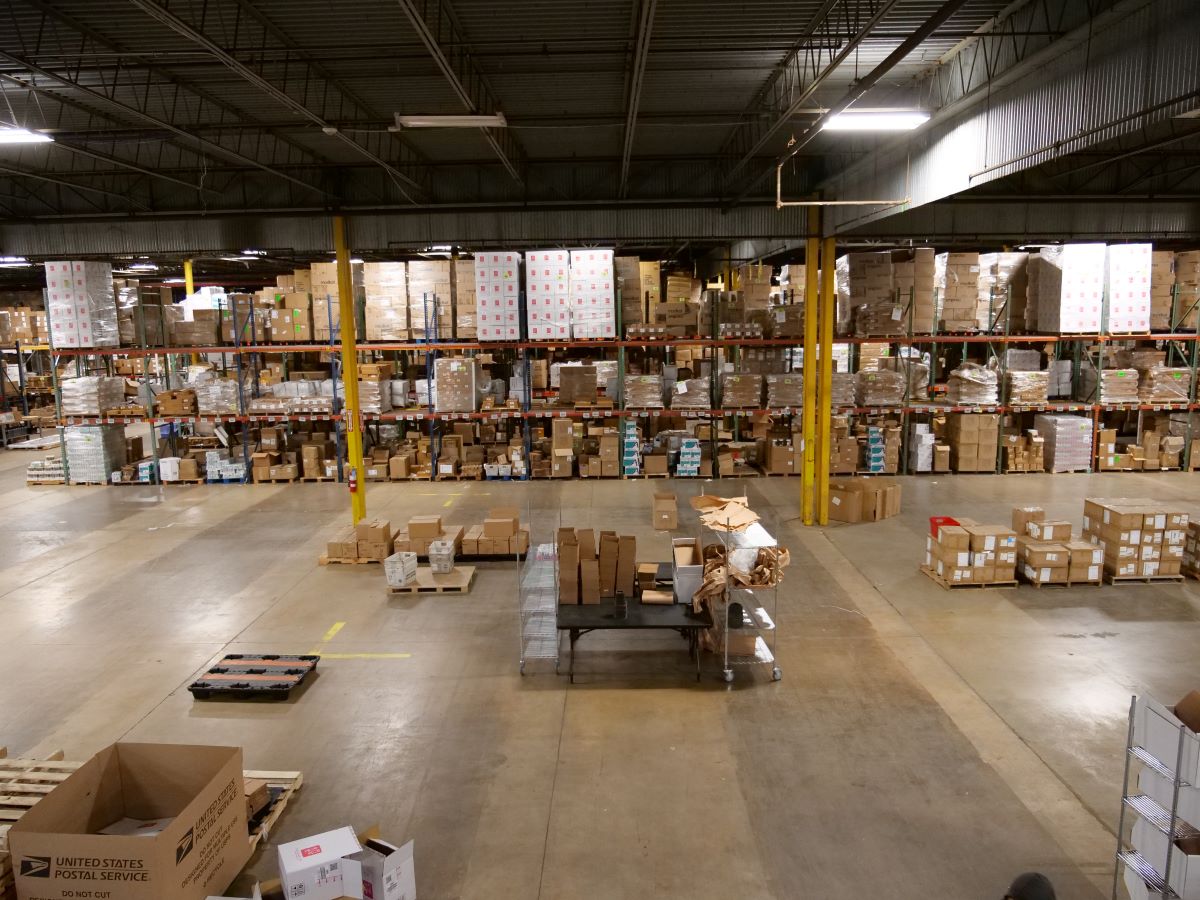
Warehousing, by definition, is the act of storing goods and raw materials that will be sold or distributed later. In a more specific context, the term refers to a storage facility or warehouse facility where items or raw materials are kept safe, organized, and ready for transit or delivery to consumers. Beyond just a storage facility, a warehouse is a hub of various tasks and processes. It's a staging area for shipments, a place where work is done, and a room where various factors and requirements come into play.
Operating a warehouse isn't merely about managing space or storing units of products. It's an area bustling with numerous activities and processes. From picking to packing, and from loading docks to storage areas, every corner of the warehouse has a purpose. Staff, trained operators in particular, are constantly on the move, managing inventory and using equipment such as forklifts to handle the materials. Each item has a specific location in the warehouse space and a manner in which it is stored, governed by a sophisticated Warehouse Management System (WMS). The advantages of such a system are numerous, and the number of businesses using them in various countries is growing.
Warehousing plays an indispensable role in the world of supply chain and inventory management now. Warehouses function as central points in supply chains, providing a convenient location for staging, processing, and distribution of physical goods. The warehouse's functions are vital to the flow of goods, from receiving and then storing goods to order picking and shipping. The country where the warehouse is located can impact the prices and efficiency of these processes. The experience of the person managing the warehouse, among others, can also have a significant impact.
For eCommerce businesses, warehouses aren't just buildings for storage; they are critical elements in the company's success. Proper warehouse logistics not only enable smooth order fulfillment but also contribute to overall business growth. By maintaining an organized warehouse and effectively managing tasks like cycle count and put away, eCommerce merchants can achieve better customer satisfaction and productivity. The manufacturing of physical products, the information available about them, physical inventory storage and the responsibilities of the warehouse staff all play a role in this process.
Key warehouse operations involve numerous steps and manual processes that require careful planning. Efficiently carrying out these tasks requires a well-structured warehouse layout and storage facilities, advanced equipment, well-trained staff, and a reliable Warehouse Management System (WMS). Moreover, safety and training measures are crucial to ensure staff welfare and productivity. Barcoding and scanning are also significant components of warehouse operations, ensuring accuracy and efficiency in tasks like ASN and EDI. The places where these operations occur, the lot sizes of the products, storage costs, and the advantage of using certain methods over others are all important considerations.
Distribution Centers: These warehouses act as hubs, receiving products from multiple suppliers and quickly dispatching them to various outlets nearby warehouses, retail stores or directly to customers.
Each of these warehouses fits into the supply chain in different ways and brings unique benefits to the table for business customers, so it's crucial for businesses to understand their own different needs in a large warehouse in order to choose the most suitable option.
A Warehouse Management System (WMS) is a vital tool in managing warehouse facilities store inventory and operations. It includes features for both warehousing logistics inventory control, order fulfillment, and real-time tracking of goods. With a WMS, businesses can achieve greater efficiency and accuracy, improving their bottom line. The parts of the system that handle different tasks, the bulk of the data it can process, and the corporation that provides it are all crucial factors.
The way a warehouse center is laid out affects its efficiency. Effective layouts use Slotting Optimization. This arranges products based on factors like their demand, size, and weight. Items that get picked often are kept closer to the dispatch areas to manage inventory and reduce pick times. A well-organized warehouse also improves safety by keeping pathways clear for people and machines. Plus, a good design leaves room for the future, allowing the business to grow without the need for a major reorganization.
Warehouses have to follow a bunch of laws and regulations to keep things safe, fair, and legal. For example, Safety Regulations are in place to protect workers. These rules might involve training, safety equipment, and machine operation standards. Warehouses that handle goods from other countries also need to follow Import/Export Laws. These laws can affect how a retail store or warehouse operates, especially when it comes to storing, managing inventory, and moving products. It's important for warehouse operators to keep up with these laws to avoid getting into trouble and to keep things running smoothly.
The nature of warehousing is rapidly evolving, largely due to advancements in technology. Concepts like data warehousing, data warehousing meaning, a full warehousing logistics solution and warehouse storage and data mining have entered the picture, promising to bring significant changes to how businesses manage their warehouse operations. The investment required for these technologies, the fulfillment centers that use them, and the package of services they offer are all important considerations.
Technology is changing the warehouse industry and ecommerce platform in big ways. Robotics is making things faster and more accurate with automated picking, packing, and sorting systems. Artificial Intelligence (AI) and Internet of Things (IoT) technologies are giving real-time tracking and predictions for inventory management. And Blockchain is giving secure and transparent tracking of goods through the supply chain. By adopting these technologies, warehouses and ecommerce companies can work more efficiently, make fewer mistakes, and stay competitive.
Warehousing extends beyond the simple notion of storage. It plays a critical role in ensuring smooth and efficient product flow. It’s important to mind its importance in supply chain management and invest in a suitable Warehouse Management System (WMS) for business growth and success. The marketing strategies used to promote warehousing services, the plans for future development, the people involved in the industry, the brands that dominate it, and the distributors that rely on it are all part of the bigger picture.
This article has aimed to provide a comprehensive overview of warehousing functions of these various entities and their development. In the end, everything traditional warehousing comes down to the quantities of products stored, the volume of operations, the money involved, the basis on which decisions are made, the list of tasks to be done, the look of the warehouse, the ports used for shipping, the office managing the operations, the improvement strategies in place, the production rates, and the slotting methods used. The meaning of what is warehousing then is much more than just storage; it's a complex system of operations that keeps the world of commerce moving.



.svg)