
.svg)

Supply Chain SKUs are an essential part of inventory management. Learn more about how ShipHero can help you manage your SKUs and streamline your supply chain processes.

.svg)
When you’re running an eCommerce business, an important factor in online success is keeping your inventory organized. The best way to do this is by using a coding system. SKU in supply chain management and eCommerce is an essential tool that helps business owners know exactly what’s in stock in their inventory.
In a competitive market, eCommerce businesses have to keep up with the desires of their clients, which means it’s imperative to keep products relevant and accessible. This has to include having a clear picture of available inventory since clients want to be sure their desired product is available before making a purchase.
The acronym SKU stands for stock keeping unit. It’s a digital method used to track products by converting data about each product into a combination of letters and numbers that can be tracked by computer software.
This is an efficient identification system that uses information that’s unique to your business and helps to differentiate products from each other. It makes it easy for your team to locate and identify products being sold through your eCommerce shop.
Each business can design its own structure of SKU identifiers. These identifiers refer to key pieces of information based on a product’s most important characteristics such as:
The information provided by SKUs provides a lot of important information such as sales data and what products need to be reordered. As products are sold and SKUs are scanned, it’s easy to see which items are selling well and which variations of the same product are more popular.
Businesses retain historical data on the SKU level. This is crucial to inventory management because SKUs allow you to track the movement of inventory and to know exactly where a particular product is at any given time.
When an item is sold, it’s automatically removed from inventory. This makes it easy to determine what items need to be restocked. Data on SKUs also provides information on product popularity and sales trends.
SKUs meaning isn’t the same as UPCs (universal product codes). Most people are familiar with UPCs, the barcodes that can be read by a scanner. While SKUs are scannable codes just like UPCs, there are some key differences between the two. These differences include:
UPCs are always 12 numbers and always include barcodes. SKUs may be printed with or without a barcode and may vary in length.
SKU productivity refers to evaluating the effectiveness of your SKUs by comparing the number of SKUs that are live on your site to the number that resulted in sales. Before doing this comparison, deduct items that have been returned.
Calculating SKU productivity gives you important information about products that don’t sell as well as expected. It makes it possible to get a better idea of what your customers are looking for so that you can satisfy demand and keep your product selection relevant. Low-performing SKUs can be swapped out for those that customers are more interested in.
From the client’s perspective, one reason to limit SKUs in the supply chain is that too many SKUs mean too many options. While consumers don’t want to be limited to only a few choices, they also don’t want to be bombarded with so many options that it’s impossible to make a decision.
An SKU level that’s too high may lead to analysis paralysis on the part of consumers as they try to select a product from a large number of choices. Another reason to limit SKUs is the manpower required to maintain too many SKUs. In eCommerce, each item often requires uploading images, videos and product descriptions, which can be a time-consuming task, especially if a large number of SKUs don’t lead to sales.
Your eCommerce team’s focus must be on products and SKUs that are most apt to lead to sales. A lower number of SKUs with higher quality images and more detailed descriptions is likely to lead to better results.
With information about SKU trends, decisions can be made about possibly purchasing fewer of the products that aren’t selling as well and more of those that are most in demand. Using SKUs helps eliminate guesswork. Whether your eCommerce business is large or small, SKUs in supply chain management are a vital tool for effectively managing your inventory.
To find out more about ShipHero's fully outsourced fulfillment solution, talk to one of our Fulfillment Experts today.
About ShipHero
ShipHero is a US-based, leading solution provider in the fast growing eCommerce fulfillment space. ShipHero served over $5 billion of eCommerce orders in 2020 and is growing rapidly. ShipHero provides warehouse management software for brands that operate their own warehouses as well as outsourced fulfillment as a service from ShipHero owned and operated North American warehouses. Some notable customers include Universal Music Group, Glossier and Canadian Tire. ShipHero is a Shopify Plus partner and more than 10% of Shopify Plus stores globally use ShipHero.

.webp)
Explore the top 3PL companies in Canada and learn how third-party logistics providers play a vital role in optimizing supply chains. Discover the benefits of partnering with a 3PL, key services offered, and steps to start working with a 3PL in Canada.
.svg)
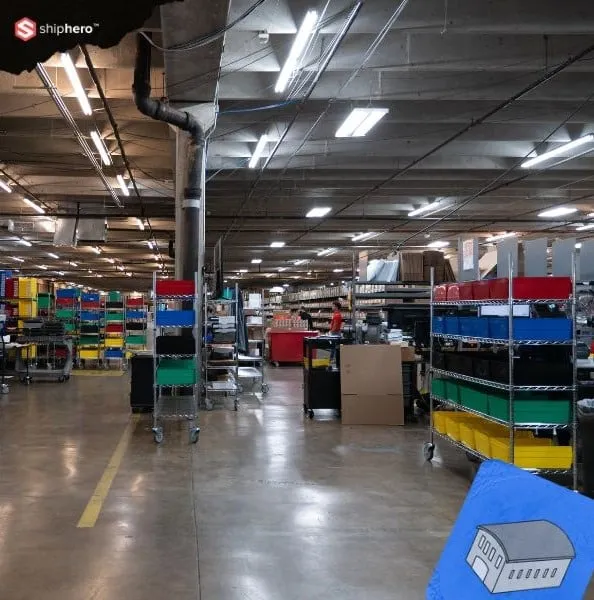
Discover the top 5 best third-party logistics (3PL) companies for your business needs, offering extensive networks, advanced technology, and superior customer service. Learn about the benefits of 3PL services, how to choose the right provider, and avoid common mistakes.
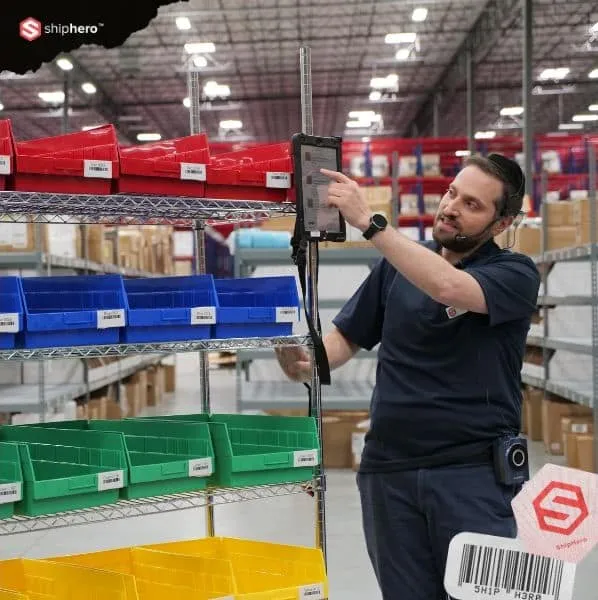
Discover the role, benefits, key features, requirements, and implementation of a 3PL Warehouse Management System (WMS) for optimizing warehouse operations. Learn about scalability, integration, real-time visibility, and customization options to choose the best solution for your business.






.svg)



.webp)