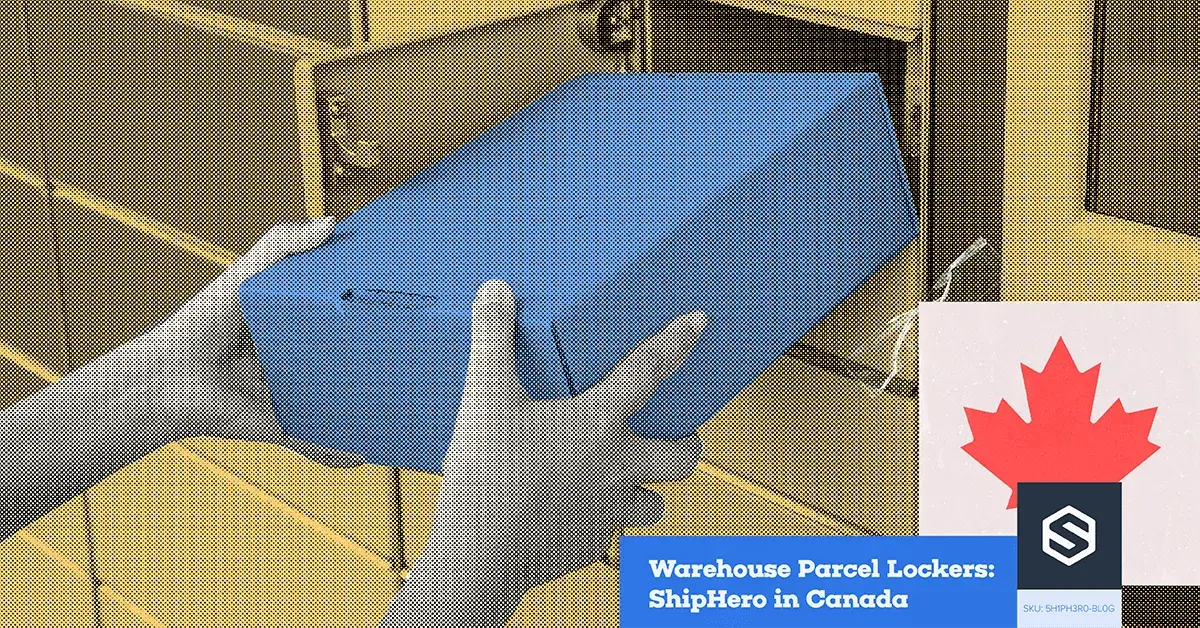

As the average person's shopping habits continue to evolve, so do the ways brands get products in their customers' hands. The eCommerce industry has exploded in recent years, with companies constantly seeking out affordable, creative and effective ways to stand out from the competition while offering a convenient buying option. The option to buy online and pick up instore, known as “BOPIS,” has allowed brands with brick-and-mortar locations to bridge the gap between their online and real-world storefronts. As BOPIS becomes more commonplace, online retailers are feeling the pressure to offer a pickup option as well. Parcel lockers, a major feature of ShipHero Fulfillment Canada, are one method of expanding delivery options and allowing customers to get their orders in the way that best suits their lives. eCommerce shippers without the advantage of a brick-and-mortar storefront can have orders placed in these easy-to-access units, making life easier on the customer while saving on last-mile shipping.
The growing popularity of in-person pickup is obvious when you consider the benefits. Let’s take a look at some of the advantages parcel lockers provide and what benefits they might have in store for your brand.
One of the major advantages of parcel lockers is the added customer convenience they provide. While in-store pickup only allows customers to collect their orders during regular business hours, parcel lockers can be accessed 24/7, allowing buyers to retrieve a package at a time that suits them best. Allowing customers to arrive at the warehouses themselves also eliminates the need for last mile shipping, one of the more expensive steps in the fulfillment process. Avoiding the cost of postage, labeling and carrier fees can mean major savings for customers, encouraging them to continue using your brand as an affordable and convenient buying option.
Outdoor storage lockers are exposed to the elements, but their contents won’t be. ShipHero Fulfillment Canada’s weatherproof outdoor locker system is designed to withstand the climate extremes of Canada, ensuring your items remain undamaged and shielded from the elements. If you’re shipping perishable items, the inside of storage lockers are temperature controlled. This provides an ideal storage solution for eGrocers that need their fulfillment partners to make sure their products are kept fresh.
One of the key expectations for customers and shippers alike is visibility. Partnering with a fulfillment 3PL that offers top-tier reporting and visibility gives you a better grasp on the progress of your shipments. That information can also be pushed to your customers, keeping them up to date on when to expect the item’s arrival.
Not only do parcel lockers make receiving orders easier for customers, but partnering businesses can also benefit from this feature. If you’re shipping component parts across Canada, for example, ShipHero Fulfillment Canada can facilitate those customers picking up the item at the time and location that works best for them. With parcel lockers as one of your brand’s delivery options, business customers can place an order online, select the dropbox nearest to them, and be automatically notified when the package is ready for pickup. Once it’s ready, those lockers are accessible 24/7.
For any eCommerce delivery strategy, visibility is key. Clear and consistent communication with the customer can minimize the risk of misships and costly returns, while supporting your buyers and giving them a reason to return in the future. When an order is placed and pushed to ShipHero, buyers and sellers are provided with a comprehensive report of the package and can track its progress as it moves throughout the fulfillment process. When a customer opts for a parcel locker pickup, they are sent a barcode and pin code that grants them access to the locker at the specified location.
Big brands aren’t the only ones that can offer a pickup delivery option. Now, thanks to parcel lockers throughout Canada, exclusively online stores can give their customers the convenience of a 24/7 pickup option. If you’re looking for a fulfillment partner to help optimize your delivery process, contact the Fulfillment Experts at ShipHero today.Click HERE to Schedule a Meeting Today
.webp)
Imagine running a warehouse where orders are picked quickly, inventory is accurate, and all operations run smoothly without any errors or delays. Thanks to Artificial Intelligence, this can now become a reality with ease.
AI is transforming warehouse management by enhancing efficiency, intelligence, and the ability to meet the rapid demands of today’s eCommerce-driven market.
ShipHero is pioneering this revolution with its AI-powered warehouse solutions, setting new industry benchmarks. This article explores ShipHero’s AI Picking feature, highlighting how it’s transforming warehouse management and enhancing operational efficiency.
The integration of AI technologies, including machine learning, robotics, and predictive analytics, is revolutionizing warehouse operations, driving significant improvements in efficiency, accuracy, and overall performance. These innovations are optimizing processes across various areas, from inventory management to order fulfillment. Below are the key benefits of AI in warehouse management.
A combination of AI technologies is shaping smarter warehouse systems to help revolutionize warehouse management.
ShipHero has taken AI integration to the next level with its AI Picking feature, designed to significantly improve warehouse efficiency. This feature automates the picking process, reducing the reliance on manual labor and enhancing productivity in ways that were once thought impossible.
Let’s dive deeper into how ShipHero’s AI Picking works and the advantages it offers.
AI Picking optimizes warehouse operations in two key ways:
The AI Picking feature delivers a wide range of benefits:
The transformative power of AI extends far beyond just picking. AI is also revolutionizing other aspects of warehouse management, driving improvements in operational efficiency, inventory management, and safety.
AI automates tasks, reducing errors and increasing speed. Automated sorting and real-time inventory tracking ensure accuracy, while real-time monitoring helps managers adapt and ensure timely deliveries.
AI plays a vital role in maintaining accurate inventory levels. By leveraging predictive analytics, AI can forecast demand and optimize stock levels, helping warehouses avoid both stockouts and overstock situations. This leads to better inventory management and fewer disruptions in supply chains.
AI-driven systems can monitor warehouse conditions to ensure safety and compliance with industry regulations. These systems can analyze warehouse data and predict potential hazards before they occur, proactively reducing risks and ensuring a safer working environment.
AI technologies are playing a transformative role in the supply chain and logistics sectors by improving efficiency, reducing costs, and enhancing decision-making.
These intelligent systems effortlessly manage supply chain processes by using data to optimize operations, predict trends, and automate routine tasks. This ultimately reshapes everything, from how goods are moved to stored and delivered.
The future of warehouse management looks promising with greater automation and efficiency, but future warehouse digitization brings challenges, such as high upfront costs and the need for skilled personnel.
AI-powered drones, autonomous robots, and IoT integration are smart warehouse technologies that are revolutionizing warehouse operations. Drones will deliver goods quickly, while robots automate sorting and transportation, thereby reducing the need for manual labor.
IoT and AI integration will enable real-time monitoring and optimization of operations. Smart technology in warehouses is leading to fully automated systems that are faster, scalable, and need minimal human input.
While AI offers immense benefits, businesses must also consider certain challenges. High initial investments in AI technology, data security concerns, and the need for skilled personnel are just a few of the hurdles that must be addressed.
However, with a strategic approach, companies can eliminate the challenges and embrace AI’s full potential to boost accuracy in picking and improve overall warehouse operations.
AI minimizes error by automating tasks like inventory tracking, order picking, and sorting, ensuring greater accuracy and efficiency.
Yes, AI-driven predictive analytics can predict demand, track inventory levels, and improve supply chain efficiency by forecasting needs with greater accuracy to help businesses stay ahead of trends and market fluctuations.
AI solutions are becoming more cost-effective thanks to cloud-based services and subscription pricing models. These options make AI technology more accessible to small businesses, allowing them to take advantage of its benefits without large upfront costs.
.webp)
When pallets roll in and loading docks buzz, your warehouse’s receiving process becomes the gatekeeper of inventory accuracy. And if that gate isn’t well-guarded with structure, speed, and oversight, errors slip in.
A mislabeled item here, a damaged shipment there, and suddenly your warehouse faces stock discrepancies, late order fulfillment, or even lost customers.
A warehouse receiving process checklist streamlines receiving operations and ensures compliance across teams, regardless of who’s on shift.
A warehouse receiving process checklist ensures every shipment that enters your facility is properly documented, inspected, and integrated into your inventory system.
Unlike ad hoc or verbal processes, this structured document verifies product condition upon arrival, checks against purchase orders to confirm accuracy, and documents all inspections for future reference.
However, ShipHero’s digital platform already seamlessly integrates this checklist into your system, automating the tracking of goods from the moment they arrive.
Because it captures critical shipment details, a receiving checklist can double as a warehouse audit checklist sample, especially when preparing for performance reviews or inventory audits.
If you’re looking for ways to improve accuracy and accountability, learning how to audit your warehouse with a structured receiving checklist is a great place to start.
A well-structured warehouse receiving process checklist is crucial for ensuring accurate and efficient inventory management. Including the mentioned key components helps streamline the process, reduces errors, and enhances overall warehouse performance.
Here’s what you must include in your checklist to maintain control and accountability:
This anchors the entire inspection. By referencing the purchase order (PO) number, warehouse teams can verify the received goods against the original order, ensuring the correct items and quantities are delivered.
Having the supplier’s full details improves accountability. If there’s a delivery issue, this info helps your team evaluate supplier performance and speed up resolution.
Timestamping each delivery helps you review delivery schedules, track shipment delays, and identify potential gaps in receiving coverage.
Here, staff will assess damage or discrepancies, confirm specifications (e.g., size, color), take photos if needed, and record all inspections in case of claims or audits. An effective inventory audit checklist incorporates these inspection protocols to ensure accuracy from the moment goods arrive.
Listing the material name (e.g., product name, SKU, or description) prevents mix-ups during inventory allocation and ensures all items are accounted for. This also helps your Warehouse Management System (WMS) update stock records correctly.
Identifying who delivered and who received the shipment establishes accountability, helps resolve disputes over damaged or missing items, and ensures proper handoff records.
Maintaining proper documentation, such as packing slips, invoices, and bills of lading, facilitates order reconciliation and supports formal audits and record keeping.
A single receiving error often ripples through the entire warehouse. A structured receiving checklist breaks this cycle by establishing clear protocols that coordinate with supply chain operations and create accountability at every step. It drives big improvements in:
This plays out in real operations. A mid-sized clothing retailer had ongoing issues with stock discrepancies during receipt. However, implementing a standardized receiving checklist significantly reduced the number of missing items and stock inaccuracies.
Employees also appreciated having clear instructions to follow, which reduced confusion and helped maintain a smoother workflow during peak delivery periods.
Before drafting your checklist, take a closer look at your existing receiving workflow. Next, identify any inefficiencies and pinpoint areas that could benefit from more structure and consistency.
Choose the data points you’ll need based on your warehouse flow, system integration, and team size. Include only what’s necessary to document key handoff moments.
You can go with paper, but digital formats (via tablets or mobile apps) are easier to scale. Software-based checklists can instantly update records and integrate with your WMS.
Use inventory management platforms or cloud-based tools to build your checklist. For example, ShipHero’s template system allows you to configure fields, set mandatory requirements, and establish workflow rules that guide staff through the receiving process. This makes sure every receiving action is consistent and auditable.
Train staff to make sure every team member follows standardized procedures. This minimizes human error, especially for new or seasonal workers.
Roll out the checklist during a test period. Assign clear roles (e.g., receiver, inspector), gather feedback, and then launch warehouse-wide. Revisit and refine it quarterly to keep up with operational changes.
Your warehouse receiving checklist works even better when paired with these best practices:
Spacing out deliveries helps reduce bottlenecks and allows teams sufficient time to track inventory levels accurately. It also allows for more accurate inspections.
Keep receiving areas clutter-free and near the entrance. This shortens the time it takes to organize storage locations after goods are received.
Invest in equipment such as barcode scanners, conveyors, or forklifts to speed up receiving operations, especially during peak seasons.
Don’t let broken items enter inventory. Flag them, document the issue, and notify procurement so the issue can be escalated quickly.
By leveraging real-time inventory tracking and barcode scanning, you can eliminate the need for manual checklists, ensuring that every received item is accurately logged. ShipHero automates the entire receiving workflow, reducing human errors and speeding up the process.
Customizable receiving workflows allow you to tailor the system to your warehouse’s specific needs, eliminating the need for paper-based checklists. Improve efficiency, accuracy, and consistency, all with ShipHero’s advanced automation tools.
At least annually, or anytime your business introduces a new product line, supplier, or technology upgrades.
Absolutely. Cross-training builds flexibility, enabling teams to cover for absences and maintain efficiency even during peak periods or periods of high turnover.
.webp)
One missed check can cost you thousands of dollars. You may have a damaged pallet, a missing fire extinguisher, or a skipped safety step that can put your team at risk.
Warehouse daily checklists serve as a pilot’s pre-flight checklist. Before takeoff, every switch, lever, and system is checked. Why? Because skipping one step can lead to serious problems. The same goes for your warehouse.
Without a solid checklist, you risk delays, missed shipments, or worse, accidents and safety violations. A checklist ensures your team follows the right procedures and nothing falls through the cracks.
Here’s everything you need to include in a warehouse daily checklist, its definition, and templates you could use to get started fast.
A warehouse daily checklist is a structured form that helps warehouse staff systematically inspect, verify, and record essential tasks on a daily basis. It covers all the daily to-dos that keep your warehouse operations running smoothly and safely, such as inventory tracking and forklift inspections.
The warehousing and storage industry reported an injury rate of 4.8 per 100 full-time workers, nearly double the national average of 2.7. Following a daily warehouse checklist ensures the right procedures and safety protocols are followed and nothing important gets missed.
A great warehouse daily checklist supports the safety of your warehouse, reduces errors, and keeps your workflow on point. Here’s how to make a checklist that your warehouse workers will actually use and benefit from.
Every component of your checklist ensures your facility, staff, and inventory remain safe, compliant, and productive.
Common components include:
Instructions should be clear and structured to help your team move through inspections efficiently and consistently.
Your daily warehouse checklist doesn’t have to be very detailed and complicated. It needs to be thorough, practical, and easy to follow.
Here’s how to build a great one:
When your checklist comprehensively details the tasks in a concise manner, it becomes a tool that delivers massive impact. This ensures your warehouse operations run smoothly, safely, and efficiently.
Ready to skip the setup and just get started? Feel free to copy our Warehouse Daily Checklist Template to your Google Docs or Microsoft Word document. It’s accessible, user-friendly, and 100% customizable to your needs.
Simply plug in your specific details, and you’re set. It’s built to save time, support compliance, and help you manage your daily workflow like a pro.
ShipHero’s Warehouse Management System (WMS) boosts warehouse efficiency by automating key processes like inventory tracking, order picking, and shipping. By streamlining these workflows, it reduces manual labor, minimizing errors and delays.
The system’s real-time data updates allow staff to make quick, informed decisions, improving overall productivity. Customizable features enable businesses to adapt ShipHero to their specific operational needs, further enhancing efficiency. With ShipHero, warehouses can achieve faster turnaround times, reduced costs, and improved accuracy.
Review a warehouse daily checklist, weekly, or monthly to maintain accuracy and relevance. Frequent reviews help align the checklist with workflow changes, new safety protocols, or operational updates.
Yes, you can customize a warehouse daily checklist template. Most templates are designed to be modified based on team size, warehouse layout, and operational goals. Customization improves relevance and usability across different warehouse environments.
Yes, basic instruction and simple training on how to use the checklist ensure employees understand how to follow the checklist, report issues, and meet safety or performance standards. Training improves consistency and accountability across shifts.