
.svg)

The past few years have permanently changed the way customers shop and interact with brands. With so many purchases happening online, brick and mortar storefronts have had to take a fresh look at their role in the retail cycle. By providing options like BOPIS and employing omnichannel marketing, brands have found a

.svg)
The past few years have permanently changed the way customers shop and interact with brands. With so many purchases happening online, brick and mortar storefronts have had to take a fresh look at their role in the retail cycle.
By providing options like BOPIS and employing omnichannel marketing, brands have found a way to leverage their physical storefronts for a better customer experience.
Despite the sudden rise of online shopping, most buying still takes place at physical locations. According to the U.S. Census Bureau, eCommerce only made up roughly 13% of all retail purchases at the height of the pandemic.
Rather than commit fully to one side or the other, brands have adapted their brick-and-mortar locations to work hand-in-hand with online stores. The new prominence of eCommerce can be leveraged and integrated into the shopping experience to create a more convenient buying option for customers. One of the key strategies retailers have employed is the “buy online, pickup in-store” model, or BOPIS.
BOPIS allows customers to make a purchase from their computer or smartphone and set a pickup time that is most convenient for them.
Rather than manage two separate sales avenues, this approach helps integrate digital and real-world retail spaces to support each other. The sudden popularity of BOPIS might have come from necessity, but it has proven advantages for retailers in the long term.
For businesses with an existing brick and mortar location, BOPIS bridges the gap between stores and their digital platforms while providing a competitive advantage. These days, customers expect their online orders to arrive in a matter of days, if not quicker. Most stores can’t guarantee such speedy delivery, and BOPIS provides another avenue for customer convenience.
The ability to offer expedited shipping is challenging from a logistics point of view, but with an established brick-and mortar location, the process can be much easier. By connecting the digital and physical sides of your business, your brand can provide a seamless shopping experience that won’t put additional strain on your shipping process.
Speaking of the shipping process, BOPIS could even reduce the demand on your warehouse staff. Customers that are eager to get their orders quickly might be more inclined to pick up the item themselves.
This could reduce the amount of output required by your warehouse, helping avoid expensive shipping bottlenecks and carrier delays when order activity picks up.
As online orders continue to increase, brick-and-mortar stores can even double as extra inventory space. In an effort to shorten delivery times, some brands have begun converting existing storefront to curb-side-pickup locations. These facilities are redesigned as storage centers that prioritize order fulfillment, rather than in-store shopping.
As inventory shortages continue to pose challenges for eCommerce brands, real-world locations have become extremely valuable for anyone looking to simplify last-mile logistics.
Not only does a BOPIS option make things easier for the customer, but the added incentive to visit a brick and mortar location could boost foot traffic through the store.
Getting more customers through the door via BOPIS could lead to additional in-store sales, while fostering a better, real-world connection with customers.
Integrating a pickup option is an important step to take, but it isn’t as easy as adding a button to your online store. Let’s take a look at some of the considerations you should make before you implement this strategy.
One of the major challenges in implementing BOPIS is syncing up online inventory with your actual store. Shoppers expect the products available online to be in-stock at the store nearest to them, so introducing BOPIS without an inventory management strategy could cause confusion down the road.
Merging BOPIS into your retail cycle can be made much easier with a dependable warehouse management software. By getting instant inventory alerts and automating stock updates for your online store, you can be sure your customers are able to make purchases without an issue.
As the owner of a brick-and-mortar location, “pickup in-store” might sound pretty straightforward, but customers won’t be as familiar with your store’s layout. It’s essential to provide customers with instructions on where exactly to go when picking up an order.
By explaining the process at the point of purchase and posting clear signage in the store, you can avoid unnecessary confusion and customer frustration when they choose the BOPIS option.
One of the key strategies brands have adopted to maximize the potential of their brick-and-mortar locations is known as omnichannel. Omnichannel is an approach to marketing that allows customers to access products on any digital platform or on any device in addition to their physical storefronts.
For example, while some eCommerce brands might offer a product on their website only, omnichannel gives customers the chance to find products and complete purchases via social media, smartphone apps, or at the store's physical location. This approach helps foster the connection with customers by providing the option to purchase products in the way that they prefer.
Some might see brick-and-mortar stores as a relic of the past, as eCommerce emerges as the first buying choice for a growing number of customers. However, an established storefront can be a powerful tool when working in conjunction with your digital platforms.
By adapting to the current market and providing options like BOPIS and curb-side pickup, brands can leverage their real-world locations to provide a much more efficient consumer experience.
If you’re looking for a partner to help connect your online store and maximize your brand’s shipping potential, contact the Software Experts at ShipHero today.
Click HERE to Schedule a Meeting Today
Aaron Rubin, Founder & CEO
About the author: Aaron Rubin is the Founder & CEO of ShipHero. He is responsible for planning and executing the overall vision and strategy of the organization. Rubin’s greatest strengths are leadership, change management, strategic planning and a passion for progression. He is known for having his finger on the pulse of ShipHero’s major initiatives, his entrepreneurial spirit, and keen business acumen. His leadership of ShipHero is grounded in providing excellent customer service that drives improved business operations. His passion for ShipHero comes from the culture and his ability to have an impact on the lives of employees, customers, partners, and investors.
.webp)
Explore the top 3PL companies in Canada and learn how third-party logistics providers play a vital role in optimizing supply chains. Discover the benefits of partnering with a 3PL, key services offered, and steps to start working with a 3PL in Canada.
.svg)
Discover the top 5 best third-party logistics (3PL) companies for your business needs, offering extensive networks, advanced technology, and superior customer service. Learn about the benefits of 3PL services, how to choose the right provider, and avoid common mistakes.
Discover the role, benefits, key features, requirements, and implementation of a 3PL Warehouse Management System (WMS) for optimizing warehouse operations. Learn about scalability, integration, real-time visibility, and customization options to choose the best solution for your business.

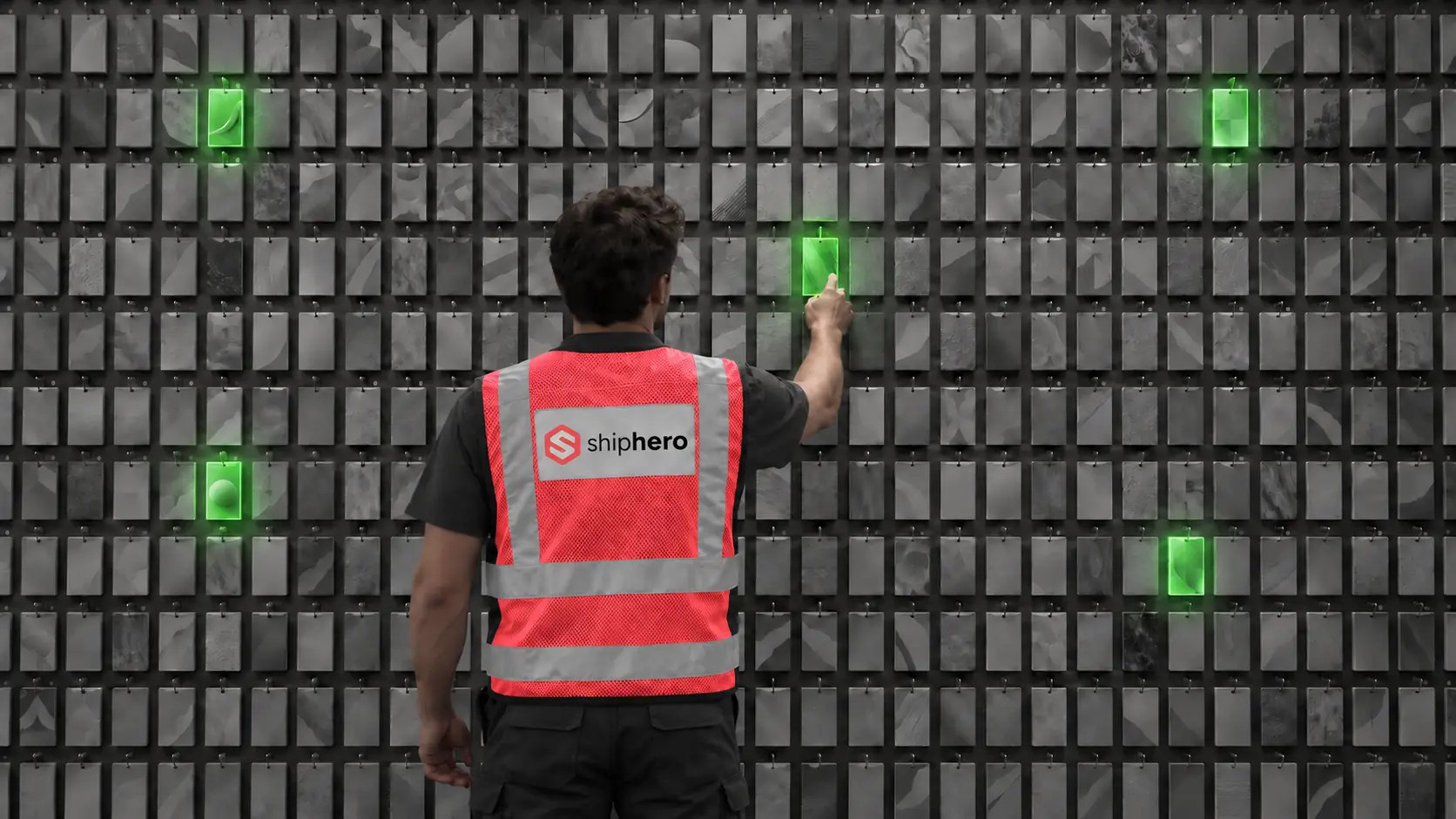
At the denser wall, average picking time per order fell from 40 seconds to 13, and orders that ran clean from start to finish rose from 18% to 97%. This is the companion to our Direct Pack + Pack-to-Light case study, from the same research.
On September 1, 2026, Descartes Systems Group announced its acquisition of Extensiv for approximately $120 million. What was announced, what usually follows deals like this, and the questions Extensiv customers should put to their vendor before renewal.



.svg)



.webp)