
.svg)

Need help deciding whether outsourcing returns management is a good option for your business? Take a minute to weigh the pros and cons of both sides so you can make an informed decision.
.svg)
So, should you keep returns in-house or say good riddance? Keeping returns in-house can be costly, and thinking carefully about how best to handle this crucial part of your business is essential. Outsourcing returns can be a great option — but is it always the correct answer? Weighing the pros and cons ahead of time will help you decide if outsourcing returns is worth it for your eCommerce business. Let's explore both sides of this debate so you can make an informed decision!
Navigating the world of returns management can feel like solving a complex puzzle, but when executed effectively, it can transform a potentially negative customer experience into a positive one. As an integral aspect of the supply chain and fulfillment process - returns management relies on the principles of reverse logistics to ensure that goods make their way back from customers to retailers smoothly and efficiently.
This dynamic workflow goes beyond simply receiving the returned product; it seamlessly integrates every step, from shipping and storing to updating stock levels in real time. When handled with finesse, accuracy, and a touch of tech magic, a well-coordinated returns ecosystem benefits not only the customer making the return but also potential new clients, stock managers, and payment operators.
By developing and implementing strategies to minimize the occurrence of returns, businesses can save valuable resources while ensuring maximum customer satisfaction. Remember, a well-oiled returns management machine makes the whole process more cost-effective. It fosters loyalty from customers who can trust that your business will address their concerns in a timely and friendly manner.
In-house returns can be both a blessing and a challenge for businesses, depending on the situation. One of the most significant benefits is the level of control it offers organizations over their operations, allowing them to tailor every aspect of the process to ensure the utmost customer satisfaction. This means that every returned item is handled efficiently and effectively, maintaining the trust and loyalty of the clientele.
The improved communication resulting from an in-house team's deeper understanding of the company's values and systems greatly benefits the organization. Since they are better equipped to represent the brand, there is a reduced risk of losing vital information due to miscommunication.
Managing in-house reverse logistics programs can be challenging for businesses, particularly regarding scalability and customer expectations. Reverse logistics necessitate a diverse array of resources, which can sometimes be limited within a company. As various departments and teams compete for these resources, the efficiency and effectiveness of reverse logistics processes can be compromised.
Moreover, with giants like Amazon setting the bar high in terms of hassle-free return experiences, customers have come to expect a smooth and streamlined process when it comes to returns. Failing to meet these expectations can significantly impact customer satisfaction and brand image, making it imperative for businesses to invest in and prioritize a robust in-house reverse logistics program. Solidifying these crucial aspects of your business can help ensure long-term success and a loyal customer base.
The concept of reverse outsourcing logistics might strike some as questionable when aiming to save money. It's easy to wonder just how much reverse logistics costs can impact a company's bottom line.
However, when we consider that approximately 15% of all goods are returned, and around 30% of those end up in landfills, it becomes evident that a staggering 4.5% of goods sold are essentially a lost cause from the get-go.
Imagine transforming this seemingly grim picture by enabling retailers to swiftly handle returns, repackage, relabel, and liquidate products. This potential twist in the narrative is precisely why many retailers are turning to third-party logistics (3PL) providers.
Through their collaborations with these providers, retailers are discovering innovative ways of making the returns process more sustainable, ultimately leading to substantial cost savings in the long run.
In conclusion, the eCommerce returns process can be a complex undertaking. It may seem like a difficult decision to make when deciding between keeping returns in-house or outsourced. By understanding the advantages and disadvantages of both solutions, you are better prepared to decide for your business and customers' needs. When staying in-house can help create more efficient processes and an enhanced customer experience.
On the other hand, outsourcing offers total peace of mind that all returns will be handled expertly and efficiently. Regardless of your business's route, if you’re looking for easy access to a network of service specialists and solutions tailored to your fulfillment needs, consider taking advantage of what outsourced returns management offers. Are you ready to outsource? Call us today, and we'll walk you through the process!
Subscribe to our blog to learn more, or click HERE to schedule a meeting today!

Aaron Rubin, Founder & CEO - ShipHero
About the author: Aaron Rubin is the Founder & CEO of ShipHero. He is responsible for planning and executing the overall vision and strategy of the organization. Rubin’s greatest strengths are leadership, change management, strategic planning, and a passion for progression. He is known for having his finger on the pulse of ShipHero’s significant initiatives, entrepreneurial spirit, and keen business acumen. His leadership of ShipHero is grounded in providing excellent customer service that drives improved business operations. His passion for ShipHero comes from the culture and his ability to impact the lives of employees, customers, partners, and investors.
.webp)
Explore the top 3PL companies in Canada and learn how third-party logistics providers play a vital role in optimizing supply chains. Discover the benefits of partnering with a 3PL, key services offered, and steps to start working with a 3PL in Canada.
.svg)
Discover the top 5 best third-party logistics (3PL) companies for your business needs, offering extensive networks, advanced technology, and superior customer service. Learn about the benefits of 3PL services, how to choose the right provider, and avoid common mistakes.
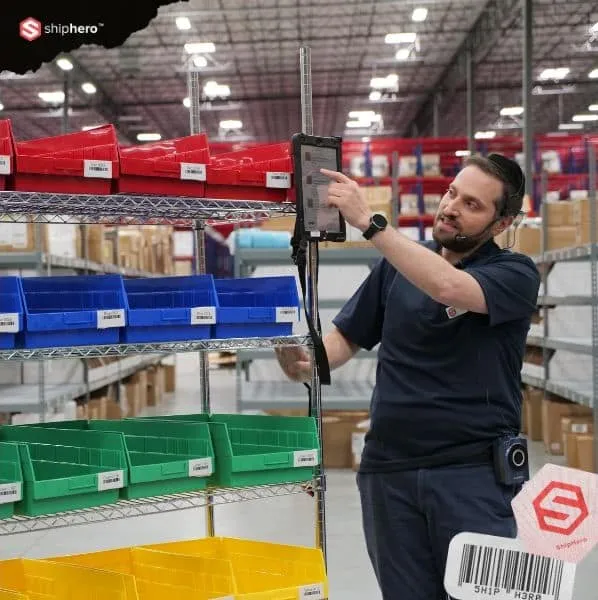
Discover the role, benefits, key features, requirements, and implementation of a 3PL Warehouse Management System (WMS) for optimizing warehouse operations. Learn about scalability, integration, real-time visibility, and customization options to choose the best solution for your business.

At the denser wall, average picking time per order fell from 40 seconds to 13, and orders that ran clean from start to finish rose from 18% to 97%. This is the companion to our Direct Pack + Pack-to-Light case study, from the same research.

On September 1, 2026, Descartes Systems Group announced its acquisition of Extensiv for approximately $120 million. What was announced, what usually follows deals like this, and the questions Extensiv customers should put to their vendor before renewal.



.svg)



.webp)