
.svg)


.svg)
Objects! with ShipHero talks with the entrepreneurs, innovators and idealists that put items on the shelf and bring packages to your doorstep. From hot sauce to board games, toothbrushes to frying pans, startup side-gigs to enterprise players, join ShipHero founder, Nicholas Daniel-Richards, as he demystifies the manufacturing and logistics behind some of our most beloved household objects, with transformational ideas that are guaranteed to make you say, why didn’t I think of that?. This fast-paced and intriguing podcast covers thousands of travelled miles in less than an hour, so next time you’re standing in your local store and see a label that says ‘Made in <A Land Far, Far Away>’, you’ll know just how it got into your hands.
Objects! with ShipHero discusses in detail what it takes to transform an intangible idea into a tangible object that is designed, sold, manufactured, shipped, and delivered in the digital world. If you are a successful entrepreneur looking to grow or an aspiring innovator with an idea, Objects! with ShipHero provides a detailed, 360′ exploration with the masterminds behind modern ecommerce and shipping solutions. So settle in, buckle up, and prepare to get objectified! … no wait, not that. Get ready to say “I objects!”… we’ll work on it. Available on iTunes and at this link.
Episode 1 of Objects! with ShipHero gets a wee bit spicy with Bayou Gotham founder Scott Bellina. In this episode, Scott and ShipHero founder Nicholas Daniel-Richards answer fiery hot questions like: How do you run a kickstarter campaign for a new hot sauce company during a quarantine? What does it take to switch from digital brand strategist to hot sauce entrepreneur? Is it possible to make and sell authentic hot sauce out of an apartment in New York City?
Grandson to the founder of the famous Crystal hot sauce brand, Scott Bellina was born and raised on the Bayou (shoutout to our Creedence Clearwater Revival fans). The first 20 years of Scott’s life spent working in a Louisiana grocery store so ingrained the taste and heritage of the local cuisine into his heart and soul that the man practically bleeds crawfish gumbo.
Since moving to New York City, Scott found success in digital marketing and brand strategy, and he has owned and operated his own agency for the last ten years. However, when work began to slow down in 2019, Scott was forced to evaluate alternative options and seek out other sources of income, and that is when his Bayou upbringing called out.
Starting with the simple question, ‘has anyone ever tried to make a hot sauce that tastes exactly like seafood boil?’, Scott spent the cold winter months doing nothing but taking trips to the grocery store and experimenting with hot sauce recipes in the kitchen of his NYC apartment. His home-made hot sauce quickly found a rabid fan base amongst his friends, family and colleagues, and he realized that this unconventional approach to hot sauce could be a hit.
In March of 2019, Scott embarked on the bold journey from making hot sauce to making a hot sauce company, and he launched a Kickstarter crowdfunding campaign for his hot sauce brand, With a fundraising goal set for $25,000. Scott recalls that at this time he didn’t even have a name, logo, design or bottle, but in creating the brand while simultaneously running the Kickstarter campaign, he was able to craft and perfect the brand and recipes with constant feedback from his audience of investors. After running the campaign for about nine months, and through a quarantine no less, Scott was able to raise just shy of $32,000.
Bayou Gotham Hot Sauce is an homage to both Scott’s Bayou roots as well as his New York home, and to date the brand has two collections: The Bayou Collection is cajun-inspired flavors, and the Gotham Collection is flavors inspired by the boroughs of NYC where Scott lived; but these are not your typical hot sauces, as Scott has made sure to put his unique mark on each flavor. For example, the Ruby Rebelle may be the most similar to his grandfather’s traditional recipe from 1923, but forever the rebel with a cause, Scott introduced barrel-aged bourbon to kick it up a notch. Another example is his most popular Bayou Bourre Louisiana Boil, which tastes exactly like a seafood-boil-in-a-bottle and has corn and potatoes in the sauce!
With $32,000 in the bank, Scott had to determine how to allocate the funds for his business. He decided that a proportional breakdown would make the most sense and he calculated the following:
Scott notes that he did not fully measure the costs for shipping and fulfillment, and attributes the unanticipated costs to the specialty box and associated tools for shipping his hot sauce bottles. Hindsight 20/20, Scott says that he would have set a higher goal if he had known of these costs prior.
Scott points out that compared to tech companies where clients want instant gratification, the food industry moves at a slower pace. In order to use his time more wisely and focus on developing the brand and recipes, Scott employed the help of a co-packer, which is a commercial kitchen that cooks and packs the hot sauce for the company.
Upon approving the recipe, which alone took six to eight months, the co-packer needed to decide if they even wanted to work with Scott and his hot sauce company. Being new and unproven in the industry, Scott was the low man on the totem pole and had to contend with the co-packers much larger and more established clients. When the co-packer finally agreed to work with Scott, it took another three months to figure out pricing. Once the pricing was sorted out, it took another three to four weeks to order fresh produce; a time-consuming process to say the least and the pandemic certainly didn’t help.
Another thing Scott had to contend with is the regionalized nature of food consumption; people in NYC want NYC products, people in Florida want Florida products, etc. Bayou Gotham Hot Sauce is from all over the map, and Scott hopes that will help him in the long run.
Scott originally decided to try to get his product into specialty stores like small BBQ grocers, then moving to chain grocery stores and finally Direct-to-Consumer (D2C). But since the pandemic, this model has shifted in his mind, and he sees his future being e-commerce and D2C.
Scott mentions that his customers understand that delays were inevitable during this unprecedented time, and people just want to know it’s happening. Scott provided consistent communication and transparency through his social media platforms and email. During the Kickstarter campaign, Scott was giving updates every four to seven days, but when things were getting held up, Scott took the approach to update his customer base once a month. Scott notes it’s difficult to give an update when there’s nothing to report, but it’s necessary and the customers deserve it.
Recently, Scott held a party at a local bar to raise additional money and eat some spicy foods.
As an update, the first shipment of Bayou Gotham Hot Sauce was made available in September 2020. The crate that went to your humble host, Nicholas Daniel-Richards, was promptly devoured with more on the way. Thanks for listening to Episode 1 of Objects! With ShipHero, see you next time!
Do you have an idea that’s been gnawing at you? You are living in an era that is full of ways to convert that idea into a viable business. The reality is there’s no magical five step program, and we’re all making this up. However, there’s lots of tools, resources, and fantastically passionate and smart people that we can all learn from who are building all sorts of new brands and yes, ShipHero gets to do the shipping.
If you have an object that you want to profile, please send a note to John Wakim at pitch@shiphero.com - we’re always on the lookout for a new object to cover. For more info, episode details, and links to the stuff we discuss, visit https://shiphero.com/podcast.
Listen to the podcast episode here.
The Objects! With ShipHero podcast is brought to you by ShipHero, the leader in ecommerce order fulfillment services.
.webp)

The ShipHero Model Context Protocol (MCP) connects supported AI clients directly to your live ShipHero data, so warehouse teams can ask questions and get specific answers from their own account. It is built for day-to-day operational checks, including inventory levels, open orders, shipment status, holds, returns, purchase orders, and exceptions. For ShipHero customers, it is available at no additional charge and runs on existing API credits.
Every order, shipment, inventory movement, hold, return, and purchase order creates data inside ShipHero. Your warehouse information is right there, but getting to it can be a slow, complex process.
Before the ShipHero MCP, answering a specific operational question often meant logging in, finding the right report, applying the right filters, exporting data, or asking the one person on the team who knew where to look.
Even when the answer was simple, like a quick inventory check, it could turn into a 20 to 45 minute task. A customer question could sit half a day while someone pulled the right numbers. That delay adds friction to the floor. It slows decisions. It keeps teams waiting on data they already own.
The ShipHero MCP gives supported AI clients secure, read-only access to live ShipHero data.
That means operators can ask questions in plain English and get answers from their actual account, not from a generic help article or static knowledge base. A chatbot can tell you where to find a number. The ShipHero MCP can return the number itself.
It works with MCP-enabled AI clients, including Claude, ChatGPT, Cursor, and Codex. Connect it once, authenticate access, and your team can start asking operational questions from the AI tool they already use.
The workflow is simple:
The MCP does not replace ShipHero. It makes the data inside ShipHero easier to reach when your team needs a fast answer.
The ShipHero MCP is designed for everyday operational questions, such as:
If the data lives in your ShipHero account, the MCP gives your team a faster way to ask for it.
Speed matters, but safety matters too.
The ShipHero MCP is read-only by design. It can retrieve information from your account, but it cannot create orders, modify records, delete data, or change warehouse settings.
That gives teams a practical way to use AI for operational visibility without risking accidental account changes. Operators can ask. Managers can check. 3PL teams can answer client questions faster.
The data becomes easier to use, while the records stay protected.
For founders, the MCP can turn a quick inventory check into a simple question.
For operations leads, it can surface shipment status, holds, exceptions, and low-stock SKUs without digging through reports.
For 3PL operators, it can help answer client questions faster, using live account data instead of manual follow-up.
The result is a faster way to reach the information already inside ShipHero.
The ShipHero MCP is available to all ShipHero customers at no additional charge. It runs on existing API credits, so specific questions help keep usage efficient.
To get started, visit developer.shiphero.com or contact your ShipHero account representative.
ShipHero MCP is a read-only connection between supported AI clients and your live ShipHero data. It lets users ask operational questions in plain English and receive answers from their actual ShipHero account.
A chatbot usually answers from fixed, generic information. ShipHero MCP connects to live account data, so it can return specific answers about your orders, shipments, inventory, holds, returns, and other ShipHero records.
ShipHero MCP works with AI clients that support the Model Context Protocol, including Claude, ChatGPT, Cursor, and Codex.
No. ShipHero MCP is read-only. It can query data, but it cannot create, update, or delete records in your ShipHero account.
No. The MCP is built for operators and can be connected from a supported AI client in minutes. Developers may use more advanced tools for deeper analysis, but most day-to-day users can work directly with the MCP.
Yes. ShipHero MCP is available to ShipHero customers at no additional charge and runs on existing API credits.
.svg)

Transitioning to a new Warehouse Management System (WMS) is a high-stakes decision that often triggers concerns regarding downtime, data integrity, and workforce adaptation. As warehouses prepare for 2026 growth, understanding these common hurdles—and the technical solutions that resolve them—is essential for a successful migration. This guide addresses the five primary barriers to adoption and how a high-velocity infrastructure ensures a seamless transition.
Warehouse operators frequently hesitate to upgrade due to perceived risks that can halt operations. These challenges typically include:
To clear these hurdles, a structured implementation strategy is used to prioritize data density and entity clarity.
In the competitive eCommerce landscape, staying stagnant with manual workarounds is often more costly than the transition itself. Moving to a high-velocity WMS converts your warehouse from a cost center into a growth engine by providing Labor Efficiency and ROI through automated routing and reduced authentication friction.
Because the platform is built for the floor worker, features like Workforce Hero allow seasonal temps and new staff to be authenticated and productive in under an hour.
No. High-velocity infrastructure increases visibility by providing Total Real-Time Control. Managers can monitor exactly what is in the Hospital queue and track replenishment in real-time from a single dashboard.
Before going live, a ground-up audit is performed using cycle counting tools. The system's architecture ensures that every movement on the floor is synchronized with sales channels instantly, maintaining 99.9% accuracy.
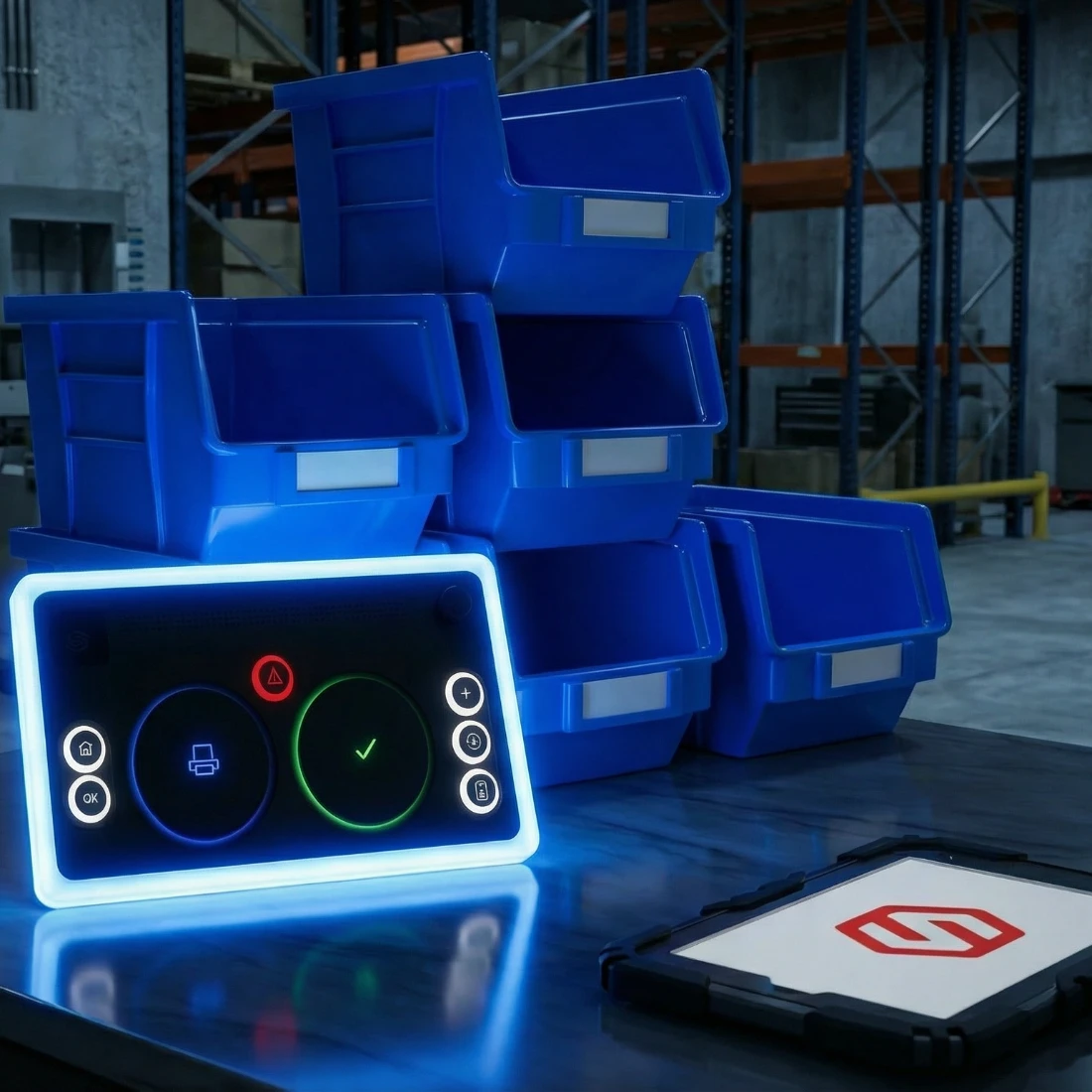
Picture a packer at Peak Season. A box is in front of them, a product in each hand, and somewhere on a cluttered desk there's a mouse they need to find to confirm the order. They look down. They hunt. They click. Then they do it again. Thousands of times a day.
That moment of friction is small. But it is never just one moment. Multiply it across your entire pack line, across an entire shift, and you are looking at a measurable and largely invisible drag on your total throughput.
Tap-to-Pack is a purpose-built hardware controller designed by ShipHero to eliminate digital friction at the packing station. It connects via USB-C, requires no drivers or additional software, and syncs automatically with the ShipHero WMS packing app. This new system is now available at the ShipHero Store.
Instead of navigating a screen with a keyboard and mouse, packers execute every high-frequency command — such as selecting box sizes, printing labels, finalizing orders, flagging exceptions — with a single physical tap on one of eight programmable buttons.
Key specifications:
Most warehouses are running 2026 operations on 1990s peripheral standards. The keyboard and mouse were designed for spreadsheets and emails, not high-volume fulfillment. When used at a packing station, they create three compounding problems:
The problem is not your people. It is the tools you are asking them to use.
Tap-to-Pack introduces a "Rodent-Free" packing standard: a workflow where the packer's hands stay on the product, their eyes stay on the work, and the software fades into the background.
The device guides the packer through two feedback systems:
ShipHero customers running Tap-to-Pack are already seeing a 90% reduction in on-screen interactions and a significant increase in the number of orders packed per hour, without adding headcount or changing their warehouse layout.
One of the hardest challenges in fulfillment is absorbing volume quickly, especially during Peak Season, when temporary staff need to reach target productivity fast.
Because Tap-to-Pack's interface is physical and intuitive, there is almost nothing to teach. Pick up the product, follow the light, tap the button. New packers can reach target productivity in minutes rather than hours.
The system is also modular:
Whether you are a growing DTC brand or a high-volume 3PL, Tap-to-Pack is designed so your hardware never becomes a ceiling on what your team can do.
Tap-to-Pack is a programmable, industrial-grade hardware controller that connects to the ShipHero WMS and allows warehouse packers to execute packing station commands, such as printing labels, selecting boxes, and completing orders. All with a single physical button press, eliminating the need for a keyboard and mouse.
The device connects via USB-C and syncs automatically with the ShipHero WMS packing app. It is a true plug-and-play solution: no drivers, no background software, and no manual configuration required.
Yes. Buttons are configurable for a range of packing actions, including Print Label, Complete Order, Select Box Size, and the Hospital function, which flags a problematic order and keeps the line moving without stopping to resolve it on screen.
The system is fully modular. Connect up to two additional 8-button hubs to the Main Hub for a total of 24 programmable buttons, supporting even the most complex multi-step packing workflows.
Tap-to-Pack devices require ShipHero Packing App v1.0 or higher. The current release is v1.1.0.



.svg)