
.svg)

Relaaaaax! CBD users can get their vapes, tinctures, lotions and more sent right to their doorstep as shipping stress-reducing CBD products have become legal across all 50 states. But suppliers, take heed: supplement and pharmaceutical companies that want their share of this growing $2.8 billion market must comply with
.svg)
Relaaaaax! CBD users can get their vapes, tinctures, lotions and more sent right to their doorstep as shipping stress-reducing CBD products have become legal across all 50 states. But suppliers, take heed: supplement and pharmaceutical companies that want their share of this growing $2.8 billion market must comply with the U.S. Government’s CBD shipping regulations, specifically regarding how much THC can be present in their products.
Companies must closely adhere to CBD shipping guidelines if they want to operate long-term. So if you don't want your CBD business to go up in smoke, be sure to build a detailed strategy for your business, from payment processing to marketing and shipping.
In this article, we get into the nitty-gritty of shipping hemp-based products, including the current state of the market, how to package and ship CBD products and the types of products you can ship out.
Yes, it's legal to ship CBD oil and other CBD products, but only under certain circumstances. These are the main factors to keep in mind:
CBD oil is only legal to ship if it is derived from the hemp plant, a type of cannabis plant that contains less THC than marijuana.
Do keep in mind that, according to US federal law, CBD products can only contain up to 0.3% of THC. Any higher and you're sure to raise red flags.
Selling CBD or other products derived from the marijuana plant is still illegal at the federal level in the US.
If you're wondering what the differences between hemp, marijuana, CBD and THC are, don't fret. Here's a quick explainer:
Marijuana and hemp are essentially the same plants. However, hemp has higher levels of CBD and lower levels of THC, while marijuana has higher levels of THC and lower levels of CBD. THC or tetrahydrocannabinol is the psychoactive agent that is found in cannabis. In short, it's what gets people high. On the other hand, cannabidiol (CBD) is purported to provide relief for depression, anxiety, and PTSD, as well as help users fall asleep.
All hemp products containing cannabidiol oil must be bought from a licensed grower. Each state has its own rules and guidelines on issuing licenses to growers, so make sure you or your supplier are able to secure a license from your state before selling any CBD-based products.
Before you can ship out your CBD products, you must first bring them to a third-party tester to identify the product's chemical makeup. This will allow you to make any claims on the CBD and THC levels in your product.
As CBD sales hit $4.6 billion in 2020, experts forecasted the CBD market to reach $12.64 billion by 2026.
The major growth drivers, according to one report, are rising government approvals of CBD products, increasing cases of chronic pain issues, anxiety, and depression (which CBD is purported to help alleviate), and rising popularity in the cosmetics industry.
One major market trend is the rise in online sales of cannabidiol oil and CBD-containing products. This means more and more people are choosing to have their CBD products delivered straight to their doorsteps rather than going out to buy them at a dispensary.
eCommerce businesses can take advantage of this trend and start catering to those who are reliant on eCommerce to get their CBD products.
Legalized CBD products come in a few different varieties. The market is currently divided by how the supplement is derived from the plant, as well as the method of consumption. For the former, there are three choices available to consumers:
Hemp-derived CBD products are the most in-demand category for e-commerce retailers, driven by hemp’s various healthcare applications.
As medicinal CBD products become more widespread, more research will lead to more uses for it.As for the method of consumption, CBD can be inhaled like traditional marijuana products, or consumed orally through edibles and other consumables. It can also serve as the main ingredient in health and wellness products, such as skin lotion, shampoo, candles, or animal-care solutions.
When shipping CBD products locally, keep the following considerations in mind:
Although shipping CBD products is legal in the United States, keep in mind that not all countries classify CBD as a legal substance. Some countries may even press charges or damage products beyond usability. So, not only will you be risking legal action, but you'll likely see your products go to waste as well.
As such, make sure to check each country's laws and seek legal advice before conducting business globally. eCommerce retailers need to be mindful of this complex legal landscape and adhere to these laws if they don't want to lose their business.
If you're committed to selling CBD products, make sure to keep a legal team close by to review all your statements and advise you on what you can and can't do in certain localities. Remember that CBD and hemp-based products are not accepted in all US states despite not being federally-controlled substances.
If you will merely be distributing CBD products, you need to be diligent about making sure your suppliers follow state laws and shipping regulations. Most carriers are stringent about having both products and suppliers meet their rules on shipping CBD.
When figuring out how to package your CBD products, it is best to find packaging that is odor-resistant, leak-proof, tamper-resistant, and compliant with state regulations. Vacuum-sealed bags and air-tight plastic containers may be your best bet here. To protect your packages from damage during transport, wrap items in thick, cardboard packaging.
When it comes to shipping, bear in mind that each carrier has different guidelines on shipping hemp-derived CBD products via mail.
When shipping through the USPS, you need to meet the following requirements:
To ship via UPS, you must have the following information on hand:
UPS has clear guidelines stating that it will refuse shipment of any marijuana-containing products or CBD products from shops that also sell marijuana products.
DHL allows shipping of CBD products so long as sellers can provide records on state law compliance, laboratory test results indicating THC contents, government licenses, and compliance reports.
Another solution could be to use third-party logistics or fulfillment providers to handle every aspect of your CBD shipping, from storage to shipping. Fulfillment centers reduce the need to rent warehouses out to store your CBD products and take care of state and federal law compliance when shipping.
The CBD market is booming, and eCommerce retailers need to stay ahead of the curve. With so many competitors in this industry though there are still plenty of ways you can get your products noticed! Here are some online marketing tactics you can deploy to smoke your competition.
Note: Pay close attention to FDA guidelines on marketing CBD products.
Search Engine Optimization (SEO) is a vital aspect of marketing CBD products. While it can appear complex and technical at first, SEO can still be more affordable and effective than other, more traditional approaches to marketing.
Building informative and entertaining content is the best way to gain traction in the CBD market. Some examples of CBD content marketing could include:
Word-of-mouth and affiliate marketing are important tools for eCommerce retailers. Affiliate marketing allows you to build relationships with third-party websites that entice clicks back towards your site, while also paying only when someone buys something because of them!
Somewhat related to affiliate marketing, Influencer marketing is another fruitful channel for spreading product awareness. This is mainly carried out on social media platforms and video. With products such as CBD-related goods, the role of influencers is heavily regulated by the FDA to avoid the unintentional spread of misinformation. The influencer needs to be open and transparent about their commercial connection to the CBD manufacturer and retailer.
Finally, email marketing still attracts some of the highest conversion rates of all the digital marketing channels. The customers that have subscribed to your updates are quite possibly the easiest pickings for your company to convert sales, so reward your loyal fanbase with discounts, free shipping, and more to generate quick sales.
The billion-dollar market for CBD products in the US is still expected to grow 10x its current rate by 2025. For eCommerce retailers that deploy a tight marketing and shipping strategy, the growth opportunities are immense, as long as you follow the FDA guidelines and avoid potentially business-ruining shipping infractions.
Run a tighter ship for your CBD online shop – consider outsourcing your fulfillment to a third-party fulfillment center like ShipHero.
The days of slow shipping are over. ShipHero has a quicker delivery speed than other 3PLs and you'll be able to spend less money on it, too! Contact us to find out how the pros get their products into satisfied customers' hands quickly and without breaking your budget or sacrificing quality of service in the process!
Yes, you can mail hemp legally as long as its THC concentration does not go any higher than 0.3%.
You can ship CBD oil internationally to countries that recognize CBD as a legal substance. Not all countries do so, however, and may confiscate or destroy your products.
To know if your supplier's CBD is legal to ship, request a license to grow and produce CBD. You can also conduct third-party lab testing to see if their product's THC levels meet the maximum standard.
-
About ShipHero: We make it simple for you to deliver your eCommerce. Our software helps you run your warehouse, and our outsourced shipping solutions eliminate the hassle of getting your products to your customers. With over 5,000 brands and 3PLs relying on us daily, we’re here to help with all your logistics needs.
Let us know how we can help you today by scheduling a call HERE.
.webp)
Explore the top 3PL companies in Canada and learn how third-party logistics providers play a vital role in optimizing supply chains. Discover the benefits of partnering with a 3PL, key services offered, and steps to start working with a 3PL in Canada.
.svg)
Discover the top 5 best third-party logistics (3PL) companies for your business needs, offering extensive networks, advanced technology, and superior customer service. Learn about the benefits of 3PL services, how to choose the right provider, and avoid common mistakes.
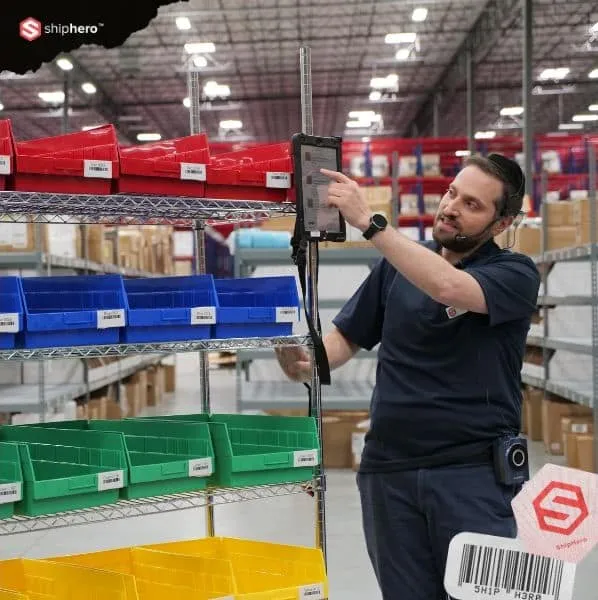
Discover the role, benefits, key features, requirements, and implementation of a 3PL Warehouse Management System (WMS) for optimizing warehouse operations. Learn about scalability, integration, real-time visibility, and customization options to choose the best solution for your business.

At the denser wall, average picking time per order fell from 40 seconds to 13, and orders that ran clean from start to finish rose from 18% to 97%. This is the companion to our Direct Pack + Pack-to-Light case study, from the same research.
On September 1, 2026, Descartes Systems Group announced its acquisition of Extensiv for approximately $120 million. What was announced, what usually follows deals like this, and the questions Extensiv customers should put to their vendor before renewal.




.svg)



.webp)