
.svg)

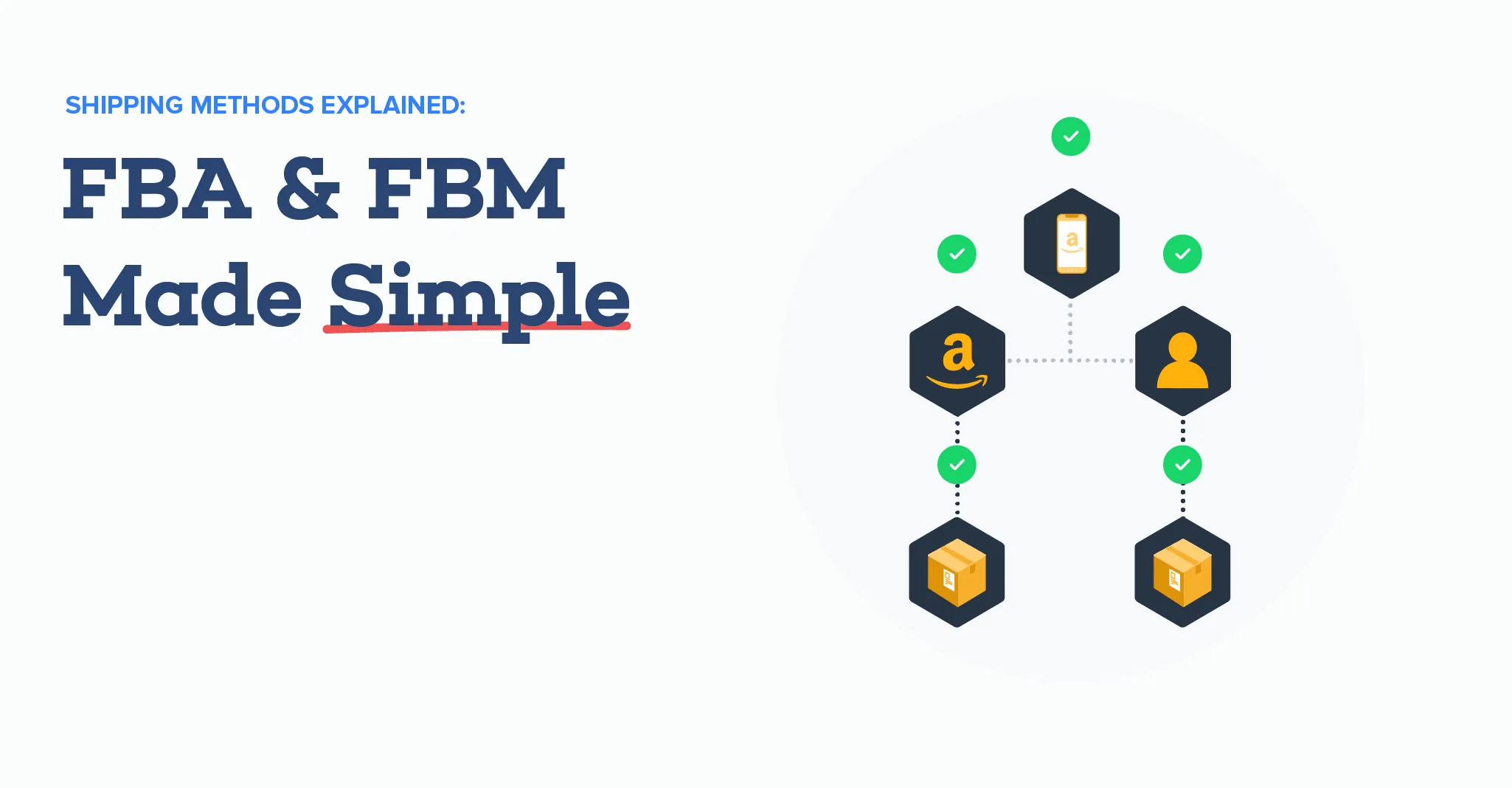
Amazon sellers can choose between FBA and FBM shipping options. What are the differences, and which one is better? Click through to learn which fulfillment method is right for you!
.svg)
Between finding the best deals, navigating carrier requirements and managing inventory, order fulfillment is challenging and time-consuming. Fortunately, you can outsource order fulfillment to third parties to focus on other business tasks.
Amazon offers two fulfillment methods for its sellers: Fulfillment by Amazon (FBA) and Fulfillment by Merchant (FBM). What are the differences, and which one should you choose? Read on to find out!
FBA is a fulfillment option where Amazon handles all order fulfillment tasks for sellers. If you register for FBA, your inventory is stored in a designated Amazon warehouse so the fulfillment crew can pack and ship your items.
Meanwhile, FBM involves a company selling its product on Amazon sales channels while handling storage, shipping and customer support on its own.
Of all current Amazon sellers:
FBA and FBM sellers can ship products via Prime, Amazon's reward program that offers one or free two-day shipping. Amazon reports that sellers with Prime memberships are more popular than non-member sellers – customers are more likely to purchase products from you if the Amazon
Prime badge shows up on your listings because customers want fast deliveries.Prime is automatically available for all FBA sellers. If you’re an FBM seller, you need to earn a Prime membership by joining Seller Fulfilled Prime (SFP). To be eligible for and retain a Prime membership, you need to ship all of your orders on time and have a low cancellation rate – otherwise, you’ll lose it.
Seller Fulfilled Prime is currently not accepting new registrations, but you can sign up for the waitlist.
Fulfillment by Amazon sends your products from an Amazon warehouse directly to customers. Here’s a simple guide to explain how FBA works:
Considering your specific business and the products you sell, you may be better off with FBA, FBM, or a hybrid of the two. Each option is evaluated below on the cost & fees, autonomy & control and ease of use.
FBM is the better option for your company if:
FBA is better for your company if:
One of the best perks of being an Amazon FBA member is that Amazon handles your entire inventory process. All you need to do is ship your products to an Amazon FBA warehouse, and the team there will do the rest.
Recently, Amazon introduced a “Send to Amazon” inventory replenishment method that’s very simple and saves you a lot of time. Here’s how to send items to an Amazon FBA warehouse:
First, choose what items you plan to send to an FBA warehouse from your product listing and enter how many units you're sending.
Input your destination Amazon FBA warehouse, then choose between an Amazon-partnered carrier or your preferred carrier company.
Depending on your choice in the previous step, you can print shipping labels directly from the Amazon Shipping Services page or your chosen carrier's company website.
Once you have printed labels, attach them to your product boxes. Note that Amazon has strict packaging requirements, so make sure you use the right boxes.
With the labels attached, you can schedule a courier pickup or visit the nearest office. From there, the carrier will ship your items to an Amazon FBA warehouse, where an inventory team will handle the rest.
You'll be charged costs and fees if you participate in Amazon FBA. Here are some factors that influence your Amazon FBA usage costs:
You can use Amazon's FBA Calculator to predict fees and expenses, given your item sizes and weight. Overall, the fee structure for FBA sellers dramatically increases with the size and weight of a product; therefore, FBA sellers with small, lightweight products incur fewer fees.
Inventory turnover is the speed at which a company sells and restocks inventory. Amazon tracks sellers' inventory turnover and assesses fees based on the duration; in other words, sellers with products that sit in Amazon fulfillment centers for longer (i.e., have slow turnover rates) must pay higher FBA fees. Additionally, if a product sits in an Amazon fulfillment center longer than 365 days, they are charged long-term storage fees.
All FBA sellers must pay FMA fees to cover the shipping and handling costs involved with fulfilling their company's orders. These most likely cover the labor hours, packaging and overhead that Amazon incurs to provide this service.
FBA and FBM have their pros and cons. To help you choose, we’ve laid out some key differences between the two fulfillment methods below:
How much control do you hope to retain over your company? FBM has the most power and autonomy regarding fulfillment because there are many ways to fulfill your product, like dropshipping, outsourcing to a 3PL, leasing and operating your warehouse, or even using a spare bedroom in your apartment for storage.
Meanwhile, FBA sellers have little to no autonomy over handling their products. Once you ship products to the FBA warehouse, Amazon will handle the entire order fulfillment process.
Most FBA members pass customer service responsibilities off to Amazon, so they don't usually speak directly to customers. Outsourcing customer service means saving money and effort because you don't have to pay or train customer service specialists. However, you're also passing up a chance to communicate directly with customers and foster brand loyalty.
Meanwhile, Amazon FBM sellers are 100% responsible for customer service. Because the customer service ball is in your court, you must spend time and money to ensure a positive customer experience. However, this is an opportunity to connect with customers and reinforce your brand.
FBA sellers have little concern over their seller feedback and rating because Amazon handles most of the process. In fact, FBA sellers can request Amazon to remove negative feedback if Amazon was the one who handled the fulfillment.
FBM sellers have almost complete control over their sales, so you might be easier targets for bad feedback. Since you can't request Amazon to remove negative feedback, you must constantly deliver the best service and respond to negative reviews on your own.
The whole process of order fulfillment, picking, packing and shipping is laborious and time-consuming.
For companies and brands with no sales channels or fulfillment methods, Amazon FBA allows instantaneous access to a gigantic logistics network for a price. But this also saves you time to focus on the aspects of your business that need your attention most.
Companies and brands that already have fulfillment channels and are considering adding Amazon should consider whether the additional FBA logistics channel is worth the costs, especially those that sell big, heavy products.
If you already have logistics channels and partners, FBM is likely the better option because you don't have to pay the extra FBA fulfillment costs.
Which one is “best” between FBA and FBM depends on what you want out of your business. There's no doubt Amazon will remain the #1 eCommerce site for a long time, so both options are relatively stable.
Generally, FBM is better if you want more control over your sales process and build more brand loyalty through direct customer interactions. FBA is better if you want a hands-off approach to order fulfillment and are fine with Amazon running your customer service.
Even if you're an FBA member, shipping items to Amazon warehouses takes time and effort. Fortunately, you can go to freight forwarders to help send products out to Amazon FBA without hassle. Here are some of the best Amazon FBA freight forwarders operating today:
Unicargo is an Amazon freight forwarder that inspects your products upon picking them up, so you don't accidentally ship damaged goods to the FBA warehouse. Unicargo also offers short-term storage warehouses if something happens with your FBA membership.
Flexport offers freight forwarding services with real-time tracking in over 80 countries. If you run an environmentally-aware business, Flexport is a good choice because one of its mission to attain 100% carbon neutrality.
Freightos helps you compare freight quotes from dozens of providers so you can find the best deals easily. It also offers on-demand freight tracking and issue resolution assistance if things go wrong mid-shipment.
Need help with fulfillment for your Amazon orders? Here's how ShipHero’s third-party logistics software can help you offer Amazon-like delivery speeds without breaking the bank.
ShipHero has fulfillment centers across the country that deliver to customers within one to two business days. We can help you deliver as fast as Amazon – without the FBA fees.
ShipHero doesn’t just handle Amazon order fulfillment. We offer third-party order fulfillment for numerous major eCommerce platforms like eBay, Shopify, Walmart and BigCommerce.
Thanks to ShipHero’s partnerships with multiple shipping carriers, Amazon sellers working with us get lower delivery costs for each order. Moreover, our fulfillment network makes last-mile delivery faster and more affordable.
So, is FBA or FBM right for your business? Stay tuned to our Shipping Methods Explained series as we dive deep into the specifics of fulfillment.
Learn more about ShipHero's industry-leading warehouse management software.
You can use both FBA and FBM. In fact, about 34% of Amazon sellers use both fulfillment methods. You can use FBM to sell large products that don’t sell too well and FBA to sell smaller, high-selling products. This combination method saves you more money because you can avoid large item fulfillment and long-term storage costs.
Amazon doesn’t charge subscription fees if you’re an individual FBM seller, but you’ll be charged $0.99 for every product sold. However, you can get a Pro FBM subscription at $39.99/month to avoid paying $0.99 for every item you sell.
Amazon takes a variable FBA fee, depending on the product’s size and dimensions, that starts at $2.92 for every item sold. You also need to pay monthly storage fees based on how much merchandise you have in FBA warehouses.
-
About ShipHero: We make it simple for you to deliver your eCommerce. Our software helps you run your warehouse, and our outsourced shipping solutions eliminate the hassle of getting your products to your customers. With over 5,000 brands and 3PLs relying on us daily, we’re here to help with all your logistics needs.

.webp)
Explore the top 3PL companies in Canada and learn how third-party logistics providers play a vital role in optimizing supply chains. Discover the benefits of partnering with a 3PL, key services offered, and steps to start working with a 3PL in Canada.
.svg)
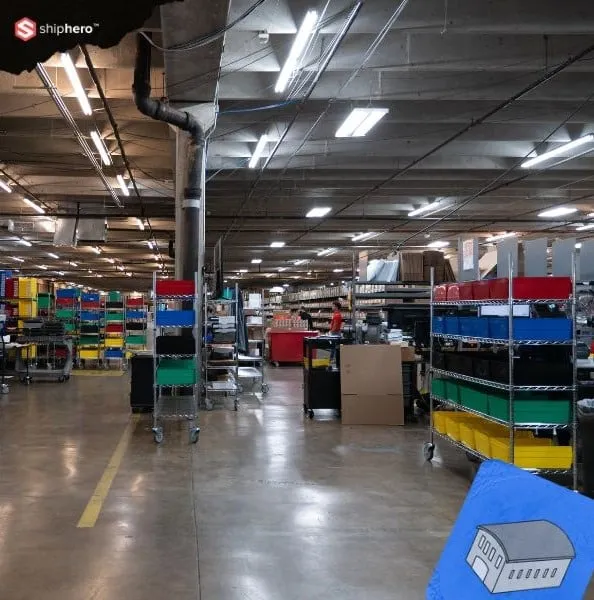
Discover the top 5 best third-party logistics (3PL) companies for your business needs, offering extensive networks, advanced technology, and superior customer service. Learn about the benefits of 3PL services, how to choose the right provider, and avoid common mistakes.
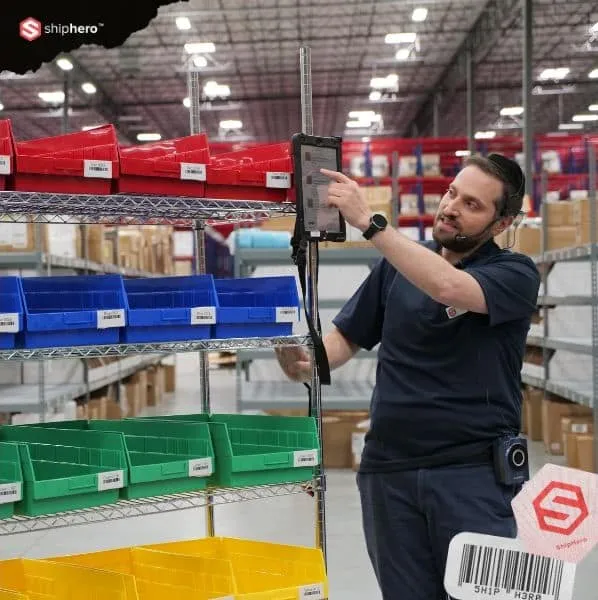
Discover the role, benefits, key features, requirements, and implementation of a 3PL Warehouse Management System (WMS) for optimizing warehouse operations. Learn about scalability, integration, real-time visibility, and customization options to choose the best solution for your business.

At the denser wall, average picking time per order fell from 40 seconds to 13, and orders that ran clean from start to finish rose from 18% to 97%. This is the companion to our Direct Pack + Pack-to-Light case study, from the same research.




.svg)



.webp)