
.svg)

The success of any business rests in the hands of the customer. If your customers aren’t happy, they won’t purchase your products or recommend your company. This leads to a reduction in sales that can ultimately drive your business into the ground. There are many factors that come into play when dealing with

.svg)
The success of any business rests in the hands of the customer. If your customers aren’t happy, they won’t purchase your products or recommend your company. This leads to a reduction in sales that can ultimately drive your business into the ground.
There are many factors that come into play when dealing with customer satisfaction, but one of the biggest is the order fulfillment process. The speed and accuracy with which orders are fulfilled is one of the biggest determining factors in customer satisfaction, but it is also one of the most challenging aspects of running a business. To simplify and streamline this process for reduced costs and improved customer satisfaction, many businesses turn to 3PL providers and 4PL providers to improve their logistics strategy and expand their fulfillment capabilities.
In order to truly understand the difference between third and fourth-party logistics, you first need to understand the basics of how outsourced logistics works. Keep reading to find simple definitions of 1PL, 2PL, 3PL, and 4PL, followed by an in-depth look at the difference between third-party and fourth-party logistics.
An online retailer has a wide variety of options when it comes to fulfilling orders. Choosing the right logistics provider is the key to optimizing your supply chain and maximizing both profit and customer satisfaction. If you make the wrong choice, it could end up costing your company thousands, even millions, of dollars, not to mention end up hurting your customer satisfaction rating as well.
Before getting into the specifics of third-party versus fourth-party logistics, here’s a quick review of logistics terminology to put things in context:
In the above overview, the egg and farmer business is a hypothetical example that could be applied to any eCommerce business.
Every business has its own unique needs for supply chain logistics. For medium to large-sized businesses, however, it usually comes down to choosing between third-party and fourth-party logistics providers. Keep reading to learn the basics of both and to receive some tips for making the best choice for your company.
Simply put, a third-party logistics provider is a model that involves three separate parties. The first is the business itself, the second the logistics provider, and the third is the carrier. In this supply chain model, the business turns over logistics operations for inventory storage, packaging, and managing inventory as well as turning it over to the carrier for shipment. Another way to think of it is that a 3PL becomes the middleman between the business and the shipping carrier, taking care of the tedious aspects of shipping.
This supply chain model has been around since the 1970s, and the first 3PL providers were intermodal marketing companies that received packaged loads from shippers and transferred them to railroads. Today, the role of a 3PL provider has expanded to include services such as managing the movement of parts and materials from suppliers to manufacturers. It also includes transferring finished products from the manufacturer to the distributor or retailer.
In most cases, third-party logistics providers offer bundled supply chain services which may include some or all of the following:
These services can be scaled and customized according to the business’s needs. Generally speaking, businesses hire 3PLs when their supply chain becomes too complicated for internal management. For example, if a small business significantly expands their inventory as sales increase or grows through a merger or acquisition by another company.
If you’re still not sure whether a third-party logistics provider is right for your business, here are some examples of industries that can benefit from hiring 3PL providers:
Hiring third-party logistics companies could help you expedite your order fulfillment while also reducing costs and improving customer satisfaction. Before you commit, however, there is another option to consider – fourth-party logistics. Keep reading to learn more.
In a fourth-party logistics partnership, a business is basically outsourcing the entirety of their supply chain management to a logistics service provider. The 4PL oversees all of the different pieces of their client’s supply chain including warehouses, transportation companies, and agents. The goal is for the 4PL to be the single interface for the business between all aspects of the supply chain.
You can think of 4PLs as a supply chain integrator. It’s the most comprehensive supply chain solution available for a business. A 4PL is often a joint venture for enterprises that want business planning and project management to be handled by a separate entity. For example, companies like Deloitte and Accenture offer 4PL services to their clients.
In most cases, the 4PL does not actually own warehouse or transportation assets. Rather, it coordinates these services with vendors – it may also coordinate the activities of 3PL providers that are handling various aspects of the company’s supply chain. The difference is that 3PL providers are focused on day-to-day operations while 4PL providers focus on integration and optimization. A 4PL provider may also be known as a Lead Logistics Provider (LLP).
The primary benefit of hiring a 4PL organization is that the 4PL focuses on simplifying and streamlining logistics for the highest level of services for the best value. The 4PL becomes your single point of contact for the entire supply chain which is ideal for large businesses that have complex order fulfillment operations.
Here is a quick summary of some of the benefits a 4PL provides:
Now that you know a little more about what a 4PL does take a minute to review the potential pros and cons for hiring a 4PL provider.
If you’re still not sure whether a fourth-party logistics provider is right for your business, here are some examples of industries that can benefit from hiring 4PL providers:
In the industry of medical devices, surgeons often make last-minute orders and order multiple sizes of devices since they don’t know exactly what they’ll need. A 4PL provider is better equipped to manage complex chain-of-custody requirements and tight delivery schedules while reducing inventory costs.
Integrative technology enables a 4PL to optimize all aspects of the supply chain including determining the ideal parts, quantities, and locations based on anticipated demand. Field techs no longer have to double as warehouse operators and parts can be delivered in 30 minutes or less, improving efficiency and maximizing customer satisfaction.
By managing the entire supply chain network, 4PLs can allocate inventory to meet customer demand and to reduce missed opportunities. They also enable companies to provide same-day delivery regardless of location as well as same-day replenishment.
Now that you know the basics about third-party and fourth-party logistics, you may already have a sense for which one might be best for your company. Before making your choice, however, you should take a closer look at the unique differences between 3PL vs 4PL providers.
A 3PL is focused on the day-to-day operations of your supply chain logistics – it is more transaction-focused than a 4PL. That being said, a 4PL takes it a step further by optimizing your entire supply chain, including any 3PL providers your business might have hired. They take over the entire operation and become your single point of contact which leaves you free to pursue other things that might help grow and expand your business.
When an organization already has an effective, high-performance supply chain strategy in place, a 3PL provider can provide the extra support needed to execute that strategy efficiently. This type of relationship usually requires a significant degree of internal management to ensure that the 3PL’s performance meets business standards. While the day-to-day functions may be out of your hands, you still need to retain a certain degree of oversight. You should also keep in mind that because 3PLs are asset-based, some companies may be more concerned with utilizing their own assets than with providing competitive rates or more valuable services.
A fourth-party logistics provider is non-asset based which means that their focus is on finding the ideal combination of service and value. These providers utilize integrated technology to ensure a high level of visibility across the entire supply chain for both strategic and tactical analysis. Your business will still need to utilize some internal resources to oversee and manage 4PL performance, but it takes most of the weight off your shoulders when it comes to optimizing services and minimizing costs.
There are a lot of factors to consider when it comes to choosing between a 3PL and a 4PL, so be sure to do your research before you decide. Keep reading to receive some simple tips to employ as you start making your decision.
Know that you understand a little more about third-party and fourth-party logistics and how they differ, which option is best for your company? Unfortunately, there may not be a clear-cut answer. You’ll need to take a deeper look at your business operations to see where you are struggling and whether hiring a 3PL or 4PL provider might help.
Here are some of the signs that your company could benefit from hiring a 3PL provider:
For many businesses, hiring a 3PL provider is the first step as the business grows and expands. Over time, however, it might make more sense to move to a fourth-party logistics model. If your business has outgrown your in-house capacity for managing supply chain services and you want to optimize the entire process for efficiency and controlled costs, you may do best with a combination of 3PL and 4PL providers. The benefit of hiring a 4PL is, of course, that you can also gain the benefit of 3PL services without having to manage them yourself.
Whether you are hiring a 3PL or a 4PL provider, you need to do your research to ensure that you choose the company that is the best fit for your business. Take the time to delve deep into each company’s set of skills as well as their experience and reputation in the industry. You’ll be turning over a significant portion of your business’s essential operations, so you need to choose a provider you can trust 100%.
ShipHero is a leading 3PL service for ecommerce merchants. We handle logistics and fulfillment for over 4,000 online stores.
Due to our partnerships with major carriers, merchants working with ShipHero get reduced shipping costs for each order. Even better, our use of distributed fulfillment centers means you save even more money on transit costs and can get orders delivered faster.
With ShipHero’s distributed fulfillment network, orders can be delivered to most locations with 1 to 2 days. This allows you to offer the same delivery speeds that Amazon does, without having to let Amazon’s FBA fees reduce your profits.
We don’t just handle fulfillment for your Amazon orders. In addition to Amazon, ShipHero handles multi-channel fulfillment for Walmart, eBay, Shopify, BigCommerce, and most other eCommerce sales channels.
Every business is unique in terms of the services it provides, but all businesses have the same basic needs. Optimizing your supply chain process for reduced costs and improved customer satisfaction should always be a priority and hiring a 3PL or 4PL provider could be your next step to doing so.
Need a warehouse management system (WMS) for your 3PL? ShipHero’s 3PL services will help your eCommerce store run at full potential.
.webp)
Explore the top 3PL companies in Canada and learn how third-party logistics providers play a vital role in optimizing supply chains. Discover the benefits of partnering with a 3PL, key services offered, and steps to start working with a 3PL in Canada.
.svg)
Discover the top 5 best third-party logistics (3PL) companies for your business needs, offering extensive networks, advanced technology, and superior customer service. Learn about the benefits of 3PL services, how to choose the right provider, and avoid common mistakes.
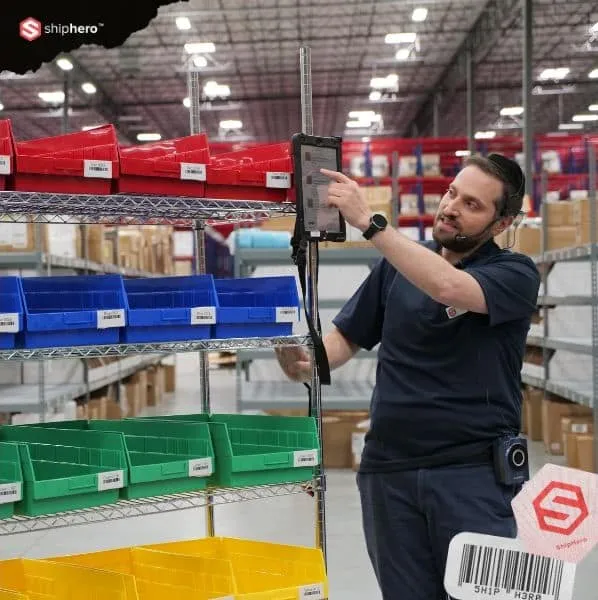
Discover the role, benefits, key features, requirements, and implementation of a 3PL Warehouse Management System (WMS) for optimizing warehouse operations. Learn about scalability, integration, real-time visibility, and customization options to choose the best solution for your business.

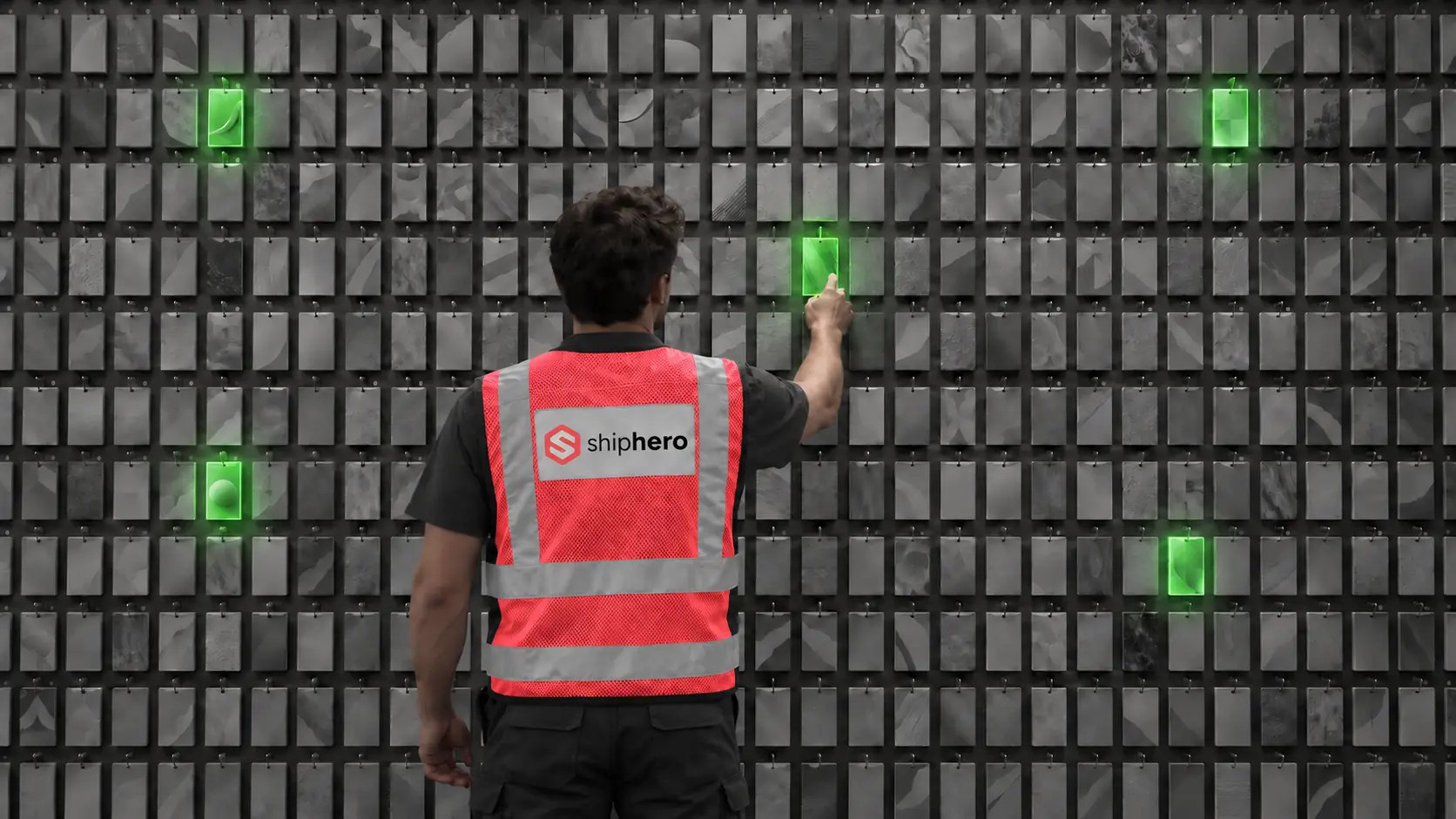
At the denser wall, average picking time per order fell from 40 seconds to 13, and orders that ran clean from start to finish rose from 18% to 97%. This is the companion to our Direct Pack + Pack-to-Light case study, from the same research.




.svg)



.webp)